
Views: 266 Author: Weishi Sheets Publish Time: 2026-10-16 Origin: Site
Content Menu
● G11 Sheet vs Epoxy Board: What Is the Real Difference?
● Understanding G11 Sheet and General-Purpose Epoxy Board
>> What Is General-Purpose Epoxy Board?
● Why Steel Plant Electrical Systems Require Careful Material Selection
● G11 Sheet vs General-Purpose Epoxy Board Comparison
● Thermal Performance: Look Beyond the Advertised Temperature
>> Hot Strength and Long-Term Thermal Endurance Are Different
>> Glass Transition Is Not a Continuous-Service Rating
● Electrical Insulation: Evaluate the Assembly, Not Just the Sheet
>> Dielectric Strength Requires Test Context
>> Surface Tracking Needs Separate Attention
● Mechanical Performance: Specify the Finished Component
● Flame Performance: Verify the Exact Product
● Three Practical Ways to Improve Material Selection
>> 1. Build a Component-Level Thermal Profile
>> 2. Qualify a Representative Machined Part
>> 3. Separate Thermal Problems from Contamination Problems
● Machining and Quality Control for Glass-Epoxy Boards
● A Purchasing Workflow for Steel Plant Insulation Components
>> Step 1: Define the Application
>> Step 2: Identify Candidate Materials
>> Step 3: Compare Compatible Evidence
>> Step 4: Review Additional Requirements
>> Step 6: Approve Production Requirements
● Working With Guangdong Weishi New Materials Co., Ltd.
>> Is G11 Sheet an Epoxy Board?
>> Is G11 Always Better Than FR4?
>> Can Any G11 Sheet Be Used at the Same Continuous Temperature?
>> Does Higher Dielectric Strength Guarantee Better System Performance?
>> Does G11 Prevent Tracking in Contaminated Conditions?
>> What Should Buyers Include in a Material Inquiry?
Choosing between G11 sheet and epoxy board for steel plant electrical systems begins with an important clarification: G11 is an epoxy board. It is a specific glass-reinforced epoxy laminate grade, while "epoxy board" is a broad commercial description.
The meaningful comparison is therefore between G11 sheet and a clearly identified alternative, such as G10 or FR4.
For steel plant buyers, this distinction matters. A quotation for "epoxy insulation board" does not establish the material's thermal endurance, mechanical performance, flame classification, or electrical properties.
The most useful purchasing question is not, "Which board is better?" It is, "Which documented material meets the requirements of this particular component?"
This guide takes an engineering-led approach to that decision, with emphasis on operating conditions, product documentation, and finished-part quality.
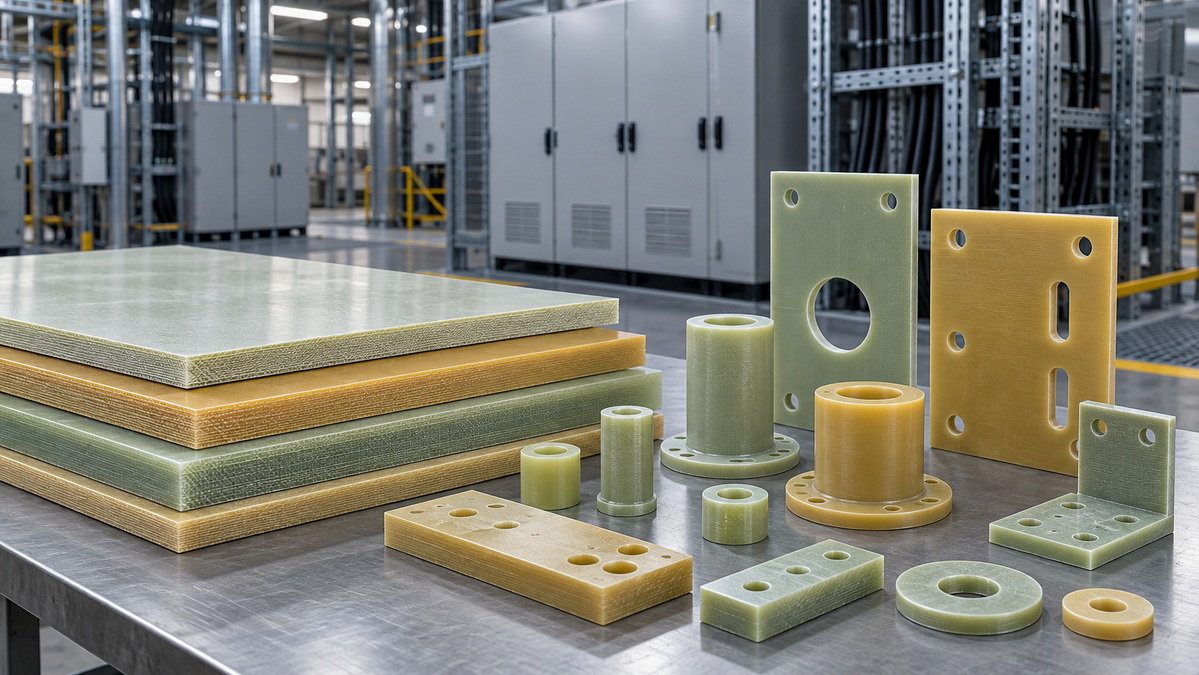
G11 sheet is a rigid composite made from woven glass fabric bonded with an epoxy resin system.
Within the glass-epoxy laminate family, G11 is distinguished by requirements addressing mechanical performance at elevated temperature. This makes it relevant when an insulation component must remain structurally dependable while exposed to heat.
However, the grade name alone does not establish every property needed for an electrical installation. Thermal endurance, tracking resistance, flame performance, and dimensional requirements still need verification.
General-purpose epoxy board commonly refers to glass-epoxy materials such as G10 or FR4.
These products share a broad material family, but their classifications and intended performance characteristics differ:
- G10 is a general-purpose glass-epoxy laminate.
- FR4 is a flame-resistant glass-epoxy laminate.
- G11 emphasizes elevated-temperature mechanical performance.
- FR5 is a flame-resistant, high-temperature glass-epoxy grade.
Buyers should therefore replace generic descriptions with precise specifications. Color, appearance, and sheet thickness cannot independently confirm the material grade.
A protected control-cabinet barrier and a mechanically loaded support near heat-producing equipment do not face the same operating conditions.
Similarly, replacing an insulation plate does not resolve every equipment problem. Contamination, moisture ingress, unsuitable ventilation, or abnormal heating may require attention separately from the material.
An effective selection process evaluates four conditions:
1. The temperature experienced by the component.
2. The electrical stress imposed on the assembly.
3. The mechanical loading and mounting arrangement.
4. The environmental exposure permitted by the equipment design.
From a procurement perspective, separating these conditions is more valuable than treating "steel plant use" as a single material specification.
The following table compares selection priorities rather than universal numerical properties. Actual results depend on the supplied product, test method, thickness, and conditioning.
| Selection factor | G11 sheet | General-purpose G10 or FR4 epoxy board |
|---|---|---|
| Material identity | Specified high-temperature glass-epoxy grade | Exact grade must be identified |
| Elevated-temperature strength | Includes requirements for hot mechanical performance | Equivalent hot-strength performance should not be assumed |
| Electrical insulation | Verify relevant product-specific test results | Verify relevant product-specific test results |
| Thermal endurance | Request evidence for the exact formulation | Request evidence for the exact formulation |
| Flame performance | Do not infer a flame classification from "G11" alone | FR4 is flame-resistant, but classification must be documented |
| Surface tracking resistance | Requires separate evidence where applicable | Requires separate evidence where applicable |
| Finished-part suitability | Depends on material and fabrication quality | Depends on material and fabrication quality |
| Main purchasing consideration | Whether hot-strength performance addresses the duty | Whether documented properties satisfy the complete application |
A premium grade is not automatically the correct grade. The strongest specification connects material properties to actual equipment requirements.
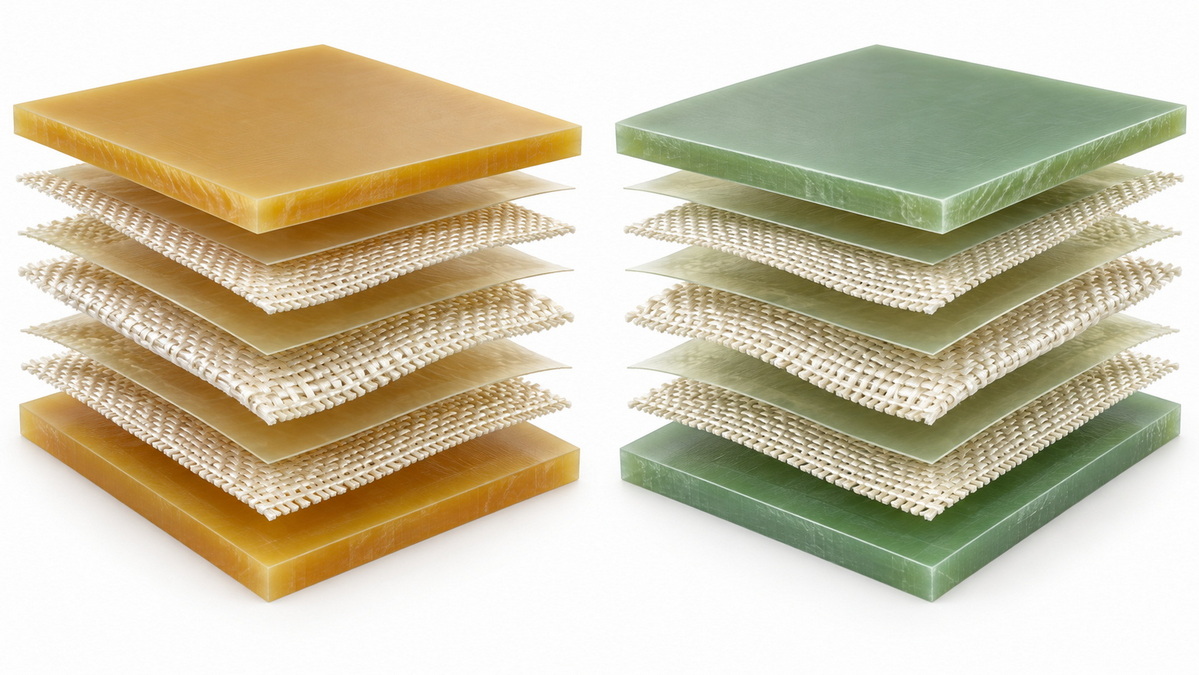
G11's elevated-temperature mechanical requirements are useful when an insulation component carries a load while hot.
Nevertheless, a short-duration strength test and long-term thermal endurance answer different questions.
A material may retain adequate strength during a particular test without demonstrating the same level of durability over prolonged exposure. Buyers should therefore request documentation that matches the intended service conditions.
Useful questions include:
- What property was measured?
- Which test method was used?
- What conditioning preceded the test?
- Does the evidence concern short-term performance or thermal aging?
- Does the report identify the product being offered?
These questions make temperature claims commercially meaningful.
Glass-transition temperature describes a change in polymer behavior. It should not be treated as an automatic continuous operating limit for an electrical insulation component.
Similarly, "high-temperature G11" does not establish a universal service rating. Different formulations and classifications can have different thermal capabilities.
A reliable proposal should distinguish glass-transition information, thermal-endurance evidence, and any recommended operating conditions.
A dielectric-strength figure is incomplete without the specimen thickness, test method, conditioning, and test environment.
Results obtained under different conditions may not support a direct comparison. A laboratory breakdown value also does not independently establish the safe working voltage of a finished assembly.
For steel plant electrical insulation, review the properties relevant to the design:
- Through-thickness electrical strength.
- Electrical performance parallel to the laminate, where applicable.
- Insulation resistance after specified conditioning.
- Required creepage and clearance distances.
- Surface and edge condition after machining.
G11's hot-strength advantage should not be interpreted as proof that every G11 product electrically outperforms every FR4 product.
Surface tracking and breakdown through the material are different failure mechanisms.
Comparative tracking index evaluates relative resistance to tracking under specified test conditions. It is therefore a separate consideration from bulk dielectric strength.
Where contamination is relevant, request the candidate product's tracking information and review the equipment's environmental limitations.
Do not assume that "high-temperature," "flame-resistant," or "glass-reinforced" automatically means superior tracking resistance.

An insulation board may also act as a support, spacer, mounting plate, or structural barrier.
Its finished geometry can be as important as its nominal material grade. Holes, slots, narrow sections, and fastener interfaces should be included in the engineering assessment.
For a loaded component, consider:
- Load direction relative to the laminate.
- Hole locations and remaining edge distances.
- Bearing loads around fasteners.
- Clamping arrangement.
- Thermal movement between adjoining materials.
- Flatness and dimensional tolerances.
- Acceptance criteria for cracks or delamination.
G11 becomes especially relevant when elevated-temperature strength is a genuine design requirement. It should not be selected merely because it sounds more advanced.
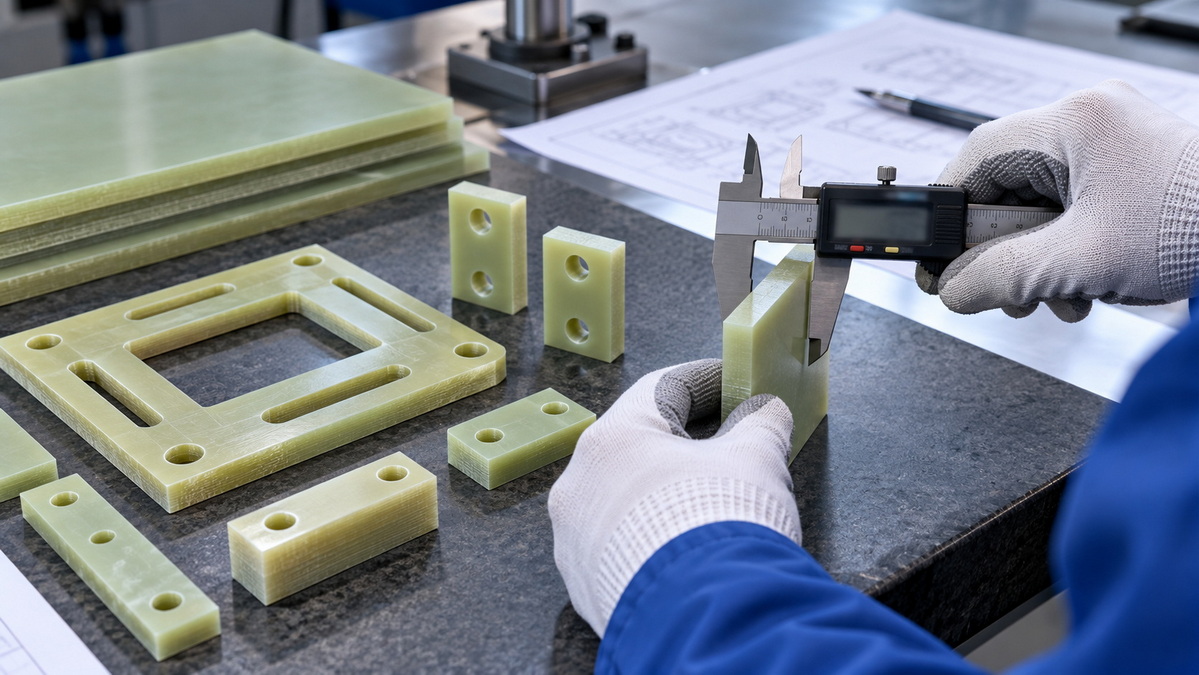
FR4 identifies a flame-resistant glass-epoxy grade, but buyers still need documentation for the required classification.
The G11 designation alone does not establish a particular flame rating. Product formulation and thickness can affect documented flammability performance.
Where both thermal capability and flame resistance matter, specify them separately.
A practical review should confirm:
1. The required flame classification.
2. The applicable material thickness.
3. The exact product identification.
4. The supporting test documentation.
5. Acceptance within the equipment specification.
Material-level flame performance should not be presented as proof of complete equipment fire safety.
Do not base selection solely on the temperature of the surrounding workshop or the presence of a nearby furnace.
Document the component's actual thermal duty across representative operating conditions. Use approved measurement methods and follow the equipment's safety procedures.
Then compare the findings with the candidate material's documented hot mechanical properties and thermal endurance.
This approach helps distinguish a material limitation from abnormal equipment heating.
Flat coupons help evaluate material properties. A representative finished component helps evaluate whether the proposed material and fabrication process meet the drawing requirements.
An agreed qualification plan can include:
- Product and batch identification.
- Thickness and flatness.
- Critical dimensions.
- Hole and slot accuracy.
- Edge condition.
- Visible defects.
- Application-relevant electrical and mechanical checks.
Define acceptance criteria before testing. A sample evaluation is more useful when both buyer and supplier understand what constitutes approval.
Consider a hypothetical insulation support showing surface damage after exposure to contamination and moisture.
Replacing it with G11 may not address the cause if the main issue is surface tracking or enclosure ingress.
By contrast, if evaluation identifies inadequate mechanical performance at the operating temperature, a verified G11 product may address the relevant limitation.
This distinction prevents an expensive grade upgrade from becoming a substitute for root-cause analysis. The example is a decision framework, not a reported customer installation.
Material selection and fabrication quality are separate responsibilities.
A correctly identified laminate can still produce an unacceptable component if dimensions, edge condition, or handling do not meet the specification.
For custom-machined G11 sheet or epoxy board, establish measurable requirements covering:
- Thickness and dimensional tolerances.
- Flatness where functionally necessary.
- Hole position and diameter.
- Permitted edge defects.
- Identification and traceability.
- Packaging protection.
Machining cured composites can also generate dust. Fabricators should assess exposure risks, apply appropriate engineering controls, and follow relevant safety information.
Finished-part inspection should verify agreed requirements rather than relying on appearance alone.
A structured purchasing process makes supplier comparisons more reliable.
Provide the component drawing and describe its electrical, thermal, mechanical, and environmental duty.
Request exact grades and product identifiers. Avoid comparing an unspecified "epoxy board" with a documented G11 product.
Check whether test methods, specimen thicknesses, and conditioning support meaningful comparison.
Confirm flame performance, tracking information, dimensional tolerances, and any equipment-specific approval requirements.
Agree on a qualification plan covering material evidence and representative finished parts.
Record the approved product, drawing revision, acceptance criteria, documentation, and traceability requirements.
This workflow turns a price comparison into a controlled material decision.
Guangdong Weishi New Materials Co., Ltd. focuses on the development, manufacture, and supply of epoxy glass-fiber boards and related composite materials, including FR4 and G10/G11 products.
Its stated business scope includes custom processing for industrial applications.
For an effective inquiry, provide:
- Component drawings.
- Intended equipment application.
- Operating conditions.
- Electrical requirements.
- Mechanical loading.
- Dimensions and tolerances.
- Order quantity.
- Required documentation.
Request a grade-specific proposal and available supporting evidence. Product certifications, thermal ratings, and test results should be verified for the proposed material rather than inferred from the company description.
The right choice between G11 sheet and general-purpose epoxy board depends on documented suitability, not the grade name alone.
G11 deserves consideration when elevated-temperature mechanical performance addresses a real requirement. A specified G10 or FR4 product may remain appropriate when its verified properties satisfy the complete duty.
For your next steel plant insulation project, send Guangdong Weishi New Materials Co., Ltd. your component drawing and operating requirements. Request a grade-specific recommendation, available qualification documentation, and a sample evaluation plan before approving production.
Yes. G11 is a glass-reinforced epoxy laminate. The useful comparison is between G11 and a specified alternative, such as G10 or FR4.
No. G11 is particularly relevant when elevated-temperature mechanical performance matters. FR4 may be suitable when its documented properties meet the complete application requirements.
No. The grade name does not establish a universal continuous-service limit. Verify the exact product's thermal-endurance evidence and suitability for the equipment.
No. Test conditions and assembly geometry matter. Laboratory results must be interpreted within the finished equipment's design requirements.
Not automatically. Tracking resistance requires separate assessment, and the equipment's environmental limitations still apply.
Include the drawing, required performance criteria, operating conditions, electrical duty, dimensions, tolerances, quantity, and documentation requirements.
1.The Gund Company, "A Review of High Temperature Glass Epoxy Laminate Materials." Supports the distinctions among G10, FR4, G11, and FR5; hot flexural performance; thermal-endurance terminology; and the need for comparative qualification. [thegundcompany]
2.The Gund Company, "NEMA FR4 Glass Epoxy Laminate." Supports the discussion of product-specific electrical properties, flammability documentation, test conditions, and limitations of typical data. [thegundcompany]
3.International Electrotechnical Commission, "New Commented Version of Standard for Determining RTI of Insulating Materials." Explains the role of IEC 60216-5 in evaluating relative thermal endurance. [iec]
4.UL Solutions, "Comparative Tracking Index (CTI) IEC 60112." Supports the distinction between surface tracking resistance and other electrical insulation properties. [ul]
5.Schneider Electric, "Inspection and Maintenance — SureSeT MV Indoor Switchgear." Supports the discussion of equipment environmental limitations and contamination considerations. [productinfo.se].xml/$/InspectionAndMaintenance-A092B399)
6.Occupational Safety and Health Administration, "OSHA Technical Manual, Section III, Chapter 1." Supports the discussion of dust generation during composite machining and relevant engineering controls. [osha]


