
Views: 221 Author: Weishi Sheets Publish Time: 2026-10-04 Origin: Site
Content Menu
● Why China Is a Major Source of Epoxy Glass Sheets
● What Defines a Reliable Epoxy Glass Sheet Manufacturer?
● Top 10 Epoxy Glass Sheet Manufacturers in China
>> 1. Guangdong Weishi New Materials Co., Ltd.
>>> Core Advantages
>>> OEM and Custom Processing Support
>> 2. Shengyi Technology Co., Ltd.
>>> Core Advantages
>>> Best-Fit Buyers
>> 3. Kingboard Laminates Holdings Ltd.
>>> Core Advantages
>>> Best-Fit Buyers
>> 4. Nan Ya Electronic Materials
>>> Core Advantages
>>> Best-Fit Buyers
>> 5. Hebei JingHong Electronic Technology Co., Ltd.
>>> Core Advantages
>>> Best-Fit Buyers
>> 6. Anhui AHD Polymer Material Technology Co., Ltd.
>>> Core Advantages
>>> Best-Fit Buyers
>> 7. Shenyang Youda Insulation Materials
>>> Core Advantages
>>> Best-Fit Buyers
>> 8. Xinxing Insulation Materials
>>> Core Advantages
>>> Best-Fit Buyers
>> 9. Wuxi Chifeng and Similar One-Stop Insulation Material Suppliers
>>> Core Advantages
>>> Best-Fit Buyers
>> 10. Hony Engineering Plastics
>>> Core Advantages
>>> Best-Fit Buyers
● FR4, G10, G11, and 3240: What Is the Difference?
● Common Problems When Buying Epoxy Glass Sheets
● The Overlooked Inspection Method: Check the Cut Edge
● How to Verify a Supplier Before Ordering
>> Confirm the Legal Company Identity
>> Review Quality Documentation
>> Request a Sample Before Mass Production
>> Conduct Pre-Shipment Inspection
● Logistics and Packaging Considerations
● Summary
>> 1. How can I verify whether an ISO 9001 certificate is still valid?
>> 2. Is FR4 always better than G10?
>> 3. Can 3240 epoxy glass laminate replace FR4?
>> 4. What should I test before placing a production order?
>> 5. What is a realistic MOQ for custom FR4 or G10 sheets?
China is one of the world's most important manufacturing centers for epoxy glass sheets and fiberglass-reinforced insulation laminates. Buyers can source a broad range of FR4 sheets, G10 sheets, G11 sheets, 3240 epoxy sheets, FR5 materials, antistatic laminate boards, copper-clad insulation boards, and CNC-machined electrical insulation components from Chinese manufacturers.
For procurement managers, however, the key challenge is not finding a supplier name. The real challenge is identifying a manufacturer that can consistently deliver the required material grade, thickness tolerance, electrical performance, mechanical strength, flame-retardant level, and export packaging quality.
A low quotation may appear attractive at the beginning of a sourcing project, but the actual cost can increase quickly when materials fail during machining, crack under stress, absorb excessive moisture, delaminate at elevated temperatures, or do not meet the required electrical insulation standard.
This guide introduces ten notable epoxy glass sheet manufacturers in China from the perspective of global industrial buyers. It also explains how to compare suppliers, verify documentation, avoid material substitution, and build a more reliable sample-to-production purchasing process.
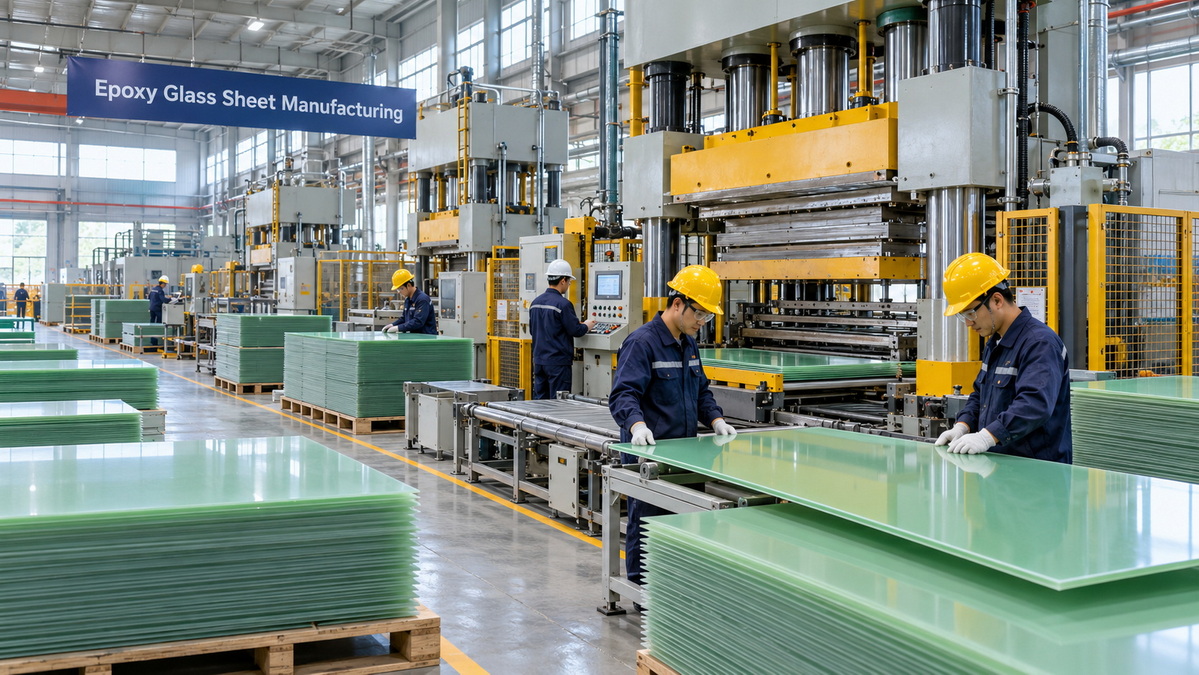
China has developed a mature industrial supply chain for electrical insulation materials, epoxy resin composites, fiberglass reinforcements, PCB materials, CNC-machined insulation components, and export packaging solutions.
The country benefits from close integration between upstream and downstream industries. Epoxy resin suppliers, fiberglass fabric producers, laminate press factories, copper-clad laminate manufacturers, CNC machining workshops, electrical-equipment producers, and international logistics companies are often located within the same industrial regions.
This creates practical advantages for international buyers:
- Broad access to FR4, G10, G11, FR5, 3240, EPGC201, EPGC202, and related insulation grades.
- Flexible options for standard sheets, cut-to-size panels, and machined parts.
- Competitive costs for medium-volume and high-volume orders.
- Strong supply support for electronics, electrical equipment, battery systems, machinery, mold making, and industrial automation.
- Access to major export ports, including Shenzhen, Guangzhou, Shanghai, Ningbo, Qingdao, and Xiamen.
- Easier consolidation of related materials such as GPO-3 sheets, phenolic laminates, mica sheets, PTFE components, and engineering plastics.
Guangdong remains especially important because of its close connection to electronics manufacturing, battery manufacturing, PCB production, industrial equipment assembly, and export-oriented supply chains. Dongguan, Shenzhen, Huizhou, Foshan, and Guangzhou provide strong industrial networks for manufacturers that serve overseas customers.
A reliable supplier should be evaluated through measurable manufacturing and quality factors rather than catalog design, product photos, or a low initial price.
A genuine epoxy glass sheet manufacturer should be able to explain its production process, material structure, and inspection procedure. It should understand the difference between G10, FR4, G11, FR5, and 3240 epoxy glass laminates.
During supplier qualification, buyers should ask:
- Is the company a direct manufacturer, a converter, or a trading company?
- Does the factory laminate sheets in-house?
- What fiberglass cloth is used in the material?
- What epoxy resin system is used for each grade?
- Can the supplier provide standard sheets and custom dimensions?
- Is CNC drilling, routing, milling, or cutting completed in-house?
- Does the manufacturer maintain batch inspection records?
- Can it support long-term production consistency?
A factory that gives clear and technically accurate answers is usually more suitable for long-term cooperation than a supplier that only repeats generic product descriptions.
Epoxy glass sheet products may look similar, especially when they are supplied in green, yellow, black, or natural colors. However, visual appearance does not confirm material grade.
A professional manufacturer should be able to provide information about:
- Fiberglass cloth construction
- Resin type
- Flame-retardant formulation
- Thickness tolerance
- Density
- Dielectric strength
- Water absorption
- Flexural strength
- Thermal resistance
- Surface finish
- Color options
- Machining behavior
- Recommended applications
For example, a buyer may need a high-voltage insulation plate for a battery pack, while another customer may only require machinable material for industrial fixtures. These projects should not automatically use the same grade.
Reliable suppliers should be prepared to provide documentation relevant to the material and destination market. Depending on the application, this may include:
- ISO 9001 quality management documentation
- RoHS declarations
- REACH declarations
- UL-related flame-retardant documentation
- Material safety information
- Product data sheets
- Inspection reports
- Third-party laboratory reports
- Batch traceability records
- Dimensional inspection reports
- Certificate validity information
Documentation should match the actual product grade being quoted. A general report for a different thickness, resin formulation, or product family may not be sufficient for a critical application.
Stable delivery is particularly important for buyers serving electrical-equipment manufacturers, electronics assemblers, industrial automation companies, and battery-system producers.
Before placing a production order, buyers should clarify:
- Standard production lead time
- Raw material availability
- Stock sheet availability
- Custom thickness lead time
- CNC machining lead time
- Packaging procedure
- Pallet and crate options
- LCL and FCL shipping recommendations
- Production capacity during peak season
- Pre-shipment inspection arrangements
A supplier that communicates delivery limitations early is generally more reliable than one that promises unrealistic lead times.
| Manufacturer | Main Strength | Core Product Focus | Customization Capability | Best Suited For |
|---|---|---|---|---|
| Guangdong Weishi New Materials Co., Ltd. | Flexible industrial insulation manufacturing | FR4, G10, G11, 3240, FR5, antistatic boards | Strong support for custom size and processing | SMEs, OEM projects, industrial buyers |
| Shengyi Technology Co., Ltd. | Advanced electronic laminate development | FR4, CEM materials, prepreg, electronic base materials | Suitable for large technical programs | PCB, electronics, automotive electronics |
| Kingboard Laminates Holdings Ltd. | Integrated laminate and chemical supply | Glass epoxy laminates, paper laminates, CEM materials | Strong for standardized volume supply | Electronics and PCB supply chains |
| Nan Ya Electronic Materials | Electronics-material manufacturing background | Copper-clad laminates and glass epoxy prepreg | Mainly electronics-oriented | PCB and electronic-material buyers |
| Hebei JingHong Electronic Technology | Broad insulation-board product range | FR4, G10, 3240, Bakelite, phenolic sheets | Standard and custom sheet sizes | General industrial insulation sourcing |
| Anhui AHD Polymer Material Technology | Machining-oriented material supply | G10, FR4 sheets, rods, fabricated parts | Strong for CNC-machined components | Mechanical and electrical equipment makers |
| Shenyang Youda Insulation Materials | Long-term electrical insulation expertise | Sheets, rods, tubes, mica, composites | Drawing-based production support | Transformers and electrical equipment |
| Xinxing Insulation Materials | Thermoset rigid composite specialization | G10, FR4, G11, epoxy fiberglass sheets | Standard and export-oriented supply | General insulation material purchasing |
| Wuxi Chifeng and similar suppliers | One-stop insulation-material sourcing | FR4, CCL, rods, tubes, related boards | Mixed-order support | Buyers consolidating multiple materials |
| Hony Engineering Plastics | Engineering-plastic and insulation material range | G10, FR4 sheets, rods, engineering plastics | Cut-to-size and mixed-material support | Prototype and multi-material projects |
Guangdong Weishi New Materials Co., Ltd. is a professional manufacturer and supplier of high-performance epoxy insulation sheets and composite materials. The company focuses on products such as FR4 epoxy glass sheets, G10 sheets, G11 sheets, 3240 epoxy glass cloth laminates, FR5 sheets, antistatic insulation boards, copper-clad laminates, GPO-3 sheets, mica sheets, phenolic boards, and related industrial insulation materials.
Established in 2007, the company has developed experience in serving customers in electronics, electrical equipment, industrial machinery, battery systems, mold manufacturing, precision machining, and other insulation-related applications.
Its manufacturing profile is particularly suitable for buyers looking for practical material solutions rather than only standard sheet products. Instead of focusing exclusively on large-volume electronic-substrate programs, Guangdong Weishi New Materials can support customers that require non-standard thicknesses, custom panel sizes, precision cutting, processing support, and clearer technical communication during the sample stage.
- Broad coverage of epoxy glass laminate grades and related insulation materials.
- Suitable for FR4, G10, G11, 3240, FR5, antistatic, copper-clad, and composite insulation projects.
- Flexible support for custom thicknesses, cut-to-size panels, and non-standard dimensions.
- Strong fit for small and medium-sized industrial buyers and OEM projects.
- Supports applications that require drilling, CNC routing, slotting, milling, or shaped insulation parts.
- Familiar with the practical needs of electrical-equipment, battery, machinery, and industrial component buyers.
- Focuses on stable material quality, responsive communication, and export-oriented packaging requirements.
Guangdong Weishi New Materials is well suited to customers that need insulation sheets for:
- Lithium-ion battery packs and battery enclosures
- Electrical control cabinets
- High-voltage insulation barriers
- Transformer components
- Motor insulation parts
- Busbar supports
- CNC-machined electrical insulation components
- Industrial fixtures
- Mold insulation parts
- Electronics equipment
- Mechanical wear-resistant components
- Structural laminate components
Many industrial buyers do not only need a full 1220 × 2440 mm sheet. They may need pre-cut panels, drilled insulation boards, CNC-routed components, protective barriers, or application-specific shapes.
Guangdong Weishi New Materials is a suitable candidate for buyers requiring:
- Customized sheet dimensions
- Custom thickness requirements
- Small-batch trial orders
- Cut-to-size panels
- CNC-drilled holes
- Routed slots and profiles
- Edge finishing
- Machined insulation parts based on drawings
- Export pallet packaging
- OEM labeling and packaging support
For a buyer developing a new battery pack, electrical cabinet, or industrial control system, working with a supplier that can discuss material selection and machining requirements before mass production can reduce downstream assembly risks.
Shengyi Technology is one of China's most recognized manufacturers of electronic circuit base materials. Founded in 1985, the company has built a strong position in electronic laminates, copper-clad laminates, prepreg materials, flame-retardant epoxy glass fabric laminates, metal-based materials, flexible circuit materials, and advanced electronic-material applications.
The company is closely associated with the Dongguan electronics manufacturing ecosystem. Its business is especially relevant to PCB manufacturers, automotive-electronics suppliers, telecom-equipment producers, server manufacturers, and high-reliability electronic-material buyers.
- Long-term experience in electronic circuit base materials.
- Strong research and development capability.
- Broad electronic laminate portfolio.
- Suitable for high-volume and specification-driven projects.
- Relevant for FR4, CEM materials, prepreg, thermal-management materials, and electronic substrate applications.
- Strong connection to the electronics and PCB supply chain.
Shengyi Technology is generally most suitable for buyers that require advanced electronic laminate materials or large-scale supply continuity for PCB-related applications.
It may be less flexible than a dedicated industrial insulation-board supplier for small custom machining orders, low-volume non-standard sheets, or highly specific industrial components. Buyers should clearly identify whether they need an electronic circuit laminate or an industrial insulation laminate before selecting a supplier.
Kingboard Laminates is a major laminate manufacturer with a long history in China's electronics-material industry. The group established its first laminate manufacturing plant in Shenzhen in 1988 and has expanded into laminates, printed circuit boards, chemicals, and related industrial businesses.
Its product scope includes glass epoxy laminates, paper laminates, and CEM laminates. The company's vertically integrated supply chain is an important advantage for customers that require standardized materials, supply continuity, and large-scale manufacturing support.
- Long manufacturing history in the laminate industry.
- Strong integration between laminate production, chemicals, and PCB-related operations.
- Broad experience with glass epoxy laminate materials.
- Suitable for standardized and high-volume purchasing programs.
- Strong presence in the Greater Bay Area manufacturing ecosystem.
- Relevant to electronics, PCB, and industrial-material supply chains.
Kingboard is generally a stronger fit for large electronics manufacturers, PCB companies, laminate distributors, and established procurement teams with stable purchasing volumes.
For buyers seeking custom-cut FR4 insulation parts, small quantities, or specialized machining support, a flexible industrial insulation manufacturer may be more appropriate.
Nan Ya is part of a large materials group with long-standing experience in plastics, chemical materials, and electronic materials. Its operations in China include electronic-material manufacturing capacity in Huizhou, Guangdong.
The company is associated with copper-clad laminates, glass epoxy prepreg, and related electronic-material products. Its supply structure is most relevant to PCB manufacturers, electronics-material buyers, and customers requiring structured quality management for large electronics-related programs.
- Strong materials-group background.
- Broad industrial experience in plastics and electronic materials.
- Relevant product categories include copper-clad laminates and glass epoxy prepreg.
- Suitable for electronics-material supply chains.
- Located in Guangdong, close to major electronics manufacturing regions.
Nan Ya is primarily relevant for PCB manufacturing, electronic laminates, copper-clad laminate programs, and high-volume electronics-material procurement.
Buyers seeking rigid industrial FR4 insulation boards should confirm the exact product category, material construction, and availability for their intended application.
Hebei JingHong Electronic Technology is known in the Chinese insulation-material market for supplying products such as FR4 sheets, G10 epoxy glass laminates, 3240 epoxy sheets, Bakelite sheets, and phenolic cotton laminates.
The company is relevant for buyers that need a wide selection of traditional electrical insulation boards for mechanical equipment, industrial fixtures, machining applications, and general electrical insulation projects.
- Broad insulation-board material range.
- Covers FR4, G10, 3240, Bakelite, phenolic, and related material categories.
- Suitable for standard sheets and customized dimensions.
- Relevant for industrial insulation and mechanical machining applications.
- Useful for buyers comparing conventional laminate options.
Hebei JingHong may suit buyers that need standard epoxy glass sheets, phenolic sheets, or general-purpose insulation boards. It is also relevant for buyers comparing different material grades for machinery, tooling, electrical equipment, or fabricated insulation components.
Buyers should confirm the exact performance level of each product grade, especially when comparing 3240, G10, and FR4 materials.
Anhui AHD Polymer Material Technology is an engineering-material supplier with product coverage extending to G10 sheets, FR4 sheets, rods, and machined components. The company is especially relevant to buyers that require a material supplier with CNC cutting and machining capability.
Rather than receiving a large sheet and handling machining internally, some buyers prefer to receive ready-to-assemble insulation parts. This can reduce internal processing time, material waste, dimensional variation, and handling damage.
- Offers G10 and FR4 sheets together with rods and fabricated parts.
- Suitable for drawing-based machining projects.
- Can support drilling, cutting, milling, and CNC-shaped components.
- Relevant for industrial equipment, automation systems, mechanical fabrication, and electrical components.
- Useful for customers that need finished parts rather than raw sheet materials only.
AHD is a practical option for customers needing machined G10 or FR4 components such as brackets, plates, spacers, electrical barriers, insulation blocks, and precision parts.
Buyers should request a drawing confirmation, tolerance statement, first-article sample, and inspection report before releasing a production order.
Shenyang Youda is a long-established supplier of electrical insulation materials. Its product range includes laminated sheets, insulation rods, tubes, molded products, composite materials, prepreg materials, insulating paper, mica products, insulation coatings, and engineering plastics.
Its broad product coverage can be valuable for industrial buyers that want to consolidate several insulation material categories into one sourcing project.
- Long-term presence in the electrical insulation material sector.
- Broad range of insulation sheets, rods, tubes, mica products, and composite materials.
- Suitable for mixed insulation-material purchasing.
- Can support drawing-based industrial components.
- Relevant for electrical equipment, transformers, motors, and maintenance applications.
Shenyang Youda may be appropriate for transformer manufacturers, motor manufacturers, electrical repair companies, switchgear assemblers, and industrial buyers requiring multiple insulation products in one shipment.
Before approving production, buyers should confirm the factory's current quality documentation, product-specific testing ability, and scope of machining support.
Xinxing is a supplier focused on thermoset rigid composites and insulation laminates. Its product range includes G10, FR4, G11, epoxy fiberglass sheets, and related industrial insulation materials.
The company is relevant for buyers seeking conventional epoxy glass laminate grades for electrical insulation, machining, mechanical support, and industrial component applications.
- Focus on thermoset rigid composite materials.
- Product portfolio includes G10, FR4, G11, and epoxy fiberglass sheets.
- Suitable for standard insulation laminate sourcing.
- Relevant to industrial machinery, electrical equipment, and mechanical processing.
- Useful for comparing different epoxy glass material grades.
Xinxing may suit procurement teams seeking standard G10, FR4, or G11 sheets for general industrial use. Buyers should clarify the required material standard, flame-retardant requirement, thickness tolerance, and thermal-performance level before comparing quotations.
Wuxi and the wider Jiangsu region are important sourcing areas for industrial materials, engineering plastics, electrical insulation products, and CNC-machining support.
Suppliers in this category often provide FR4 sheets, epoxy fiberglass sheets, insulation rods, insulation tubes, phenolic laminates, silicone rubber sheets, PTFE components, copper-clad laminates, and related electrical insulation materials.
The main advantage of this supplier category is sourcing convenience. Buyers can purchase several materials in one order instead of managing separate vendors for each insulation material family.
- Broad selection of electrical insulation materials.
- Suitable for consolidated purchasing.
- Can support mixed orders of sheets, rods, tubes, and related components.
- Useful for industrial maintenance, electrical assembly, and material distribution projects.
- Convenient for buyers sourcing several materials for one production program.
This type of supplier is suitable for buyers who need to combine FR4 sheets with other materials, including phenolic boards, PTFE, silicone rubber, mica products, engineering plastics, or copper-clad materials.
For highly regulated or safety-critical applications, buyers should confirm whether the supplier manufactures the material directly or sources it from an upstream laminate factory.
Hony Engineering Plastics supplies engineering plastics and industrial insulation materials, including FR4 sheets, G10 sheets, rods, and fabricated components. Its product range is useful for buyers that need to source multiple engineering materials for a single industrial assembly project.
For example, an equipment manufacturer may require FR4 electrical insulation panels, PEEK bushings, PTFE seals, POM machine parts, and nylon components. A mixed-material supplier can simplify procurement and reduce the number of shipments.
- Combines epoxy glass laminate materials with engineering plastics.
- Offers FR4 and G10 sheets and rods.
- Suitable for cut-to-size and machining-related projects.
- Supports mixed-material industrial orders.
- Relevant for mechanical, electrical, automation, and prototype applications.
Hony is useful for buyers combining FR4 or G10 with PEEK, POM, PTFE, nylon, PPS, or other engineering materials. Buyers should confirm the source of the epoxy glass sheet material and request product-specific technical documentation for critical applications.
Epoxy glass laminate materials are often grouped together in supplier catalogs, but they are not interchangeable.
| Grade | Typical Structure | Flame-Retardant Performance | Heat Resistance | Common Applications | Buyer Focus |
|---|---|---|---|---|---|
| G10 | Fiberglass cloth reinforced with epoxy resin | Usually not flame-retardant | Moderate | Mechanical insulation, fixtures, structural components | Confirm whether flame retardancy is needed |
| FR4 | Fiberglass cloth reinforced with flame-retardant epoxy resin | Commonly selected for flame-retardant applications | Moderate | Electrical insulation, PCB-related use, battery packs | Request proof of actual flame performance |
| G11 | High-temperature epoxy fiberglass laminate | Depends on formulation | Higher than standard G10 or FR4 | Motors, transformers, high-temperature insulation | Confirm thermal rating and retained strength |
| FR5 | High-temperature flame-retardant epoxy glass laminate | Commonly flame-retardant | Higher-temperature use | Demanding electrical and electronics applications | Confirm resin system and thermal data |
| 3240 | General epoxy glass cloth laminate | Not automatically equivalent to FR4 | General-purpose | Industrial insulation, machinery, tooling | Do not treat it as an automatic FR4 substitute |
| EPGC201 | Epoxy glass laminate designation | Depends on product formulation | Product-specific | Internationally specified industrial laminates | Confirm test standard and actual product grade |
| EPGC202 | Flame-retardant epoxy glass laminate designation | Commonly associated with FR4-type materials | Product-specific | Electrical and electronics insulation | Confirm lot-specific performance records |
A reliable supplier should be able to explain the difference between these grades and recommend a suitable option based on the actual operating environment.

The most common risk is receiving a lower-grade material than the one specified.
Examples include:
- G10 supplied instead of FR4.
- 3240 supplied as a substitute for FR4.
- Lower-density fiberglass laminate supplied at a lower price.
- Material with reduced glass-fiber reinforcement.
- Generic epoxy sheets labeled as high-temperature G11.
- Standard boards sold as antistatic materials without verified surface-resistance values.
- Old stock or mixed batches used for custom orders.
The difference may not be visible at first glance. The board may have a similar color and surface finish but may perform differently during machining, electrical testing, exposure to humidity, or long-term heat aging.
A sheet quoted as 3.0 mm may not remain 3.0 mm across the full surface. Thickness variation can cause problems in precision assemblies, battery systems, electrical enclosures, or machined components.
Buyers should define:
- Nominal thickness
- Minimum and maximum thickness tolerance
- Measurement points
- Flatness requirement
- Surface finish
- Corner condition
- Sheet size tolerance
Low-quality epoxy glass sheets may chip excessively, crack near drilled holes, delaminate during routing, or create uneven edges.
For parts requiring CNC machining, buyers should provide:
- CAD drawings
- Critical dimensions
- Hole diameters
- Slot positions
- Tolerance requirements
- Edge-finish requirements
- Quantity per batch
- Assembly function
- Required inspection points
A sample machining test can prevent major problems before mass production.
Some suppliers may provide generic test reports that do not match the quoted product. Buyers should confirm that the documentation applies to:
- The same material grade
- The same thickness range
- The same resin formulation
- The same flame-retardant requirement
- The same product family
- The same manufacturing entity
- The current production period
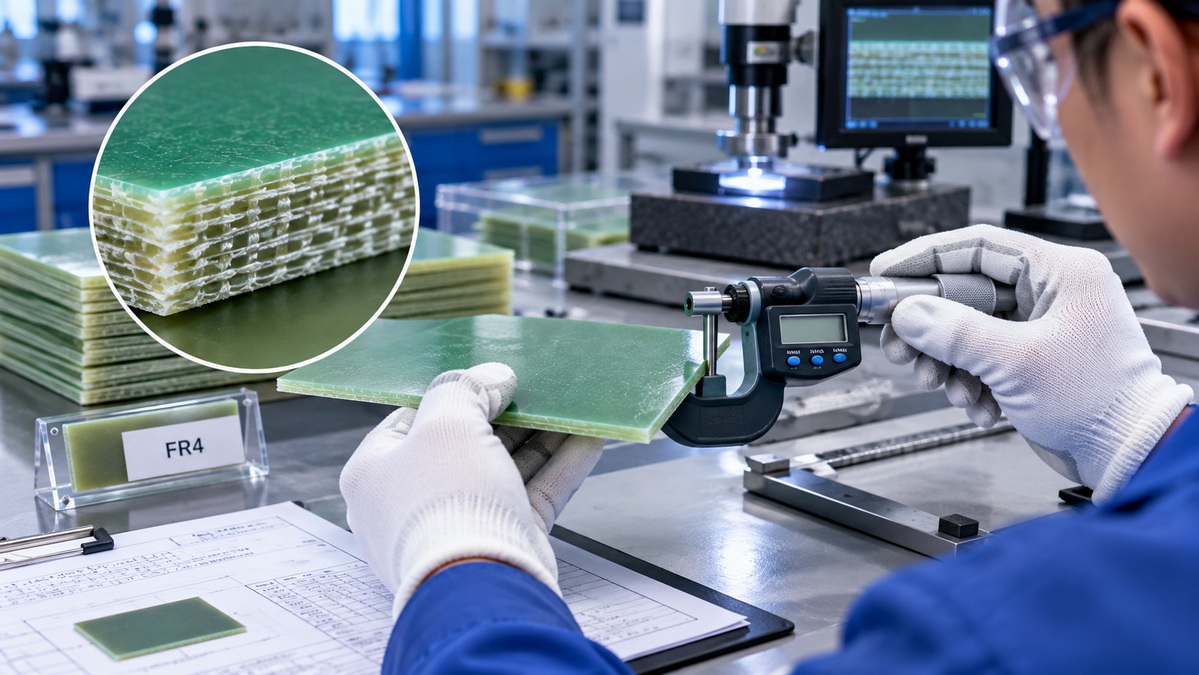
A polished sheet surface can look clean even when the internal laminate structure is inconsistent. One of the most practical ways to inspect epoxy glass sheet quality is to examine a freshly cut edge.
The cut edge can reveal information that is not visible on the sheet surface.
Look for:
- Even fiberglass layer distribution
- Consistent resin penetration
- No large air bubbles or voids
- No dry fiberglass zones
- No obvious delamination
- No irregular layer separation
- Controlled chipping after cutting
- Uniform internal color and structure
For important projects, buyers should request both a full sample sheet and a small cross-cut sample piece. The supplier should also provide thickness measurements from multiple points across the sheet.
This simple inspection method is especially useful for buyers comparing suppliers with similar prices but different material consistency.
Start by confirming:
- Full legal company name
- Registered address
- Factory address
- Main contact person
- Telephone number
- Website domain
- Bank account name
- Export entity name
- Business scope
- Manufacturing or trading status
The name on the quotation, contract, bank account, certificate, and packaging documents should be consistent.
Ask for current documentation relevant to your project.
Key items may include:
- ISO 9001 certificate
- RoHS declaration
- REACH declaration
- Material data sheet
- Inspection report
- Product test report
- Flame-retardant documentation
- Factory audit report
- Third-party inspection records
- Batch traceability information
When reviewing an ISO certificate, verify the certificate number, issuing organization, expiration date, legal company name, factory address, and scope.
A valid certificate should clearly state whether the organization is certified for manufacturing, processing, distribution, or another activity.
A sample should be treated as a technical approval stage, not simply a free product.
A structured sample process should include:
1. Material specification confirmation.
2. Sample production or stock-sample identification.
3. Dimensional inspection.
4. Visual inspection.
5. Mechanical evaluation.
6. Electrical insulation testing if required.
7. Machining test if parts will be CNC processed.
8. Sample approval record.
9. Production-order release.
For critical projects, retain an approved sample for comparison with future deliveries.
Before shipment, verify:
- Sheet quantity
- Thickness
- Dimensions
- Flatness
- Color
- Surface condition
- Edge condition
- Package markings
- Carton or pallet strength
- Moisture protection
- Batch labels
- Export documents
- Packing list accuracy
For larger orders, third-party inspection can be useful. Buyers can also ask for production photos, packing photos, pallet photos, and container-loading photos.
Epoxy glass sheets are rigid but can still be damaged during transport. Corners can chip, sheets can scratch, and poor pallet support can cause edge damage or warping.
For export shipments, buyers should discuss:
- Protective surface film
- Corner guards
- Moisture-resistant wrapping
- Plywood pallets or fumigated wooden pallets
- Pallet dimensions
- Carton protection
- Maximum stacking height
- LCL cargo handling risk
- Container loading method
- Shipping marks
- Insurance requirements
LCL shipments involve more cargo handling than full-container shipments. For valuable sheets or precision-machined parts, stronger edge protection and individual protective packaging are recommended.
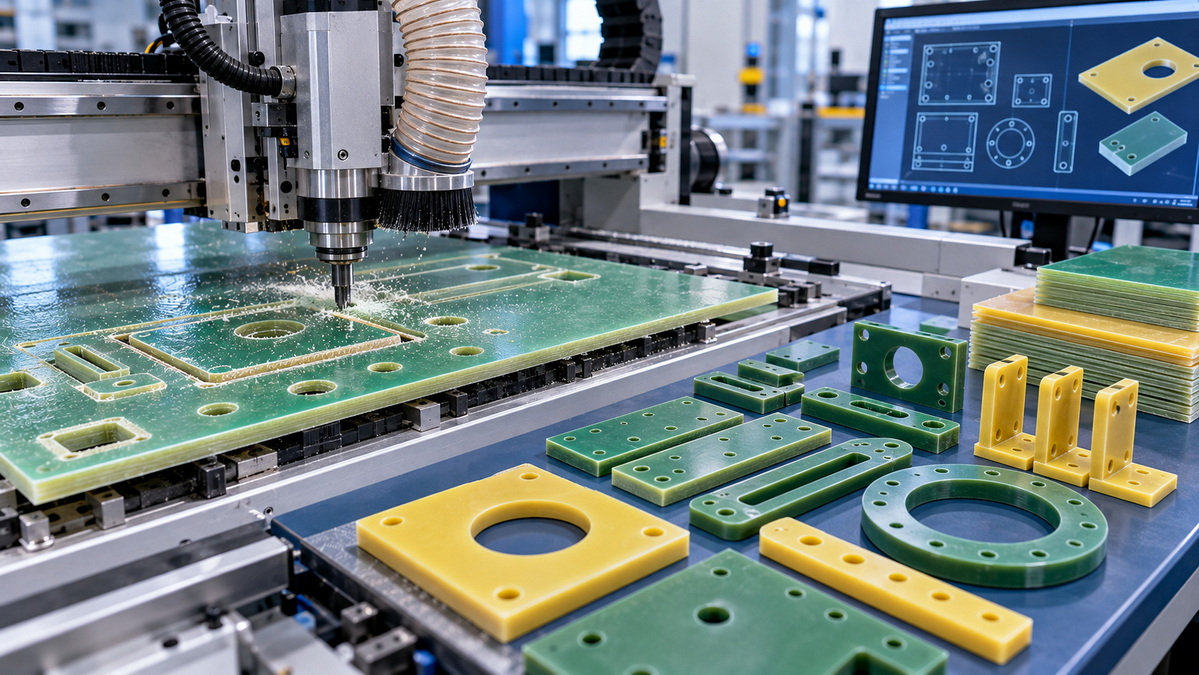
China provides a wide range of epoxy glass sheet sourcing options, from large electronic-laminate groups to flexible industrial insulation manufacturers. The right supplier depends on whether the buyer needs advanced electronic materials, high-volume standard laminates, custom sheet dimensions, CNC-machined parts, mixed insulation materials, or responsive support for OEM projects.
For buyers requiring flexible support across FR4, G10, G11, 3240, FR5, antistatic sheets, copper-clad materials, and customized insulation components, Guangdong Weishi New Materials Co., Ltd. is a practical manufacturer to evaluate. Its product range and customization capability make it relevant for industrial equipment producers, electrical component manufacturers, battery-related projects, machinery companies, mold makers, and small-to-medium-sized OEM customers.
A reliable sourcing process should always begin with a clear specification, followed by document review, representative sampling, application testing, production confirmation, and pre-shipment inspection. Buyers that follow this process can reduce the risk of material substitution, unexpected machining problems, inconsistent performance, and shipping damage.
Request the full certificate rather than a screenshot or logo. Check the certificate number, issuing certification body, company name, factory address, certificate scope, issue date, and expiry date. Where available, search the certification body's online database or contact the issuing organization directly.
No. FR4 is commonly chosen when flame-retardant performance is required. G10 may be suitable for applications that require good mechanical strength and electrical insulation but do not require flame-retardant performance. The right material depends on the application environment, regulatory requirements, temperature, voltage, humidity exposure, and mechanical load.
Not automatically. Both materials belong to the epoxy glass laminate family, but they may differ in flame-retardant performance, resin composition, electrical properties, thermal resistance, and application suitability. Any substitution should be reviewed through material data, sample testing, and engineering approval.
At minimum, inspect thickness, dimensions, flatness, surface condition, edge structure, density, drilling behavior, and machining performance. For electrical or safety-critical applications, test dielectric strength, insulation resistance, flame performance, water absorption, flexural strength, and thermal stability as required.
MOQ depends on thickness, dimensions, color, resin formulation, product grade, processing requirements, and whether the material is standard stock or made to order. Standard sheet sizes may have lower trial-order requirements, while custom thicknesses, antistatic grades, high-temperature laminates, and CNC-machined parts may require larger minimum quantities.
1. [Guangdong Weishi New Materials Co., Ltd.]
2. [GB/T 1303.4-2009 Electrical Thermosetting Resin Industrial Rigid Laminated Sheets]
3. [General Administration of Customs of the People's Republic of China]
4. [Shengyi Technology Co., Ltd.]
5. [Kingboard Holdings Limited]


