
Views: 266 Author: Weishi Sheets Publish Time: 2026-09-20 Origin: Site
Content Menu
● How to Evaluate a Fiberglass Sheet Supplier
>> Material Grade Transparency
>> Manufacturing and Processing Capability
>> Documentation and Compliance Support
● Understanding Fiberglass Sheet Categories
● Top Fiberglass Sheets Manufacturers and Suppliers Serving Canada
>> 1. Guangdong Weishi New Materials Co., Ltd.
>>> Core Advantages
>>> OEM and Custom Processing Scope
>>> Core Advantages
>> 3. RPS Composites / Polyfab
>>> Core Advantages
>>> Core Advantages
>>> Core Advantages
>>> Core Advantages
>> 7. Canada Plastics & Belting Inc.
>>> Core Advantages
>> 8. Atlas Fibre / Polymershapes Network
>>> Core Advantages
● FR4, G10, G11, and FRP: Key Differences
● Common Fiberglass Sheet Sourcing Problems
>> Inadequate Export Packaging
● An Important Quality Check That Many Buyers Miss
● Buyer's Guide for Canadian Importers
>> Define the Application Clearly
>> Approve Samples Before Volume Production
>> Calculate the Total Landed Cost
>> Confirm Packaging Before Shipment
>> How can I verify whether a supplier's ISO certificate is still valid?
>> Is FR4 always suitable for high-voltage battery-pack insulation?
>> Can G10 be used instead of FR4?
>> How can I prevent a supplier from replacing FR4 with a lower-grade epoxy sheet?
>> What should I inspect when receiving fiberglass sheets?
Canada is an important North American market for fiberglass sheets, FRP panels, glass-epoxy laminates, and engineered composite components. The country has established strengths in industrial fabrication, transportation, infrastructure, mining, chemical processing, aerospace-related manufacturing, and composite distribution.
For procurement managers, however, "fiberglass sheet" is not a single product category. A hygienic FRP wall panel, a structural pultruded fiberglass plate, and an FR4 epoxy insulation board may all contain glass fiber reinforcement, but they serve very different applications and require different performance criteria.
The right supplier is therefore not necessarily the one located nearest to the final project. A stronger choice is a supplier that can consistently meet requirements for material grade, mechanical strength, flame resistance, electrical insulation, dimensional stability, surface finish, machining performance, documentation, packaging, and delivery reliability.
This article reviews notable manufacturers and suppliers serving the Canadian market. It includes Canadian composite distributors, structural FRP specialists, wall-panel suppliers, and Guangdong Weishi New Materials Co., Ltd., an export-oriented manufacturer focused on FR4, G10, G11, epoxy fiberglass sheets, and customized electrical insulation materials.
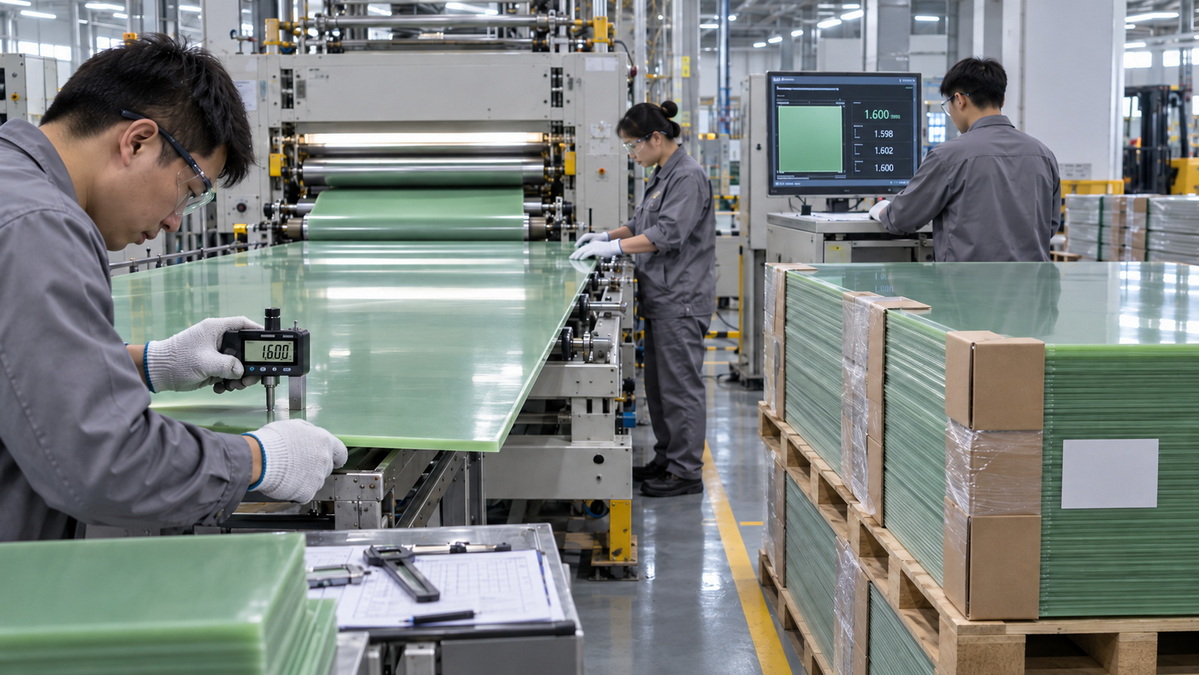
Professional sourcing requires more than comparing unit prices. A low initial quotation can become expensive if the supplier delivers inconsistent thickness, undocumented flame performance, poor machining behavior, weak packaging, or delayed replacement material.
A reliable fiberglass sheet supplier should be assessed across several areas.
The supplier should clearly identify the material being quoted. The description should include the resin system, reinforcement type, flame-retardancy status, thickness range, standard sheet size, density where applicable, and intended application.
For example, an FR4 epoxy fiberglass sheet is generally used for electrical insulation, high-voltage equipment, battery pack barriers, transformer components, CNC fixtures, and precision-machined industrial parts. A polyester FRP wall panel, by contrast, is more suitable for cleanable commercial interiors, food-processing areas, washrooms, utility spaces, and wall-protection projects.
Buyers should avoid vague descriptions such as "green fiberglass board," "epoxy sheet," or "FRP board" unless the full technical requirements have been confirmed.
A capable supplier should be able to explain whether the material is produced in-house, converted from imported master sheets, stocked from a third-party manufacturer, or fabricated after purchase.
For custom projects, buyers should evaluate whether the supplier can provide:
- Custom sheet thicknesses
- Large-format panel sizes
- CNC cutting and routing
- Drilling and countersinking
- Edge finishing
- Surface-film protection
- Custom colors
- Drawing-based parts
- OEM labels and packaging
- Prototype samples before mass production
The ability to provide a machined sample part is often more valuable than simply sending a raw sheet sample.
Fiberglass sheet quality is influenced by resin formulation, glass-fiber content, pressing conditions, curing process, thickness control, flatness, surface finish, moisture management, and packaging.
A stronger supplier should have procedures for:
- Incoming material inspection
- Batch traceability
- Thickness measurement
- Flatness inspection
- Surface-defect inspection
- Dimensional verification
- Machining-quality checks
- Packaging review
- Pre-shipment inspection
For electrically sensitive applications, buyers should also request technical data related to dielectric strength, insulation resistance, flame performance, heat resistance, water absorption, and mechanical strength.
The exact documentation needed depends on the application and destination market. Relevant documents may include:
- Material technical data sheets
- Product test reports
- RoHS declarations
- REACH declarations
- Flame-retardancy test documentation
- Material safety information
- Quality-management certificates
- Inspection reports
- Packing lists and batch labels
- Certificates of conformity
Buyers should confirm that the documentation applies to the exact material grade, thickness, and production batch being purchased.
A stable supply relationship depends on more than stated lead time. Buyers should verify raw-material availability, normal production scheduling, export packaging capacity, communication speed, shipping terms, and the supplier's ability to handle replacement material if defects occur.
For large fiberglass sheets, packaging quality is especially important. Poorly supported panels can suffer from corner damage, surface scratches, warping, or breakage during long-distance transportation.
Fiberglass sheets are manufactured from glass-fiber reinforcement combined with a resin system. The resin type, reinforcement structure, curing process, and intended performance level determine whether the product is suitable for electrical insulation, structural use, chemical resistance, wall cladding, or precision machining.
| Material Type | Typical Resin System | Common Applications | Key Procurement Consideration |
|---|---|---|---|
| FR4 Epoxy Fiberglass Sheet | Epoxy resin with woven glass cloth | Electrical insulation, battery packs, CNC fixtures, switchgear, transformer components | Confirm flame-retardancy, dielectric properties, and thickness tolerance |
| G10 Fiberglass Sheet | Epoxy resin with woven glass cloth | Industrial fixtures, mechanical parts, structural insulation, machining components | Confirm whether flame-retardant performance is required |
| G11 Fiberglass Sheet | High-temperature epoxy resin with glass cloth | High-heat electrical equipment and thermal insulation parts | Confirm continuous operating temperature and thermal performance |
| 3240 Epoxy Glass Sheet | Epoxy resin with glass cloth | General electrical insulation and industrial machining | Verify grade consistency and intended voltage level |
| FRP Wall Panel | Polyester resin with fiberglass reinforcement | Food facilities, washrooms, commercial interiors, wall cladding | Confirm surface finish, impact resistance, installation method, and fire requirements |
| Pultruded FRP Sheet or Plate | Polyester, vinyl ester, or epoxy resin | Platforms, industrial structures, corrosion-resistant systems | Confirm load direction, corrosion environment, and UV exposure |
| Copper-Clad Laminate | Epoxy glass laminate with copper foil | PCB-related applications and electrical assemblies | Confirm copper thickness, peel strength, and dimensional stability |
The term "fiberglass board" should never be used as a complete purchasing specification. Buyers should define the material based on the final application, not simply its appearance.
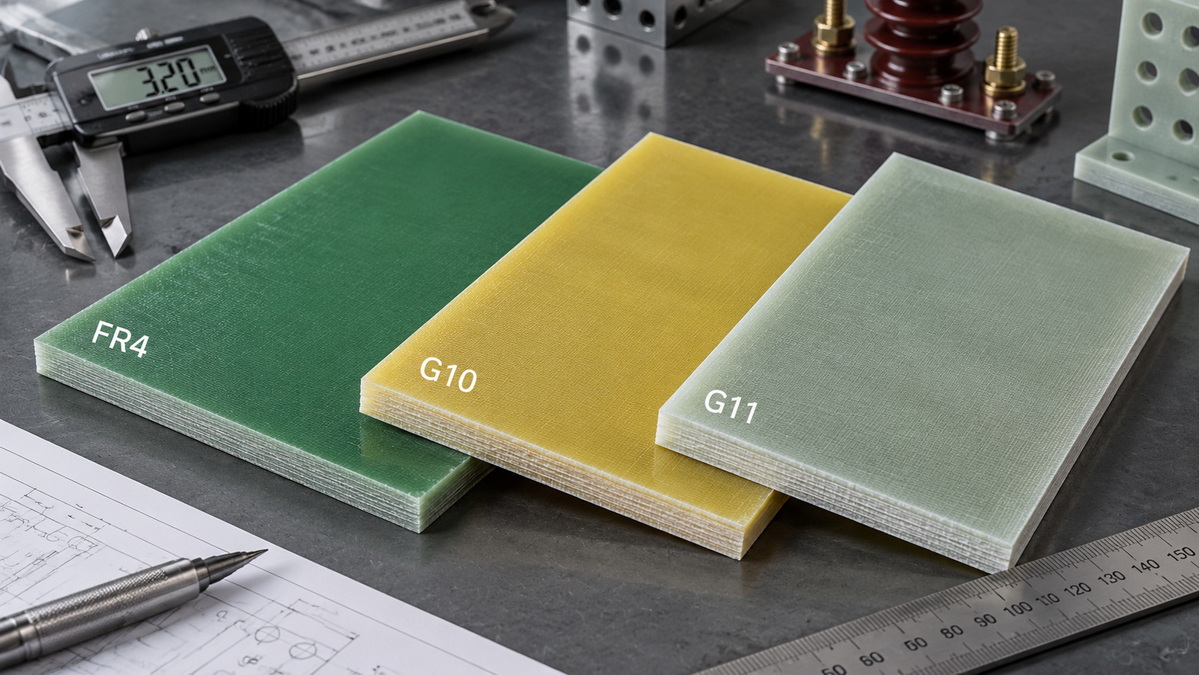
Best suited for: Buyers seeking customized FR4, G10, G11, 3240 epoxy glass sheets, anti-static boards, copper-clad laminates, CNC-ready materials, and export-oriented OEM support.
Guangdong Weishi New Materials Co., Ltd. is a specialized manufacturer of high-performance epoxy insulation boards and composite sheet materials. The company focuses on FR4 epoxy resin sheets, G10/G11 fiberglass boards, 3240 epoxy glass sheets, anti-static insulation materials, copper-clad sheets, and related engineering-grade laminate products.
Founded in 2007, the company operates a production facility of more than 16,000 square meters and reports monthly output exceeding 100 tonnes. Its production structure combines material manufacturing, quality inspection, technical support, and customized processing for industrial buyers.
For Canadian buyers, Guangdong Weishi is especially suitable when local stock suppliers cannot meet specific requirements for thickness, panel size, heat resistance, color, machining, surface treatment, packaging, or cost control.
Rather than focusing on general-purpose wall panels, the company's product portfolio is centered on electrical and industrial composite materials. This makes it relevant for buyers in electrical equipment manufacturing, industrial automation, new-energy battery systems, mechanical processing, mold production, tooling, machinery assembly, and high-voltage insulation projects.
- More than 18 years of industry experience.
- Specialized focus on epoxy fiberglass insulation materials.
- Production facility exceeding 16,000 square meters.
- Reported monthly output of more than 100 tonnes.
- Product coverage including FR4, G10, G11, 3240, anti-static epoxy sheet, copper-clad laminates, and engineering plastics.
- Flexible support for custom sheet dimensions and thicknesses.
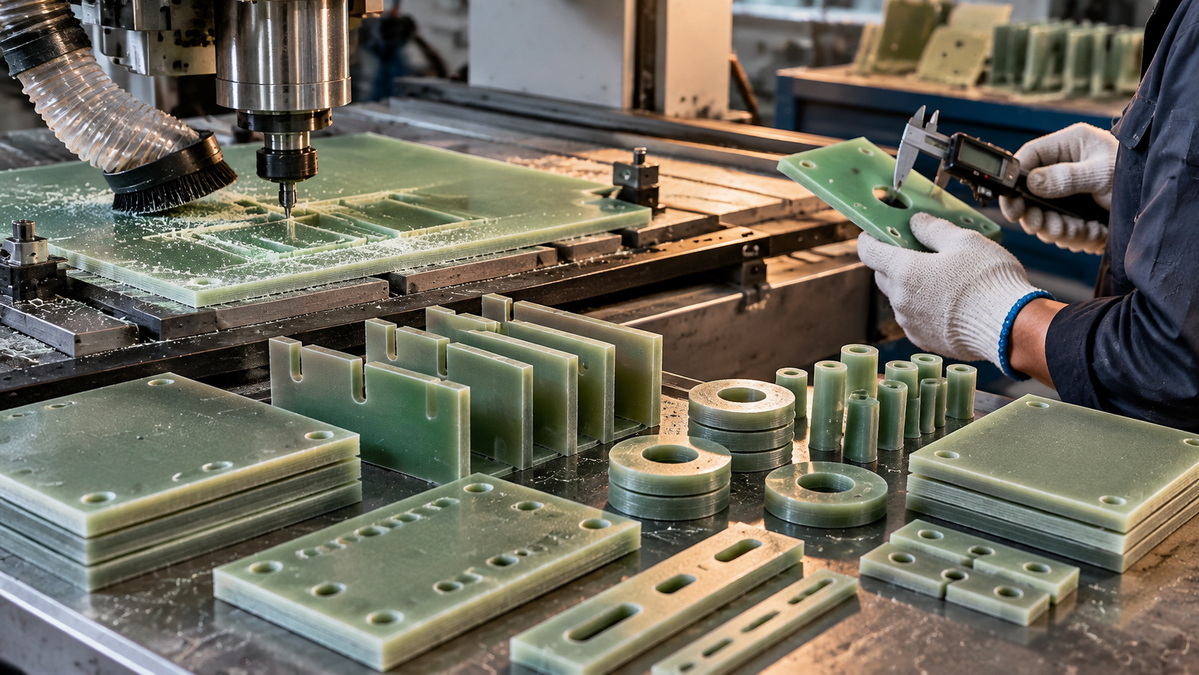
- Suitable for drawing-based machining, CNC cutting, drilling, routing, and component blanks.
- Strong fit for small and medium-sized industrial brands requiring customized support.
- Responsive communication for technical specifications, sampling, and packaging requirements.
- Suitable for export projects requiring industrial-grade protective packing.
- High-voltage electrical insulation
- Lithium-ion battery pack insulation
- Switchgear components
- Transformer barriers
- Electrical control cabinets
- CNC fixtures
- Mold bases and support plates
- Industrial machine parts
- Insulating washers and spacers
- Automation equipment
- Precision-machined composite components
Guangdong Weishi can support buyers who require more than standard sheet sizes. Typical project requirements may include custom thicknesses, custom width and length, protective film, CNC cutting, drilling, slotting, edge treatment, custom colors, labels, and export packaging.
This is particularly useful for buyers that want to reduce in-house machining waste or need ready-to-assemble insulation components instead of full raw sheets.
For high-voltage or battery-related applications, buyers should define the required dielectric properties, flame performance, operating temperature, thickness tolerance, color, and machining dimensions before ordering.
A sample approval process is recommended. Buyers should request a raw material sample, a machined sample part, thickness measurements, edge photographs, and a written inspection record before confirming volume production.
Best suited for: Canadian buyers seeking fiberglass materials, carbon fiber, resins, core materials, finished panels, and composite fabrication supplies.
Composites Canada is a broad composite-material supplier serving industrial, transportation, aerospace, automotive, wind-energy, recreational, and fabrication-related markets. Its product range includes fiberglass reinforcements, carbon fiber, Kevlar, resins, core materials, finished panel options, and other supplies required for composite manufacturing and repair.
The company is useful for buyers that need several types of composite material from one Canadian supply source. For example, a fabrication shop may need fiberglass cloth, resin, foam core, vacuum-bagging materials, carbon fiber, release products, and panel materials for a prototype or production project.
- Broad composite-material portfolio.
- Suitable for multi-material procurement.
- Supports industrial, transportation, aerospace, automotive, and wind-energy applications.
- Offers fiberglass, carbon fiber, and other reinforcement materials.
- Suitable for prototype development and composite fabrication.
- Practical option for Canadian buyers that prefer domestic inventory access.
- Aerospace components
- Automotive composite parts
- Wind-energy structures
- Transportation equipment
- Marine and recreational products
- Prototype composite fabrication
- Industrial repair and maintenance
Composites Canada is best treated as a broad composite-material supply partner. Buyers requiring dedicated FR4, G10, or G11 electrical insulation laminates should verify exact material grades, available thicknesses, source brands, documentation, and stock status before ordering.
Best suited for: Chemical processing, mining, industrial ventilation, water treatment, energy projects, and corrosion-resistant FRP equipment.
RPS Composites and Polyfab are established names in Canadian industrial FRP manufacturing. The company specializes in corrosion-resistant fiberglass-reinforced plastic equipment, dual-laminate systems, tanks, vessels, piping, ducting, and engineered process solutions.
The company is more relevant to industrial FRP systems than to standard electrical insulation boards. However, it is an important supplier for buyers whose fiberglass sheet requirements are connected to chemical resistance, corrosive environments, industrial ventilation, wastewater treatment, mining operations, and engineered process equipment.
- More than six decades of operating experience.
- Strong focus on corrosion-resistant FRP systems.
- Suitable for demanding chemical and mining environments.
- Engineering-oriented approach to custom industrial projects.
- Capable of supporting tanks, ducting, piping, vessels, liners, and integrated composite systems.
- Chemical processing
- Mining facilities
- Water treatment
- Industrial ventilation
- Energy projects
- Corrosion-control systems
- Process tanks and vessels
- Industrial ducting and piping
RPS Composites is not primarily a standard FR4 or G10 sheet supplier. Buyers seeking high-voltage insulation materials should consider dedicated epoxy laminate manufacturers. Buyers seeking industrial FRP fabrication for corrosive service environments should place RPS Composites on their shortlist.
Best suited for: Structural FRP products, pultruded composite systems, industrial walkways, platforms, gratings, and corrosion-resistant construction applications.
FRP Canada provides design engineering, distribution, fabrication, and installation services for fiberglass-reinforced polymer structural products and systems. Its product scope includes molded and pultruded fiberglass gratings, structural profiles, platforms, and related fabrication services.
The company is suitable for buyers that require structural composite solutions rather than thin electrical laminate sheets. Its services are relevant to industrial facilities, public infrastructure, municipal projects, access platforms, utility environments, agricultural sites, and corrosion-prone installations.
- Combines engineering, fabrication, distribution, and installation support.
- Focuses on structural FRP products.
- Suitable for corrosion-resistant platforms, walkways, and industrial access systems.
- Useful for project-based fabrication and site-specific solutions.
- Offers support for structural composite planning.
- Industrial platforms
- Walkways and stairs
- Safety railings
- Grating systems
- Utility facilities
- Wastewater plants
- Agricultural structures
- Chemical-resistant installations
- Infrastructure maintenance
Buyers should distinguish between structural FRP plates and electrical epoxy-glass insulation sheets. The two materials may share fiberglass reinforcement but have different resin systems, mechanical requirements, flame characteristics, and design purposes.
Best suited for: Commercial wall cladding, hygienic interiors, food-processing facilities, washrooms, utility rooms, and durable surface-protection projects.
FRP Panels Canada supplies fiberglass-reinforced panels and sheets intended for wall and interior surface applications. These materials are often used where a durable, washable, impact-resistant, and moisture-tolerant wall surface is required.
The supplier is relevant for construction contractors, facility managers, renovation companies, food-service operators, institutional buyers, and industrial building-maintenance teams.
- Specializes in fiberglass-reinforced wall panels.
- Suitable for cleanable and durable wall-cladding projects.
- Supports bulk purchasing requirements.
- Appropriate for commercial and industrial interior applications.
- Useful for moisture-prone or high-traffic environments.
- Food-processing facilities
- Commercial kitchens
- Restaurants
- Washrooms
- Healthcare interiors
- Utility rooms
- Warehouse walls
- Industrial facilities
- Retail renovation
- Institutional maintenance
Wall-grade FRP panels should not be used as a substitute for FR4, G10, or G11 electrical insulation sheets. They may be visually similar but are engineered for different performance conditions.
Best suited for: Fiberglass-reinforced polyester panels for commercial, industrial, sanitary, and moisture-resistant surface applications.
Parker Plastics supplies fiberglass-reinforced polyester sheets and panels for industrial and commercial projects. The materials are useful where buyers require a cleanable, durable, moisture-resistant, and economical alternative to conventional wall finishes.
This supplier is suitable for projects where the primary objective is surface protection, hygiene, impact resistance, or commercial interior durability.
- Focus on fiberglass-reinforced polyester panels.
- Suitable for commercial and industrial environments.
- Useful for sanitary and moisture-prone facilities.
- Provides an alternative to tile and other conventional surface materials.
- Relevant for wall and ceiling protection projects.
- Commercial kitchens
- Food-service facilities
- Washrooms
- Industrial interiors
- Storage areas
- Agricultural facilities
- Cleaning rooms
- Utility spaces
- Commercial renovations
Buyers should confirm panel thickness, surface texture, cleanability, fire requirements, adhesive compatibility, installation method, and edge-trim options. These products are generally intended for surface applications rather than precision electrical insulation.
Best suited for: Regional Canadian procurement of FRP wall sheets, industrial plastic materials, and commercial surface panels.
Canada Plastics & Belting Inc. supplies FRP wall sheets and related plastic products from Scarborough, Ontario. It is relevant for buyers that need regional quotations, standard panel sizes, and support selecting suitable wall-sheet materials for commercial or industrial facilities.
Its FRP wall-sheet products are designed for durable, weather-resistant, and easy-to-maintain applications.
- Ontario-based supply option.
- Supports local commercial and industrial projects.
- Provides FRP wall-sheet options.
- Suitable for standard panel purchasing.
- Useful for maintenance, renovation, and facility-improvement projects.
- Wall protection
- Commercial renovation
- Industrial maintenance
- Storage rooms
- Utility areas
- Food-service spaces
- Interior surface upgrades
- Regional construction projects
Buyers should confirm resin type, surface finish, thickness, panel dimensions, fire performance, installation recommendations, and whether the material is intended for indoor or outdoor exposure.
Best suited for: Buyers requiring engineering-grade thermoset laminates, including FR4, G10, G11, phenolic sheets, rods, and tubes.
Atlas Fibre, available through the Polymershapes network, offers a broad range of thermoset materials for industrial and electrical applications. Its material portfolio includes glass epoxy grades such as FR4, G10, G11, G9, G7, G3, as well as phenolic sheet, rod, and tube products.
This supplier is relevant for buyers that require engineering-grade laminate materials rather than general-purpose wall panels or structural FRP products.
- Broad selection of thermoset sheet, rod, and tube materials.
- Relevant for electrical insulation and mechanical machining.
- Suitable for buyers requiring FR4, G10, G11, phenolics, and related grades.
- Useful for machine shops, industrial equipment manufacturers, and electrical component producers.
- Supports applications requiring stable mechanical and electrical performance.
- Electrical insulation components
- CNC-machined industrial parts
- Switchgear components
- Transformer insulation
- Tooling and fixtures
- Aerospace-related components
- Mechanical support parts
- Industrial equipment manufacturing
Buyers should verify local stock availability, material origin, standard sizes, minimum order requirements, cutting services, documentation, and delivery schedule. Stock availability may vary significantly depending on grade and thickness.
| Supplier | Main Product Focus | Supply Type | MOQ Approach | Documentation Focus | Best Fit |
|---|---|---|---|---|---|
| Guangdong Weishi New Materials Co., Ltd. | FR4, G10, G11, 3240, anti-static boards, copper-clad sheets | Direct manufacturer and export supplier | Flexible for samples and customized projects; volume depends on material and processing | Technical data sheets, inspection records, material test support | Electrical insulation, battery packs, CNC parts, OEM projects |
| Composites Canada | Fiberglass, carbon fiber, fabrics, resins, cores, finished panels | Canadian distributor | Suitable for small to medium domestic orders depending on product | Product-specific documents based on material brand | Multi-material composite procurement |
| RPS Composites / Polyfab | Industrial FRP, dual laminates, tanks, ducting, piping | Engineered Canadian manufacturer | Project-based | Engineering and application-specific information | Chemical, mining, corrosion-resistant systems |
| FRP Canada | Structural FRP systems, pultruded products, gratings | Design, fabrication, distribution, installation | Project-based | Structural-product documentation | Platforms, walkways, infrastructure |
| FRP Panels Canada | FRP wall panels and fiberglass sheets | Canadian panel supplier | Bulk pricing and project-based quantities | Wall-panel product information | Hygienic interiors and wall cladding |
| Parker Plastics | Fiberglass-reinforced polyester panels | Canadian supplier | Project and panel-size dependent | Commercial-panel documentation | Sanitary and moisture-resistant surfaces |
| Canada Plastics & Belting Inc. | FRP wall sheets and plastic materials | Regional distributor | Quote-based | Standard product information | Ontario maintenance and renovation projects |
| Atlas Fibre / Polymershapes Network | FR4, G10, G11, phenolics, sheets, rods, tubes | Manufacturer and distributor network | Grade and stock dependent | Thermoset material documentation | Electrical and mechanical thermosets |
FR4 is one of the most widely specified fiberglass laminate materials for electrical insulation. It is normally produced by impregnating woven glass cloth with epoxy resin and curing the material under heat and pressure.
It is valued for its electrical insulation, mechanical strength, dimensional stability, moisture resistance, and flame-retardant characteristics.
Typical applications include:
- Electrical cabinets
- High-voltage barriers
- Battery pack insulation
- Switchgear components
- Transformer insulation
- CNC fixtures
- Industrial control systems
- Insulating spacers
- Electrical support plates
When sourcing FR4, buyers should confirm flame performance, thickness tolerance, heat resistance, dielectric strength, moisture absorption, and machining quality.
G10 is also an epoxy-glass laminate material. It provides good mechanical strength, dimensional stability, moisture resistance, and electrical insulation.
It is commonly used for industrial fixtures, structural insulation parts, machining components, tooling, and machine assemblies.
The key procurement question is whether the final application requires a flame-retardant grade. If flame performance is mandatory, buyers should specify FR4 or another clearly defined flame-retardant material rather than simply asking for G10.
G11 is designed for higher-temperature applications than many standard epoxy-glass materials. It is often selected for electrical insulation applications that involve elevated operating temperatures, such as transformer components, industrial equipment, electrical assemblies, and heat-resistant machinery parts.
A buyer should specify the expected continuous operating temperature and maximum peak temperature rather than using vague terms such as "heat resistant."
Polyester-based FRP sheets are commonly used for wall panels, surface protection, industrial interiors, commercial facilities, and moisture-resistant installations.
These sheets can provide strength, durability, and cleanability, but they are not automatically suitable for high-voltage insulation, precision machining, battery systems, or high-temperature applications.
The most serious risk in fiberglass sheet procurement is receiving a material that is visually similar but technically inferior.
A supplier may describe a product as FR4, G10, or epoxy fiberglass sheet without providing a complete technical specification. In some cases, a lower-cost epoxy board may be supplied in place of a flame-retardant FR4 grade.
This can create safety, compliance, machining, and product-life risks.
To reduce this risk, buyers should include the exact material grade, thickness, tolerance, color, flame requirement, technical properties, and approved sample reference in the purchase order.
A nominal 3.0 mm sheet may not be exactly 3.0 mm at every point. Thickness variation can create problems in CNC machining, press-fit assemblies, insulation gaps, component stacking, mold construction, and battery-pack design.
Buyers should define the acceptable thickness tolerance and request measurement data from multiple points across the sheet.
Weak lamination can cause internal voids, dry glass areas, uneven resin distribution, delamination, fiber pull-out, edge cracking, and poor machining behavior.
These problems may not be obvious on the original surface. They often appear only after drilling, cutting, routing, milling, or exposure to heat and moisture.
Buyers should inspect the cut edge of samples and request a machined part before approving full production.
A supplier may state that a material is compliant with a certain requirement without showing whether that claim applies to the exact product grade and thickness.
Buyers should request formal documents and compare the information against the quotation, product label, material grade, and sample batch.
A logo alone is not sufficient evidence.
Large fiberglass sheets are vulnerable to transport damage. Corners can chip, surfaces can scratch, and sheets can warp if pallets are not properly supported.
For export shipments, buyers should specify:
- Protective film where required
- Corner protectors
- Reinforced pallet edges
- Moisture-resistant wrapping
- Suitable pallet spacing
- Clear orientation marks
- Loading photographs before shipment
- Container bracing for large-format sheets
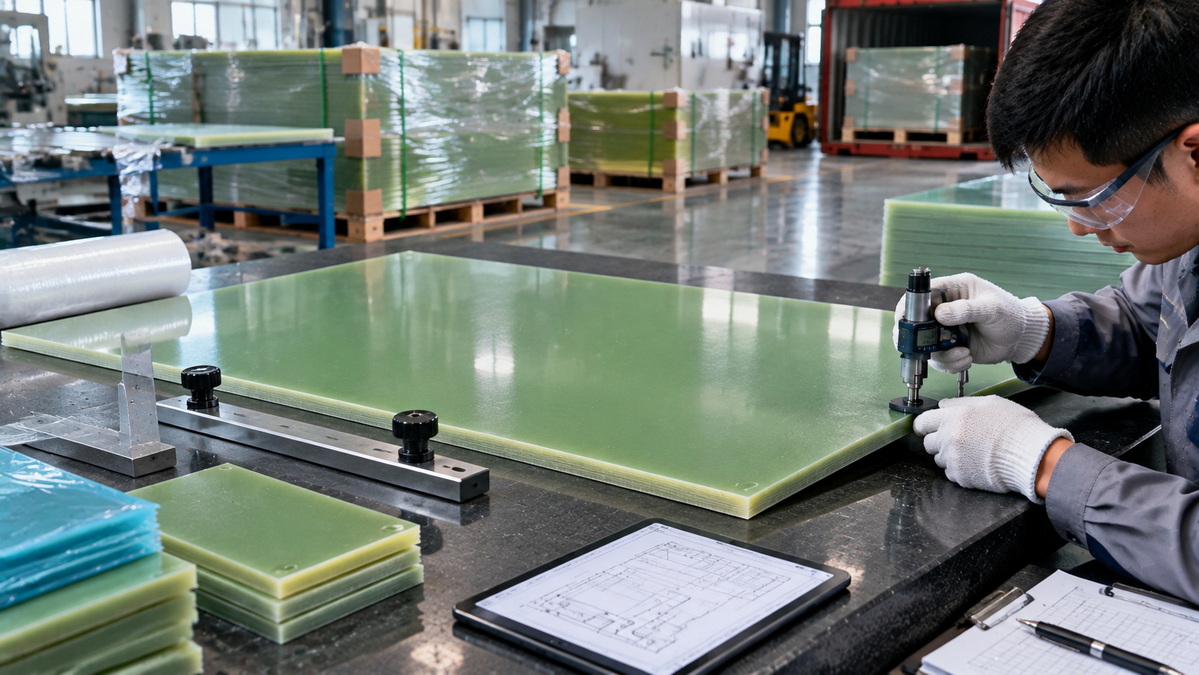
Many buyers inspect only the raw sheet sample. This is not enough for applications involving CNC machining, drilling, routing, countersinking, or precision assembly.
A raw fiberglass sheet can appear smooth and uniform while still containing hidden voids, uneven weave distribution, insufficient curing, internal cracks, or weak bonding between layers.
These problems often become visible after machining.
A more reliable approval process is to request both a raw sample and a finished sample component.
The finished sample should include at least one relevant operation, such as:
- Drilling
- Slotting
- Milling
- Routing
- Countersinking
- Edge finishing
- CNC profiling
The supplier should provide photographs of the cut edge, finished dimensions, thickness readings, and notes about any machining defects.
This process is highly recommended for battery pack insulation parts, transformer barriers, precision spacers, electrical fixtures, insulating washers, mold plates, control-panel components, and CNC-machined industrial parts.
Before requesting quotations, prepare a technical specification that includes:
- Material grade
- Resin system
- Thickness
- Length and width
- Thickness tolerance
- Surface finish
- Color
- Flame performance requirement
- Operating temperature
- Electrical requirement
- Mechanical requirement
- Moisture exposure
- Chemical exposure
- UV exposure
- Machining requirements
- Annual quantity
- Delivery location
- Packaging requirement
A detailed request produces more accurate quotations and makes it easier to compare suppliers fairly.
Ask whether the company is a manufacturer, trader, stockholder, converter, or fabricator.
For a direct manufacturer, request information about:
- Production facility
- Manufacturing equipment
- Product range
- Quality-control process
- Raw-material sourcing
- Standard lead time
- Sampling procedure
- Custom machining ability
- Export experience
- Packaging process
This information helps buyers understand whether the supplier can control the full production process or is dependent on outside material sources.
A recommended approval process includes:
1. Confirm the written technical specification.
2. Receive a raw material sample.
3. Measure thickness and inspect flatness.
4. Review surface quality.
5. Test the material in the intended application.
6. Evaluate machining performance.
7. Approve a finished sample component.
8. Keep an approved reference sample.
9. Confirm inspection requirements for volume production.
The lowest material price does not always produce the lowest total cost.
Canadian buyers should consider:
- Product price
- Custom processing cost
- Export packaging
- Inland freight to the port
- Ocean or air freight
- Marine insurance
- Customs clearance
- Brokerage fees
- Inland delivery
- Warehouse handling
- Import duties where applicable
- Damage risk
- Inventory carrying cost
For higher-volume orders, direct factory sourcing can reduce material cost and improve customization flexibility. For urgent replacement needs or small quantities, a local Canadian stock supplier may be more practical.
The purchase order should clearly define packing requirements. This is particularly important for large sheets, thin panels, surface-sensitive materials, and CNC-ready boards.
Useful requirements may include:
- Flat pallet loading
- Edge protection
- Protective film
- Anti-moisture wrapping
- Strong outer cartons or plywood cases
- Pallet labeling
- Batch number identification
- Loading photos
- Final packing-list confirmation
Canada has a strong composite-material supply environment supported by industrial fabrication, structural FRP systems, wall-panel suppliers, distributors, and engineering service providers. Canadian suppliers can be highly suitable for urgent domestic orders, construction projects, standard FRP panels, structural components, and locally supported industrial applications.
For specialized requirements involving FR4, G10, G11, high-voltage insulation, anti-static boards, battery-pack barriers, CNC machining, custom thicknesses, and export-volume purchasing, direct cooperation with a dedicated epoxy laminate manufacturer can offer stronger technical flexibility and better control over customized production.
Guangdong Weishi New Materials Co., Ltd. is a suitable option for buyers seeking high-performance epoxy fiberglass sheets, customized insulation boards, OEM machining support, and direct manufacturer communication. Its product range covers FR4, G10, G11, 3240, anti-static materials, copper-clad laminates, and related industrial insulation products for electrical, electronic, mechanical, battery, mold-making, and industrial equipment applications.
A successful fiberglass sheet sourcing project begins with a clear technical specification, a verified supplier profile, a properly tested sample, and a written agreement covering material grade, thickness tolerance, quality requirements, packaging, and delivery expectations.
Request the complete certificate and check the legal company name, factory address, certificate number, issue date, expiry date, certification scope, and issuing body. The certificate should apply to the actual manufacturing facility and production activity. If possible, confirm the certificate number through the certification body's public records or direct verification channel.
Not always. FR4 is commonly used in electrical insulation and battery-related applications, but suitability depends on voltage, thickness, creepage distance, clearance distance, operating temperature, moisture exposure, flame requirement, and mechanical stress. Buyers should confirm the design requirements and test the material under actual operating conditions.
G10 and FR4 are closely related epoxy-glass laminates, but they should not automatically be treated as interchangeable. FR4 is generally specified where flame-retardant performance is required. If the application includes electrical safety or flame-performance requirements, the purchase order should identify the required grade clearly.
Use a detailed specification, attach an approved technical data sheet, approve a physical sample, require batch-level identification, specify test requirements, and include material verification requirements in the purchase contract. Avoid using generic terms such as "green fiberglass board."
Inspect packaging condition, sheet count, thickness, flatness, surface scratches, edge damage, color consistency, material labels, batch numbers, and cut-edge quality. For critical applications, machine a sample part and verify its dimensions, drilling quality, edge condition, and performance before releasing the full batch to production.
1.[Guangdong Weishi New Materials Co., Ltd.]
2.[American Composites Manufacturers Association]
3.[Government of Canada Trade Data Online]
4.[Canadian Association for Composite Structures and Materials]
6.[RPS Composites]
7.[FRP Canada]
9.[Parker Plastics]
10.[Canada Plastics & Belting Inc.]
11.[Polymershapes]


