

Views: 244 Author: Weishi Sheets Publish Time: 2026-08-24 Origin: Site
Content Menu
● What Is an Epoxy Laminate Sheet?
● Epoxy Plate vs Epoxy Laminate Sheet: Main Differences
● Why Vacuum Chamber Insulation Requires Careful Selection
>> Outgassing and Material Cleanliness
>> Moisture Control and Pump-Down Stability
>> Thermal Cycling and Dimensional Stability
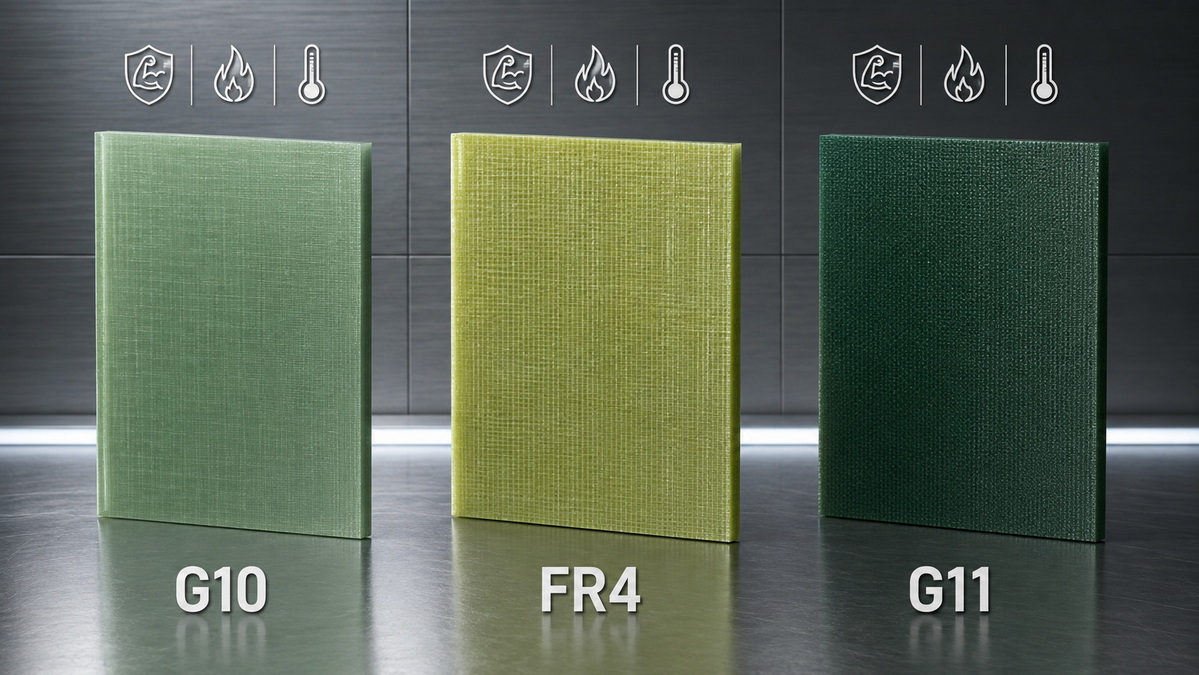
● G10, FR4, and G11 for Vacuum Chamber Insulation
● Practical Selection Guide for Vacuum Chamber Insulation
>> 1. What Vacuum Level Will the Chamber Operate At?
>> 2. What Temperature Will the Insulation Part Experience?
>> 3. What Electrical Load Is Required?
>> 4. What Mechanical Loads Will the Part Carry?
>> 5. What Final Part Geometry Is Needed?
● How to Specify Epoxy Insulation Materials
● FAQ
>> 1. Is an epoxy plate the same as an epoxy laminate sheet?
>> 2. Can G10 epoxy laminate sheet be used in a vacuum chamber?
>> 3. Is G11 better than G10 for vacuum chamber insulation?
>> 4. Is FR4 suitable for vacuum chamber applications?
>> 5. What information should be provided when ordering epoxy insulation parts?
>> 6. Can G10, FR4, and G11 sheets be CNC machined?
>> 7. Should epoxy insulation parts be baked before vacuum chamber installation?
Selecting the right insulation material for a vacuum chamber requires more than choosing a product called "epoxy." The material must deliver dependable electrical insulation, mechanical strength, thermal stability, dimensional accuracy, and controlled performance in a low-pressure environment.
When comparing an epoxy plate with an epoxy laminate sheet, the most important difference is usually not the product name. It is the material's internal construction, reinforcement, resin system, processing quality, temperature capability, and suitability for the intended vacuum environment.
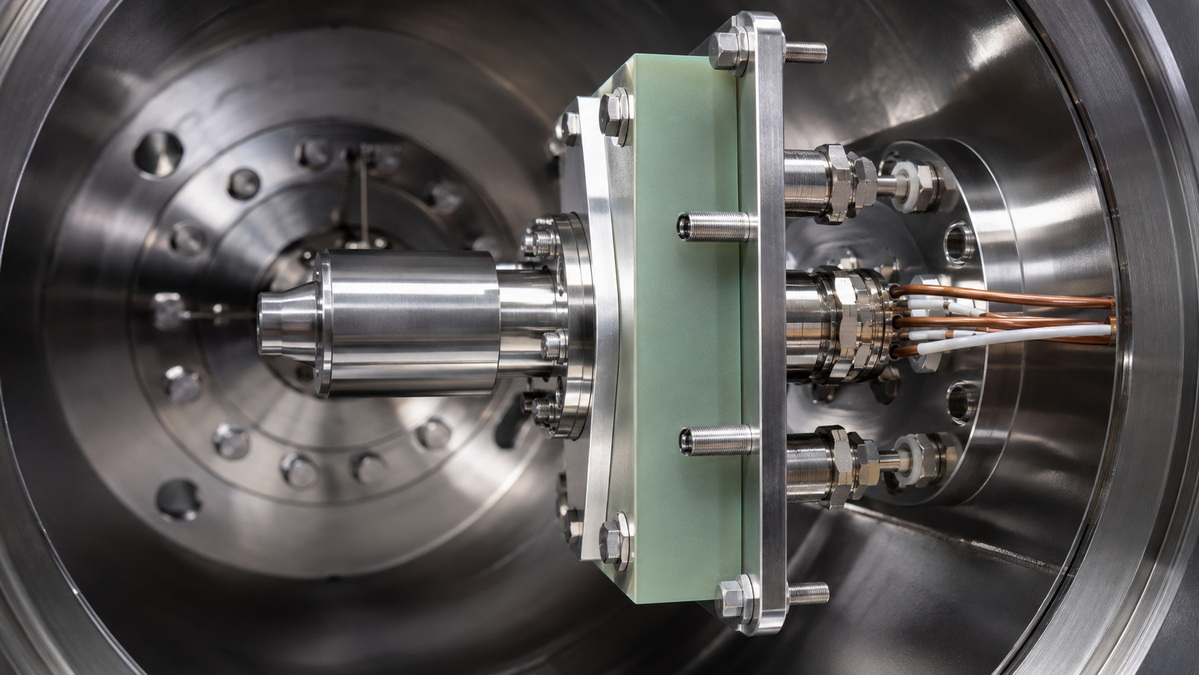
For vacuum chamber applications, glass-reinforced epoxy materials such as G10, FR4, and G11 are commonly considered because they combine insulating performance with the strength needed for machined industrial components.
An epoxy plate is a broad term for a rigid board made from cured epoxy resin. Depending on the product design, it may contain glass fiber reinforcement, fabric reinforcement, mineral fillers, or other composite materials.
In industrial manufacturing, the term "epoxy plate" often describes the product's physical form. It may be supplied as a thick board, block, panel, or machined insulation component.
Typical epoxy plate applications include:
- Electrical insulation barriers
- High-voltage support components
- Machined spacer blocks
- Insulation washers
- Terminal boards
- Mold and fixture components
- Mechanical support plates
- Vacuum chamber mounting parts
However, the term "epoxy plate" alone does not define whether the product is G10, FR4, G11, or another engineered composite grade. It also does not confirm the reinforcement type, resin chemistry, flame-retardant performance, thermal rating, or vacuum-use suitability.
For this reason, engineers should specify the exact material grade and operating conditions rather than purchasing a generic epoxy board.
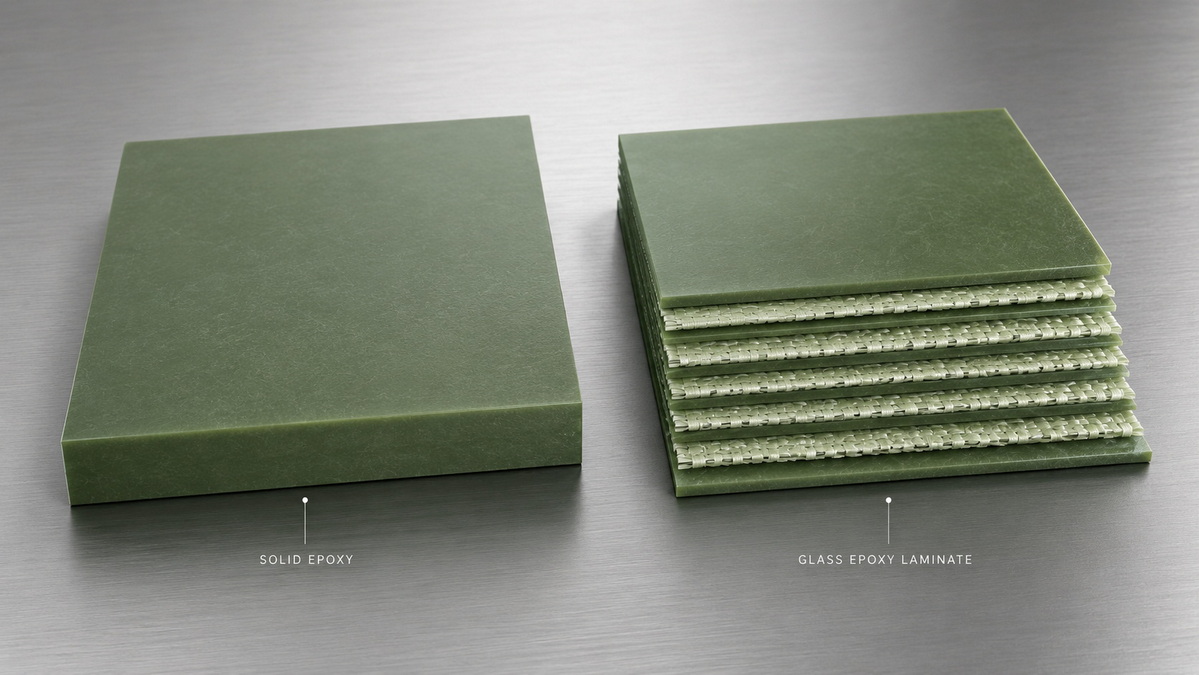
An epoxy laminate sheet is a layered composite material made by combining reinforcement layers with epoxy resin under controlled heat and pressure.
The most common version is a glass epoxy laminate sheet, which uses woven glass fabric as reinforcement. Multiple layers of glass cloth are impregnated with epoxy resin, stacked, pressed, cured, and cut into sheets or plates.
This structure provides a strong balance of electrical and mechanical performance.
Key characteristics of epoxy laminate sheets include:
- High dielectric strength
- Excellent mechanical strength
- Good dimensional stability
- Strong compression resistance
- Reliable CNC machining performance
- Resistance to many industrial chemicals
- Available grades for different temperature requirements
- Flexible thickness and custom-processing options
Common glass epoxy laminate material grades include:
- G10
- FR4
- G11
- EPGC 201
- EPGC 203
- EPGC 306
- EPGC 308
An epoxy laminate sheet can also be supplied in thicker formats and referred to as an epoxy laminate plate. In practical sourcing, a 20 mm G11 board may be described as both a G11 epoxy plate and a G11 epoxy laminate sheet.
| Comparison Item | Epoxy Plate | Epoxy Laminate Sheet |
|---|---|---|
| General meaning | A broad name for a rigid epoxy-based board or plate | A specific layered composite construction |
| Reinforcement | May be reinforced or unreinforced | Usually reinforced with woven glass cloth |
| Internal structure | Depends on the product and formulation | Built from multiple resin-impregnated reinforcement layers |
| Material consistency | Varies significantly by supplier and formulation | More predictable when supplied as a defined material grade |
| Typical grades | Generic epoxy, G10, FR4, G11, custom composites | G10, FR4, G11, EPGC series materials |
| Mechanical performance | Can vary from moderate to high | Usually provides strong mechanical reinforcement |
| Machining suitability | Depends on material structure | Well suited for CNC drilling, milling, cutting, and shaping |
| Vacuum chamber use | Must be evaluated case by case | Can be specified more accurately through grade and resin data |
| Best purchasing method | Define the exact material construction and technical requirements | Define grade, thickness, operating temperature, and machining dimensions |
The practical conclusion is straightforward: epoxy plate describes the product form, while epoxy laminate sheet describes the composite material structure.
For demanding vacuum chamber insulation, specifying a glass epoxy laminate grade is generally more reliable than ordering a generic epoxy plate.
Vacuum chambers are used in equipment where contamination control, dimensional stability, electrical isolation, and temperature resistance can all affect system performance.
A material that works well in general industrial equipment may not perform the same way inside a vacuum environment.
Vacuum chamber insulation components may be exposed to:
- Low-pressure conditions
- Thermal cycling
- Localized heater temperatures
- Electrical loading
- High-voltage feedthroughs
- Mechanical vibration
- Compression forces
- Moisture release
- Surface contamination risks
- Plasma or semiconductor process environments
The insulation material must maintain its shape and electrical properties while minimizing unwanted release of moisture or volatile compounds.
In a vacuum environment, some materials can release absorbed moisture, residual solvents, processing compounds, or volatile substances from the resin system. This behavior is commonly known as outgassing.
Outgassing can affect:
- Chamber pump-down time
- Optical coating processes
- Semiconductor equipment cleanliness
- Analytical instruments
- High-voltage insulation reliability
- Precision scientific applications
- Sensitive deposition processes
Not all epoxy materials behave the same way. Two products with similar names may use different resin systems, fillers, curing methods, pigments, flame-retardant additives, or manufacturing processes.
For vacuum chamber insulation, the material evaluation should include:
- Resin formulation
- Glass-fiber reinforcement type
- Moisture absorption behavior
- Cure condition
- Post-cure process
- Surface cleanliness
- Cleaning procedure
- Packaging condition
- Bake-out compatibility
- Vacuum performance testing, where required
A standard G10, FR4, or G11 designation can provide useful technical guidance, but it should not be treated as a complete vacuum qualification by itself.
Glass epoxy laminates can absorb moisture from storage conditions and factory environments. Once installed in a vacuum chamber, this moisture can gradually leave the material surface.
This may increase pump-down time and create unstable operating conditions during early system operation.
Good handling practices include:
1. Store epoxy insulation sheets in dry, clean packaging
2. Avoid prolonged exposure to high-humidity environments
3. Machine components in a controlled workshop environment
4. Remove machining dust and residues before packaging
5. Use appropriate cleaning methods for the chamber process
6. Apply controlled bake-out when permitted by the material grade and equipment design
7. Seal finished parts before delivery and installation
For highly sensitive systems, a small insulation part with a large exposed surface area can have a greater effect than expected. Surface preparation and packaging should therefore be considered part of the material-selection process.
Vacuum chamber insulation components are often installed near heaters, electrical feedthroughs, process zones, or mechanical assemblies that experience temperature changes.
Repeated heating and cooling can create stress between the epoxy composite and connected metal components. Stainless steel, aluminum, copper, and epoxy-glass laminates expand at different rates.
If the material has insufficient temperature capability, it may experience:
- Warping
- Surface cracking
- Reduced mechanical strength
- Permanent deformation
- Delamination
- Loss of flatness
- Reduced insulation reliability
- Bolt-load reduction in mounted parts
This is why material selection should be based on the expected continuous operating temperature, maximum short-term temperature, thermal cycling frequency, and mechanical load.
For higher-temperature applications, G11 epoxy laminate sheet is often preferred over standard G10 because it is designed for stronger performance retention under elevated thermal conditions.
G10 epoxy laminate sheet is a glass-fiber reinforced epoxy material that offers a practical balance of mechanical strength, electrical insulation, and machining efficiency.
It is often selected for:
- Vacuum chamber insulation spacers
- Electrical isolation plates
- Terminal supports
- Mechanical mounting blocks
- CNC-machined insulating parts
- Fixture components
- Structural insulation barriers
- General industrial electrical assemblies
Advantages of G10 include:
- High mechanical strength
- Good dielectric performance
- Reliable machinability
- Strong compression resistance
- Wide thickness availability
- Cost-effective material selection
- Good performance at moderate operating temperatures
G10 is generally suitable when the vacuum chamber application has moderate thermal requirements and the material can be properly cleaned, stored, and conditioned before installation.
FR4 epoxy sheet is also a glass-fiber reinforced epoxy laminate, but it includes flame-retardant characteristics.
FR4 is widely recognized in the electronics industry, especially in circuit board production. However, thicker industrial FR4 sheets can also be machined into structural electrical insulation components.
FR4 may be selected when the project requires:
- Flame-retardant material performance
- Electrical insulation barriers
- Structural support components
- CNC-machined parts
- Medium-temperature electrical applications
- Industrial control equipment insulation
Important considerations for FR4 include its resin system, flame-retardant additives, processing conditions, and cleanliness requirements.
For vacuum chamber projects, flame-retardant performance should be balanced against the chamber's contamination sensitivity. The final decision should consider the exact material formulation rather than relying only on the FR4 grade name.
G11 epoxy plate is a high-temperature glass epoxy laminate material designed for applications that require stronger thermal endurance than standard G10.
It is commonly used for:
- High-temperature vacuum chamber insulation
- Heater support components
- High-voltage insulating structures
- Electrical isolation plates near heat sources
- Structural components exposed to thermal cycling
- Precision-machined composite parts
- Industrial equipment insulation systems
Key advantages of G11 include:
- Higher thermal resistance
- Good electrical insulation at elevated temperature
- High mechanical strength
- Strong compression performance
- Good dimensional stability
- Reliable machining for custom components
- Suitable for demanding electrical and mechanical environments
G11 is often the stronger choice when the part is exposed to elevated temperature, prolonged heater operation, repeated thermal cycling, or sustained mechanical loading.
The correct material choice depends on the real operating environment. A well-defined material specification should answer the following questions.
Different chambers operate under different pressure conditions.
Typical categories include:
- Rough vacuum
- Medium vacuum
- High vacuum
- Ultra-high vacuum
- Process vacuum
- Laboratory vacuum
- Semiconductor process vacuum
- Coating equipment vacuum
As vacuum requirements become stricter, material cleanliness, moisture control, surface treatment, and outgassing behavior become more important.
Define both normal and maximum temperature conditions.
For example:
- Continuous operation at 80°C
- Heater-adjacent temperature of 130°C
- Short-term exposure to 150°C
- Bake-out temperature of 180°C
- Frequent heating and cooling cycles
A material that performs well at room temperature may not retain the same properties under continuous high-temperature operation.
For elevated-temperature vacuum applications, G11 is often a more suitable starting material than standard G10.
The insulation part should be selected based on the actual electrical conditions, including:
- Working voltage
- Maximum voltage
- Dielectric withstand requirement
- Voltage frequency
- Creepage distance
- Clearance distance
- Electrical field concentration
- Risk of arcing
- Partial discharge conditions
- Surface contamination exposure
Thickness alone does not guarantee insulation reliability. Component design, mounting geometry, edge treatment, surface finish, and nearby metal hardware all influence electrical performance.
Many vacuum chamber insulation parts are not only electrical barriers. They also function as structural components.
Consider:
- Compression load
- Bolt torque
- Clamping force
- Vibration
- Shock
- Bending load
- Thermal expansion stress
- Flatness requirements
- Dimensional tolerance
- Long-term creep resistance
For high-load parts, a reinforced epoxy laminate sheet is generally more reliable than an unreinforced cast epoxy plate.
A quality glass epoxy laminate supplier should support custom machining for vacuum chamber applications.
Common finished components include:
- Insulating washers
- Spacer rings
- Support blocks
- Electrical barriers
- Terminal boards
- Slotted mounting plates
- High-voltage insulation panels
- Custom CNC-machined brackets
- Vacuum fixture supports
- Threaded or drilled insulating parts
A complete drawing should include thickness tolerance, hole diameter, countersink details, edge radius, flatness requirements, surface-finish needs, and quantity.
The best way to avoid material-selection problems is to provide a complete specification before production begins.
A useful material specification should include:
- Material grade: G10, FR4, G11, or a custom epoxy composite
- Product form: Sheet, plate, rod, tube, or machined component
- Thickness: Nominal thickness and allowable tolerance
- Operating temperature: Continuous and maximum temperature
- Electrical requirement: Voltage, insulation resistance, dielectric withstand requirement
- Mechanical requirement: Compression load, bending strength, mounting condition
- Vacuum requirement: Vacuum level and process sensitivity
- Surface condition: Cleaned, machined, polished, or controlled surface finish
- Packaging requirement: Dry packaging, vacuum-sealed packaging, or cleanroom packaging
- Part drawing: Dimensions, tolerances, holes, slots, chamfers, and assembly features
- Inspection requirement: Dimensional inspection, material certification, or batch traceability
This specification process makes it easier to select the right epoxy plate or epoxy laminate sheet before machining starts.

In practical manufacturing, material grade is important, but it is only one part of the final result.
A G10, FR4, or G11 material can perform differently depending on:
- Resin quality
- Glass-fiber content
- Lamination pressure
- Cure temperature
- Post-cure process
- Thickness
- Storage environment
- Surface finish
- Machining method
- Cleaning procedure
- Final installation condition
For vacuum chamber insulation, the most reliable approach is to evaluate the material as a complete system: material grade, production process, machining quality, cleaning method, packaging, and final operating environment.
This is particularly important for components used in high-temperature, high-voltage, high-vacuum, or contamination-sensitive equipment.
For many vacuum chamber applications, a glass epoxy laminate sheet provides a more clearly defined and reliable material solution than a generic epoxy plate.
Choose G10 epoxy laminate sheet for moderate-temperature applications that require strong electrical insulation, good machinability, and cost-effective mechanical performance.
Choose FR4 epoxy sheet when flame-retardant properties are required and the specific formulation meets the chamber's material and cleanliness requirements.
Choose G11 epoxy plate or G11 laminate sheet for higher-temperature vacuum chamber insulation, thermal cycling environments, heater-adjacent components, and mechanically loaded electrical insulation parts.
The best material is not necessarily the thickest or the most expensive option. It is the material that matches the chamber's temperature, voltage, vacuum level, mechanical load, machining requirements, and cleanliness expectations.
Guangdong Weishi New Materials Co., Ltd. provides high-performance epoxy glass fiber sheets, FR4 boards, G10 insulation sheets, G11 epoxy plates, and custom-machined composite insulation components for industrial equipment, electronics, electrical systems, mold manufacturing, and vacuum chamber applications.
Not always. An epoxy plate usually describes a rigid epoxy-based board or finished plate form. An epoxy laminate sheet describes a layered composite material made from epoxy resin and reinforcement layers, such as woven glass fabric. A G10 or G11 board can be described as both an epoxy plate and an epoxy laminate sheet.
Yes, G10 can be used in many vacuum chamber insulation applications. It is suitable for components that require electrical insulation, mechanical strength, and good machining performance under moderate temperature conditions. The specific material should still be evaluated for cleanliness, moisture control, conditioning, and vacuum suitability.
G11 is generally better for higher-temperature applications. It offers stronger thermal endurance and better property retention under elevated temperature conditions. G10 remains a practical and economical choice for moderate-temperature vacuum chamber components.
FR4 can be suitable for some vacuum chamber insulation applications, especially where flame-retardant characteristics are required. However, the actual resin system, additives, cleanliness requirements, and chamber sensitivity should be reviewed before selection.
Provide the material grade, required thickness, part drawing, operating temperature, voltage requirement, vacuum level, mechanical load, dimensional tolerances, surface-finish expectation, and quantity. This information helps ensure the selected epoxy laminate material matches the application.
Yes. These glass epoxy laminate materials can be CNC machined into spacers, washers, insulation barriers, support blocks, terminal boards, brackets, rings, and custom industrial components. Suitable cutting tools and dust-control procedures are important because glass-fiber reinforcement is abrasive.
In many cases, controlled bake-out can help remove absorbed moisture and residual volatile substances before installation. The bake-out temperature and duration should be selected according to the material grade, component geometry, chamber design, and operating requirements.
1. Ready Plastics. "[NEMA G10 — Glass-Epoxy Laminate Spec Page]." Material construction, strength, dielectric properties, moisture absorption, and differences between G10 and FR4.
2. The Gund Company. "[A Review of High Temperature Glass Epoxy Laminate Materials]." Thermal endurance, G10, FR4, G11, FR5, and high-temperature glass epoxy laminate comparisons.
3. NASA Goddard Space Flight Center. "[Outgassing Data Introduction and Database]." Technical information related to total mass loss, collected volatile condensable materials, and water vapor regained testing.
4. Atlas Fibre. "[G-11 Glass Epoxy Data Sheet]." Reference information on electrical and mechanical characteristics of G11 glass epoxy laminates.
5. SAM Composites. "[IEC 60893 G11 Epoxy Glass Laminate]." Additional reference material for G11 epoxy glass laminate grades and industrial applications.


