
Views: 218 Author: Weishi Sheets Publish Time: 2026-11-22 Origin: Site
Content Menu
● Introduction: How to Select a G10 Fiberglass Sheet Manufacturer
● Selection Criteria: What Earns a Place on the Shortlist?
● G10 Fiberglass Sheet Specifications Buyers Should Put in Writing
● Top 10 G10 Fiberglass Sheet Manufacturers and Supply Candidates in China
>> 1. Guangdong Weishi New Materials Co., Ltd. — Drawing-Based OEM for Small and Midsize Buyers
>> 2. Jiujiang Xinxing Insulation Material Co., Ltd. — Laminate, Prepreg, and Machined Insulation
>> 3. Hebei JingHong Electronic Technology Co., Ltd. — Full-Sheet and Larger-Format Orders
>> 4. Zhejiang Jingjing Insulation Materials Co., Ltd. — Broad Format Range and Specialty Laminates
>> 5. Jiujiang Xinrui Composite Material Co., Ltd. — G10 and Solder-Pallet Materials
>> 6. Guangde Huachang New Materials Co., Ltd. — Multi-Grade OEM/ODM Candidate
>> 7. Shenzhen Xiongyihua Plastic (XYH) — Catalog-Based G10 Supply Candidate
>> 8. Xuchang Zhonghao Insulation Materials Co., Ltd. — Conditional Lead for Cut Insulation Stock
>> 9. Xuchang Rainyan Insulation Material Co., Ltd. — Conditional Lead for Quote Benchmarking
>> 10. Xin Cheng Industry Material Co., Ltd. — Conditional Lead for Multiple Insulation Forms
● Comparison Table: Capacity, MOQ, and Certification Evidence
● Buyer's Guide: From RFQ to Repeat Orders
>> 1. Send One Specification to Every Supplier
>> 2. Verify the Pressing Plant and Its Available Capacity
>> 3. Approve a Production-Lot Sample, Then a Pilot Shipment
>> 4. Guard Against Grade Substitution and Unusable Sheet Area
>> 5. Compare Landed Cost on the Same Delivery Basis
>> The Overlooked Check: Match the Test Coupon to the Pallet
● Conclusion: Qualify a Supply Route, Not Just a Supplier Name
● FAQ
>> 1. How can I tell whether a manufacturer's ISO 9001 certificate is current and covers my plant?
>> 2. Can I approve G10 based on a report for FR4 made on the same line?
>> 3. Why did a prototype pass inspection while parts from the production run did not fit?
>> 4. Is a RoHS report for a natural-color sheet enough for a black or adhesive-backed part?
>> 5. How can I qualify a second source without revalidating every finished part?
Start with one question: Can the supplier show that the G10 fiberglass sheet you approve is the same material you will receive on repeat orders? The answer depends on more than an ISO certificate or a good sample. Ask who presses the laminate, how the factory controls material and process changes, what it measures before releasing a batch, and whether it can reserve capacity for your required thickness and delivery schedule. For machined parts, ask for an engineering review of your drawing and an inspection report from a pilot run. These checks reveal more about a long-term partner than a catalog thickness range or a quoted price per kilogram.
China offers several sourcing routes: Guangdong suppliers combining laminate and drawing-based processing; Jiangxi producers with complementary capabilities in insulation laminates, prepreg, and high-temperature composites; and sheet producers in Hebei, Zhejiang, and Anhui. Guangdong's electronics manufacturing network, particularly around Shenzhen and Dongguan, is useful when a project needs both material supply and downstream conversion. The advantage is the choice of production models—not a guarantee that every company in a cluster owns a hot press or performs every operation in-house.
For market context, Grand View Research's 2026 outlook estimates that China's broader fiberglass market generated US$4.25 billion in 2025, or 20% of global fiberglass revenue, and projects US$7.85 billion by 2033. These figures cover fiberglass across multiple end uses; they do not measure G10 sheet sales, exports, or individual factory market share. China Customs publishes official trade statistics, but the tables cited here do not isolate G10 fiberglass sheet. Confirm the customs classification for your specific sheet or finished component before using trade data to estimate sourcing volume.
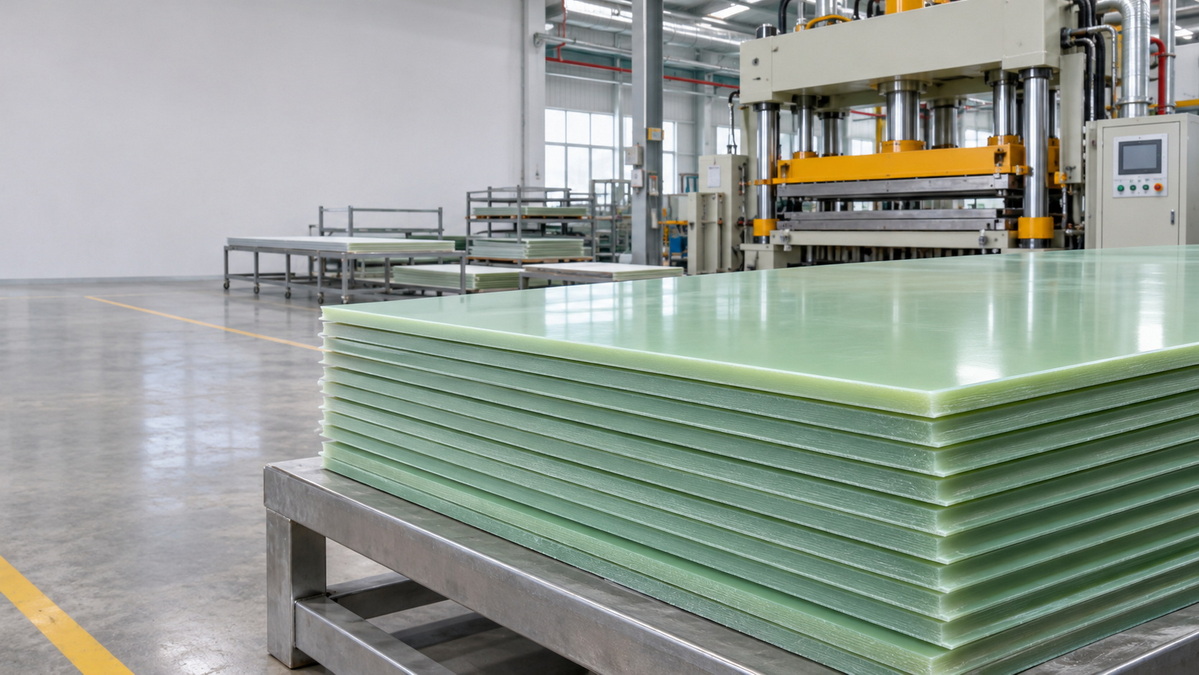
This is a sourcing shortlist, not an audited national ranking. Guangdong Weishi New Materials Co., Ltd., the company publishing this guide, is listed first. Other entries are organized by sourcing fit and the quality of available public information, not by an undisclosed score. Entries with limited evidence are marked as conditional rather than presented as confirmed G10 pressing plants.
| Selection criterion | Evidence to request | What it tells the buyer |
|---|---|---|
| Factory identity and certification | Business license, production-site address, certificate number and scope, list of outsourced processes | Whether the legal entity, plant, certification, and actual production route match |
| Engineering and process capability | Grade-specific data sheet, drawing review, first-article report, written change-control procedure | Whether the supplier can translate your specification into repeatable production |
| Quality control and traceability | Lot-linked certificate of analysis (CoA), inspection records, specimen orientation and conditioning, pallet-to-lot mapping | Whether test evidence applies to the material you receive |
| Capacity and delivery reliability | Available press time for your grade and thickness, recent on-time delivery data, planned shutdowns, recovery plan | Whether the plant can sustain your schedule, not just complete the first order |
| Commercial and OEM fit | Sample and production minimums, tooling charges, yield assumptions, machining scope, claim terms | Whether the quote is competitive at your actual order size and finished-part yield |
Use factory identity, material identity, and required compliance evidence as pass/fail gates before comparing prices. In the profiles below, a missing founding year, market breakdown, or certificate means the information was not confirmed from the cited sources. It does not mean the company lacks the capability or credential.
G10 is a rigid laminate made from woven glass fabric bonded with epoxy resin. Buyers use it for electrical insulation and mechanical applications such as fixtures, spacers, and support plates. A supplier may cross-reference G10 to IEC 60893-3-2 type EPGC201, but a cross-reference on a product page is not proof that a particular lot meets both specifications. On the purchase order, name the governing standard and edition, identify the required properties, and state which specification controls if a supplier's data sheet uses different test conditions.
- G10 vs. FR4: Do not infer a flame rating from the G10 label or from a combined "G10/FR4" listing. If flame performance is a design requirement, specify the required classification, thickness, and material designation. Ask for evidence covering the exact grade offered—not another laminate in the same catalog.
- G10 vs. G11: If the part must carry a mechanical load at elevated temperature, ask for property data at the relevant temperature and under the relevant conditioning. A general heat-resistance claim is not a substitute for evidence that the laminate will retain the required strength or dimensional stability in service.
- G10 vs. 3240: A catalog may group these grades because they serve overlapping applications. That does not make them contractually interchangeable. For example, one listing advertises "3240 G10" in its title but identifies the material as 3240 in its technical description. Require the mill grade on the quotation, CoA, and packing label, and prohibit substitutions without written approval.
- Electrical and mechanical tests: Define the method, specimen thickness, conditioning, and test direction. For example, a dry dielectric result through the thickness cannot substitute for a result parallel to the laminations after moisture conditioning. Distinguish minimum acceptance values from typical data-sheet values.
Keep management-system certification separate from material compliance. ISO 9001 concerns the quality management system within a defined scope; it does not certify an individual lot as G10. EU RoHS restricts specified substances in covered electrical and electronic equipment. A laminate declaration or test report can support the finished-equipment compliance file, but ask whether it covers the exact formulation, color, and any added adhesive. CE marking applies only where the relevant EU legislation requires it; it is not a blanket environmental certificate for raw laminate.
Founded in 2007 in Heyuan, Guangdong, Weishi supplies G10, G11, FR4, and other insulation materials and reports a facility of more than 16,000 m², three workshops, and monthly output exceeding 100 tonnes across product categories. The company serves industrial buyers in electronics, electrical equipment, and machinery and reports international shipping experience. Its public materials do not break down sales by country or isolate G10 output.
Weishi is worth quoting for small and midsize brands and equipment manufacturers that need engineering support without coordinating a separate sheet mill and machine shop. Its published OEM/ODM scope includes material selection, prototyping, CNC routing and milling, stamping, grinding, and adhesive backing. To evaluate communication speed, send a drawing and ask for one written response covering drawing revision, material grade, tolerance exceptions, pilot MOQ, and production lead time. Weishi advertises machining tolerances down to ±0.05 mm; ask which features on your drawing can hold that tolerance and how they will be measured. Compare sheet-only and finished-part quotes to see whether integrating the work reduces your total cost.
Established in 2003 in Jiujiang, Jiangxi, Xinxing lists G10, G11, FR4, FR5, prepreg, and CNC-machined insulation parts. The group reports its own glass-fabric operation for 7628 electronic cloth. The company advertises supply to Europe, the Americas, Australia, and other markets, but does not publish a verified sales split.
Xinxing is a useful candidate for buyers sourcing several grades or looking for a producer that can discuss both laminate manufacture and part conversion. Ask whether the offered G10 uses group-produced cloth, which site presses it, and whether machining will take place at that same site. On recurring programs, require written notice before changes to the approved material or production site.
JingHong identifies a factory in Baoding, Hebei, and says its newer site entered production in October 2022. That is a plant milestone, not a confirmed corporate founding date. Its export channel, J&Q New Composite Materials, lists a regular G10 sheet size of 1,030 × 1,230 mm, custom formats up to 1,220 × 2,440 mm, and a published MOQ of 500 kg. It reports working with domestic and foreign trading companies but does not identify its largest export markets.
The clearest published customization offer is nonstandard sheet size. The G10 product page lists productivity of 13,000 tonnes per year without clearly defining its scope and separately cites 43,000 tonnes across two factories. Do not use either figure as committed G10 capacity. For large-format orders, request available monthly output for your thickness, the usable area after edge trim, and a flatness report covering the sheet size you will buy.
Jingjing's supplier profile gives a 2011 start date and identifies its plant in Shaoxing, Zhejiang. The company reports a market split of 80% domestic China, 15% Southeast Asia, and 5% East Asia; treat this as supplier-reported. Its product range includes G10/G11, FR4/FR5, prepregs, and antistatic laminates. Its marketplace profile advertises ODM and lists ISO 9001:2015 and ISO 14001.
Jingjing is a useful comparison for buyers considering both conventional and specialty laminates. Ask for separate quotations and documentation for standard G10 and antistatic material. If static dissipation is required, put the acceptable surface-resistance range and test conditions on the drawing rather than approving a sheet because it is black or marked "ESD."
Founded in 2005 in Jiujiang, Jiangxi, Xinrui lists standard G10, black antistatic FR4/G10, and high-temperature composite materials for solder pallets. It reports a 26,000 m² site and in-house development of high-temperature resin systems. The cited company materials do not provide a geographic sales split or a detailed OEM machining scope.
Xinrui is worth evaluating when one program requires both electrical insulation sheets and materials for assembly fixtures. Request a separate grade code, data sheet, and quotation for each. If you need finished fixture components, confirm whether cutting, drilling, or routing is done in-house and use a drawing-based first article to check dimensional and surface requirements.
This Anhui supplier lists G10/G11, FR4/FR5, antistatic boards, and synthetic stone. Its marketplace profile advertises own-brand, OEM, and ODM services, making it a useful comparison for buyers consolidating more than one insulation material. The cited listings do not establish its founding year, leading markets, or the exact operations included in its OEM offer.
Ask for an operation-by-operation response: laminate pressing, cut-to-size supply, CNC conversion, inspection, and export packaging. Before approving the supplier for multiple materials, check whether each grade is pressed at the declared site and can be traced independently. A single line item labeled "epoxy board" is not enough for a mixed-grade order.
XYH publishes a Shenzhen-origin G10 product under model G10-02. Its product listing references ISO 9001, SGS, and RoHS, but the page alone does not establish certificate scope, report validity, or the identity of the pressing plant. Founding year, principal markets, and G10-specific OEM scope were not confirmed from the cited product source.
Use XYH as a quote comparator for catalog sheet or cut blanks, subject to verification. Ask whether model G10-02 comes from a fixed mill and whether all repeat orders would use that source. If machining is offered, ask who performs it, whether the machining quote includes incoming laminate verification, and how the finished parts are linked back to the sheet lot.
Zhonghao's marketplace profile lists a 2011 establishment date and a site in Xuchang, Henan. It advertises custom-cut insulation material and lists ISO 9001, ISO 14001, and ISO 45001. Its principal export markets are not identified in the cited profile. Crucially, the product title mentions G10, but the technical description specifies 3240.
Keep Zhonghao on the conditional list if you need a supplier for several insulation grades. For a G10 job, advance it only after it supplies a distinct G10 data sheet, a quotation naming the exact grade, and a same-grade production sample. The custom-cut offer is worth evaluating only after that material mismatch is resolved.
Rainyan appears in a G10 fiberglass sheet marketplace search from Henan, with a 500 kg minimum shown for a surfaced offer. This is useful for benchmarking a quote, but it does not establish a factory-wide minimum or identify the pressing plant. The cited listing does not confirm its founding year, primary export markets, G10 capacity, or OEM scope.
Before ordering a sample, ask whether the quoted minimum applies per grade, thickness, or total order. If you need cut-to-size or machined parts, request a separate quotation that names the conversion site and sets out who is responsible for dimensional acceptance and material traceability.
Xin Cheng appears in a marketplace directory with G10-related sheet and tube listings. This makes it a possible comparison for buyers sourcing both flat and tubular insulation, but the directory does not establish that the company presses the sheet itself. Its founding year, main markets, plant capacity, and G10 OEM/ODM capabilities were not confirmed from the cited evidence.
Request separate specifications, production-site details, and sample lots for sheet and tube. Do not carry approval from one product form to the other. For the sheet program in particular, ask for a lot-linked inspection report and proof that the supplying plant produces the flat laminate rather than sourcing it from an undisclosed mill.
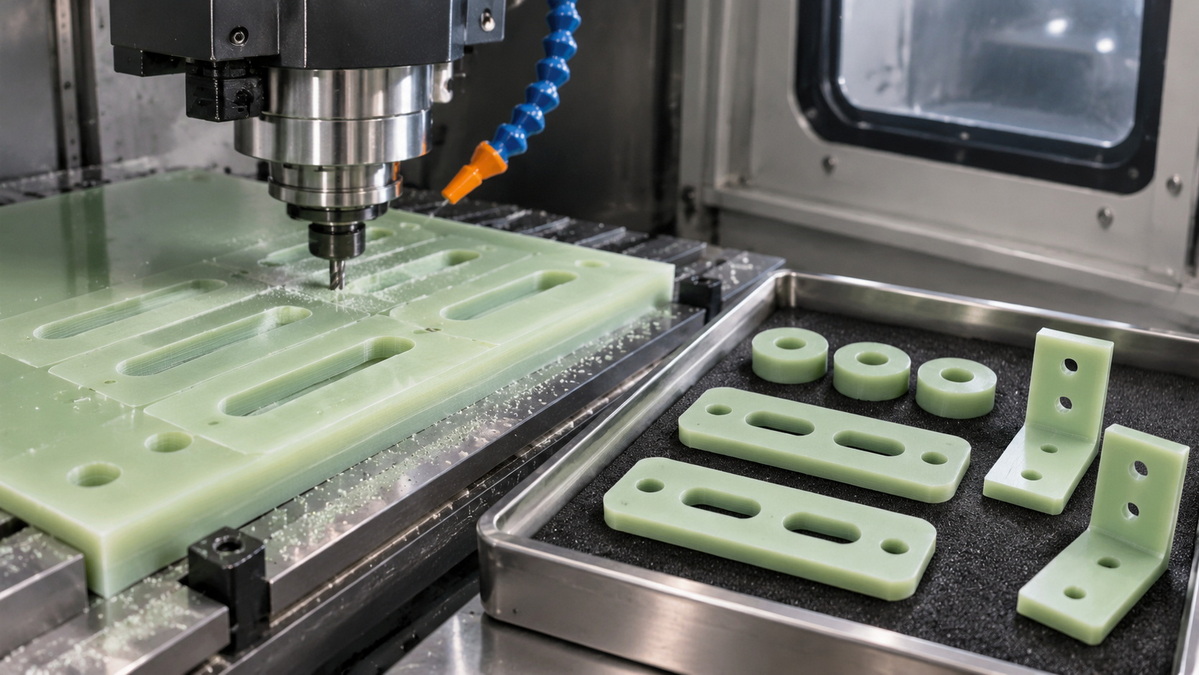
MOQ means minimum order quantity. Published figures below are not audited or guaranteed; a product-page MOQ may differ from the minimum for a pilot lot, a nonstock thickness, or a custom-machined part. "Not confirmed" means no usable figure or credential was established from the cited evidence.
| Supplier | Best initial RFQ | Publicly reported capacity or output | Public G10 MOQ | Public certification or compliance evidence |
|---|---|---|---|---|
| Guangdong Weishi | CNC parts, prototypes, repeat OEM orders | 100+ tonnes/month across product categories; not G10-only | Not confirmed | Offers CoA and RoHS documentation; request reports for the exact grade. |
| Jiujiang Xinxing | Multi-grade laminate, prepreg, and machining | G10-specific figure not confirmed | Not confirmed | Request the current site certificate and lot-specific records. |
| Hebei JingHong | Larger sheets and nonstandard formats | 13,000 tonnes/year listed as productivity with unclear scope; 43,000 tonnes/year stated across two factories | 500 kg listed | Publishes technical data; confirm the site certificate and acceptance limits separately. |
| Zhejiang Jingjing | Standard and specialty laminates | G10-specific figure not confirmed | Not confirmed | ISO 9001:2015 and ISO 14001 listed; verify status and scope. |
| Jiujiang Xinrui | G10 plus solder-pallet materials | Site area disclosed; G10 output not confirmed | Not confirmed | Request plant certificates and grade-specific reports. |
| Guangde Huachang | Multi-grade OEM/ODM quotation | Not confirmed | Not confirmed | Request the certificate for the site making the order. |
| XYH | Catalog G10 quote and cut-blank comparison | Not confirmed | Not confirmed | Product listing references ISO 9001, SGS, and RoHS; obtain the actual documents. |
| Xuchang Zhonghao | Cut insulation stock, subject to grade verification | Not confirmed | Not confirmed | ISO 9001, ISO 14001, and ISO 45001 listed; these do not resolve the G10/3240 discrepancy. |
| Xuchang Rainyan | MOQ and price benchmarking | Not confirmed | 500 kg on a surfaced offer | Marketplace audit badge is not a grade-specific certificate. |
| Xin Cheng | Sheet and tube sourcing comparison | Not confirmed | Not confirmed | Directory listing only; verify the mill and all applicable documents. |
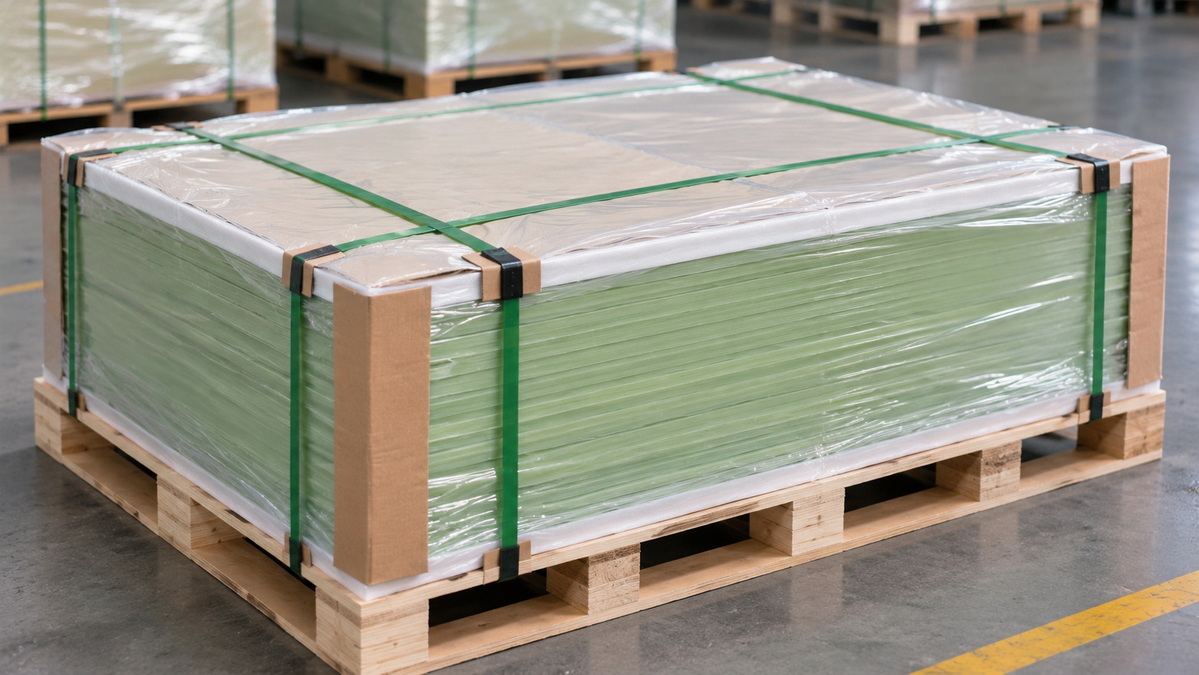
Specify the grade and governing standard, sheet dimensions, usable area, thickness tolerance, flatness, order volume, and acceptance tests. For machined components, attach a controlled drawing with datums, critical features, tolerances, and edge-finish requirements. Ask suppliers to quote stock sheets, cut blanks, and completed parts separately where applicable. A quote per kilogram is not directly comparable with a price per accepted finished part. For example, a landed sheet lot costing US$1,200 that yields 950 acceptable blanks costs about US$1.26 per blank before machining—not US$1.20 based on a theoretical yield of 1,000.
Ask for the Chinese legal entity name, business license, production-site address, and names of any subcontractors handling pressing or conversion. During a live audit, follow one traceable job from raw materials through pressing, trim, inspection, and packing. A mill-plus-converter arrangement can work; the risk is an undisclosed source change or unclear responsibility when a lot fails. For a recurring contract, ask for available capacity on your grade and thickness, the lead time for repeat orders, and the contingency plan if a press goes offline.
Use a catalog sample for preliminary fit or machinability. Before signing off, request full sheets or coupons drawn from a normal production lot, with a lot-specific CoA. If you buy finished parts, approve a first article made from that material on the proposed equipment. Then inspect a pilot shipment in its actual export packaging. Check that the sheet labels, part records, packing list, and CoA reconcile before releasing repeat orders.
Color and appearance are not acceptance tests. Require the quoted grade and lot on the shipping label and CoA, and prohibit material, formulation, or plant changes without written approval. For full sheets, define thickness and flatness measurement locations, edge exclusion, and the usable rectangle after trimming. For close-tolerance parts, specify what counts as an unacceptable chip or delamination and where dimensional checks take place.
Ask each supplier for pallet dimensions, gross weight, packaging materials, and the delivery term with a named place. Check with your broker whether the product is being declared as raw laminate sheet or as a finished component; do not copy a tariff code from a supplier listing without verification. For large sheets, agree on rigid support, corner protection, moisture protection, and pallet identification by lot. Confirm who pays for inspection, expedited replacement, or return freight if material is damaged or rejected.
Do not approve volume production merely because a sample passes and a CoA is attached. Ask the supplier to show that the tested coupon came from the lot you are buying. Have the factory identify the parent sheet or press lot, mark the coupon's location and direction, and reconcile that identifier with the pallet label. For a tight-tolerance full-sheet order, consider sampling from both the center and an agreed near-edge location within the usable area. Retain a labeled coupon or finished part for complaint investigation and comparison against future lots. This check does not replace qualification testing; it prevents a conforming but unrelated sample from becoming the basis for approving a shipment.
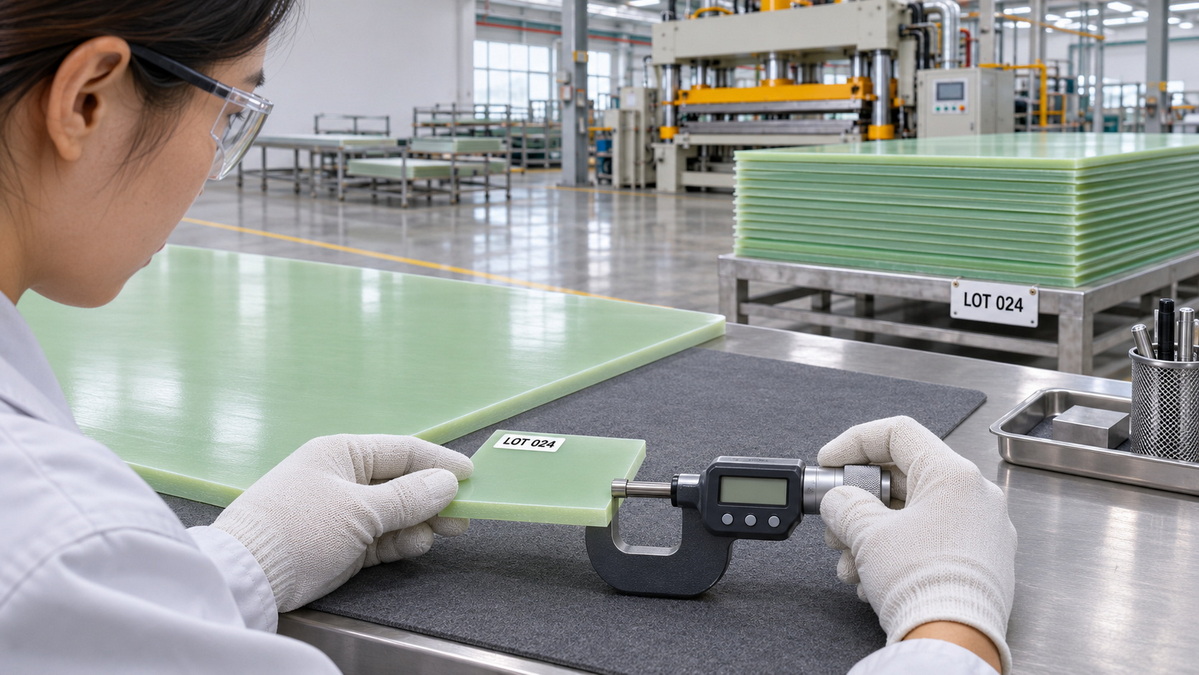
Start with two or three candidates whose published capabilities match the job. For recurring full-sheet orders, prioritize verified press capacity and usable sheet area. For a drawing-based program, give more weight to engineering response, first-article quality, and traceability after machining. For an electrical safety application, do not release the order until the exact grade, test conditions, and compliance evidence match the design requirements.
For a quotation from Guangdong Weishi New Materials Co., Ltd., email `ws@gdwsxcl.com` with your drawing revision, required grade, sheet thickness, annual volume, and destination. Ask for separate sample, pilot, and recurring-production terms, along with available inspection records and any tolerance exceptions. That gives your team a documented basis for comparing Weishi with the other candidates.
Request the certificate number, legal entity, site address, scope, and any multi-site annex. Search by certificate number or entity name in the verification database and check the status, certifier, and scope—not only the expiry date on the PDF. If the record is missing or differs from the supplier's copy, confirm it directly with the issuing certification body. A valid certificate for a sales office does not establish that the pressing plant is covered.
No. A shared press or fabric reinforcement does not establish that the two laminates use the same formulation or meet the same requirements. Ask for documentation tied to the exact G10 grade, relevant thickness, and required test conditions. If flame performance is mandatory, obtain evidence for the exact offered material rather than borrowing a result from the supplier's FR4 line.
First check whether the prototype and production parts came from the same grade, thickness range, and production route. Then separate the laminate's incoming thickness and flatness variation from machining variation. Compare the inspection reports against the same drawing revision, datums, and measurement setup. For the next pilot, have the supplier record incoming sheet measurements and finished critical dimensions against the same lot identifier.
Not automatically. Ask whether the report and declaration cover the black formulation and any added adhesive or backing. If they do not, request supporting records for the additional materials and determine what further evidence your finished equipment requires. Keep that evidence with the approved part revision so a later material change does not silently invalidate it.
Define the material properties, dimensions, and compliance requirements that matter to the application, then use the same approved drawing and acceptance plan at both sources. Compare pilot parts from normal production lots and have the responsible engineering or quality team decide which tests can be bridged and which must be repeated. Keep separate source approvals and require change notification from both plants. A shared "G10" label is not enough to establish interchangeability.
1.International Electrotechnical Commission — IEC 60893-3-2 and Amendment 1, requirements for rigid laminated sheets based on epoxy resins. [webstore.iec]
2.General Administration of Customs of the People's Republic of China — official trade statistics, including 2026 export tables and monthly bulletins. [english.customs.gov]
3.European Commission — official guidance on the RoHS Directive and CE marking. [environment.ec.europa]
4.IAF CertSearch — certificate status, scope, site, and certification-body verification. [iafcertsearch]
5.Grand View Research — 2026 China Fiberglass Market Outlook, with 2025 estimates and projections through 2033; not a G10-specific market study. [grandviewresearch]


