

Views: 211 Author: Weishi Sheets Publish Time: 2026-10-18 Origin: Site
Content Menu
● How This Mica Board Supplier Shortlist Was Selected
>> 1. Product Relevance and Manufacturing Scope
>> 2. Engineering and Development Capability
>> 3. Quality Control and Compliance Documentation
>> 4. Capacity and Delivery Transparency
>> 5. Customization and Commercial Fit
● Why Source Mica Boards from China?
>> Established Manufacturing and Application Networks
>> What the Latest Official Data Shows
● Understanding Mica Board Before Comparing Suppliers
>> Reconstituted Mica Board Is Not the Same as Natural Mica Sheet
>> Muscovite and Phlogopite Grades
>> Why Binder Behavior Matters
>> Standards and Compliance: What Buyers Should Request
● Top 10 Mica Board Manufacturers and Supply Partners in China
>> 1. Guangdong Weishi New Materials Co., Ltd.
>> 2. Zhejiang Rongtai Electric Material Co., Ltd. — Glory Mica
>> 3. PAMICA
>> 4. Hubei Zhongtian Mica Products Co., Ltd.
>> 5. HighMica
>> 6. Ningbo Ram Electric Material Ltd.
>> 7. Yangzhou Shengkai Electrical Insulation Co., Ltd.
>> 8. Sichuan Meifeng Mica Industry Co., Ltd.
>> 9. Ningbo Kaxite Sealing Materials Co., Ltd.
>> 10. Hangzhou Weshare Import & Export Co., Ltd.
● Supplier Comparison: Capacity, MOQ, and Certification
● Buyer's Guide: How to Qualify a Mica Board Supplier
>> Step 1: Issue an Application-Based Specification
>> Step 2: Verify the Factory and Contracting Entity
>> Step 3: Use a Controlled Sample Process
>> Step 4: Separate Marketing Claims from Compliance Evidence
>> Step 5: Confirm Logistics and Customs Classification
● Common Procurement Pitfalls and How to Avoid Them
>> Pitfall 1: Comparing Boards with Different Formulations
>> Pitfall 2: Treating Peak Temperature as a Continuous Service Rating
>> Pitfall 3: Using Total Factory Output to Judge Board Availability
>> Pitfall 4: Accepting Historical Certificates or Company Dates Without Checking
● Insider Buying Check: Approve the Post-Heat Function, Not Just the New Board
● Conclusion: Select the Supplier That Can Reproduce the Approved Specification
● FAQ
>> 1. How can I verify whether a manufacturer's ISO certificate has expired or been suspended?
>> 2. Does a CE certificate prove that a mica board is suitable for European customers?
>> 3. Can I use a mica board's advertised maximum temperature as its continuous operating temperature?
>> 4. How should I compare suppliers when one quotes kilograms and another quotes finished pieces?
>> 5. How can I prevent production shipments from differing from approved samples?
Choosing a mica board manufacturer is not simply a matter of comparing price per kilogram. For professional buyers, the more important questions are whether the supplier controls its material formulation, maintains consistent lamination quality, supports application-specific testing, and can repeat the approved specification across future shipments.
China offers an established supply base for mica insulation materials, with suppliers serving electrical heating, household appliances, industrial equipment, fire-resistant cables, and battery protection applications. The U.S. Geological Survey's February 2026 report states that China supplied 73% of U.S. sheet mica imports during 2021–2024. However, this category includes several forms of mica and worked mica products; it should not be interpreted as China's share of the global mica board market.
This guide examines ten China-based manufacturers and supply partners worth evaluating. It starts with Guangdong Weishi New Materials Co., Ltd., a composite insulation manufacturer with a mica sheet product category, before covering specialist mica producers and application-focused suppliers.
The central purchasing principle is traceability: buyers should be able to connect the delivered board to its material grade, production site, inspection results, and approved sample.
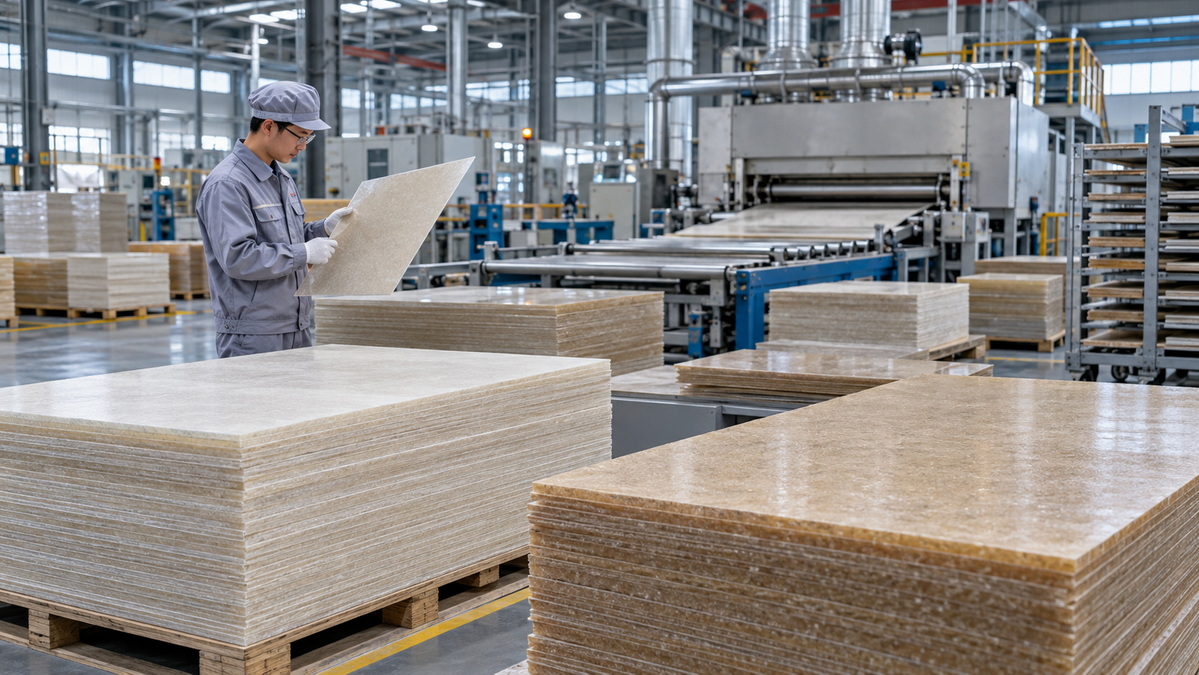
This is an editorial purchasing shortlist, not an independently audited ranking by revenue, production volume, or product quality. Guangdong Weishi appears first as the featured company commissioning this guide. Its position does not imply that it is China's largest mica board producer.
The assessment draws on public company websites, supplier profiles, official technical standards, and government commodity reporting. Company-reported production figures and certification claims remain subject to buyer verification.
Where public information does not establish a founding date, current certificate, mica-specific capacity, or minimum order quantity, the guide identifies that limitation rather than supplying an unsupported number.
A supplier should demonstrate a relevant mica product range: rigid mica boards, flexible mica sheets, thick mica plates, tubes, washers, or machined insulation components.
Buyers should also distinguish among:
- Manufacturers that produce mica paper and laminate boards.
- Manufacturers that convert purchased boards into finished components.
- Integrated insulation suppliers offering several material families.
- Export companies coordinating production through partner factories.
These business models can all support purchasing projects, but they require different verification procedures.
The assessment considers whether the supplier publishes technical specifications, identifies application sectors, and supports customized insulation products.
A practical engineering discussion should cover operating temperature, voltage, mechanical loading, assembly conditions, and dimensional requirements—not just sheet size and price.
Useful evidence includes a documented quality system, product-specific test results, batch identification, and a clear relationship between certificates and the actual manufacturing site.
A certificate logo on a website is not equivalent to a verified, current certificate.
Public capacity information is useful only when its scope is understood. Total output across mica paper, tape, tubes, and sheets cannot automatically be treated as mica board capacity.
Likewise, total composite-material production is not evidence of mica-specific production volume.
The shortlist includes suppliers with different purchasing profiles, from broad composite-material support to specialist mica production and custom component supply.
For smaller brands and equipment manufacturers, willingness to support drawings, trial orders, specification revisions, and repeat-order consistency can matter more than headline factory size.
The companies reviewed here illustrate several relevant regional concentrations:
- Tongcheng and Xianning in Hubei are home to PAMICA and Hubei Zhongtian, both active in mica insulation materials.
- Jiaxing, Ningbo, and Hangzhou in Zhejiang offer mica laminates, converted components, industrial sealing materials, and export-oriented supply services.
- Yangzhou in Jiangsu has suppliers serving electric furnace accessories and electrical insulation applications.
- Guangdong provides access to broader composite insulation capabilities, including Weishi's epoxy fiberglass and related material portfolio.
These locations are useful starting points for supplier discovery, but a regional address does not prove that a particular company performs every production step in-house.
The USGS Mineral Commodity Summaries 2026 estimates that U.S. sheet mica imports reached 5,100 metric tons in 2025, compared with 4,520 metric tons in 2024. It also reports that the United States remained fully import-dependent for this category on a net-import-reliance basis.
This supports the importance of international mica supply chains. It does not establish a reliable global market value for finished mica boards or provide a verified ranking of Chinese board manufacturers.
Procurement teams should therefore avoid using broad "mica market" figures as a substitute for application-specific supplier qualification.
Commercial mica insulation boards commonly use mica paper bonded with a suitable resin and consolidated into a laminated product.
For example, PAMICA describes its heating-equipment mica plates as mica paper impregnated with high-temperature-resistant silicone resin, followed by lamination. Its published specifications distinguish mica content from binder content.
Natural mica sheets, reconstituted mica boards, and epoxy fiberglass laminates are different material categories. A quotation should identify exactly which category is being offered.
Muscovite and phlogopite are the commercially important mica types identified by the USGS. Both appear in rigid mica materials covered by the relevant heating-equipment standard.
Do not select a board based on the mineral name alone. Ask the supplier to identify:
- Mica type and grade designation.
- Binder system.
- Mica and binder content.
- Nominal thickness and tolerance.
- Electrical performance and test conditions.
- Temperature rating and its duration basis.
- Whether the board remains self-supporting after heat exposure.
The applicable mica standard recognizes that the binder may be driven off during service, leaving material that needs support. Alternatively, the binder may remain wholly or partly, allowing a self-supporting material if the binder withstands the operating temperature.
This distinction is particularly important for boards used as unsupported separators, bolted barriers, or structural insulation parts.
A high advertised temperature does not, by itself, establish that a board will retain its original mechanical function at that temperature.
IEC 60371-3-3 specifically addresses rigid mica materials for electrical heating equipment. Buyers should identify the appropriate material standard and agreed test methods rather than accepting a generic statement that a product "meets IEC."
CE marking also requires careful interpretation. The European Commission states that not all products require CE marking and that it must not be affixed to products outside the relevant legislation. A generic "CE certificate" should therefore not be treated as universal proof of mica board quality or suitability.
For suppliers advertising RoHS or REACH compliance, request the underlying declaration or report for the exact product grade being purchased. HighMica, for example, publishes such compliance claims, but buyers still need to examine the supporting documentation.
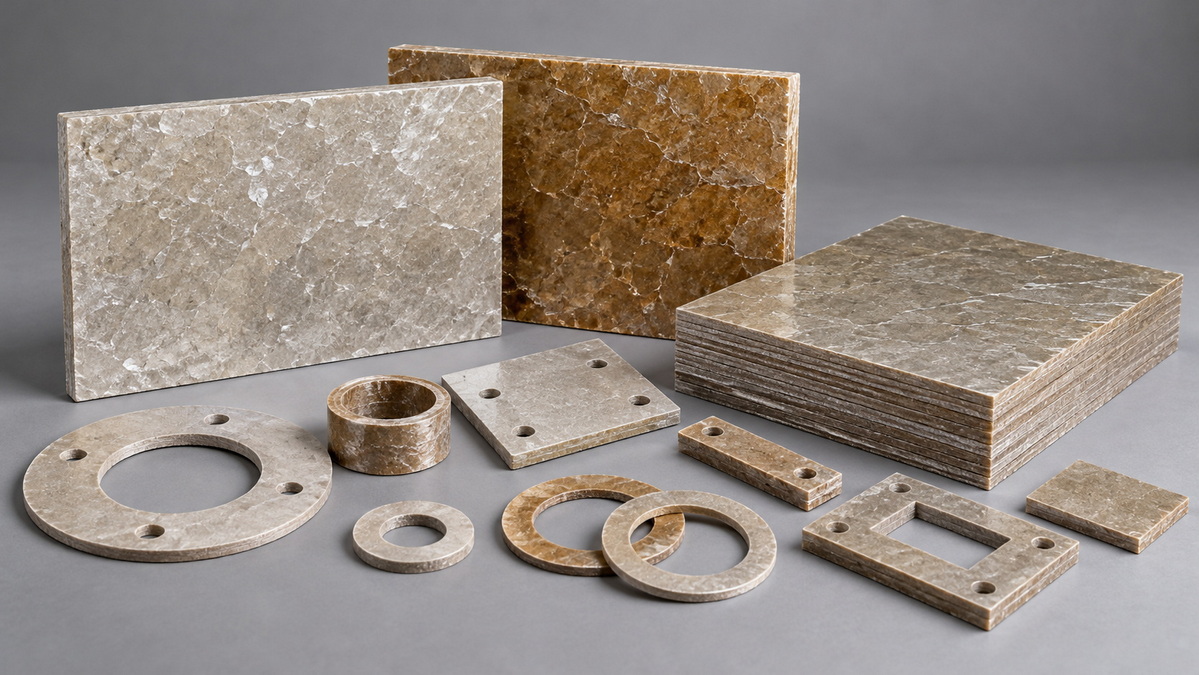
Guangdong Weishi is a practical starting point for buyers who need mica sheets alongside epoxy fiberglass insulation materials and customized composite components.
Its website states that the company was founded in October 2007 in Heyuan, Guangdong. It reports a building area exceeding 16,000 square meters, ten engineers, more than sixty technical staff, and monthly production exceeding 100 tons. These figures describe its broader composite-material operation—not verified mica board output.
- Established: October 2007.
- Location: Heyuan, Guangdong.
- Core strengths: Broad composite insulation portfolio, including FR4 and related fiberglass materials, with a mica sheet category.
- Market focus: Electronics, electrical equipment, machinery, and other industrial insulation applications.
- Customization scope: The website offers support for developing product ideas and designs for mass production.
For small and medium-sized brands, Weishi's potential value lies in coordinating material selection and customized parts within a broader insulation project. This can be relevant when an assembly requires both heat-resistant mica barriers and mechanically robust epoxy fiberglass components.
Its engineering resources and design-support offering provide a basis for evaluating development capability. However, "cost-effective" should be established through a comparable quotation covering machining, inspection, packaging, and delivered cost—not assumed from positioning.
Buyers should also assess communication efficiency during the quotation stage: does the team clarify drawings, identify missing tolerances, and document revisions accurately?
Before ordering, confirm whether the selected mica grade is laminated in-house, converted from purchased stock, or supplied through a production partner. Published information does not establish mica-specific capacity, MOQ, or a current mica-specific certification package.
Zhejiang Rongtai, operating under the Glory Mica identity, is a specialist supplier of high-temperature mica insulation composites.
Public company information identifies a founding year of 1998 and a Jiaxing location. Its portfolio includes mica plates, tapes, tubes, heating elements, washers, and other insulation products.
- Established: 1998.
- Location: Jiaxing, Zhejiang.
- Core strengths: Broad specialist mica portfolio and application-oriented insulation solutions.
- Market focus: New energy vehicles, household appliances, wire and cable, rail transportation, and industrial equipment.
- Customization scope: Mica parts, washers, tubes, heating elements, and application-specific insulation components.
Rongtai is worth evaluating when buyers want several mica product formats from one specialist supplier.
Its marketplace listings show a 50 kg minimum for certain rigid, flexible, and thick mica plate products. This is a listing-specific indication, not a universal factory MOQ. Request confirmation for the selected grade, thickness, and machining requirement.
PAMICA offers mica insulation materials, fiberglass products, and newer insulation materials for battery-related applications.
Its official history distinguishes the current technology corporation, established in 2015, from the Hubei operation described as having established its headquarters in 2000. Other public profiles refer to earlier origins, so buyers should verify the history of the exact legal entity issuing the quotation.
- Established: Current corporation stated as 2015; Hubei headquarters history stated as 2000.
- Location: Tongcheng, Xianning, Hubei.
- Core strengths: Mica paper, boards, tapes, washers, and related insulation materials.
- Main markets: Its official history identifies entry into markets including the United States, Britain, and Korea.
- Customization scope: Heating insulation products, mica parts, and new energy insulation components.
A useful feature is its published mica plate specification table. Certain grades list mica content of at least 88% and binder content of no more than 12%, alongside identified test references. These values are grade-specific, not industry-wide requirements.
Its historical company information mentions eight production lines and annual output of 10,500 metric tons. Treat this as historical information requiring confirmation, not current mica board capacity.
Hubei Zhongtian is a specialist mica insulation manufacturer whose official company article states that it was established in 2001.
The same source describes a production facility exceeding 30,000 square meters and exports to more than thirty countries.
- Established: 2001, according to its official article.
- Location: Tongcheng area, Xianning, Hubei.
- Core strengths: Mica plates, tapes, paper, and other mica products.
- Market focus: Electrical and electronics applications, with an international customer base.
- Customization scope: Public company information lists precision-machined and customized mica components.
Zhongtian is relevant for buyers seeking a specialist supplier across multiple mica insulation formats.
Its public profiles advertise several quality and compliance credentials. Buyers should obtain the actual certificates and product reports, then verify the legal entity, site address, scope, and validity. A list of certification names does not establish that every board grade is covered.
HighMica publishes comparatively detailed information about its mica operation.
Its website states that it was established in 2007, operates a factory exceeding 6,000 square meters, employs more than 150 people, and has over ten engineers. It reports annual output of 8,000 tons of mica products.
- Established: 2007.
- Location: China; confirm the contracting entity and manufacturing address.
- Core strengths: Mica sheets, papers, tapes, rolls, tubes, gaskets, and other parts.
- Main markets: Company-reported exports to more than fifty countries and regions.
- Customization scope: Mica insulation components and spare parts for multiple industrial applications.
HighMica also states that its quality system is certified to ISO 9001:2015 and advertises RoHS and REACH compliance. These are company-published claims requiring documentary verification.
The reported 8,000 tons covers mica products generally. Buyers should ask how much capacity is available for the specific board grade and thickness being quoted.
Ningbo Ram offers mica sheets and other electrical insulation products. Its public product information includes an HP5 rigid mica sheet series for heating equipment.
- Established: Not verified from the reviewed public material.
- Location: Ningbo, Zhejiang.
- Core strengths: Mica sheet products and a broader electrical insulation offering.
- Market focus: Heating equipment and electrical insulation; regional sales distribution is not publicly established.
- Customization scope: Confirm cutting, drilling, and component-conversion capabilities against the project drawing.
The website also displays the Chinese name Ningbo Shuangyang Electrical Materials. Buyers should confirm the relationship between the English trading identity, registered company, and manufacturing site before contracting.
This supplier is suitable for further evaluation when rigid mica sheets for heating applications are the primary requirement. Current capacity, MOQ, and certification scope need direct confirmation.
Yangzhou Shengkai specializes in electric furnace accessories and high-temperature insulation products, including mica boards, mica paper, and related materials.
- Established: A third-party company record lists March 30, 2018; verify against the business license.
- Location: Baoying, Yangzhou, Jiangsu.
- Core strengths: Furnace-related insulation and mica board products.
- Market focus: Electric furnace and electrical insulation applications.
- Customization scope: Confirm board conversion, component dimensions, and furnace-specific parts against drawings.
A marketplace listing shows a 100 kg MOQ for one mica plate offering, while supplier search results display ISO 9001:2015. Neither should be generalized without reviewing the actual quotation and certificate.
Shengkai is worth considering for equipment builders whose purchasing requirements extend beyond flat boards to furnace insulation accessories.
Sichuan Meifeng's public supplier profiles identify a Ya'an-based operation offering mica tape, mica paper, and mica blocks. One profile claims mica-product activity dating to 1952.
- Established: Claimed industrial history from 1952; current legal-entity founding date remains unverified.
- Location: Ya'an, Sichuan.
- Core strengths: Mica paper, tape, blocks, and related mica processing.
- Main markets: International-facing supplier profiles; detailed geographic sales shares are not disclosed.
- Customization scope: Require written confirmation of current rigid board production and machined-part services.
This is the least fully documented board-specific candidate in the shortlist. Buyers should not infer current mica board capacity merely from the company's broader mica product history.
For a board project, request a current catalog, grade-specific datasheet, production-site information, and samples before treating it as a qualified manufacturer.
Kaxite is primarily an industrial sealing manufacturer with mica sheets included in its compression-sheet portfolio.
Its mica product information covers sheet forms, custom shapes, washers, gaskets, and heating-element applications.
- Established: Public websites give conflicting dates—1990 and 2009—so verify the current legal entity and claimed predecessor history.
- Location: Ningbo, Zhejiang.
- Core strengths: Sealing materials, sheet conversion, and mica-related gasket applications.
- Main markets: Company-reported supply to more than sixty countries.
- Customization scope: Shaped mica sheets, washers, and gaskets.
Kaxite is particularly relevant when mica is being purchased as a sealing or shaped insulation component rather than as a standalone board program.
Its catalog includes different mica forms. Buyers should specify whether they need natural mica, reconstituted mica, or a particular bonded laminate.
Weshare describes itself as a one-stop mica insulation purchasing enterprise with production and sales activities.
Its official company page states that it was founded in 2005 and offers mica plates, tapes, shaped products, heating parts, and products for new energy vehicles.
- Established: 2005.
- Location: Hangzhou, Zhejiang.
- Core strengths: Broad mica product sourcing and customized component supply.
- Market focus: Household appliances, cables, metallurgy, chemical equipment, and automotive-related applications.
- Customization scope: Washers, spacers, flanges, discs, gaskets, tubes, and other machined mica parts.
Weshare is useful to evaluate when a buyer prefers one commercial contact for several mica product formats.
Because it uses an import-and-export company identity, confirm the actual production site, subcontracting arrangements, and responsibility for quality approval and corrective action.
"Not disclosed" means that the reviewed sources did not establish a reliable current figure. It does not mean the supplier lacks capacity or certification.
| Supplier | Published capacity information | MOQ information | Certification or compliance evidence | Primary purchasing focus |
|---|---|---|---|---|
| Guangdong Weishi | Over 100 tons/month across composite materials; mica-specific output not disclosed | Not disclosed | Current mica-specific documents not established | Mixed-material insulation and customized composite projects. |
| Zhejiang Rongtai / Glory Mica | Current board capacity not established | 50 kg on selected mica plate listings | Request current certificates and grade-specific reports | Specialist mica boards and multiple insulation formats. |
| PAMICA | Historical 10,500 tons/year figure; current scope requires confirmation | Not established | Published grade specifications reference IEC and GB/T tests | Mica paper-to-component supply and thermal insulation. |
| Hubei Zhongtian | Facility over 30,000 m²; current board output not established | Not established | Public profiles advertise ISO and other credentials; verify documents | Specialist mica insulation products. |
| HighMica | Company-reported 8,000 tons/year across mica products | Not disclosed | Company claims ISO 9001:2015, RoHS, and REACH compliance | Broad mica portfolio and export supply. |
| Ningbo Ram | Not disclosed | Not disclosed | Current documents not established | Rigid mica sheets for heating equipment. |
| Yangzhou Shengkai | Not disclosed | 100 kg on one marketplace offering | ISO 9001:2015 displayed in supplier results; verify certificate | Furnace accessories and mica plates. |
| Sichuan Meifeng | Current board capacity not established | Not disclosed | Current documents not established | Mica paper and tape; board scope requires confirmation. |
| Ningbo Kaxite | Mica-specific output not disclosed | Product page offers various quantities; confirm commercially | Website claims ISO 9001; verify current scope | Mica gaskets and shaped sheet products. |
| Hangzhou Weshare | Manufacturing-site capacity not disclosed | Not disclosed | Current documents not established | Customized mica components and consolidated supply. |
The figures above are not directly comparable. Factory area, total composite output, total mica output, and historical production figures measure different things.
For a meaningful capacity comparison, ask each supplier to quote available monthly output for the same grade, thickness, dimensions, and inspection requirements.
Before requesting prices, prepare a controlled specification that states:
- Intended application and installation position.
- Mica type and required grade.
- Continuous operating temperature.
- Peak temperature and exposure duration.
- Working voltage and electrical acceptance requirements.
- Thickness, flatness, dimensions, and hole tolerances.
- Mechanical loading and assembly constraints.
- Required compliance documents.
- Forecast order quantities and delivery schedule.
This specification is especially important because the material standard recognizes that binder behavior can change whether a heated mica component remains self-supporting.
Request the business license, manufacturing address, and a process flow identifying which operations occur in-house.
For an ISO-certified supplier, check the certificate holder, site, scope, and status using IAF CertSearch and the issuing certification body. The IAF platform is designed to validate accredited certificates and their associated accreditation chain.
An export company can be a workable supply partner, but the contract should identify who controls production changes, inspection release, and corrective action.
A useful qualification sequence is:
1. Review the proposed grade and datasheet.
2. Obtain full-thickness material samples.
3. Inspect dimensions and machining quality.
4. Test the relevant electrical and thermal requirements.
5. Evaluate the part in its intended assembly.
6. Approve a pilot production lot.
7. Retain an identified reference sample and specification.
For heating-equipment boards, use the appropriate mica material standard as the starting point, then add the requirements specific to the finished assembly.
Ask for reports that identify the exact material grade and test specimen, not merely a brand name.
Do not accept CE marking as a general quality badge. Its relevance depends on the legislation applying to the product, and the European Commission explicitly warns that voluntary certificates are not a substitute for the required conformity assessment.
Similarly, an ISO quality-system certificate and a product compliance report serve different purchasing purposes. Verify the quality-system certificate through the appropriate channels and evaluate product documentation separately.
The USGS report distinguishes natural mica tariff categories from plates, sheets, and strips of agglomerated or reconstituted mica under heading 6814.10. It also identifies other worked mica articles under 6814.90.
Use that distinction as a discussion point with your customs broker, not as a final classification ruling.
Before shipment, agree on packaging, sheet support, corner protection, handling instructions, and responsibility for damaged goods. The RFQ should also distinguish factory completion time from inland transport and international transit time.
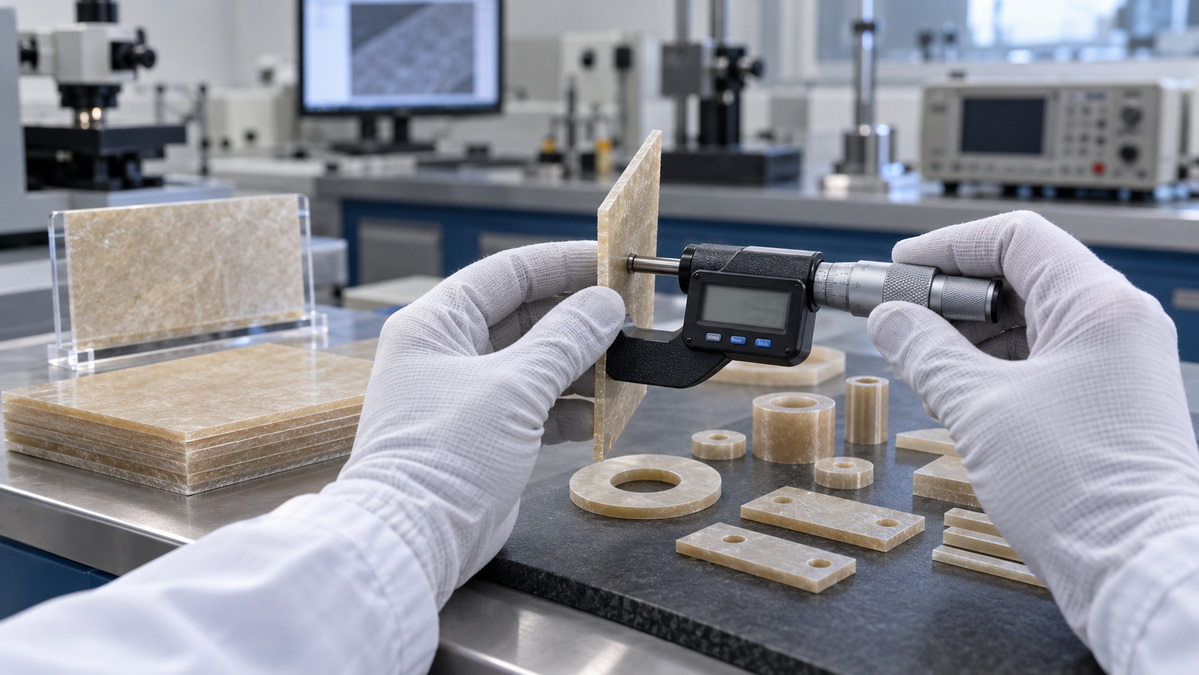
Two boards may have similar dimensions while differing in mica type, binder system, and composition.
PAMICA's grade tables illustrate why composition belongs in the purchasing specification: its selected products identify separate mica and binder content limits.
Avoid substitution risk by requiring a named grade, an approved datasheet, and written authorization before formulation changes.
A board's advertised heat resistance does not establish how it performs during prolonged exposure or whether it retains mechanical support.
Require the supplier to explain the rating basis and evaluate the board under the intended mounting conditions. The standard's distinction between supported and self-supporting material is directly relevant here.
Weishi's published output covers composite materials, while HighMica's reported output covers mica products generally. Neither figure establishes available capacity for one specific mica board grade.
Ask for a grade-specific production commitment and a delivery plan rather than relying on total tonnage.
Several supplier histories contain differing establishment dates or references to predecessor operations. Kaxite's public websites, for example, state both 1990 and 2009.
Resolve these differences against the current business license and contracting entity. For certifications, verify current status rather than relying on an old PDF or website logo.
A less obvious procurement issue is that a board can be satisfactory as delivered yet function differently after its binder has been exposed to service temperature.
The mica material standard explicitly allows for products whose binder is driven off during use and which subsequently require support. This means a visually acceptable new sheet is not sufficient evidence for an unsupported, load-bearing, or clamped installation.
Build a post-heat assessment into qualification:
- Test the actual grade and thickness.
- Use representative mounting and mechanical restraint.
- Inspect dimensions and physical condition after exposure.
- Reassess the relevant electrical requirements.
- Determine whether the assembly still provides the required support.
The purchase specification should state the required condition after thermal exposure, not only the appearance and dimensions at delivery. This directly connects the board's material behavior to its real function in the customer's equipment.
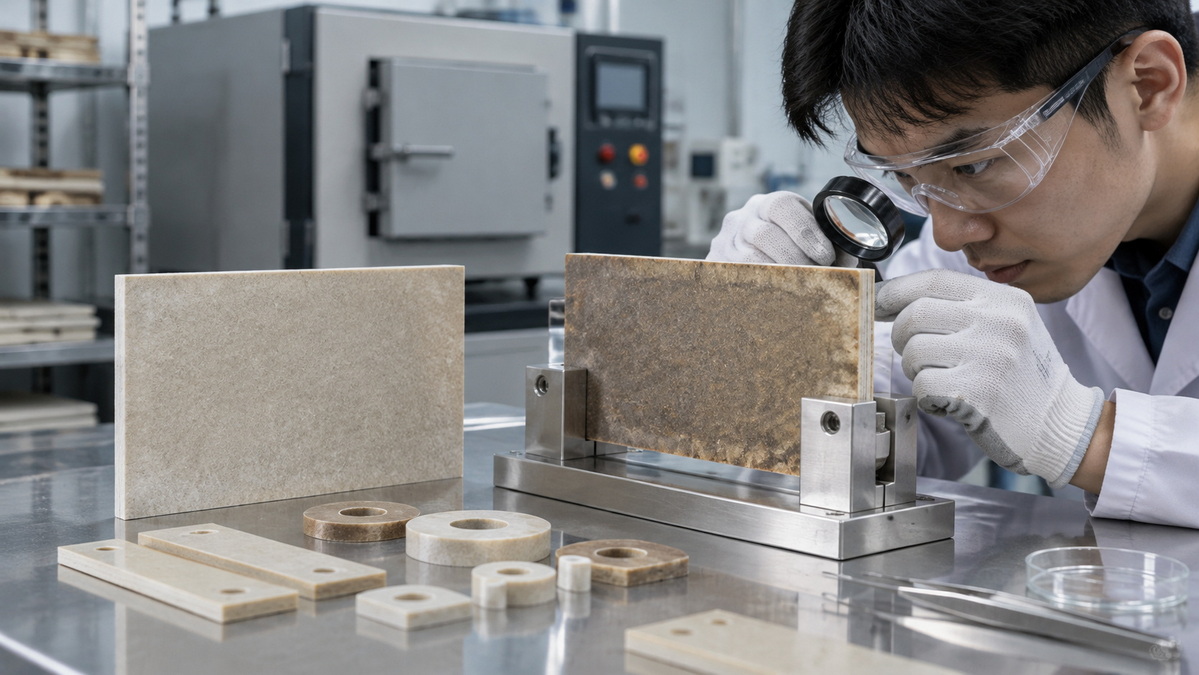
China offers a diverse mica board supply base, but the ten companies in this guide serve different purchasing needs.
Guangdong Weishi is worth evaluating for projects combining mica sheets, epoxy fiberglass materials, and customized insulation components. Specialist suppliers such as Rongtai, PAMICA, Zhongtian, and HighMica offer broader mica-focused portfolios, while other candidates emphasize heating applications, sealing components, or consolidated supply.
For a project-specific quotation from Guangdong Weishi New Materials Co., Ltd., submit your drawing, material requirements, operating conditions, annual demand, and documentation needs. Ask the team to confirm the mica grade, production route, sample plan, MOQ, and delivery schedule before commercial approval.
Weishi lists ws@gdwsxcl.com as its contact email and offers support for adapting product designs for mass production.
Search the certificate or company in IAF CertSearch, then cross-check the result with the issuing certification body.
Review the legal company name, manufacturing site, certification scope, certificate status, and validity information. IAF CertSearch verifies not only certificates but also the relationship between certification bodies and recognized accreditation bodies.
If information is missing or inconsistent, seek confirmation from the issuer before treating the certificate as valid.
No. CE marking applies only where the product falls within relevant legislation requiring it.
The European Commission states that not all products require CE marking and that it must not be used for products outside that scope. Suitability still requires application-specific technical evidence and the relevant chemical or product documentation.
Not without supporting information.
Ask what the rating means, how long the exposure lasts, and whether the material remains self-supporting afterward. The relevant mica standard recognizes that binder loss during service can leave a material requiring external support.
Normalize both quotations to the same approved drawing, material grade, inspection requirements, and delivery basis.
Separate raw-material cost from machining, tooling, testing, and packaging. Also confirm the MOQ for that specific configuration: Rongtai and Shengkai listings demonstrate that minimum quantities can vary by product offering rather than representing one universal supplier policy.
Specify the approved grade, formulation requirements, manufacturing site, and document revisions in the purchase agreement. Retain identified reference samples and require notification before changes.
For heating applications, include the required post-heat condition. This matters because boards that look similar before use may differ in binder behavior and their need for support after thermal exposure.
1.U.S. Geological Survey — Mineral Commodity Summaries 2026, Mica (Natural): official trade, production, and tariff-category information. [pubs.usgs]
2.U.S. Geological Survey — Mica Statistics and Information: commodity background and reporting resources. [usgs]
3.International Electrotechnical Commission — IEC 60371-3-3: rigid mica materials for electrical heating equipment. [webstore.iec]
4.International Accreditation Forum — IAF CertSearch: accredited certificate validation. [iafcertsearch]
5.International Accreditation Forum — accreditation and multilateral recognition framework. [iaf]
6.European Commission — CE Marking: scope, responsibilities, and restrictions. [single-market-economy.ec.europa]
7.European Commission — Conformity Assessment: requirements and warnings about unregulated certificates. [single-market-economy.ec.europa]


