

Views: 253 Author: Weishi Sheets Publish Time: 2026-08-19 Origin: Site
Content Menu
>> Main Components of FR4 Epoxy Sheet
● FR4 Sheet vs. General Epoxy Resin Sheet
● Key Properties of FR4 Epoxy Resin Sheet
>> Electrical Insulation Performance
>> Mechanical Strength and Rigidity
● Common Applications of FR4 Epoxy Sheet
>> Electrical and Electronic Equipment
>> Transformer and Motor Components
>> Industrial Fixtures and Precision Parts
>> Mechanical and Mold Applications
● How to Select the Right FR4 Sheet
>> Define the Electrical Requirement
>> Define the Mechanical Requirement
>> Define the Thermal Environment
>> Confirm Material Documentation
● FR4 CNC Machining Considerations
● Working With Guangdong Weishi New Materials
● Summary
● FAQ
>> Is FR4 the same as an epoxy resin sheet?
>> What is FR4 sheet mainly used for?
>> Can FR4 epoxy sheet be CNC machined?
>> What thicknesses are available for FR4 sheets?
>> How do I choose between FR4 and G11?
An FR4 epoxy resin sheet is a rigid electrical insulation material made from woven fiberglass cloth and flame-retardant epoxy resin. It is manufactured under heat and pressure to create a strong, stable laminate that performs well in electrical, electronic, mechanical, and industrial environments.
FR4 sheets are widely used when a component must provide electrical insulation, mechanical support, heat resistance, dimensional stability, and reliable machining performance. Common applications include electrical panels, transformer components, PCB fixtures, motor insulation parts, terminal boards, industrial spacers, CNC-machined parts, and mold tooling accessories.
Although the terms "FR4 sheet" and "epoxy resin sheet" are often used interchangeably, they do not always mean the same thing. FR4 is a specific type of epoxy fiberglass laminate with flame-retardant properties, while epoxy resin sheet is a broader category that may include several resin systems, reinforcements, and performance grades.
FR4, also written as FR-4, is a glass-reinforced epoxy laminate widely used as an electrical insulation and structural material. It is commonly produced by impregnating woven E-glass fabric with epoxy resin, stacking the treated layers, and curing them under controlled heat and pressure.
The final product is a hard, durable composite board with excellent electrical insulation performance and good mechanical strength.
The letters "FR" refer to flame-retardant performance. In practical terms, FR4 is designed to resist ignition and limit flame spread more effectively than ordinary epoxy fiberglass materials without flame-retardant formulations.
However, buyers should always verify the actual test data, certification status, and thickness-specific performance of the material they purchase. Different FR4 grades may use different resin systems, fiberglass styles, and production processes.
A typical FR4 epoxy resin sheet includes:
- Woven fiberglass cloth
- Flame-retardant epoxy resin
- Curing agents
- Thermal and processing additives
- Optional surface treatment or colored finish
The fiberglass cloth provides structural reinforcement. It gives the material rigidity, strength, and resistance to deformation.
The epoxy resin acts as the binding matrix. It holds the glass-fiber layers together while contributing to electrical insulation, chemical resistance, and thermal stability.
This combination creates a material that is stronger and more stable than many standard plastic sheets or non-reinforced resin boards.
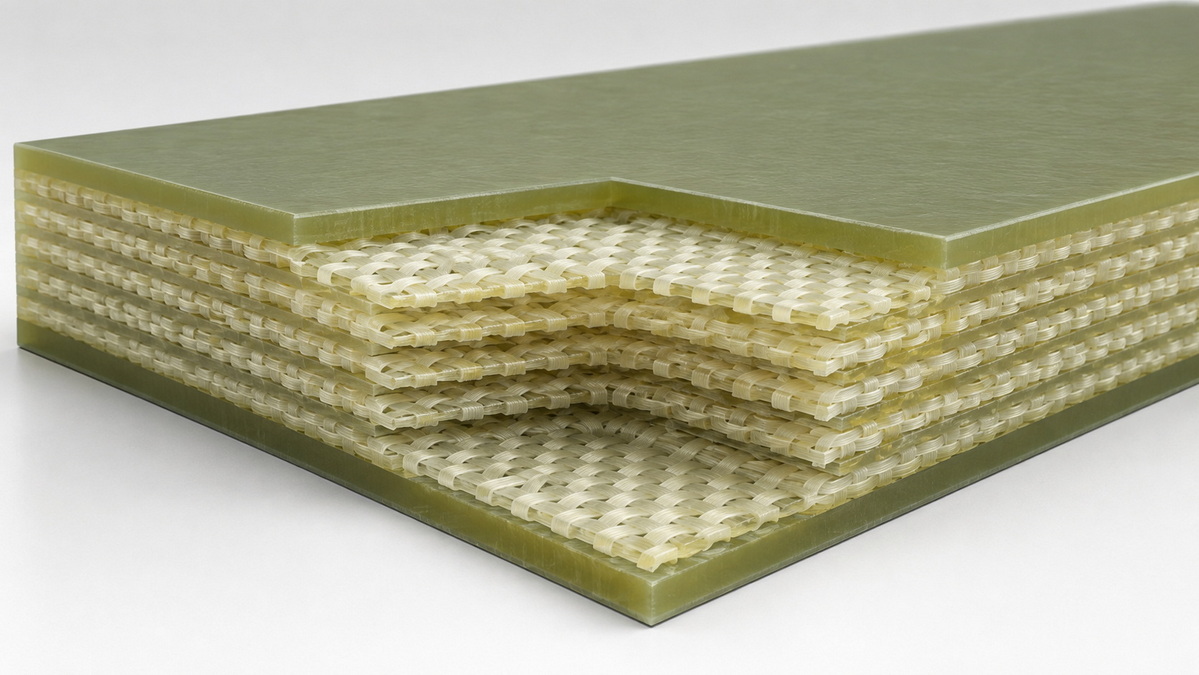
FR4 is an epoxy-based sheet, but not every epoxy resin sheet is FR4.
The phrase "epoxy resin sheet" can describe many different products. Some are reinforced with glass fiber. Others may use cotton fabric, paper, mineral fillers, carbon fiber, or no reinforcement at all.
This difference matters because the reinforcement and resin formulation directly affect electrical insulation, flame performance, heat resistance, machinability, and long-term reliability.
| Feature | FR4 Epoxy Resin Sheet | General Epoxy Resin Sheet |
|---|---|---|
| Material category | Specific flame-retardant glass epoxy laminate | Broad category of epoxy-based sheet materials |
| Reinforcement | Usually woven fiberglass cloth | May contain fiberglass, paper, cotton fabric, fillers, or no reinforcement |
| Flame resistance | Commonly selected for flame-retardant applications | Depends on resin formulation and grade |
| Mechanical strength | High rigidity and good structural strength | Can range from low to high |
| Electrical insulation | Excellent for electrical and electronic parts | Varies by composition |
| Heat performance | Good thermal resistance for many industrial uses | Depends on resin type and curing system |
| Machinability | Suitable for drilling, milling, routing, and CNC cutting | May vary significantly between products |
| Typical use | Electrical insulation, fixtures, switchgear, industrial components | General insulation, molded parts, decorative panels, mechanical parts |
For demanding industrial projects, the material name alone is not enough. Buyers should confirm the actual performance requirements before selecting a board.
For example, a low-voltage insulating spacer in a dry environment may use a general epoxy composite sheet. A transformer insulation support, switchgear barrier, or electronic fixture may require FR4 because of its more balanced electrical, mechanical, and flame-retardant performance.
FR4 is widely used because it provides a practical balance between insulation strength, mechanical durability, heat resistance, and processing flexibility.
One of the most important properties of FR4 is its ability to resist electrical current flow.
FR4 epoxy sheet can be used to separate conductive components and reduce the risk of unwanted current leakage, short circuits, arcing, or electrical breakdown. This makes it suitable for electrical assemblies that require reliable separation between energized components.
Important electrical properties may include:
- Dielectric strength
- Volume resistivity
- Surface resistivity
- Arc resistance
- Dielectric constant
- Dissipation factor
Dielectric strength is especially important. It refers to the voltage a material can withstand before electrical breakdown occurs through its thickness.
However, electrical performance is affected by more than the material grade. Buyers should also consider:
- Sheet thickness
- Working voltage
- AC or DC current conditions
- Humidity level
- Surface contamination
- Operating temperature
- Installation method
- Required creepage distance
- Required clearance distance
A thicker sheet does not automatically solve every insulation problem. The part design, electrical environment, assembly clearance, and material condition all influence final performance.
FR4 sheet has good tensile strength, flexural strength, and compressive strength because of its woven fiberglass reinforcement.
This makes the material useful for components that need to maintain their shape during installation, machining, clamping, fastening, vibration, or repeated handling.
Typical mechanically demanding applications include:
- Electrical insulation barriers
- Transformer support plates
- Motor insulation parts
- Terminal boards
- Switchgear components
- Industrial spacers
- CNC-machined precision parts
- Mold fixtures
- Drilling jigs
- Structural insulation brackets
Compared with many standard plastics, FR4 has better rigidity and dimensional stability. It is less likely to deform under moderate mechanical loading, especially when the correct sheet thickness and part geometry are selected.
FR4 offers useful thermal resistance for many electrical and industrial applications.
Standard grades are commonly used in environments with moderate heat exposure. Higher-temperature grades are available when a part must maintain stronger mechanical or electrical performance near heat sources.
When evaluating thermal performance, it is important to distinguish between several different conditions:
- Continuous operating temperature
- Short-term peak temperature
- Glass-transition temperature
- Thermal cycling frequency
- Mechanical load at elevated temperature
- Exposure to hot oil, air, or equipment surfaces
The glass-transition temperature is particularly important because it indicates the range where the epoxy resin matrix begins to lose stiffness.
For example, a part may remain physically intact at elevated temperature but lose some of its mechanical rigidity. In high-temperature applications, this can affect flatness, hole tolerance, fastening force, and long-term insulation performance.
For projects involving motors, power electronics, battery systems, heating equipment, or continuous thermal cycling, material selection should be based on actual operating conditions rather than room-temperature properties alone.
Flame resistance is one of the major reasons buyers choose FR4 over standard G10 epoxy fiberglass sheet.
FR4 is commonly used when a project requires a flame-retardant insulating material. It can help improve safety performance in electrical assemblies, electronic devices, industrial panels, and equipment where heat or electrical faults may occur.
Still, flame performance should be confirmed for the exact supplied material. Thickness, resin system, test method, and production formulation can all influence results.
When fire-related performance is important, buyers should request:
- Material technical data sheet
- Flame classification information
- Thickness-specific test details
- Material compliance documentation
- Batch traceability requirements
- Application-specific approval records
A clear material specification helps prevent substitution with a visually similar but technically different epoxy laminate.
FR4, G10, and G11 are all commonly used fiberglass-reinforced epoxy laminate materials. They share some similar characteristics, but each grade is intended for different operating conditions.
| Material Grade | Main Composition | Key Advantage | Main Consideration | Common Applications |
|---|---|---|---|---|
| FR4 | Flame-retardant epoxy resin with woven fiberglass | Balanced electrical, mechanical, and flame-resistant performance | Standard grades may not be ideal for long-term high-temperature conditions | Electrical insulation parts, terminal boards, switchgear, PCB fixtures |
| G10 | Standard epoxy resin with woven fiberglass | Good strength, rigidity, and machinability | May not provide the same flame-retardant performance as FR4 | Jigs, fixtures, mechanical insulating parts, structural components |
| G11 | Higher-temperature epoxy resin with woven fiberglass | Better performance under elevated temperatures | Usually requires a higher material budget and detailed specification review | Motor insulation, high-temperature equipment, demanding electrical assemblies |
FR4 is usually the preferred choice when the application requires:
- Electrical insulation
- Flame-retardant material performance
- Good mechanical strength
- Stable machining behavior
- Moderate heat resistance
- Long-term industrial reliability
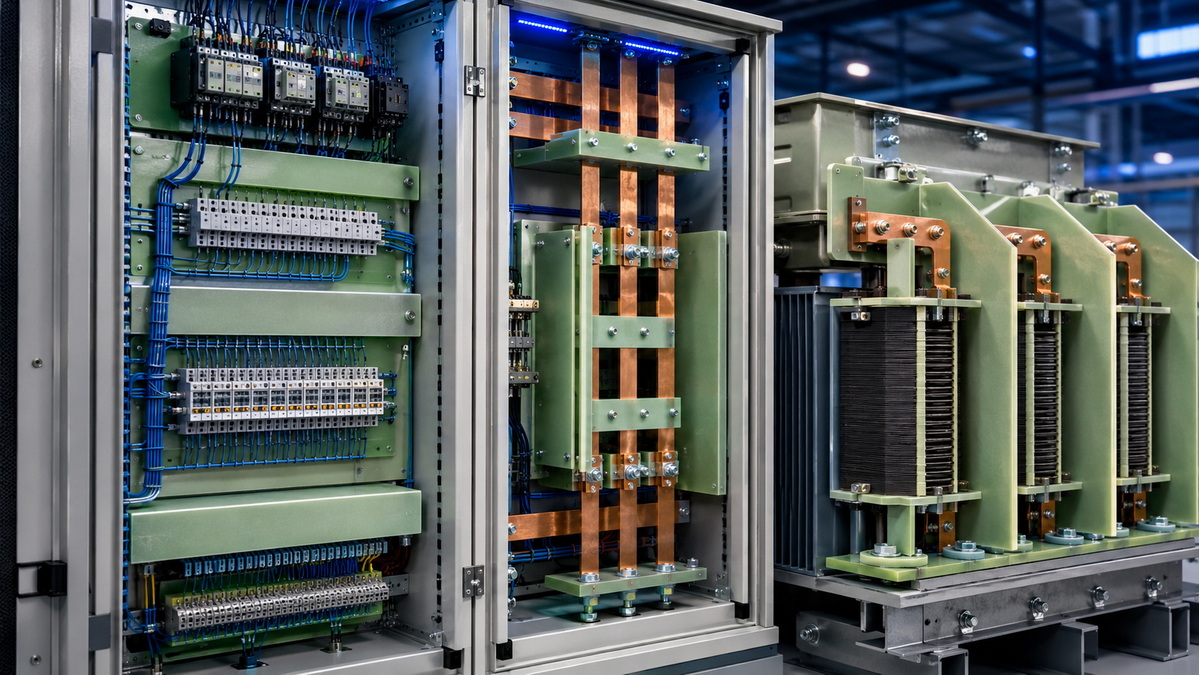
FR4 is commonly selected for electrical cabinets, transformers, switchgear, circuit-board fixtures, terminal boards, insulation washers, structural insulating components, and custom-machined parts.
G10 may be suitable when mechanical strength and machinability are more important than flame-retardant properties.
It is often used for industrial fixtures, structural parts, tool components, wear-resistant insulating elements, and other applications where the operating environment does not require a flame-retardant grade.
Before substituting G10 for FR4, buyers should confirm whether their final equipment, customer specification, or industry requirement includes flame-related performance criteria.
G11 is generally considered when a part must withstand higher temperatures while maintaining better electrical and mechanical properties.
It is often used in motors, high-temperature electrical systems, thermal insulation assemblies, and equipment that experiences continuous heat exposure.
G11 may be a better option than standard FR4 when temperature is the dominant selection factor. However, the final choice should also consider part thickness, mechanical loading, voltage level, humidity, and expected service life.
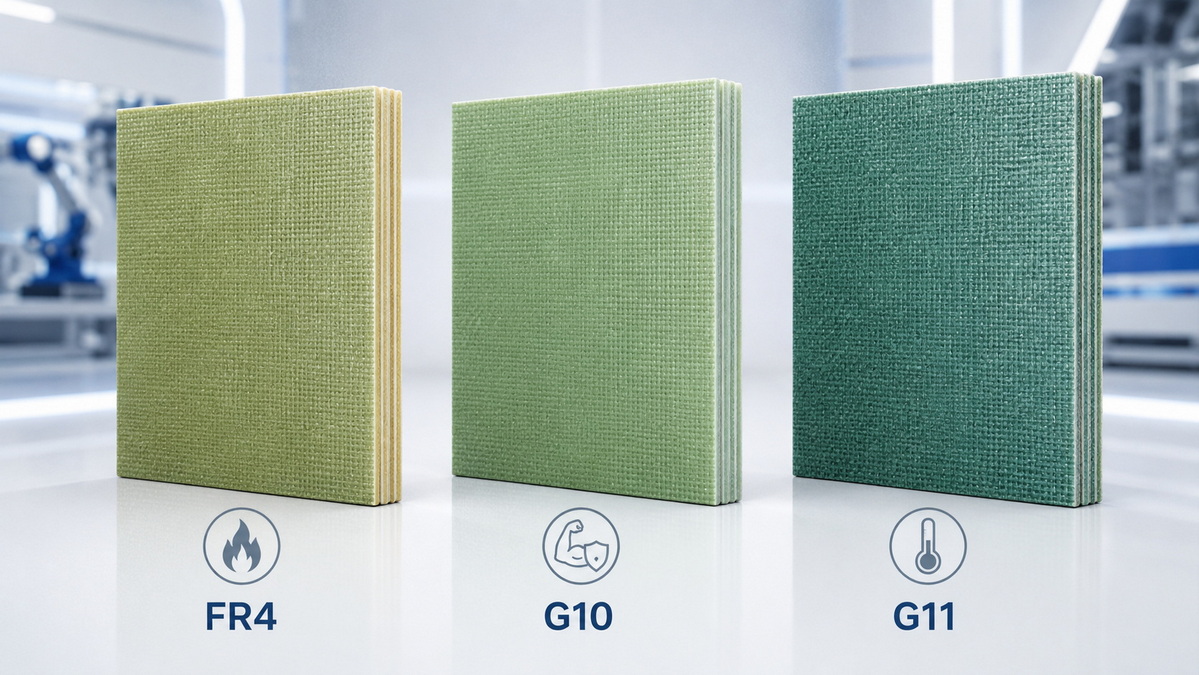
FR4 epoxy resin sheet is used in many industries because it can be supplied as full boards or machined into custom parts.
FR4 is frequently used for:
- Electrical insulation barriers
- Terminal boards
- Circuit board fixtures
- Switchgear insulation parts
- High-voltage spacers
- Relay components
- Electrical mounting plates
- Insulating supports
- Battery system insulation components
Its ability to resist electrical current flow makes it a reliable choice for separating conductive parts in compact assemblies.
FR4 can be used in transformer and motor-related applications, including:
- Transformer insulation plates
- Coil support components
- Motor terminal boards
- Slot insulation parts
- Insulating washers
- Electrical separators
- Structural supports
The correct grade should be selected according to the expected heat level, electrical load, vibration, and environmental exposure.
Because FR4 can be CNC-machined, it is suitable for industrial production tooling and precision components.
Examples include:
- Drilling fixtures
- Testing fixtures
- Assembly jigs
- Positioning plates
- Insulation pads
- Wear-resistant spacers
- Custom washers
- Precision routing templates
- Mold support accessories
FR4 is particularly useful when metal components would create an electrical conductivity risk or when standard plastics lack the required rigidity.
In mechanical processing and mold manufacturing, FR4 sheets can serve as insulating or non-conductive structural components.
Typical uses include:
- Mold insulation boards
- Non-conductive guide plates
- Pressing pads
- Machine isolation parts
- Spacer blocks
- Wear plates
- Structural inserts
- Custom CNC components
Choosing the correct FR4 sheet involves more than selecting a color, thickness, or sheet size. The material should match the final application environment.
Start by identifying the electrical conditions.
Consider:
- Operating voltage
- Required insulation distance
- AC or DC conditions
- Current load
- Risk of arcing
- Humidity exposure
- Surface contamination
- Electrical safety standards required by the final product
For higher-voltage applications, sheet thickness and component geometry should be considered together.
The finished FR4 part may need to withstand clamping, fastening, vibration, impact, or repeated handling.
Important questions include:
- Will bolts or screws compress the part?
- Does the component need drilled holes?
- Are narrow slots or complex shapes required?
- Is flatness important?
- Will the part experience repeated vibration?
- Does the design require tight tolerances?
Providing a detailed drawing helps ensure that the correct material thickness, machining method, and tolerance control are used.
Temperature affects the long-term performance of epoxy composite materials.
Document the following before selecting a grade:
- Normal operating temperature
- Maximum temperature
- Duration of heat exposure
- Frequency of thermal cycling
- Distance from heat sources
- Mechanical load during operation
- Expected service life
If the application operates close to the thermal limit of standard FR4, a high-temperature FR4 or G11 material may be more appropriate.
For industrial, export, and customer-approved projects, material documentation is essential.
A complete purchase review may include:
- Technical data sheet
- Certificate of conformity
- Thickness tolerance requirement
- Flame performance information
- Incoming inspection standard
- Custom machining drawing
- Sample confirmation
- Packaging requirement
- Labeling requirement
This process helps reduce the risk of receiving material that appears similar but does not meet the actual application requirement.
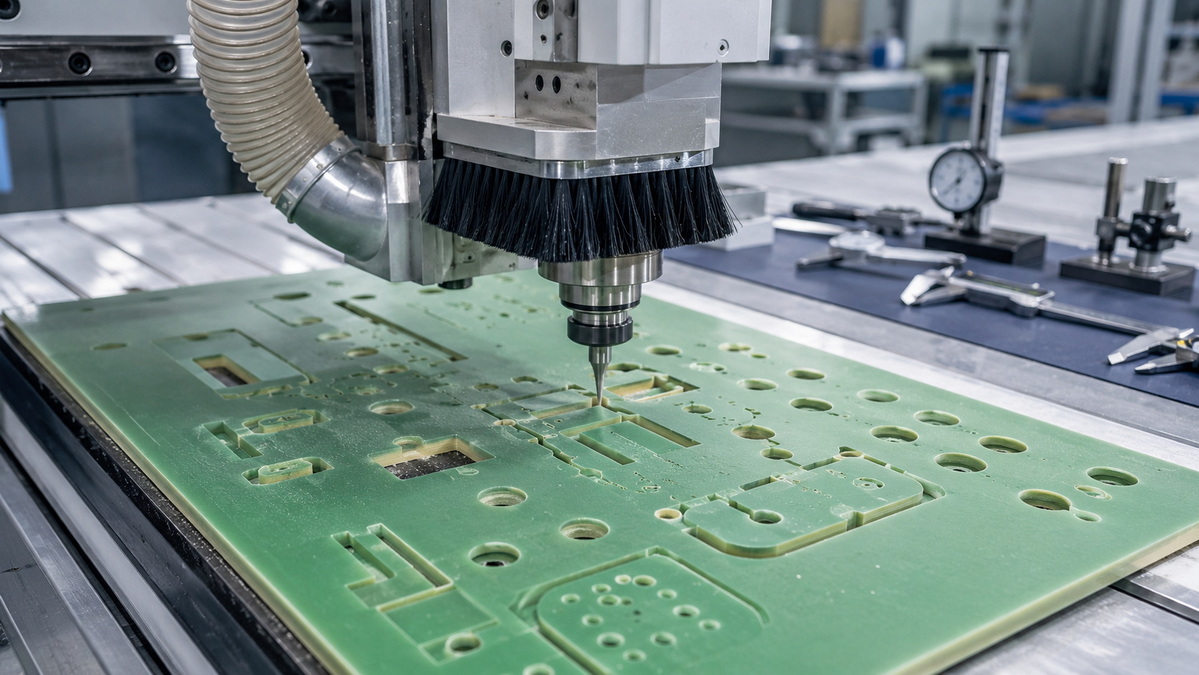
FR4 epoxy sheet can be drilled, routed, milled, cut, punched, and machined into complex components. Its fiberglass reinforcement provides rigidity, but it also makes the material more abrasive than ordinary plastic.
Machining quality depends on the correct combination of tooling, feed rate, spindle speed, workholding, and dust control.
Important machining considerations include:
- Use suitable carbide or diamond-coated cutting tools
- Maintain stable workholding during CNC processing
- Control drilling parameters to reduce delamination
- Use appropriate cutters for slots, holes, and edge finishing
- Remove burrs after machining
- Inspect hole positions and dimensional tolerances
- Use dust extraction near the cutting area
- Protect operators from fiberglass-containing dust
Fine dust may be generated during cutting, grinding, drilling, or sanding. Production environments should use appropriate extraction systems, personal protective equipment, and cleaning procedures.
Guangdong Weishi New Materials Co., Ltd. focuses on the development, production, and supply of high-performance epoxy insulation boards and composite materials.
Our product range includes:
- FR4 epoxy fiberglass sheets
- Epoxy glass cloth laminates
- G10 sheets
- G11 sheets
- Customized insulation components
- CNC-machined composite parts
- Industrial electrical insulation materials
We support customers in electronics, electrical equipment, mechanical processing, mold manufacturing, industrial machinery, and export-oriented manufacturing projects.
A dependable material solution requires stable sheet quality, accurate thickness control, suitable resin selection, reliable processing capability, and careful inspection before shipment.
For projects involving custom dimensions, drawings, operating temperatures, or electrical insulation requirements, sharing detailed technical information early helps ensure that the selected material matches the final application.
FR4 epoxy resin sheet is a high-performance fiberglass-reinforced epoxy laminate designed for electrical insulation and industrial use. It combines flame-retardant performance, strong mechanical properties, reliable machinability, thermal resistance, and dimensional stability.
Compared with general epoxy resin sheets, FR4 provides a more clearly defined solution for applications that require electrical insulation and flame-resistant composite material performance.
When selecting between FR4, G10, and G11, focus on the actual operating environment. Consider voltage, temperature, mechanical load, flame requirements, humidity, machining needs, and required service life before finalizing the material grade.
For custom FR4 sheets, machined insulation parts, or assistance comparing FR4, G10, and G11 materials, provide your drawing, thickness requirement, working environment, and expected quantity for a more accurate material recommendation.
No. FR4 is a specific flame-retardant epoxy fiberglass laminate. Epoxy resin sheet is a broader term that can include FR4, G10, G11, epoxy paper laminates, epoxy cotton laminates, and other epoxy composite materials.
FR4 sheet is commonly used for electrical insulation barriers, transformer parts, motor components, PCB fixtures, terminal boards, switchgear parts, industrial spacers, jigs, and CNC-machined composite components.
FR4 is generally preferred when flame-retardant performance is required. G10 may be suitable for applications focused on mechanical strength and machinability where flame-related requirements are not critical.
Yes. FR4 can be CNC-routed, drilled, milled, cut, and shaped into custom parts. Appropriate tools, machining parameters, dust extraction, and edge finishing are important for clean and accurate results.
FR4 has relatively low moisture absorption, but it should not be treated as universally suitable for all submerged or chemically aggressive environments. The specific grade, temperature, exposure duration, and electrical conditions should be evaluated before use.
FR4 sheets can be supplied in many standard and customized thicknesses. Availability depends on the material grade, sheet size, required tolerance, production process, and quantity.
Choose FR4 when electrical insulation and flame-retardant performance are the main requirements. Choose G11 when the material must retain stronger properties in higher-temperature environments. The final decision should consider voltage, heat exposure, mechanical load, and expected service life.
1. UL Solutions. [Standards for Evaluating Plastic Products]. [ul]
2. UL Solutions. [Combustion Fire Tests for Plastics]. [ul]
3. UL Solutions. [Understanding UL 94 Rating Certifications and Limitations]. [code-authorities.ul]
4. DigiKey. [FR-4 Glass Epoxy Technical Product Information]. [media.digikey]
5. ASTM International. [ASTM D149: Dielectric Breakdown Voltage and Dielectric Strength of Solid Electrical Insulating Materials]. [store.astm]
6. Intertek. [Dielectric Strength ASTM D149 and IEC 60243]. [intertek]
7. Ready Plastics. [NEMA G10 vs FR4, G11, G7 and G9 Laminates]. [readyplastics]
8. National Library of Medicine. [Destruction of Carbon and Glass Fibers During Chip Machining]. [pmc.ncbi.nlm.nih]
9. Massachusetts Institute of Technology. [Standard Operating Procedure for Epoxy]. [www-internal.psfc.mit]


