

Views: 253 Author: Weishi Sheets Publish Time: 2026-08-26 Origin: Site
Content Menu
● What Is G11 Epoxy Glass Fiber Sheet?
● How Is G11 Epoxy Glass Sheet Made?
● Key Properties of G11 Epoxy Glass Fiber Sheet
>> Heat Resistance and Thermal Stability
>> Electrical Insulation Performance
>> When Should You Choose G11?
>> When Might FR4 Be More Suitable?
>> Important Note on Flame Performance
● Common Applications of G11 Epoxy Glass Fiber Sheet
>> Motor and Generator Components
>> Transformer Insulation Parts
>> Mold and Mechanical Equipment Insulation
● How to Select the Right G11 Sheet
>> 6. Custom Machining Requirements
● Machining G11 Epoxy Glass Fiber Sheet
>> Practical Machining Considerations
● Common Buying Mistakes to Avoid
● Summary
>> What is G11 epoxy glass fiber sheet made of?
>> What temperature can G11 epoxy sheet withstand?
>> Is G11 epoxy sheet flame retardant?
>> Can G11 epoxy glass fiber sheet be CNC machined?
>> Is G11 suitable for humid environments?
>> What information is needed to order G11 sheets?
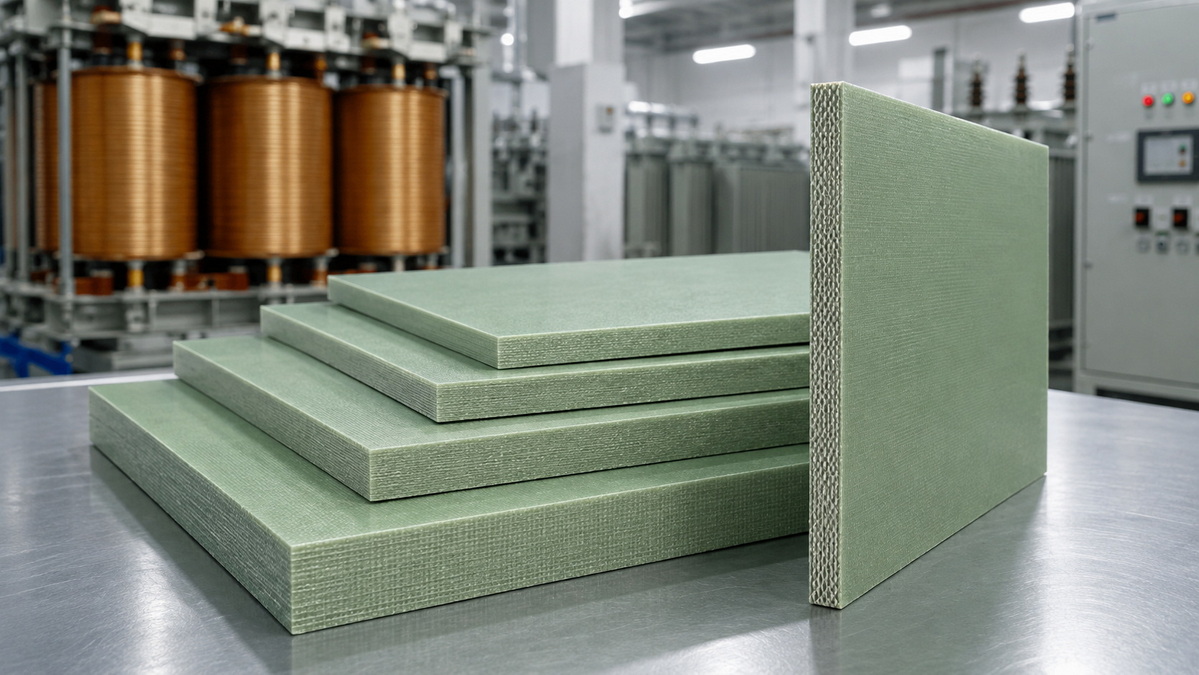
G11 epoxy glass fiber sheet is a rigid industrial laminate made from woven glass fabric and high-temperature epoxy resin. It is engineered for applications where electrical insulation, structural strength, and heat resistance must work together.
For manufacturers of motors, transformers, switchgear, molds, industrial equipment, and electrical assemblies, G11 is often selected when standard insulation boards cannot maintain reliable performance under higher operating temperatures.
At Guangdong Weishi New Materials Co., Ltd., G11 epoxy glass fiber sheet is supplied as full sheets, cut-to-size panels, and custom-machined insulation components. Material selection is based on the real operating environment, including temperature, voltage, humidity, mechanical load, thickness tolerance, and required part geometry.
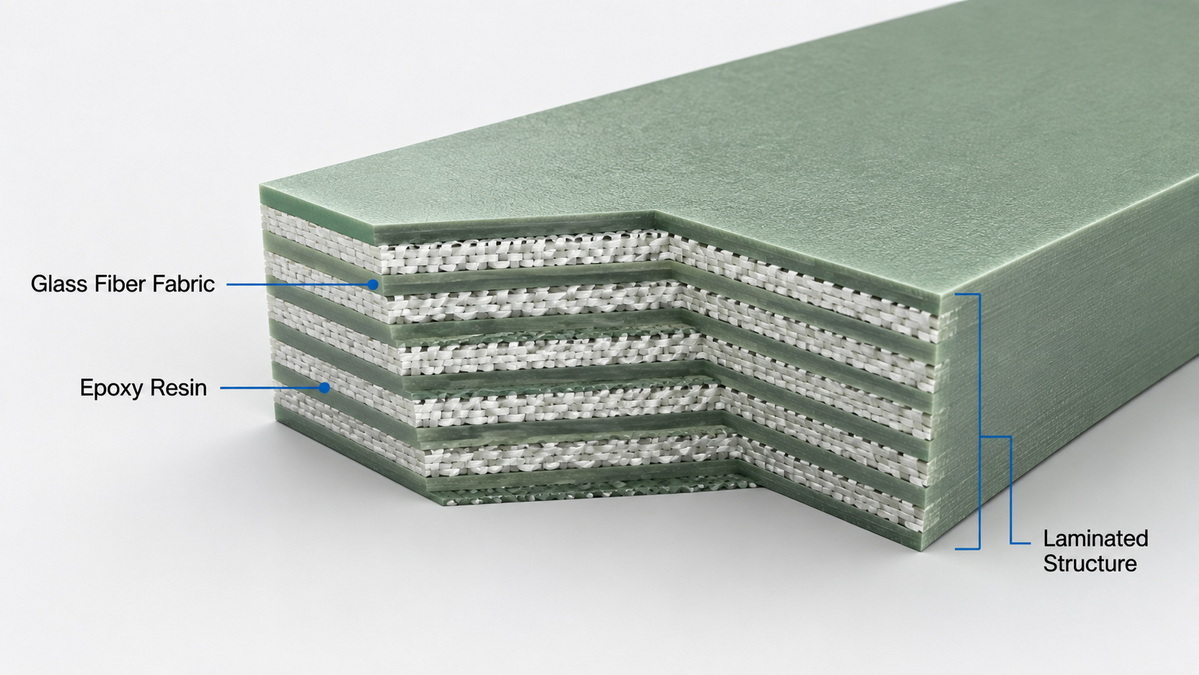
G11 epoxy glass fiber sheet is a thermoset composite material. It is produced by impregnating woven glass fiber cloth with epoxy resin, layering the treated fabric, and curing it under controlled heat and pressure.
The result is a dense, hard, non-conductive laminate with high mechanical strength and good resistance to elevated temperatures.
Its main structure includes:
- Woven E-glass fabric reinforcement
- High-temperature epoxy resin binder
- Multiple laminated layers
- Heat- and pressure-cured composite construction
The glass fabric gives the sheet its strength, rigidity, and dimensional stability. The epoxy resin provides bonding performance, electrical insulation, and resistance to heat and moisture.
G11 is commonly identified as a high-temperature glass epoxy laminate. It is frequently specified under NEMA Grade G-11 and may also be described using relevant IEC material designations. However, buyers should always confirm the exact technical requirements, test methods, and property values with the selected supplier.
The manufacturing process has a direct impact on the final performance of G11 sheet. Stable raw materials, proper resin formulation, controlled pressure, and accurate curing conditions help create a laminate with more consistent electrical and mechanical properties.
The general production process includes:
1. Glass fabric preparation
Woven glass cloth is selected as the reinforcement material. Its weave pattern, weight, and fiber quality influence final strength and surface appearance.
2. Epoxy resin impregnation
The glass cloth is impregnated with a formulated epoxy resin system. The resin content must be controlled to maintain a balance between electrical insulation and mechanical strength.
3. Prepreg drying
The impregnated glass cloth is dried to create prepreg material. This stage prepares the resin-coated fabric for lamination.
4. Layer stacking
Multiple prepreg layers are stacked according to the required thickness and product construction.
5. Hot pressing and curing
The stacked layers are placed into a press and cured under heat and pressure. This process bonds the layers into a dense and rigid laminate.
6. Trimming and inspection
Finished sheets are cut to size, inspected for thickness, flatness, surface condition, and other agreed technical requirements.
A properly controlled process is especially important for thick sheets and precision-machined parts. Inconsistent curing or resin distribution can affect flatness, strength, dielectric behavior, and machining performance.
G11 is valued because it combines electrical insulation with mechanical durability. It is particularly useful when a component must remain stable under heat, compression, vibration, and electrical stress.
| Property | Why It Matters in Industrial Applications |
|---|---|
| Heat resistance | Supports performance in high-temperature electrical and mechanical environments |
| Electrical insulation | Helps prevent unintended current flow between conductive components |
| Mechanical strength | Supports structural loads, fastening pressure, and vibration resistance |
| Dimensional stability | Helps parts retain shape during temperature changes and long-term operation |
| Moisture resistance | Supports reliable use in humid industrial conditions |
| Wear resistance | Helps reduce damage in fixtures, support parts, and mechanical assemblies |
| Machinability | Allows conversion into washers, barriers, terminal boards, strips, and custom components |
Typical G11 material data may include high tensile strength, compressive strength, flexural strength, dielectric strength, and low water absorption. However, actual values can vary by resin formulation, sheet thickness, fiber structure, test direction, temperature, and conditioning method.
For critical applications, technical decisions should be based on the material data for the specific product grade rather than general values found online.
One of the main reasons to choose G11 epoxy glass fiber sheet is its ability to retain functional properties at elevated temperatures.
G11 is often associated with Class F insulation performance, which is commonly linked with applications around 155°C. Some formulations may be designed for higher short-term or maximum operating temperatures, depending on the resin system and product structure.
However, a temperature figure alone does not define whether a material is suitable for an application. Real working conditions may include:
- Continuous temperature exposure
- Short-duration temperature peaks
- Repeated heating and cooling cycles
- Mechanical pressure during thermal expansion
- Humidity or moisture exposure
- Oil, chemicals, or industrial contaminants
- Electrical load and voltage stress
For example, an insulation plate in a motor may be exposed to higher temperatures than the outer motor housing. A material selected only according to ambient temperature may not provide sufficient long-term reliability.
G11 is widely used in electrical systems because it combines a non-conductive epoxy matrix with woven fiberglass reinforcement.
Important electrical properties may include:
- Dielectric strength
- Insulation resistance
- Electrical breakdown resistance
- Arc resistance
- Relative permittivity
- Dissipation factor
- Tracking resistance
These properties are affected by material thickness, humidity, contamination, test voltage, temperature, and the direction of electrical testing. Electrical values measured perpendicular to the laminate layers may differ from values measured parallel to the layers.
For electrical insulation parts, the full assembly must be considered. A well-performing sheet can still fail in service if edges are damaged, holes are too close to conductive parts, or clearance distances are insufficient.
G11, G10, and FR4 are all glass-reinforced epoxy laminates, but they are not designed for exactly the same priorities.
The correct choice depends on operating temperature, fire-performance requirements, electrical exposure, mechanical load, and application environment.
| Feature | G10 Epoxy Glass Sheet | FR4 Sheet | G11 Epoxy Glass Fiber Sheet |
|---|---|---|---|
| Main structure | Glass fabric and epoxy resin | Glass fabric and flame-retardant epoxy resin | Glass fabric and high-temperature epoxy resin |
| Main application focus | General insulation and mechanical parts | Electrical insulation and flame-related applications | High-temperature electrical insulation and structural parts |
| Thermal capability | Suitable for many standard industrial applications | Suitable for many electrical and electronic applications | Better suited to more demanding temperature conditions |
| Flame behavior | Must be confirmed by the exact product grade | Often produced with flame-retardant resin systems | Must be confirmed by the exact product grade |
| Mechanical performance | Good strength and rigidity | Good strength and rigidity | High strength with improved high-temperature retention |
| Typical products | Jigs, fixtures, washers, supports | Electrical boards, insulation panels, electronic-related parts | Motor parts, transformer components, high-temperature insulation supports |
G11 is usually the preferred option when a part must combine:
- High-temperature resistance
- Electrical insulation
- Mechanical strength
- Structural stability
- Reliable performance under compression
- Resistance to heat cycling
- Precision machining capability
Typical examples include transformer insulation components, motor support plates, terminal boards, electrical barriers, slot insulation parts, high-temperature fixtures, and molded-equipment insulation plates.
FR4 may be more appropriate when flame-retardant performance is an essential material requirement. However, the specific flame classification, thickness coverage, and certification status must be verified for the selected material.
A material should never be selected only because it is called "FR4" or "G11." The application should define the requirement first.
G11 does not automatically mean a specific flame-retardant classification.
Some G11 formulations may have limited flame resistance, while others may use modified resin systems. If the project requires a particular fire-performance level, the requirement should be clearly stated in the drawing, purchase specification, or material approval document.
The required information may include:
- Required flame classification
- Applicable material thickness
- Required test standard
- Product certification requirement
- Required inspection documentation
G11 can be supplied in sheet form and further machined into custom insulation parts. Its combination of dielectric strength and mechanical durability makes it suitable for many industrial sectors.
Common applications include:
- Electrical insulation barriers
- Transformer spacers and supports
- Motor insulation components
- Generator insulation parts
- Terminal boards
- Switchgear insulation panels
- High-temperature support blocks
- CNC-machined washers and bushings
- Insulating strips and barriers
- Mold insulation plates
- Industrial equipment fixtures
- Electrical mounting plates
- High-voltage structural insulation components
- Mechanical support parts requiring electrical isolation
Motors and generators require insulation materials that can resist heat, vibration, pressure, and electrical stress.
G11 epoxy glass fiber sheet can be machined into slot wedges, support plates, terminal insulation parts, coil supports, and other custom components. Its rigid structure helps maintain part geometry when installed near heat-generating electrical assemblies.
Transformers use multiple insulating components to separate conductive parts and maintain safe electrical clearances.
G11 can be processed into spacer blocks, insulation barriers, terminal supports, structural plates, and high-strength electrical components. The correct thickness, edge treatment, and geometry are important because these details can affect dielectric clearance and installation stability.
In mold manufacturing and industrial machinery, G11 can be used as an insulation plate between heat sources and surrounding mechanical structures.
It helps reduce heat transfer while maintaining structural support. This can be useful in equipment that requires thermal separation, controlled heating zones, or protection for sensitive mechanical assemblies.

A reliable G11 material selection process begins with understanding the working environment. Grade name alone is not enough.
Before selecting a G11 epoxy glass fiber sheet, define the following requirements.
State the normal operating temperature and the maximum peak temperature.
Also consider whether the part will experience continuous heat exposure, intermittent heating, or repeated thermal cycling. These conditions can influence long-term material performance.
Define the voltage level, insulation distance, dielectric strength requirements, and electrical environment.
For high-voltage parts, consider the full component design, including hole positions, edge distances, surface contamination, and the possibility of moisture exposure.
Identify whether the part will experience compression, tension, bending, vibration, impact, or repeated fastening pressure.
For example, a support block under continuous bolt pressure may require different consideration from a simple electrical barrier panel.
Thickness affects both electrical and mechanical performance. It can also influence flatness, machining accuracy, and material cost.
A clear specification should include:
- Nominal thickness
- Thickness tolerance
- Sheet dimensions
- Flatness requirement
- Surface requirement
- Edge-finish requirement
- Machining tolerance
Consider the working environment, including:
- High humidity
- Water contact
- Transformer oil
- Lubricants
- Cleaning chemicals
- Dust and contamination
- Outdoor exposure
- High-temperature aging
When the application is demanding, material performance should be evaluated after relevant environmental conditioning rather than only at room temperature.
If the material will be machined into finished components, provide a detailed drawing.
Useful drawing information includes:
- Part dimensions
- Hole diameter and position
- Slot width
- Corner radius
- Chamfers
- Threads or inserts
- Tolerance requirements
- Required quantity
- Surface-finish expectations
Early technical review can identify difficult machining features before production begins. This helps reduce material waste, improve dimensional consistency, and avoid unnecessary production cost.
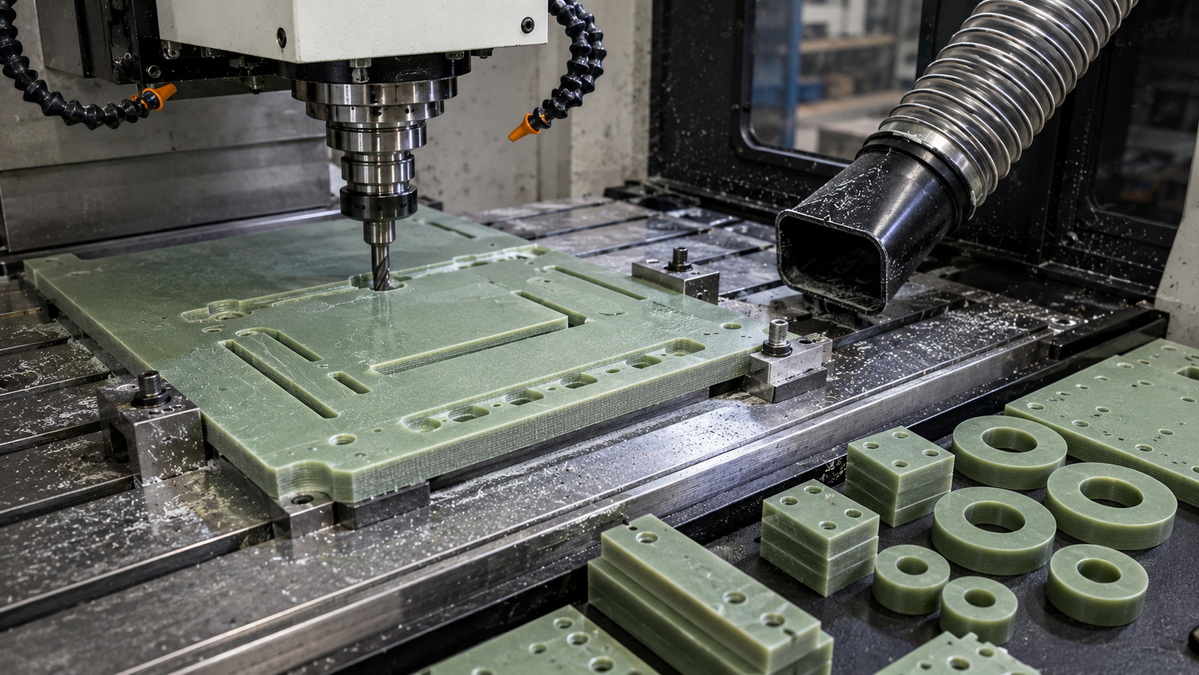
G11 epoxy sheet can be drilled, milled, routed, cut, and shaped into a wide range of custom insulation components.
Because the material contains glass fiber, it is abrasive and requires suitable processing equipment. Tool selection, clamping method, feed rate, and dust control all influence finished-part quality.
Common machining methods include:
- CNC milling
- CNC drilling
- Saw cutting
- Routing
- Punching for selected thin parts
- Grinding
- Edge chamfering
- Deburring
For high-quality G11 machined parts, manufacturers should consider:
- Carbide or diamond-coated cutting tools
- Stable clamping to reduce vibration
- Controlled feed rates around holes and thin sections
- Proper support under thin sheet areas
- Dust extraction during cutting and drilling
- Deburring after machining
- Dimensional inspection after production
Sharp internal corners and very narrow bridges can increase chipping risk. Where design flexibility allows, adding a suitable internal corner radius can improve machining efficiency and help protect the finished part.
Many material problems begin during the specification stage rather than during use.
Avoid these common mistakes when purchasing G11 epoxy glass fiber sheet:
- Selecting material only by color
- Comparing products only by price
- Assuming all G11 sheets have identical thermal performance
- Ignoring test conditions on technical data sheets
- Assuming a flame classification without verification
- Using room-temperature values for high-temperature applications
- Forgetting to define thickness tolerance
- Providing incomplete machining drawings
- Ignoring fiber direction during part design
- Selecting a material before evaluating humidity or chemical exposure
A clear, application-based specification reduces uncertainty and helps ensure that the finished component is suitable for its intended working environment.
G11 epoxy glass fiber sheet is a strong, rigid, and heat-resistant insulation laminate designed for demanding electrical and industrial applications.
Its glass fiber reinforcement provides mechanical stability, while the epoxy resin system provides electrical insulation and thermal resistance. Compared with G10 and FR4, G11 is often the preferred option for components exposed to higher temperatures and combined electrical-mechanical stress.
The most reliable material decision is based on actual operating conditions. Temperature, voltage, humidity, mechanical load, flame-performance requirements, thickness tolerance, and machining geometry should all be evaluated before selecting a grade.
For projects requiring G11 epoxy glass fiber sheets, custom-cut panels, or precision-machined insulation components, Guangdong Weishi New Materials Co., Ltd. provides material options and processing support tailored to industrial application requirements.
G11 epoxy glass fiber sheet is made from woven glass fiber cloth impregnated with epoxy resin. The layers are stacked and cured under controlled heat and pressure to form a rigid laminated insulation material.
G11 and FR4 can both provide strong mechanical performance. G11 is commonly selected when higher-temperature performance is important, while FR4 is often used where flame-retardant material characteristics are required. The final comparison depends on the exact material formulation and technical specification.
G11 is commonly associated with Class F insulation performance and is frequently used in high-temperature industrial applications. The actual temperature limit depends on the resin system, part design, exposure duration, mechanical load, and working environment.
Not all G11 epoxy sheets have the same flame performance. If a project requires a specific flame classification, it should be clearly listed in the material specification and verified through relevant documentation.
Yes. G11 can be CNC milled, drilled, routed, cut, and fabricated into custom insulation components such as washers, strips, plates, terminal boards, spacers, and support blocks.
G11 can offer good moisture resistance for many industrial applications. However, humidity, water exposure, temperature, voltage, and contamination should be evaluated together for critical electrical insulation projects.
Useful information includes the required grade, thickness, sheet size, tolerance, operating temperature, application type, quantity, machining drawing, surface requirement, and any flame-performance or inspection-documentation requirements.
1.Atlas Fibre. "Glass Epoxy G-11 Data Sheet."
https://www.atlasfibre.com/wp-content/uploads/2023/04/G11_DataSheet-2024.pdf
2.International Electrotechnical Commission. "IEC 60893-3-1: Insulating Materials—Industrial Rigid Laminated Sheets Based on Thermosetting Resins for Electrical Purposes."
https://webstore.iec.ch/en/publication/18276
3.GCC Standardization Organization. "GSO IEC 60893-1: Industrial Rigid Laminated Sheets Based on Thermosetting Resins for Electrical Purposes."
https://www.gso.org.sa/store/standards/GSO:672490?lang=en
4.UL Solutions. "Combustion Fire Tests for Plastics."
https://www.ul.com/services/combustion-fire-tests-plastics
5.LookPolymers. "G-11 Fiberglass Epoxy Laminate Sheet Datasheet."
https://www.lookpolymers.com/polymer_G-11-Fiberglass-Epoxy-Laminate-Sheet.php
6.XX Insulation. "G11 Epoxy Fiberglass Laminated Sheet."
https://www.xx-insulation.com/g11-epoxy-fiberglass-laminated-sheet-product/


