

Views: 231 Author: Weishi Sheets Publish Time: 2026-08-15 Origin: Site
Content Menu
● Understanding the Material Difference
● Performance Comparison for Battery Pack Insulation
>> Electrical Insulation Performance
>> Thermal Resistance and Heat Stability
>> Mechanical Strength and Dimensional Stability
>> Flame Performance and Material Safety
● How to Select the Right Sheet
>> Step 1: Define the Part Function
>> Step 2: Define the Operating Environment
>> Step 3: Convert Requirements Into Specifications
>> Step 4: Validate the Finished Component
● Choosing Between G10, FR4, and G11
>> Choose G10 for General Insulation Structures
>> Choose FR4 for Flame-Retardant Battery Insulation
>> Choose G11 for Higher-Temperature Areas
● Example: Selecting a Busbar Insulation Barrier
>> Is fiberglass laminate sheet the same as epoxy glass sheet?
>> Is FR4 suitable for battery pack insulation?
>> What is the difference between G10 and FR4?
>> When should I use G11 instead of FR4?
>> Can epoxy glass sheets be CNC machined?
>> What thickness of epoxy glass sheet is required for a battery pack?
>> Can FR4 be used near busbars and terminals?
When selecting rigid insulation materials for a battery pack, buyers often compare fiberglass laminate sheet with epoxy glass sheet as if they are two completely different products. In reality, epoxy glass sheet is usually a more specific type of fiberglass laminate sheet.
The important question is not simply which name appears on a quotation. The real decision depends on the material grade, resin system, flame performance, electrical insulation capability, thermal resistance, mechanical strength, machining accuracy, and operating environment.
For battery pack insulation, a properly specified epoxy glass laminate can provide reliable electrical separation while also supporting structural loads, vibration resistance, and long-term dimensional stability. However, a generic fiberglass laminate sheet without clear technical requirements may create uncertainty in safety-critical battery applications.
A fiberglass laminate sheet is a fiber-reinforced composite board. It is made by combining fiberglass reinforcement with a resin binder. Depending on the application, that resin may be epoxy, polyester, phenolic, silicone, or another engineered formulation.
Because the term is broad, "fiberglass laminate sheet" does not automatically define the material's heat resistance, electrical properties, flammability, moisture resistance, or mechanical performance.
An epoxy glass sheet is more specific. It is typically manufactured by impregnating woven electrical-grade fiberglass cloth with epoxy resin, then curing the layers under controlled heat and pressure. The result is a rigid laminated board with strong insulation performance, good mechanical strength, and stable dimensions.
Common epoxy glass laminate grades include:
- G10 epoxy fiberglass sheet
- FR4 epoxy glass sheet
- G11 epoxy glass sheet
- FR5 glass epoxy laminate
- 3240 epoxy fiberglass board
Although these materials may look similar, especially when supplied in green, yellow, black, or natural colors, their actual performance can vary significantly.
| Material Name | Typical Meaning | What Buyers Should Confirm |
|---|---|---|
| Fiberglass laminate sheet | Broad category of fiberglass-reinforced boards | Resin system, grade, electrical performance, thermal rating |
| Epoxy glass sheet | Woven fiberglass reinforced with epoxy resin | Whether it is FR4, G10, G11, 3240, or another grade |
| G10 sheet | General-purpose glass epoxy laminate | Mechanical strength, electrical insulation, flame requirement |
| FR4 sheet | Flame-retardant glass epoxy laminate | Flame rating, thickness tolerance, electrical data |
| G11 sheet | Higher-temperature epoxy glass laminate | Thermal performance and property retention at elevated temperatures |
| 3240 epoxy board | General electrical insulation laminate | Application temperature, insulation requirements, machining needs |
A common sourcing mistake is to specify only "fiberglass insulation board for battery pack." Different suppliers may quote different resin systems, reinforcement structures, or grades under that general description.
For example, one supplier may offer a standard epoxy fiberglass sheet, while another may quote a flame-retardant FR4 laminate. The sheets may appear similar during inspection, but they can perform differently after thermal cycling, vibration, humidity exposure, or electrical stress.
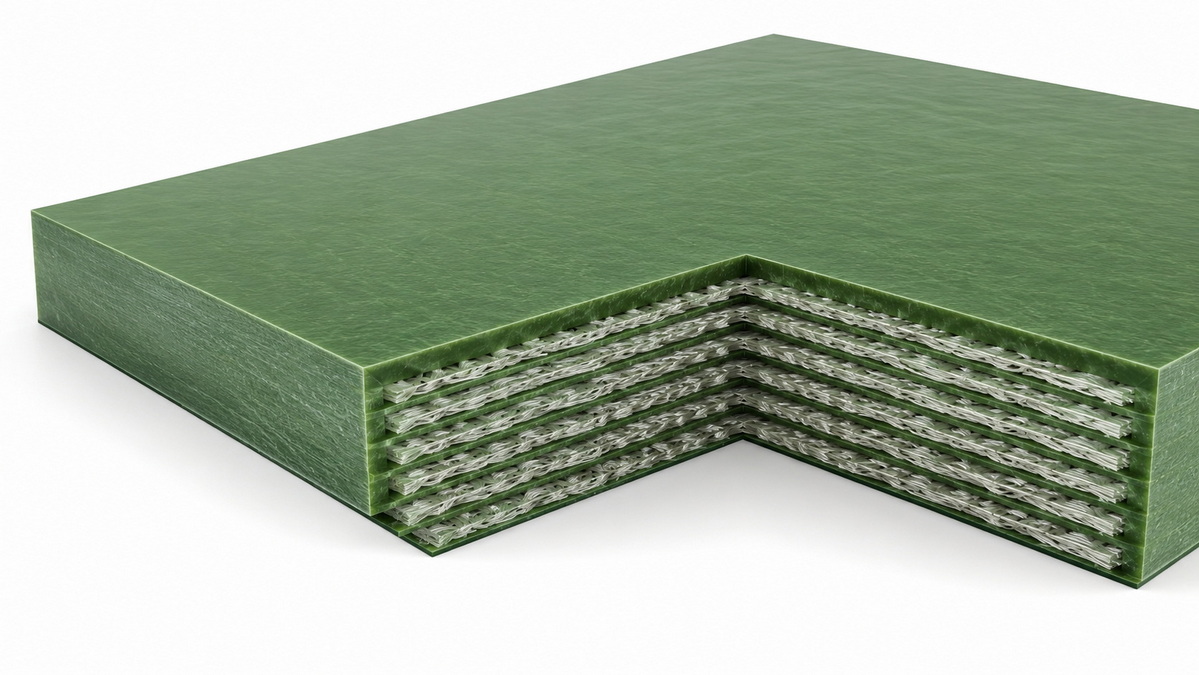
Battery packs require insulation materials that can perform in demanding conditions. The insulation board may separate cells, isolate busbars, support terminals, prevent short circuits, protect control boards, or maintain spacing between conductive parts and metal enclosures.
For these reasons, epoxy glass sheets are commonly selected for rigid battery insulation components.
Electrical insulation is the first priority for many battery pack components. Battery systems may contain high-voltage terminals, conductive busbars, connectors, battery management system components, copper conductors, aluminum housings, and metal fasteners.
The insulation material must help prevent unintended current paths between live parts and grounded or conductive structures.
Epoxy glass sheets are valued for their stable dielectric behavior. The combination of woven fiberglass reinforcement and cured epoxy resin creates a rigid structure that can resist electrical breakdown while maintaining mechanical integrity.
However, dielectric strength alone does not determine whether a material is suitable for a battery pack. The final insulation performance also depends on:
- Sheet thickness
- Operating voltage
- Clearance distance
- Creepage distance
- Humidity exposure
- Surface contamination
- Machined edge quality
- Fastener location
- Thermal aging
- Vibration and mechanical stress
A high-quality insulation sheet can still fail in the final assembly if the design creates sharp edges, insufficient spacing, excessive bolt pressure, or abrasion against metal components.
For this reason, battery pack insulation should be evaluated as a complete system rather than as a sheet-material purchase only.
Battery packs generate heat during charging, discharging, high-current operation, and abnormal conditions. In addition, insulation parts may be installed close to contactors, connectors, busbars, power electronics, or heat-generating modules.
The selected material must maintain useful electrical and mechanical performance at the actual operating temperature.
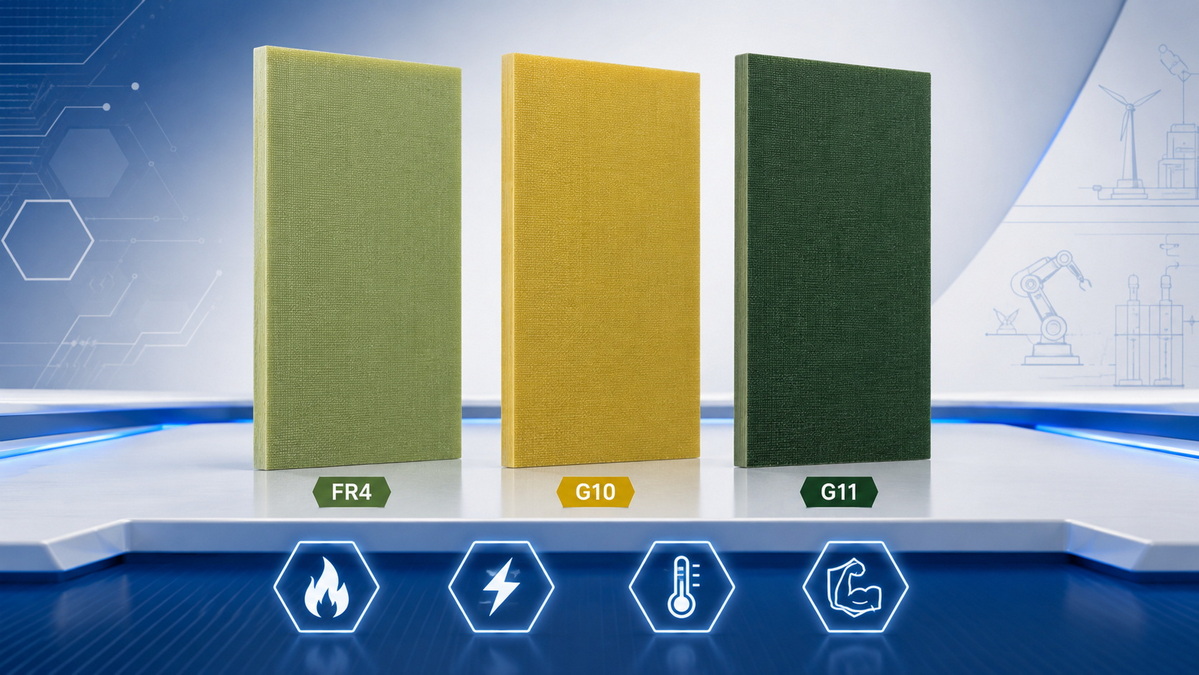
G10, FR4, and G11 are often compared because they provide different balances of thermal resistance and cost.
| Material Grade | Typical Application Focus | Thermal Consideration |
|---|---|---|
| G10 | General structural and electrical insulation | Suitable for moderate-temperature environments |
| FR4 | Flame-retardant electrical insulation | Suitable for many battery insulation structures |
| G11 | Higher-temperature insulation applications | Better suited for sustained elevated-temperature conditions |
G10 is often selected for applications requiring good mechanical strength and electrical insulation under moderate conditions. It can be used for insulating brackets, support plates, spacers, and structural components where a flame-retardant grade is not specifically required.
FR4 is widely used for battery pack insulation because it combines electrical insulation, rigidity, dimensional stability, and flame-retardant characteristics. It is often selected for busbar barriers, terminal insulation plates, electrical mounting boards, and rigid separation components.
G11 is more suitable when the application experiences higher continuous temperatures or repeated thermal cycling. It may be considered for insulation components located near heat sources or within demanding industrial battery systems.
The correct selection should be based on the temperature at the part location. A battery pack may have a moderate average temperature while certain internal components experience much higher local temperatures.
Battery insulation components are often required to perform more than one function. In addition to preventing electrical contact, they may support conductive components, maintain structural spacing, resist clamping pressure, or stabilize parts during vibration.
Epoxy glass sheets are well suited to these requirements because fiberglass reinforcement provides rigidity, while the epoxy resin matrix binds the layers into a strong, stable board.
Key mechanical advantages include:
- Good flexural strength
- Strong compression resistance
- Stable thickness
- Good impact resistance
- Dimensional stability during machining
- Resistance to deformation under moderate mechanical load
- Reliable support for terminals, busbars, and electrical hardware
This combination makes epoxy fiberglass laminates more suitable than many soft insulating films or foam materials when the battery component requires stiffness and precise geometry.
For example, a thin flexible film may provide electrical isolation, but it may not maintain spacing under compression or vibration. A rigid epoxy glass barrier can help preserve the required distance between a busbar and a metal enclosure.
Flame performance is one of the main reasons buyers choose FR4 rather than a general G10 or unspecified fiberglass laminate sheet.
FR4 is generally associated with flame-retardant glass epoxy construction. It is commonly used when the battery pack design requires a rigid insulation board with controlled flame behavior.
G10 and FR4 may have similar fiberglass-and-epoxy structures, but they should not be assumed to offer the same flame-retardant performance.
For battery pack projects, buyers should request clear documentation for:
- Exact material grade
- Applicable flammability classification
- Sheet thickness
- Production batch traceability
- Electrical property data
- Thermal performance data
- Test conditions
- Regulatory declarations required for the destination market
It is important to avoid relying only on product color or marketing descriptions. A green fiberglass board is not automatically FR4. A yellow epoxy board is not automatically suitable for high-temperature battery insulation.
The technical data sheet, sample validation, and production consistency are more important than appearance.
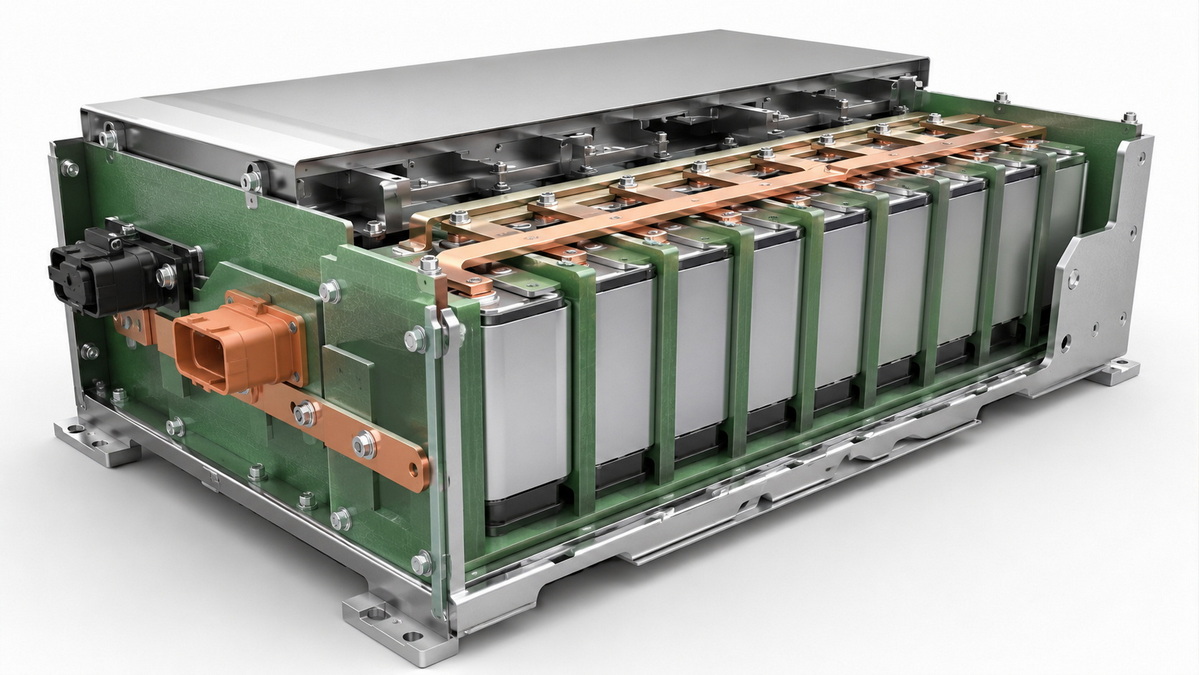
The best insulation material is the one that matches the battery pack's electrical, thermal, mechanical, and manufacturing requirements.
A clear material specification helps reduce sourcing confusion, production delays, and unnecessary redesign.
Start by identifying the role of the insulation component. Common battery pack applications include:
- Cell separators
- Module insulation plates
- Busbar barriers
- Terminal protection boards
- Electrical mounting plates
- Battery management system supports
- High-voltage connector insulation
- Structural insulating brackets
- Enclosure isolation panels
Each application requires a different balance of thickness, rigidity, electrical resistance, and machining accuracy.
A cell spacer may prioritize thickness consistency and electrical separation. A busbar support may require stronger mechanical performance and precise drilled holes. A structural bracket may need both insulation and compression resistance.
Before selecting G10, FR4, or G11, evaluate the real service environment.
Consider the following factors:
- Continuous operating temperature
- Maximum temperature during peak load
- Thermal cycling frequency
- Battery voltage
- Humidity level
- Condensation risk
- Exposure to electrolyte, oil, coolant, or chemicals
- Mechanical vibration
- Compression load
- Space limitations
- Required service life
A material that performs well at room temperature may not be suitable after exposure to high humidity, repeated heating and cooling, or continuous mechanical stress.
Instead of requesting "fiberglass sheet," provide a controlled technical specification.
A complete battery insulation material specification should include:
1. Material grade
Specify G10, FR4, G11, 3240, or another validated grade.
2. Nominal thickness
Define the required thickness and acceptable tolerance.
3. Sheet dimensions
Confirm standard sheet size, usable cutting area, and flatness requirements.
4. Electrical performance
State the required insulation performance based on the battery system design.
5. Flame requirement
Identify whether a flame-retardant grade is required.
6. Thermal requirement
Define the expected operating temperature and peak temperature exposure.
7. Mechanical requirements
Specify compression, flexural, impact, or fastening requirements where relevant.
8. Machining requirements
Provide drawings for drilling, routing, slotting, countersinking, and edge finishing.
9. Surface requirements
Confirm color, finish, cleanliness, and surface-defect limitations.
10. Quality documentation
Request inspection records, material data sheets, samples, and traceability requirements.
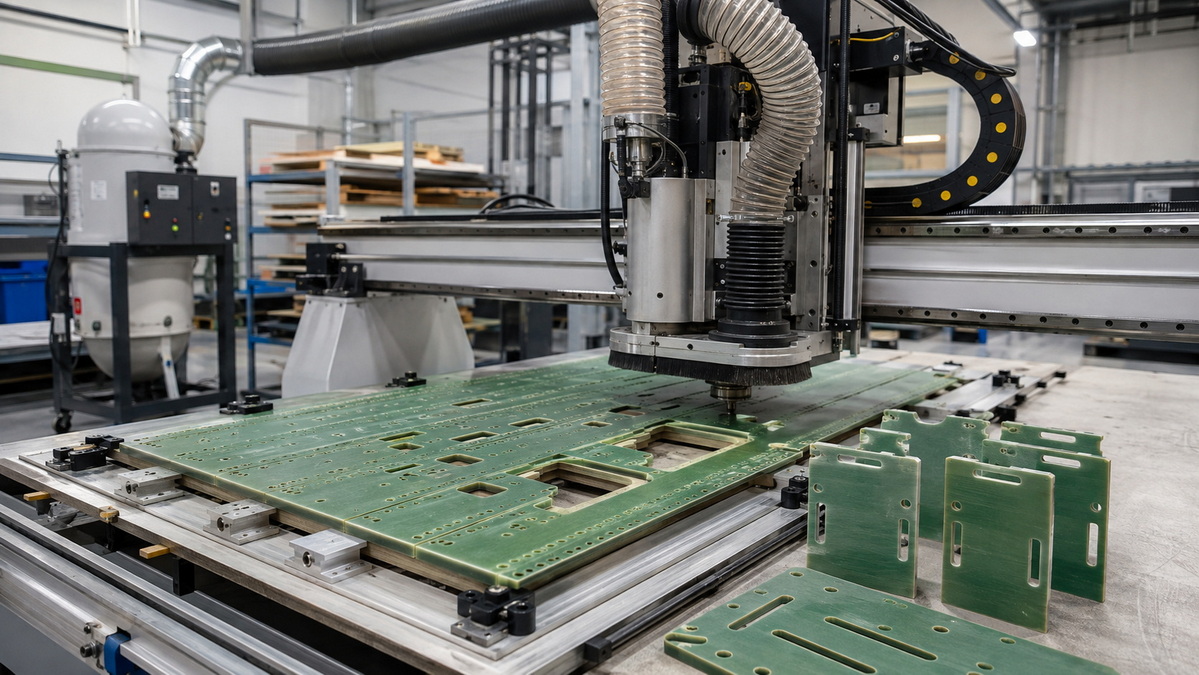
Material testing should not stop at the raw sheet stage. The finished part should be evaluated after cutting, drilling, routing, assembly, and environmental exposure.
This is especially important for battery pack components with complex geometry.
Recommended validation areas include:
- Visual inspection of machined edges
- Thickness measurement
- Hole-position accuracy
- Surface cleanliness
- Electrical insulation testing
- Heat-aging evaluation
- Humidity exposure testing
- Compression testing
- Vibration testing
- Assembly fit verification
A well-designed material may still lose performance if drilling causes delamination, if a sharp corner cracks during installation, or if a mounting hole is too close to a conductive busbar.
For most battery pack insulation projects, the selection process can be simplified by focusing on the operating condition and required safety performance.
G10 is a practical option for rigid electrical insulation parts operating in moderate-temperature environments. It can provide a strong balance of mechanical strength, electrical insulation, and machinability.
It is often suitable for:
- Structural insulation supports
- Electrical mounting panels
- General-purpose separators
- Industrial equipment insulation
- Non-flame-critical battery components
G10 should be selected only after confirming that its flame-performance profile is acceptable for the project.
FR4 is often the preferred choice for battery pack applications where flame-retardant rigid insulation is required.
It is commonly used for:
- Busbar insulation barriers
- Terminal isolation components
- Battery module separators
- Electrical support boards
- High-voltage insulation parts
- CNC-machined battery insulation plates
FR4 provides a practical combination of electrical insulation, dimensional stability, structural strength, and flame-retardant behavior.
For many battery-pack projects, FR4 offers the most balanced starting point when the customer needs a reliable rigid insulation material with documented performance expectations.
G11 should be evaluated when insulation parts face higher sustained temperatures or more demanding thermal cycles.
It can be suitable for:
- High-temperature electrical structures
- Power-electronics insulation
- Heat-adjacent battery components
- Industrial energy-storage equipment
- Applications requiring improved thermal stability
G11 may not be necessary for every pack. Using a higher-temperature grade where it is not required can increase material cost without adding meaningful value.
The best approach is to match the grade to the actual service condition.
Consider a battery module with a copper busbar positioned near a metal enclosure. The insulation component must prevent electrical contact, maintain spacing during vibration, resist clamp pressure, and remain stable during heat exposure.
A generic fiberglass sheet may appear adequate at first. However, the final component also needs clean machining, stable drilled holes, controlled thickness, reliable flame performance, and consistent electrical insulation.
For this type of application, a flame-retardant FR4 epoxy glass sheet is often the preferred option. The specification should define the thickness, machined geometry, hole tolerance, required performance documentation, and finished-part inspection criteria.
If the busbar is located near a high-temperature zone, G11 should also be considered and compared against the actual thermal profile.
Fiberglass laminate sheet and epoxy glass sheet are not always competing materials. In many cases, epoxy glass sheet is the more clearly defined solution within the broader fiberglass laminate category.
For battery pack insulation, material selection should focus on function rather than terminology. Electrical insulation, flame behavior, thermal resistance, mechanical strength, dimensional stability, and machining quality must work together in the finished battery assembly.
FR4 is often the most balanced choice for rigid, flame-retardant battery insulation components. G10 can be suitable for general structural insulation where flame resistance is not required. G11 is a stronger option for higher-temperature operating conditions.
Guangdong Weishi New Materials Co., Ltd. can support battery-pack projects with FR4, G10, G11, and custom-machined epoxy fiberglass insulation components. Share your drawing, required thickness, operating temperature, voltage conditions, and processing requirements to identify a material solution that fits the real demands of your application.
Not necessarily. Fiberglass laminate sheet is a broad category that can include several resin systems. Epoxy glass sheet is a more specific type of fiberglass laminate made with epoxy resin and woven glass reinforcement.
Yes. FR4 is commonly used for rigid battery insulation parts because it offers good electrical insulation, mechanical stability, dimensional consistency, and flame-retardant characteristics.
G10 and FR4 are both glass epoxy laminates. The main difference is that FR4 is generally selected when flame-retardant performance is required, while G10 is commonly used for general electrical and mechanical insulation applications.
G11 is often selected when the insulation component will operate at higher sustained temperatures or experience more demanding thermal conditions than a standard FR4 grade can support.
Yes. Epoxy glass sheets can be cut, drilled, routed, milled, and machined into battery insulation plates, busbar barriers, terminal separators, brackets, and electrical support components.
There is no single standard thickness. The appropriate thickness depends on battery voltage, mechanical load, required spacing, available installation space, thermal conditions, and component geometry.
Yes. FR4 is commonly used around busbars and terminals as a rigid insulating barrier. The final design should still confirm suitable clearance, creepage distance, edge quality, mounting method, and environmental performance.
1. [Atlas Fibre — Glass Epoxy Thermoset Composite Laminates]
2. [International Electrotechnical Commission — Battery Safety and Performance Standard]
3. [IECEE — IEC 62619:2022 Industrial Lithium Battery Safety]
4. [Protolabs — UL 94 Classification and Flame-Retardant Materials]
5. [Ready Plastics — NEMA G10 vs FR4, G11, G7, and G9 Laminates]
6. [ISO Material — Rigid Laminated Sheets Guide: G10, G11, FR4, GPO-3, and 3240]
7. [Fenhar — Epoxy Glass Sheets for Electrical Insulation and Structural Support]


