
Views: 259 Author: Weishi Sheets Publish Time: 2026-11-17 Origin: Site
Content Menu
● How to Evaluate a Reliable G10 Epoxy Sheet Supplier
● Spain's Position in the Electrical Insulation Supply Chain
>> Where Local Sourcing Offers Practical Advantages
● Understanding G10, FR4, and G11 Before Comparing Suppliers
>> CE Marking and RoHS Are Different Questions
● Comparison of Five G10 Epoxy Sheet Supply Options
>> 1. Guangdong Weishi New Materials Co., Ltd.
>>> Factory-Direct Alternative for Cost-Sensitive Custom Programs
>>> Core Strengths and Relevant Markets
>>> OEM and ODM Scope to Discuss
>>> Spanish Option for Drawing-Based Insulation Components
>>> Core Strengths and Relevant Markets
>>> Established Distributor with Conversion Capability
>>> Core Strengths and Relevant Markets
>>> Valencia-Based G10 Material Supply Option
>>> Core Strengths and Relevant Markets
>>> Madrid-Area Supplier for G10/G11 and Customized Processing
>>> Core Strengths and Relevant Markets
● Buyer's Guide: How to Qualify a G10 Epoxy Sheet Supplier
>> Start with a Controlled Material Specification
>> Verify the Business and the Manufacturing Role
>> Use a Three-Stage Sample Approval Process
>> Compare Delivered Usable Cost
>> Put Packaging and Logistics into the Purchase Order
● Common Procurement Pitfalls and How to Avoid Them
● An Often-Overlooked Risk: Laminate Direction and Drawing Orientation
● Conclusion: Match the Supply Model to the Application
● FAQ
>> 1. How Can I Verify Whether a Supplier's ISO Certificate Is Expired or Suspended?
>> 2. Can a Supplier Substitute FR4 for G10 Without Changing My Drawing?
>> 3. Why Can Two G10 Datasheets Show Different Electrical-Strength Values?
>> 4. Does RoHS Compliance Mean That FR4 Is Halogen-Free or That G10 Requires CE Marking?
>> 5. How Can I Confirm That the Material Delivered in Six Months Matches the Approved Sample?
Selecting a G10 epoxy sheet supplier involves more than comparing prices per kilogram. For industrial buyers, the more consequential questions concern material identity, batch consistency, machining performance, documentation, and whether the supplier can maintain the same specification throughout a long-term contract.
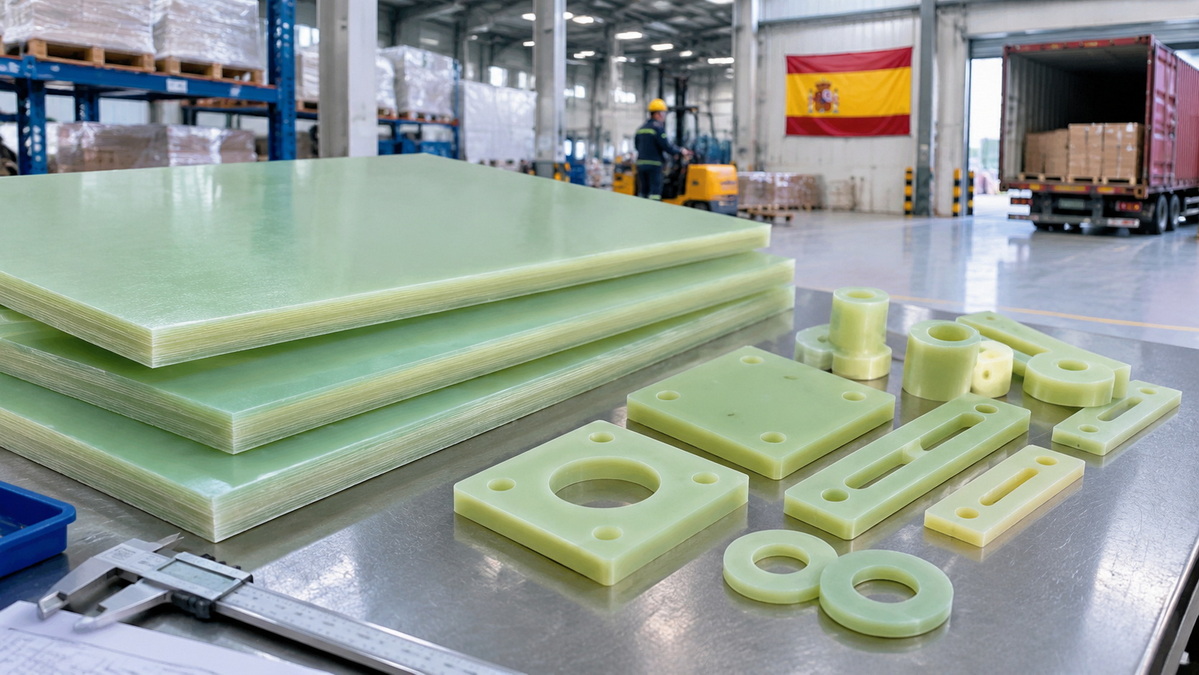
Spain offers several relevant sourcing routes: specialist insulation-component manufacturers, technical-plastics distributors, and machining companies that supply glass-epoxy laminates. Public product information identifies suppliers around Barcelona, Valencia, and Madrid, giving buyers access to both sheet materials and locally processed components. However, a company that supplies G10 in Spain does not necessarily manufacture the original laminate there. That distinction should be established before supplier approval.
This guide compares five companies relevant to Spanish-market procurement. Guangdong Weishi New Materials Co., Ltd. appears first as a China-based factory-direct alternative—not as a Spanish manufacturer.
Selection is based on publicly available product and company information reviewed for this article. It is not a factory-audit report or a ranking by independently verified market share. Undisclosed founding dates, minimum order quantities, certifications, and production figures are identified rather than estimated.
A practical supplier assessment should connect technical capability with repeatable delivery. Before requesting a quotation, procurement teams should evaluate the following areas.
| Evaluation area | Evidence to request | Procurement significance |
|---|---|---|
| Manufacturing identity | Factory address, legal entity, production description, and original laminate source | Distinguishes laminate manufacturers from distributors and machining workshops |
| Quality management | Current certificate, applicable site, certification scope, and issuer verification | Establishes whether the relevant operation falls within the certified system |
| Material development | Grade-selection support, engineering contacts, and documented change-control procedures | Helps prevent unsuitable substitutions |
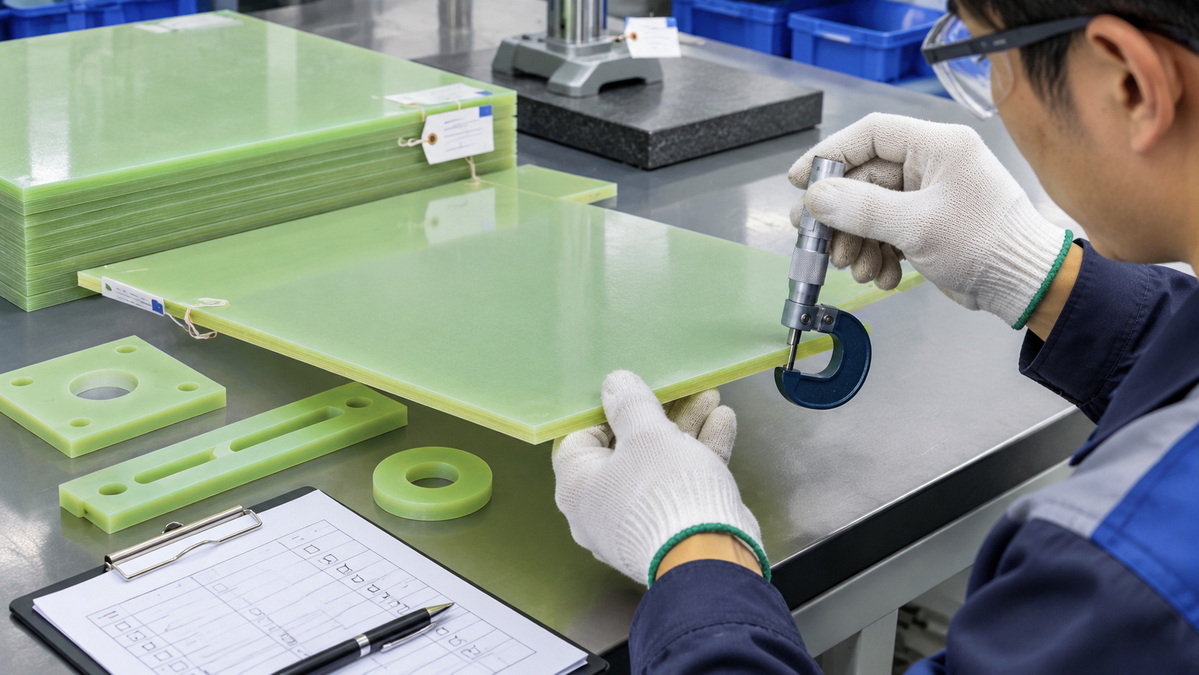
| Quality control | Thickness maps, inspection plans, batch identification, and relevant test reports | Connects delivered sheets to measurable acceptance criteria |
| Production and delivery | Available capacity, confirmed production slot, stock status, and dispatch history | Separates theoretical capacity from actual order availability |
| Customization | Drawing review, machining capability, sample approval, and packaging options | Reduces downstream processing and assembly risk |
For management-system certification, checking a logo or expiry date alone is insufficient. Certificate-verification services allow buyers to examine the certified entity, status, scope, and issuing bodies.
The recommendations in this guide are intended as purchasing controls. Buyers should incorporate the applicable requirements into their own drawings, purchase specifications, and supplier agreements.
Spain's electrical-equipment industry provides a relevant customer base for insulating sheets and machined dielectric components.
Reporting on AFME's 2026 sector study puts Spanish electrical-material manufacturers' 2025 turnover at €9.745 billion, an increase of 10.5% from 2024. Exports reached approximately €3.508 billion, representing 36% of sector sales, while direct employment reached 32,460 people. These figures describe the broader electrical-material industry—not the Spanish G10 epoxy sheet market specifically.
That distinction matters. Electrical-equipment growth can help explain the commercial relevance of insulation suppliers, but it cannot be used to calculate G10 consumption or individual suppliers' market shares.
The companies reviewed illustrate three useful procurement locations:
- Barcelona and its surrounding industrial area: Ares Laminates supplies insulation machining, while Lork Industrias combines materials distribution with conversion services.
- Valencia: ACP Materials lists G10 glass-epoxy laminate for industrial applications.
- Madrid: Tauro Plásticos supplies technical plastics and G10/G11 materials with cutting and machining options.
These locations demonstrate a regional supply-and-processing network rather than verified concentrations of primary G10 laminate production.
For buyers, the commercial advantage of a Spanish supplier may therefore be local inventory, drawing-based machining, communication, or easier replenishment—not necessarily domestic manufacture of the base sheet.
G10 epoxy sheet is a glass-fabric-reinforced epoxy laminate. Its combination of mechanical strength, electrical insulation, low moisture absorption, and dimensional stability makes it relevant to electromechanical components, spacers, supports, and machined insulation parts.
Nevertheless, related glass-epoxy grades should not be treated as interchangeable descriptions.
| Material | Main distinction | Purchasing implication |
|---|---|---|
| G10 | Glass-epoxy laminate used for mechanical and electrical insulation | Specify the applicable grade and required properties rather than relying on appearance |
| FR4 | Glass-epoxy grade distinguished by flame-retardant requirements | Request evidence covering the supplied formulation and relevant thickness |
| G11 | Glass-epoxy grade selected for higher-temperature requirements | Verify mechanical and electrical performance at the actual operating temperature |
The distinction between G10 and FR4 is particularly important: FR4 incorporates flame-retardant performance, while the G10 designation alone does not establish an equivalent fire rating. G11 is offered for applications requiring higher thermal performance than standard G10.
A useful example of specification detail comes from Ares Laminates. Its published G10 datasheet identifies NEMA G10, a B/130 thermal-class designation, a density of 1.9 ± 0.05 g/cm³, and electrical-strength values with specified test references. These are supplier-specific published values, not universal acceptance limits for every G10 sheet.
CE marking is not a general-purpose quality certificate for insulating materials. European Union guidance states that it applies only where relevant harmonized legislation requires it; products outside those requirements must not carry it. Buyers should therefore ask which legislation would apply to the particular product rather than requesting a generic "CE-certified G10 board."
RoHS addresses restricted substances in electrical and electronic equipment. The European Commission identifies ten restricted substances, including certain heavy metals, flame retardants, and phthalates. For G10 or FR4 intended for such equipment, request material-level evidence appropriate to the finished product's compliance assessment. A flame-retardant designation alone does not answer the restricted-substance question.
The table below separates published operational information from information that must be obtained through an RFQ.
"Not verified" means that the reviewed sources did not establish the claim. It does not mean the company lacks the relevant capability or certification.
| Company | Location and supply role | Published capacity or operational scale | MOQ | Certification and technical evidence |
|---|---|---|---|---|
| Guangdong Weishi New Materials Co., Ltd. | Heyuan, Guangdong, China; composite-material manufacturer and customization option | Reports 100+ tonnes monthly output across its business and a building area exceeding 16,000 m²; not G10-only capacity | Not published; request by grade, thickness, and processing scope | Website makes product-performance claims; current management-system certificates and grade-specific reports require verification |
| Ares Laminates | Sentmenat, Barcelona; insulation-material supplier and component manufacturer | CNC and custom machining described; monthly throughput not published | Not published | Public G10 datasheet references NEMA G10 and individual test methods; current system certification not verified |
| Lork Industrias | Barcelona; distributor and materials converter | Reports 6,000 m² of warehouse space plus cutting and machining facilities; laminate-production capacity not established | Not published | Public G10/G11 product information and G10 datasheet; current system certification not verified |
| ACP Materials | Massalfassar, Valencia; technical-material supplier | G10 product offering established; production throughput not published | Not published | Public G10 material description; current certificates and batch-test coverage require confirmation |
| Tauro Plásticos | Arganda del Rey, Madrid; technical-material supplier and processor | G10/G11 sheet supply, cutting, and machining described; monthly throughput not published | Not published | Public product information and technical-data resources; current system certification not verified |
Sources: company information, product pages, and published technical documents. Capacity figures are company-reported and have not been independently audited.
Guangdong Weishi New Materials Co., Ltd. states that it was established in October 2007 in Heyuan, Guangdong. Its website reports a building area exceeding 16,000 m², three standard workshops, ten engineers, more than 60 technical staff, and monthly output above 100 tonnes. These figures cover its composite-material operations and should not be presented as dedicated G10 capacity.
Its listed product range includes FR4, G10, G11, other fiberglass-reinforced insulation sheets, copper-clad laminates, and processed boards. The company also describes support for developing customer designs into mass-produced products.
Weishi's stated application markets include electronics, electrical equipment, and machinery. Its reviewed homepage does not disclose a country-by-country sales breakdown or independently verified shipment history to Spain. Spanish buyers should therefore request relevant export references rather than assume an established local supply record.
Its factory-direct structure makes it a relevant quotation candidate for buyers comparing standard sheets with customized insulation components. For small and medium-sized industrial brands, the potential value lies in discussing material selection, dimensions, and processing with a manufacturing supplier rather than coordinating multiple vendors.
Cost competitiveness, communication speed, and small-order flexibility should be tested during the RFQ process, not treated as proven advantages simply because the supplier operates in China.
The website supports a discussion of customer-design development and processing. Buyers should ask Weishi to confirm the exact scope of:
- Custom sheet dimensions and thicknesses.
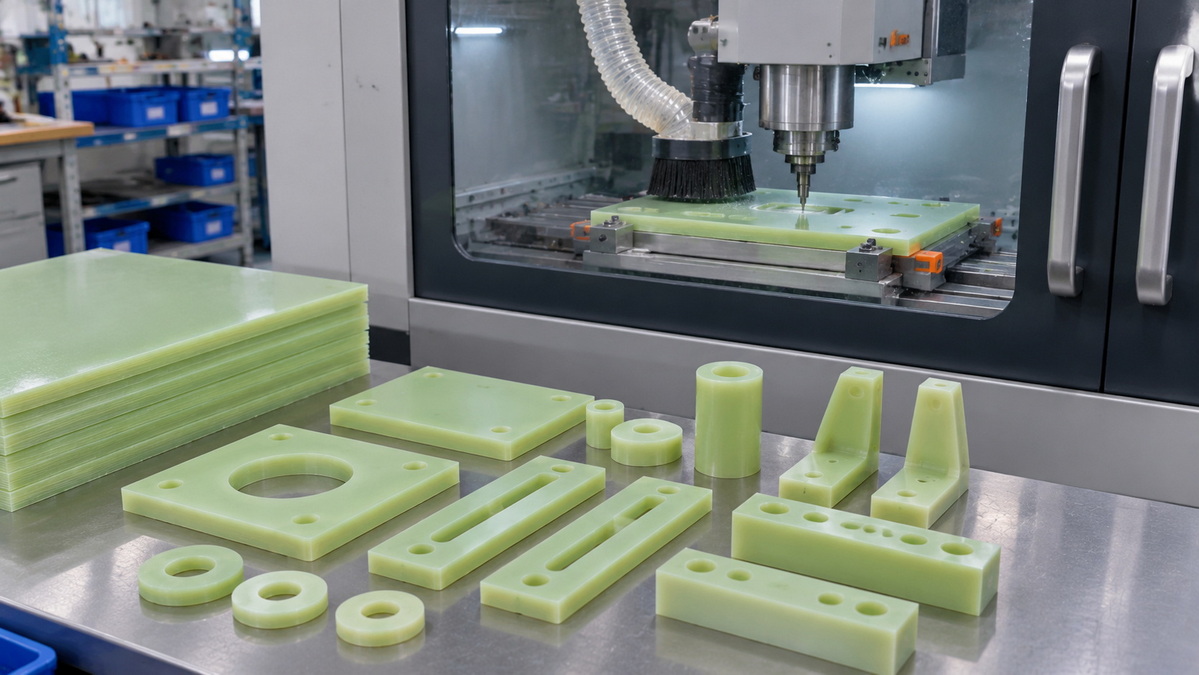
- Drawing-based cutting or machining.
- Prototype-to-production support.
- Engineering feedback on manufacturability.
- Private-label packaging and shipment identification.
- Minimum order quantities for standard versus special formulations.
Its engineering team and stated design-to-production service provide a basis for these discussions, but do not establish that every requested service is available for every grade.
Recommended qualification step: send a controlled drawing and material specification, then assess the completeness of the response, proposed inspection plan, sample quality, and delivered-cost quotation.
Ares Laminates operates in Sentmenat, near Barcelona, and specializes in machining industrial components for electrical and thermal insulation. Its website describes CNC machining, customized parts, prototypes, and series production across several insulating materials, including G10 and G11.
Founding year: not established in the reviewed official material. The company states that it has more than 35 years of sector experience, but that statement should not be converted into a specific incorporation year.
Ares is particularly relevant to electromechanical buyers seeking finished insulation parts rather than only full-size sheets. Its published capabilities include machining laminates and assisting customers with customized industrial components. Geographic sales distribution is not disclosed in the reviewed source.
Its G10 datasheet lists nominal thicknesses from 0.5 mm to 60 mm, sheet formats of 1,980 × 960 mm or 980 × 980 mm, and cut or machined dimensions on request. These are published formats, not confirmation that every combination is immediately available.
Ares describes design and production of customized insulation components, technical advice, and prototype or series work. This makes it a suitable RFQ candidate for drawing-controlled washers, spacers, supports, and related electromechanical parts.
Recommended qualification step: establish the original laminate manufacturer, current material specification, achievable tolerances, and traceability from the parent sheet to finished components.
Lork Industrias states that it was founded in 1977. Its business includes distribution, commercialization, and transformation of plastics, laminates, rubber, insulating materials, and sealing products. The company reports 6,000 m² of warehouse space in Barcelona and a workshop for cutting, die cutting, and machining.
Its own company profile identifies materials sourced from multinational manufacturers. Buyers should therefore assess Lork as a distributor and processor unless a quotation explicitly establishes another role for the ordered product.
Lork's published G10/G11 offering and broader materials range make it relevant to industrial customers purchasing multiple technical materials. Its company profile refers to service to Spanish and European industry and national and international markets, without giving a detailed geographic revenue breakdown.
The company publishes a G10 datasheet and describes fiberglass-epoxy materials for applications including high-voltage components, industrial electronics, slot insulation, and spacers.
Its machining page states that it cuts, drills, manufactures, and machines epoxy-glass components to drawings or samples. That supports a build-to-print sourcing discussion, but does not by itself establish proprietary resin development or full product-design responsibility.
Recommended qualification step: ask which laminate producer and grade will be supplied, whether that source can be contractually fixed, and how offcuts and machined parts retain batch identification.
ACP Materials lists an address in Massalfassar, Valencia, and a dedicated G10 fiberglass-epoxy product offering. Its product description identifies a thermoset epoxy laminate with mechanical strength, dielectric properties, low water absorption, and dimensional stability.
Founding year: not verified in the reviewed material.
ACP's listed applications include mechanically loaded high-voltage components, industrial-electronics parts, slot insulation, and separators. Its product page provides Spanish, French, and English descriptions, but multilingual content alone does not establish a particular export-market share.
The public information establishes relevance to G10 procurement. It does not establish primary laminate manufacturing, monthly capacity, or a complete custom-engineering service.
Buyers should obtain written confirmation of available cutting, machining, engineering support, packaging, and repeat-order services. The reviewed G10 page does not provide enough detail to classify ACP as a verified full-service OEM or ODM partner.
Recommended qualification step: request the current technical datasheet, original manufacturing source, available sheet dimensions, stock quantities, and batch-specific documentation before proceeding to sample approval.
Tauro Plásticos Decorativos e Industriales SLU is located in Arganda del Rey, Madrid. It lists G10 and G11 fiberglass-epoxy sheets, G11 rods, and custom cutting and machining options.
Founding year: not verified in the reviewed official material.
Tauro describes technical-plastic supply for mechanical, electrical, and demanding industrial applications. Its G10/G11 product page lists sheet formats of 1,020 × 1,020 mm and 2,040 × 1,020 mm, subject to grade and availability. It also explains that prices depend on quantity, dimensions, thickness, color, and other variables.
This makes Tauro relevant to buyers seeking a Spanish point of supply for technical sheets and processed parts. Its geographic sales mix and laminate-manufacturing capacity are not established by the reviewed pages.
Published capabilities include cutting, milling, and drilling fiberglass-epoxy materials into customized components. Buyers should distinguish these conversion services from development of a new laminate formulation, which is not established by the reviewed product information.
Recommended qualification step: confirm the exact grade, sheet availability, machining allowance, inspection method, and responsibility for any outsourced processing.
A quotation request that says only "green G10 sheet, 10 mm" leaves too much room for interpretation.
Use an RFQ containing:
1. Grade designation and applicable specification.
2. Required thickness and tolerance.
3. Sheet dimensions or finished-part drawing.
4. Flatness requirements and inspection method.
5. Electrical test requirements and conditioning.
6. Mechanical requirements at operating temperature.
7. Flame-performance requirements, where applicable.
8. Restricted-substance documentation.
9. Batch identification and change-control requirements.
10. Quantity, delivery destination, and agreed commercial terms.
This approach is particularly important because published supplier documents may use different test conditions, units, temperature descriptions, and grade terminology. Ares and Lork, for example, publish their own grade-specific thermal information; those descriptions should be checked against the actual application rather than treated as universal design limits.
Check the legal entity before transferring funds or approving a long-term agreement. The European e-Justice portal explains that EU business registers are interconnected and searchable.
Then establish:
- Who manufactures the original sheet?
- Where does lamination take place?
- Who performs cutting and machining?
- Which entity issues the certificate of conformity?
- Can the original laminate source change without approval?
A distributor can be a strong supply partner. The risk is not distribution itself; it is an unclear chain of responsibility.
A practical qualification plan can separate material screening from production validation.
| Stage | Proposed evaluation | Decision |
|---|---|---|
| Material sample | Check dimensions, appearance, traceability, and specified properties | Does the supplied grade match the requirement? |
| Machining trial | Produce representative holes, pockets, thin sections, and edges | Does the material perform acceptably in the intended process? |
| Pilot order | Review consistency, packaging, documentation, and delivery execution | Can the supplier repeat the approved result commercially? |
Ask for samples representative of the proposed production source and thickness. Retain approved samples, inspection records, and the associated batch references.
A lower sheet price is not necessarily a lower component cost.
For quotation comparison, include:
- Sheet purchase price.
- Freight and insurance.
- Customs clearance and applicable import charges.
- Cutting and machining.
- Inspection and testing.
- Scrap and rejected parts.
- Inventory and replenishment requirements.
For Spanish-stock supply, determine whether the quoted material is physically available or still needs to be imported. For factory-direct orders, request an order-specific production schedule rather than relying on a general capacity statement.
Specify how the material should arrive, including:
- Rigid support and edge protection.
- Protection against moisture and contamination.
- Grade, thickness, quantity, and batch labels.
- Separation of different grades or production lots.
- Packing-list references that match inspection documents.
- Agreed responsibility for freight damage and claims.
For imports, confirm classification, origin documentation, importer responsibilities, and destination charges with the relevant logistics and customs specialists before shipment.
| Pitfall | Why it creates risk | Purchasing control |
|---|---|---|
| Accepting "G10/FR4" as a complete specification | The commercial description does not resolve the required flame performance | Identify the exact approved grade and supporting evidence |
| Approving material by color | Appearance does not establish resin system or test performance | Use traceable documentation and agreed tests |
| Treating a technical datasheet as a batch report | Published typical values do not show the measured result for the delivered lot | Define which batch records are required |
| Assuming warehouse size means manufacturing capacity | Distribution scale and laminate output describe different operations | Ask separately about stock, conversion throughput, and production |
| Accepting a generic certificate image | It may concern another entity, location, or activity | Verify the certificate and its scope |
| Allowing undocumented source changes | A replacement source may alter processing or qualification assumptions | Require written approval before material or source substitution |
G10 and FR4 confusion is particularly avoidable: specialist material sources explicitly distinguish FR4's flame-retardant role from G10. The purchase order should do the same.
An important detail in glass-epoxy procurement is the relationship between test direction and finished-part orientation.
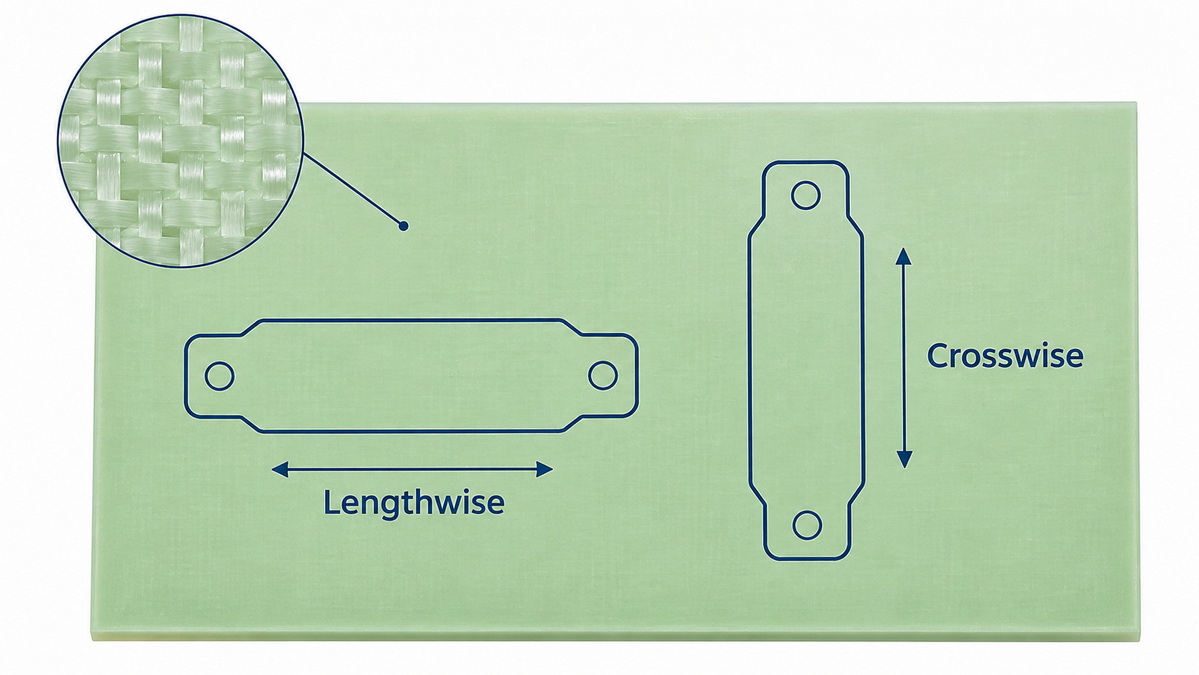
Published material guidance notes that lengthwise and crosswise mechanical values can differ. Consequently, a strength value taken from one direction should not automatically be applied to a part loaded in another direction.
A practical purchasing control is to require the supplier to:
- Identify the relevant laminate direction.
- State which direction the quoted mechanical values represent.
- Preserve specified orientation during cutting and nesting.
- Mark orientation on blanks when required by the drawing.
- Obtain approval before changing an orientation-sensitive nesting plan.
The issue is not necessarily deliberate substitution. A processor may rotate components to improve sheet utilization unless the drawing prohibits it. Where orientation matters to the design, make it a contractual requirement rather than an informal instruction.
For Spanish-market procurement, Ares Laminates, Lork Industrias, ACP Materials, and Tauro Plásticos offer different combinations of material supply and local processing. Their reviewed information supports consideration as sourcing candidates, but not a claim that all four manufacture the original G10 laminate in Spain.
Guangdong Weishi New Materials Co., Ltd. provides a separate factory-direct option for buyers comparing customized composite-material supply with locally sourced alternatives. Its stated engineering resources, product range, and customer-design support justify an RFQ discussion; pricing, MOQ, lead time, compliance evidence, and service responsiveness still require order-specific validation.
To begin that comparison, send Weishi the same controlled specification used for Spanish suppliers: grade, thickness, dimensions, drawings, annual volume, inspection requirements, and delivery destination. Request a material proposal, sample plan, supporting documentation, and itemized quotation. The most useful supplier is the one that can repeatedly deliver the approved specification at an acceptable total cost.
Search using the certificate number and legal company name in an appropriate certificate-verification system. Check the current status, applicable standard, site, scope, certification body, and accreditation information—not only the printed expiry date.
If the record cannot be found, do not immediately conclude that the certificate is false. The CertSearch user guide identifies several possible reasons for missing records and provides an inquiry route. Contact the issuing certification body for confirmation before approval.
Require engineering approval before accepting substitution.
Although both belong to the glass-epoxy laminate family, FR4 has flame-retardant characteristics that distinguish it from G10. A supplier's combined "G10/FR4" commercial description should not replace the actual drawing requirement.
Ask the supplier to identify the proposed grade, provide its datasheet, disclose relevant differences, and confirm that the substitution meets all application-specific requirements.
First check whether the documents describe the same test arrangement. Ares's datasheet, for example, distinguishes electrical strength perpendicular to the layers, expressed in kV/mm, from a parallel-to-layer result expressed in kV. Those figures should not be compared as though they were the same measurement.
For acceptance testing, specify specimen thickness, conditioning, direction, test method, and reporting units. Ask for clarification wherever a datasheet omits the information needed for a like-for-like comparison.
No. These are separate questions.
RoHS restricts ten specified substances in electrical and electronic equipment; it is not a general declaration that a material contains no halogens. Request separate evidence against the project's halogen restrictions if those apply.
CE marking depends on the legislation applicable to the product. EU guidance states that it must not be used where no applicable requirement mandates it. Do not treat a generic CE certificate as proof of G10 material quality.
Use a controlled supply agreement covering the approved manufacturer, grade, specification revision, inspection plan, batch identification, and source-change approval.
For parts with direction-sensitive mechanical requirements, include laminate orientation as well as dimensions. Published glass-epoxy guidance shows why directional properties deserve attention.
Retain the approved sample and its records, then require each shipment's documentation to identify the supplied batch and any authorized deviations.
1. Guangdong Weishi New Materials Co., Ltd.: company-reported establishment date, facility scale, output, engineering resources, products, and customization statements. [wsepoxysheet]
2. Ares Laminates: official company capabilities and published G10 technical datasheet. [areslaminates]
3. Lork Industrias: official company history, warehouse information, machining services, and G10/G11 documentation. [lorkindustrias]
4. ACP Materials: official G10 product description and Valencia contact information. [acpmaterials]
5. Tauro Plásticos: official G10/G11 offering, processing options, and Madrid-area location. [plasticostauro]
6. AFME 2026 sector study: industry reporting on 2025 electrical-material turnover, exports, and employment; not a G10-specific market estimate. [interempresas]
7. European Union and European Commission: official guidance on CE marking, RoHS, and company-register searches. [europa]
8. Certificate-verification resources: certificate status, scope, issuing-body information, and handling of missing records. [iafcertsearch]


