

Views: 231 Author: Weishi Sheets Publish Time: 2026-07-28 Origin: Site
Content Menu
● Side-by-side performance view
● Thermal performance in transformers
● Electrical and mechanical behavior
● Moisture, aging, and service life
● Machining and fabrication factors
● When to choose each material
● A procurement insight from the factory floor
● Why this matters for transformer safety
● Our manufacturing perspective
● Final recommendation for buyers
● FAQ
When engineers choose insulation for transformer parts, the real question is not just "which material is stronger." The real question is which epoxy fiberglass laminate can survive heat, electrical stress, machining, and long service life with the least risk. For high-temperature transformer components, the comparison between G10 epoxy sheet and G11 fiberglass sheet becomes a practical decision about reliability, cost, and operating margin.

Transformers work in environments where heat, vibration, humidity, and continuous electrical loading can all appear at the same time. In that setting, insulation materials are not passive fillers; they are structural and safety-critical parts of the system. G10 and G11 are both widely used in electrical insulation, but they are not identical, and the difference becomes more important as operating temperature rises.
For transformer designers, maintenance teams, and procurement specialists, the choice often comes down to a simple rule: use G10 when conditions are demanding, and use G11 when the thermal environment is more severe. That rule is helpful, but it is not enough on its own. A better decision requires a closer look at performance, manufacturability, and real application risk.
G10 and G11 are glass-reinforced epoxy laminates made by impregnating woven fiberglass cloth with epoxy resin and then hot pressing the layers into rigid sheets. Both are valued for electrical insulation, dimensional stability, and mechanical strength. Both are used in transformer components, switchgear, motor parts, and other industrial insulation applications.
The key distinction is thermal behavior. G11 is formulated for higher heat resistance and better retention of properties at elevated temperatures, while G10 is generally positioned as a strong, cost-effective general-purpose grade. In simple terms, G10 is the dependable standard, while G11 is the stronger option for hotter service conditions.
| Property | G10 Epoxy Sheet | G11 Fiberglass Sheet |
|---|---|---|
| Heat resistance | Suitable for standard electrical insulation and moderate heat exposure | Better for high-temperature environments and stronger thermal stability |
| Electrical insulation | Excellent under normal operating conditions | Excellent, with stronger retention at elevated temperature |
| Mechanical strength | Strong and widely used for structural insulation parts | Often better retained at high temperature, especially under load |
| Moisture behavior | Low moisture absorption and stable service performance | Also low moisture absorption, with good performance in humid environments |
| Machinability | Easier to machine than many high-heat grades | Can be more difficult to cut and machine |
| Cost | Usually more economical | Usually higher cost because of enhanced thermal performance |
This table shows the practical truth: G11 does not win every category, but it wins the category that matters most in hot transformer service. G10 remains highly capable, especially where budget and machining efficiency matter.
High-temperature transformer components need insulation that holds shape, insulation value, and strength when the unit is under continuous thermal stress. Several technical sources note that G10 is suitable for lower or moderate operating temperatures, while G11 is designed to perform better as temperature climbs. Some industry materials also describe G10 as a standard grade for electrical insulation and G11 as the preferred choice for elevated-temperature applications.
In practical transformer design, this means G10 can work well for:
- Terminal boards.
- Spacers.
- Supporting parts in moderate thermal zones.
- General insulating structures where heat rise is controlled.
G11 is more suitable for:
- Components close to heat-producing windings.
- Hot-zone structural parts.
- Insulation elements exposed to continuous elevated temperature.
- Applications where long-term thermal stability is more important than initial cost.
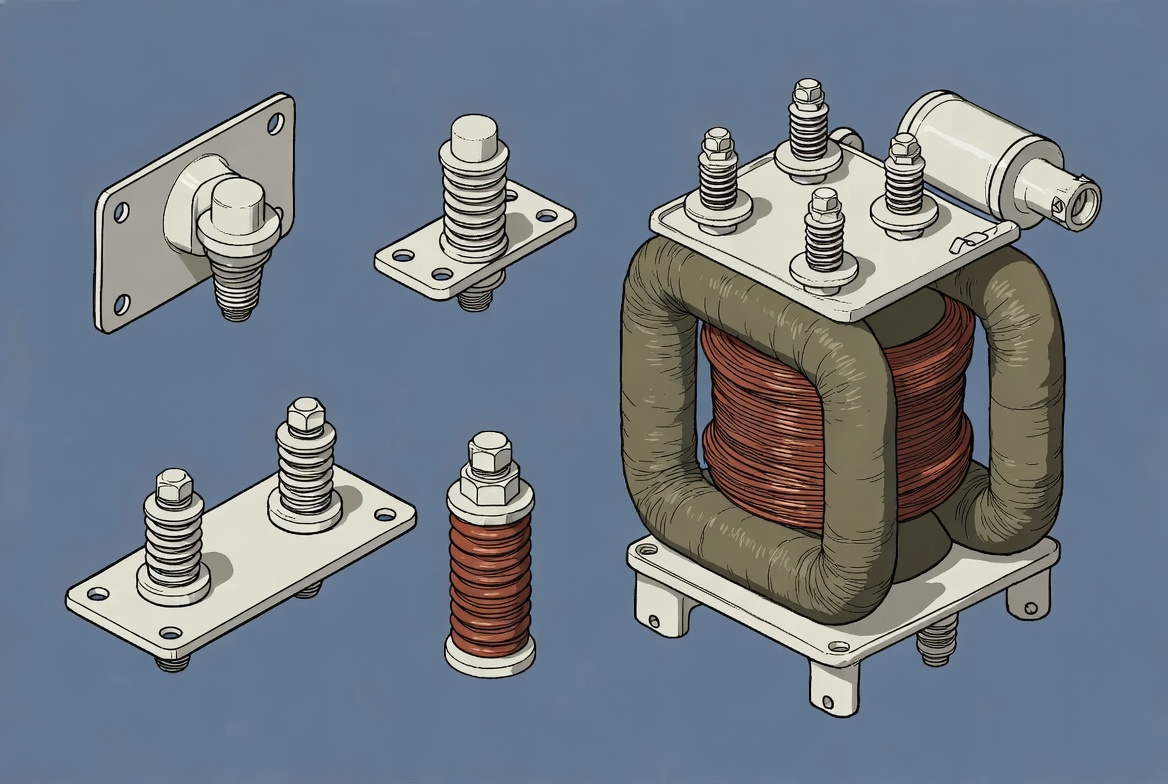
Both materials offer excellent insulating performance, but the key distinction is how that performance holds up under heat. Industry sources consistently note that G11 retains mechanical and electrical integrity better at higher temperatures. That makes it more suitable for transformer parts that must stay stable during long duty cycles or repeated thermal cycling.
Mechanical strength is also important because transformer insulation often serves as a load-bearing part. Vibration, clamp pressure, and assembly stress can all create mechanical fatigue over time. In this area, G10 is strong and reliable, but G11 is often the safer choice when the environment is hotter and the structural margin must stay intact longer.
Transformers do not only face heat. They may also operate in humidity, coastal conditions, or environments with seasonal temperature swings. Both G10 and G11 are known for low moisture absorption, which helps preserve insulating performance and dimensional stability.
Where G11 often stands out is durability under combined stress. When heat and moisture act together, material aging can accelerate. That is why many engineers prefer G11 for critical parts that must resist long-term property loss, especially in demanding transformer installations.
From a production standpoint, the best material is not always the strongest one. It must also be manufacturable at the required tolerance and cost. G10 is generally easier to machine, which can reduce fabrication friction for cutters, drillers, and CNC shops.
G11 delivers higher thermal performance, but it may be harder to cut or machine cleanly. That means buyers should think beyond raw material price and include tooling, scrap rate, lead time, and finishing requirements in the total cost calculation. In many projects, this is where the final decision is really made.
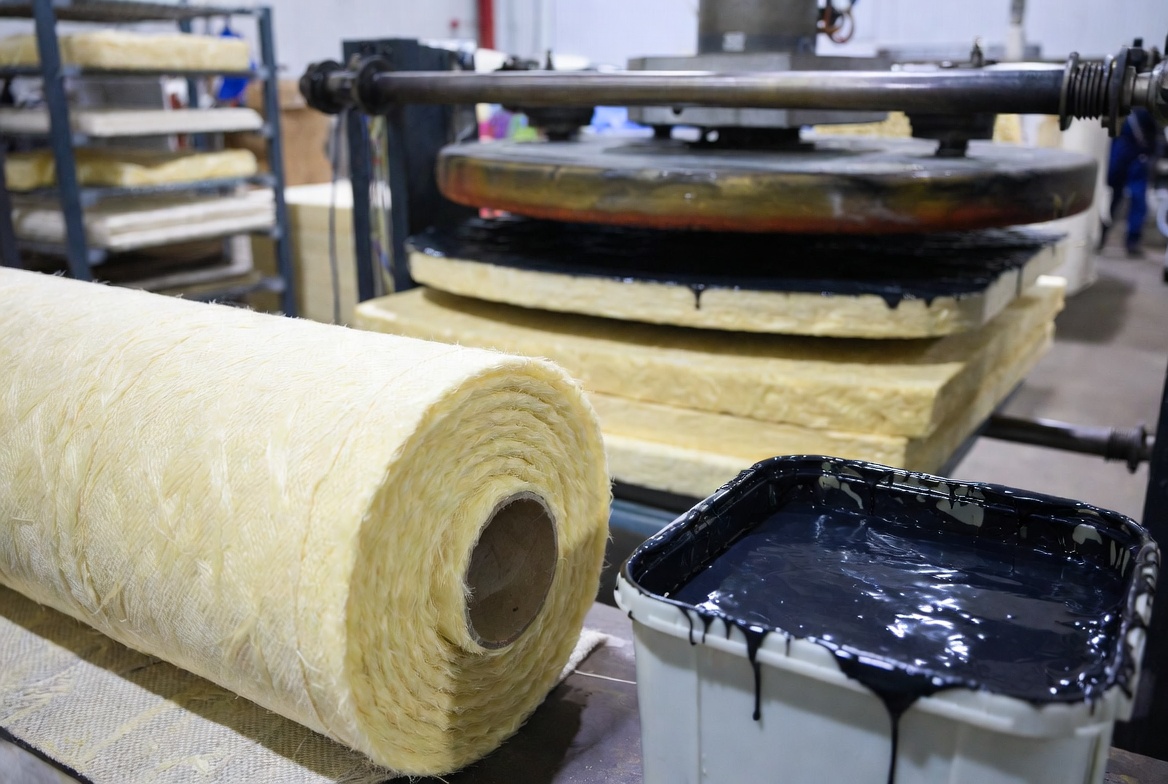
A practical selection rule is useful for purchasing and design teams.
1. Choose G10 if the transformer component will run at moderate temperature, needs solid insulation, and must stay cost-efficient.
2. Choose G11 if the component will face sustained heat, higher thermal stress, or tighter reliability demands.
3. Choose G10 if machinability and production speed are important.
4. Choose G11 if long-term thermal stability matters more than initial material cost.
For many transformer applications, G10 is the balanced choice. For harsh hot zones, G11 is the safer engineering choice.
In real manufacturing projects, the "best" insulation sheet is often the one that reduces downstream problems. A lower-cost material can become expensive if it causes rework, deformation, or early replacement. From the viewpoint of a materials supplier, the most successful transformer projects usually match the laminate grade to the exact thermal zone instead of using one sheet grade everywhere.
A simple sourcing practice can improve outcomes:
- Map the transformer into hot, warm, and cool zones.
- Assign material grade based on temperature exposure.
- Verify machining tolerance before mass production.
- Confirm whether the part also carries structural load.
- Check whether long-term service life or initial cost is the priority.
This approach reduces both technical risk and procurement waste.
Transformer insulation failure can lead to higher maintenance costs, reduced reliability, and potential system downtime. Since insulation parts are often hidden inside the assembly, selecting the wrong sheet grade may not show immediate problems. The risk appears later, after heat, vibration, and aging have accumulated.
That is why high-temperature applications should be evaluated conservatively. If the transformer component is near a thermal limit, G11 offers a better safety margin. If the application is less severe, G10 remains a proven and efficient solution.
At Guangdong Weishi New Materials Co., Ltd., we focus on high-performance epoxy insulation boards and composite materials for industrial use. In transformer-related applications, our experience shows that engineers often need more than a sheet specification; they need stable quality, consistent thickness, reliable electrical performance, and custom machining support. That is especially true for export projects, where customer standards, service conditions, and inspection expectations can vary widely.
For that reason, the right partner should help you match the material grade to the actual operating environment. A good supplier should not simply sell a sheet. A good supplier should help reduce risk in the final assembly.
If your project is a standard transformer component with controlled temperature rise, G10 epoxy sheet is usually the smarter balance of performance and cost. If your component must withstand sustained elevated heat, G11 fiberglass sheet is the stronger long-term choice.
The decision becomes simple when you focus on service temperature first, then mechanical load, then fabrication needs, and finally cost. That order leads to better material selection and fewer surprises in production.
If you are sourcing insulation for transformer components, request a material recommendation based on your operating temperature, thickness, machining needs, and application drawings. A tailored selection at the start can save cost, improve reliability, and extend service life.
1. Is G11 always better than G10 for transformers?
No. G11 is better for higher temperatures, but G10 is often more cost-effective and easier to machine for moderate-temperature applications.
2. Which material has better heat resistance?
G11 has better heat resistance and retains properties more effectively at elevated temperatures.
3. Can both materials be used for electrical insulation?
Yes. Both are widely used as electrical insulation materials in transformer and industrial applications.
4. Which is easier to process in manufacturing?
G10 is generally easier to machine, while G11 can require more care during cutting and finishing.
5. How do I choose the right one for my project?
Start with operating temperature, then check mechanical load, humidity exposure, machining needs, and budget. If heat is the main concern, G11 is usually the safer option.
6. Are these materials suitable for custom transformer parts?
Yes. Both are commonly used for custom insulating parts such as terminal boards, spacers, and structural supports.
1. [广东纵胜新材料股份有限公司]
2. [电工层压木产品 - 许绝电工股份有限公司]
3. [Know About G10 Fiberglass Epoxy Laminate Sheet]
4. [G10 vs G11 Glass-Reinforced Epoxy Laminates Comparison Guide]
5. [glass-reinforced epoxy laminates G10 vs G11 comparison]
6. [G10 vs. G11 Epoxy Fiberglass: Temperature Resistance & More]
7. [Technical Data Sheet G-10]
8. [FR4/G10 vs G11: Differences in Insulation & PCB Support]
9. [What is the difference between G10 and G11?]
10. [Common Cryogenic Materials: G-10 & G-11]
11. [High-Performance Class F Epoxy Laminate G11]
12. [NEMA G-10/11 Fiberglass Epoxy Laminate]
13. [G10 vs. Traditional Insulation Materials: What Transformer ...]
14. [SAFETY DATA SHEET - NEMA Grade G-10 / G11]
15. [IEC 60893 G11 Epoxy Glass Laminate, Nema ...]
16. [NEMA G11 (EPGC 308) from The Gund Co]
17. [A Review of High Temperature Glass Epoxy Laminate ...]
18. [Why are Transformer Insulation System Ratings Important?]


