
Views: 265 Author: Weishi Sheets Publish Time: 2026-11-15 Origin: Site
Content Menu
● Understanding the Market: What Does "Fiberglass Sheets" Mean?
● Why Source Fiberglass Sheets Through Poland?
>> Access to an Established Industrial Ecosystem
>> A Choice Between Local Production and Local Distribution
>> What the Latest Industry Report Actually Shows
● Selection Criteria: How These Suppliers Were Evaluated
>> 2. Clear Manufacturing or Distribution Role
>> 3. Engineering and Customization Relevance
>> 4. Quality-Control Transparency
>> 5. Certifications and Compliance Evidence
● Five Fiberglass Sheets Manufacturers and Suppliers to Consider
>>> Product Focus and Core Strengths
>>> OEM/ODM Support and Communication
>>> Main Markets and Purchasing Fit
>> 2. IZO-ERG — Polish Manufacturer of Electrical Insulation and Structural Laminates
>>> Product Focus and Core Strengths
>>> OEM/ODM Scope
>>> Main Markets
>> 3. HOLTEX — Polish Industrial-Materials Supplier for Technical Laminates
>>> Product Focus and Core Strengths
>>> OEM/ODM Scope
>>> Main Markets
>> 4. Eurodrut — Electrical-Industry Distributor Offering 3240 Epoxy Sheets
>>> Product Focus and Core Strengths
>>> OEM/ODM Scope
>>> Main Markets
>> 5. LAMILUX Through Its Polish Sales Channel — GRP Sheets for Vehicles, Panels, and Cladding
>>> Product Focus and Core Strengths
>>> OEM/ODM Scope
>>> Main Markets
● Supplier Comparison: Capacity, MOQ, and Certification Transparency
● Technical Buyer's Guide: Specify the Material Before Comparing the Price
>> Define a Grade, Not Just a Color
>> Handle CE Marking Correctly
>> Request Targeted Chemical-Compliance Documentation
● A Less-Discussed Purchasing Trap: The Sample May Not Represent the Production Sheet
● Factory Verification, Sampling, and Logistics
>> Verify the Factory Behind the Invoice
>> Use a Three-Stage Approval Process
>>> Stage 1: Documentation Review
>>> Stage 2: Material and Processing Trial
>> Compare Landed Cost, Not Just Price per Sheet
>> Agree Packaging and Delivery Responsibilities
● Conclusion: Match the Supplier to the Material and Supply Model
● FAQ
>> 1. How can I verify whether a supplier's ISO certificate has expired or been suspended?
>> 2. Can a supplier replace G10 with FR4 or 3240 without requalification?
>> 3. What should I do when the sample passes but the first production shipment fails inspection?
>> 4. How do I qualify a supplier when it will not disclose capacity or MOQ publicly?
>> 5. Do fiberglass sheets supplied to Poland always need CE marking?
Choosing a fiberglass sheet supplier requires more than comparing prices and delivery promises. Procurement managers need to establish who manufactures the material, which grade is actually being supplied, how batches are tested, and whether the supplier can maintain consistent quality after the sample order.
Poland offers several sourcing routes: domestic laminate manufacturing, specialist industrial-material distributors, and local sales support for international composite producers. Its automotive and advanced-manufacturing ecosystem also provides a relevant customer base for engineered materials. The Silesia Automotive & Advanced Manufacturing cluster, coordinated by the Katowice Special Economic Zone, illustrates this concentration of industrial expertise.
This guide evaluates five suppliers relevant to buyers sourcing fiberglass sheets in Poland. It begins with Guangdong Weishi New Materials Co., Ltd. as an international factory-direct alternative, followed by Polish manufacturing and distribution options.
The selection considers material specialization, manufacturing transparency, engineering support, quality documentation, and suitability for repeat purchasing. It is a procurement shortlist—not an audited ranking by revenue, market share, or independently verified production capacity.

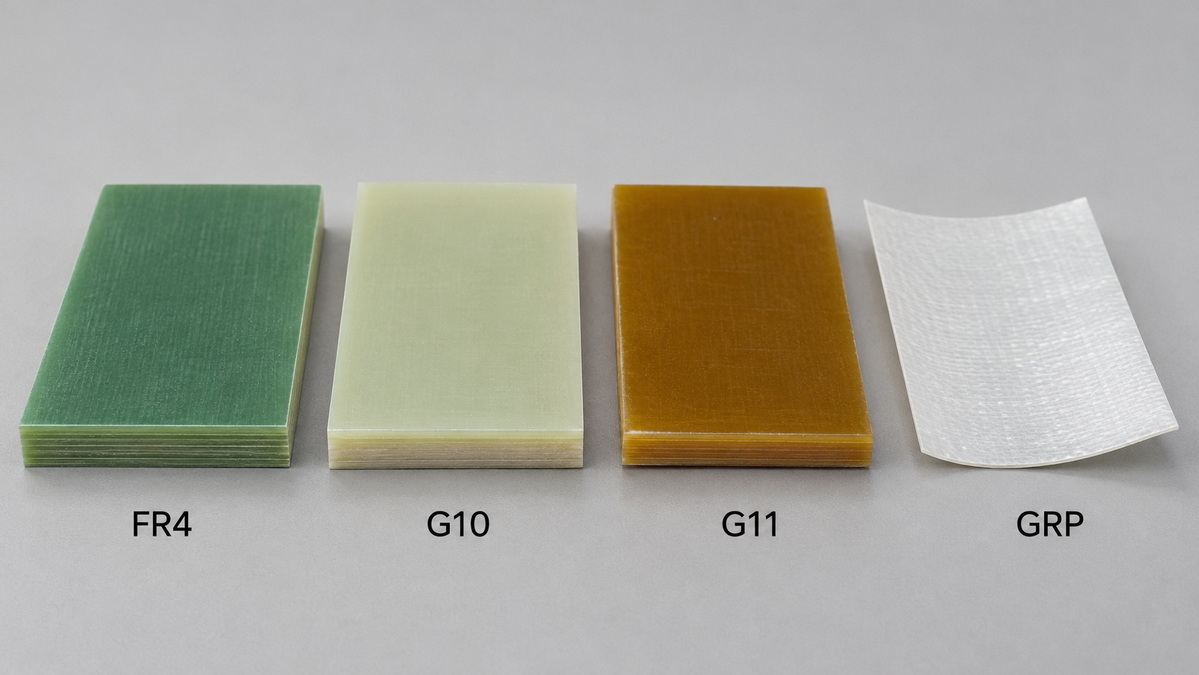
The phrase "fiberglass sheets" covers materials that are not necessarily interchangeable.
For electrical insulation and precision-machined components, buyers commonly require woven-glass epoxy laminates such as FR4, G10, and G11. By contrast, vehicle bodywork, wall cladding, and sandwich-panel production may use glass-reinforced plastic sheets designed around different resin systems, surface finishes, and manufacturing processes. LAMILUX, for example, describes continuous industrial flat-sheet production for applications including commercial vehicles, caravans, buses, and cold rooms.
This distinction matters because an excellent supplier of hygienic GRP cladding may not be the right source for a load-bearing electrical insulation plate.
Before requesting quotations, define which product family your application requires:
| Product family | Typical purchasing purpose | Essential clarification |
|---|---|---|
| FR4 epoxy fiberglass sheets | Flame-retardant electrical insulation and structural components | Exact grade, thickness, and documented flame performance |
| G10 glass-epoxy sheets | Electrical insulation and mechanically loaded components | Mechanical, electrical, and environmental requirements |
| G11 glass-epoxy sheets | Applications requiring improved elevated-temperature performance | Grade-specific thermal data and retained mechanical properties |
| 3240 epoxy-glass sheets | General industrial insulation and structural uses | Actual specification; do not assume automatic equivalence to FR4 |
| GRP/FRP construction and vehicle sheets | Cladding, vehicle skins, and panel facings | Resin system, surface finish, impact resistance, and application suitability |
Glass-epoxy grades differ in formulation and performance, while 3240 is separately marketed as an electrical insulating laminate. Treat these names as starting points for specification—not permission to substitute materials without approval.
Poland's industrial appeal is not limited to the existence of a few material suppliers. Its automotive, electrical, and manufacturing activities create a practical environment for technical procurement, component processing, and supplier collaboration.
The Polish Investment and Trade Agency identifies automotive and electromobility as important national industries and highlights the battery-production ecosystem in Lower Silesia. These are relevant downstream sectors for engineered insulation and composite components, although their scale should not be confused with the size of Poland's fiberglass sheet market itself.
Silesia and Opole are particularly relevant industrial locations. The regional automotive and advanced-manufacturing cluster explicitly supports collaboration between manufacturing companies, technology providers, and educational institutions.
Buyers should distinguish three different advantages:
- A domestic laminate manufacturer can offer direct access to material production and processing capabilities.
- A local distributor can consolidate multiple industrial materials and coordinate purchasing through a Polish commercial contact.
- An international manufacturer can provide an alternative cost structure and factory-direct customization.
None of these business models is automatically superior. The right choice depends on the required grade, annual consumption, documentation burden, and acceptable replenishment risk.
AVK's March 2026 report estimates that European composites production declined by 3% in 2025 to 2,281 kilotons, compared with 2,351 kilotons in 2024. Thermoset composites accounted for 952 kilotons of the total.
The same report places the Eastern European thermoset composites region at 182 kilotons, or 19.1% of the European thermoset market. That regional category includes Poland alongside Czechia, Hungary, Romania, and several other countries. It is not a Poland-only figure and does not isolate FR4, G10, or G11 sheets.
For procurement teams, the useful implication is that broad market statistics cannot prove the available capacity of an individual fiberglass sheet supplier. Capacity must be verified at factory, production-line, and material-grade level.
The shortlist uses six transparent criteria.
A company must publicly identify relevant glass-epoxy laminates or fiberglass-reinforced sheet products. Suppliers of glass fabric alone are not treated as finished-sheet manufacturers.
The assessment separates companies that manufacture laminates from businesses that distribute them or provide a local sales channel.
This prevents a common purchasing mistake: assuming that a warehouse address is also the production site.
For insulation boards, useful support may include material selection, drawing review, cut-to-size supply, machined components, or development of a repeatable production specification.
OEM support should be evaluated through actual deliverables. "Custom service available" is less meaningful than a documented tolerance review and an approved first-article inspection.
The recommended qualification process examines incoming reinforcement and resin controls, production records, dimensional inspection, test methods, batch identification, and nonconformance handling.
These are recommended purchasing checks, not claims that every listed company has passed an independent audit.
A certificate should identify the legal entity, relevant site, scope, and current status. A management-system certificate does not replace a product test report. IAF CertSearch provides tools for checking accredited management-system certifications and their status.
Buyers should compare confirmed MOQ, production lead time, available stock, change-control procedures, packaging, and delivery performance.
Where public information does not establish a value, this guide states that it requires confirmation rather than supplying an estimate.
Guangdong Weishi New Materials Co., Ltd. is based in Heyuan, Guangdong, China. It is included first as an overseas manufacturing option for buyers serving Poland—not as a Polish manufacturer.
According to its website, the company was established in October 2007 and operates a facility with more than 16,000 square meters of building area. It reports 10 engineers, more than 60 technical personnel, and monthly output exceeding 100 tonnes. These are company-published figures rather than independently audited capacity measurements.
Weishi's published range includes FR4 fiberglass sheets, G10/G11-related product categories, antistatic sheets, copper-clad laminates, and other composite insulation materials. The company positions its products for electronics, electrical equipment, and machinery.
Its potential attraction is the combination of sheet production and processing support. Its website states that it can take customer product ideas and designs, modify them, and support mass production.
For small and medium-sized OEMs, this makes Weishi a relevant candidate when standard stock sheets do not fully meet the application requirements.
A suitable qualification project would ask Weishi to demonstrate:
- Drawing-based material and processing recommendations.
- Thickness and dimensional tolerance review.
- Prototype-to-production consistency.
- Clear responsibility for technical questions and drawing revisions.
- A documented quotation separating material, machining, tooling, and packaging.
The company's engineering team and stated design-to-production support provide a basis for evaluating R&D-oriented cooperation. However, response speed, low-volume flexibility, and communication efficiency should be measured during the quotation and sample stages rather than assumed.
The verified website identifies application sectors but does not establish an audited geographical sales breakdown. Buyers should request relevant export references and examples of documentation prepared for European customers.
Weishi is worth evaluating as a cost-conscious, customization-oriented factory-direct option. Its value should be judged by delivered cost per accepted component, not by an unsupported claim that it is always the cheapest supplier.
The website advertises UL94 V-0 performance for a featured FR4 product. Before using that claim in a safety-critical design, request the supporting report or recognition information and verify the exact material designation, thickness, and manufacturing site covered.
IZO-ERG is the most directly relevant domestic manufacturing option in this shortlist for buyers seeking industrial glass-epoxy insulation laminates.
Its published history traces the business to 1946. The company describes its core products as paper-phenolic, cotton-phenolic, and glass-epoxy laminates, supplied in forms including sheets, tubes, and rods.
The LERG Group's company profile lists technical laminates, thermosetting prepregs, machined laminate parts, flexible insulation materials, and high-voltage feed-through insulators. This gives IZO-ERG a broader electrical-insulation offering than a general plastics distributor.
For procurement managers, the main attraction is access to both laminate materials and related processing capabilities.
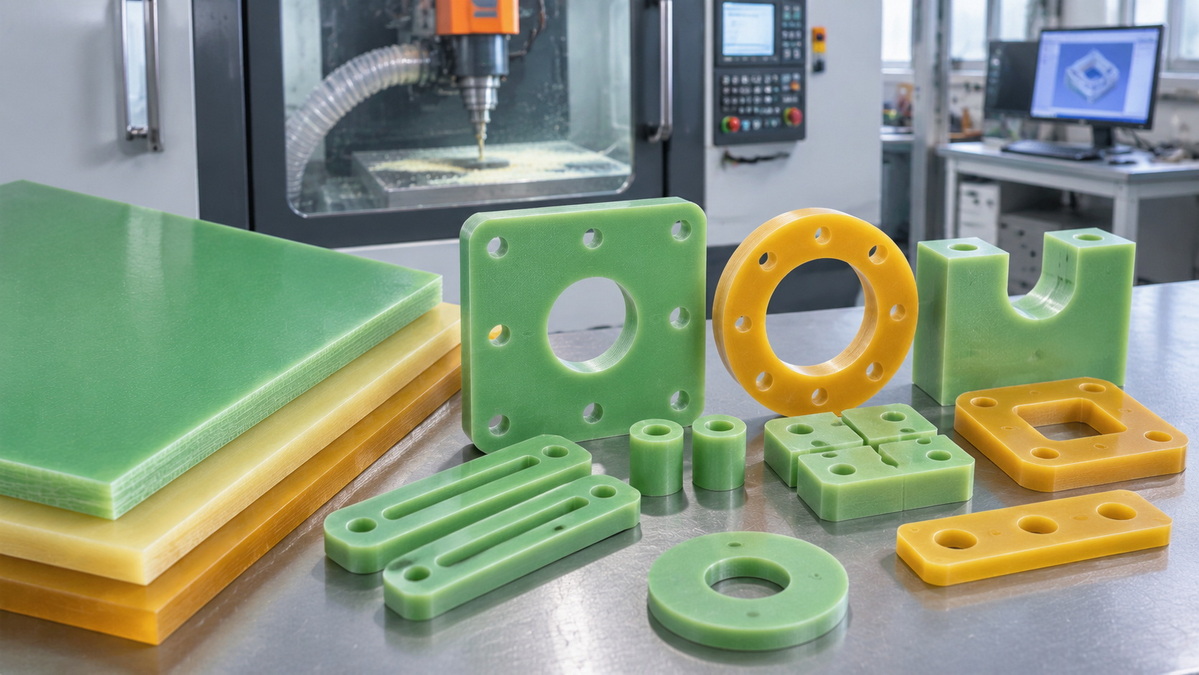
The publicly documented supply of machined laminate parts supports consideration for drawing-based OEM components. Buyers can investigate opportunities to procure both raw sheets and finished insulation parts through the same manufacturing relationship.
Original material development or proprietary resin formulation should not be assumed. Those capabilities require a separate technical discussion and development agreement.
IZO-ERG's catalogue identifies both Polish and foreign markets. Its product portfolio supports electrical-insulation and structural applications, but buyers should request sector-specific references when the intended use involves additional qualification requirements.
Ask for the exact laminate designation, applicable specification, production-site details, and certificate scope. Do not accept "glass epoxy" as a complete substitute for the grade required on an engineering drawing.
HOLTEX traces its history to 1991 and describes itself as a supplier of technical sealing products and industrial materials, including engineering plastics and thermal insulation. It identifies customer industries such as chemicals, energy, heating, metallurgy, and petrochemicals.
Its technical material information specifically discusses glass-epoxy laminates and differentiates several TSE grades.
HOLTEX is relevant for buyers who need technical laminates alongside other maintenance, sealing, or industrial materials.
Its published information distinguishes TSE-2, TSE-3, TSE-5 variants, and higher-temperature TSE grades. That is a useful starting point for a technical conversation, but the article is not a substitute for the current datasheet of the product being quoted.
The reviewed sources establish an industrial supply role, not verified in-house laminate manufacturing or proprietary resin development.
For OEM procurement, ask whether HOLTEX can supply cut blanks, processed parts, or documentation packages through its own operations or qualified partners. Confirm the responsibility for each step before approving a repeat-order arrangement.
The company's published emphasis is industrial material supply, particularly to process and energy-related sectors. A detailed export-market breakdown was not established from the reviewed sources.
Request the original laminate manufacturer's identity and a written grade cross-reference when a TSE designation is offered against a drawing specifying FR4, G10, G11, or an IEC designation.
A cross-reference should identify relevant test results and limits—not merely state that the products are "similar."
Eurodrut states that it was established in 2002, with its founder's industry experience dating to 1995. Its headquarters and main warehouse are in Tarnowo Podgórne, Poland.
The business specializes in winding wires and components used to build or regenerate electric motors and related equipment. Its product range includes 3240 electrical insulating laminate made from glass fabric and epoxy resin.
Eurodrut is relevant when fiberglass insulation sheets form part of a broader electrical-material purchase.
Motor, transformer, and coil-related buyers may find it useful to discuss winding materials and rigid insulation through a supplier already focused on those industries. The documented offering makes Eurodrut a more relevant candidate for this purchasing context than a general-purpose building-plastics stockist.
The reviewed evidence supports distribution and specialist material sourcing. It does not establish proprietary fiberglass sheet manufacturing or in-house laminate formulation.
Any cut-to-size, machining, or customized insulation package should therefore be confirmed in writing, including whether a subcontractor performs the work.
Eurodrut identifies motor, transformer, coil, and other inductive-component applications. Its company profile emphasizes its role in the Polish distribution market; detailed overseas sales information requires direct confirmation.
Do not automatically substitute its listed 3240 material for FR4. If flame behavior, moisture resistance, or a particular mechanical property is mandatory, request evidence for the supplied grade before approving equivalence.
LAMILUX offers a different product route from the electrical-laminate specialists above.
Its composite sheets are manufactured in Germany, while its Polish website provides a local commercial contact and identifies LAMILUX Polska in Gdynia. This is a Poland-facing supply channel, not evidence of Polish composite-sheet production.
The establishment year of the Polish entity was not verified in the reviewed sources and should be confirmed if company-history information forms part of supplier qualification.
LAMILUX describes continuous flat-sheet production for fiberglass-reinforced plastics used in caravans, commercial vehicles, buses, cold rooms, construction, and other industrial applications.
It is therefore relevant for buyers seeking lightweight sheet surfaces and panel facings rather than assuming every fiberglass sheet must be an electrical insulation board.
The documented product range supports application-specific material selection. Buyers can discuss the required sheet format, finish, surface functionality, and compatibility with their panel or vehicle manufacturing process.
However, tooling ownership, exclusive material development, private labeling, and other ODM terms require direct confirmation.
Its published applications include transport, recreational vehicles, construction, and temperature-controlled environments. Independent industry coverage also identifies vehicle materials and hygienic wall and ceiling cladding as active application areas.
Do not approve a GRP vehicle or cladding sheet for electrical insulation solely because it contains glass reinforcement. Specify the electrical, thermal, and flame requirements separately.
The following table separates disclosed information from matters requiring quotation-stage verification.
"Not verified" means that current, applicable evidence was not established in the reviewed public sources. It does not mean that a supplier lacks the capability or certificate.
| Supplier | Supply model | Published capacity information | Published MOQ | Certification or compliance evidence to verify | Primary sourcing fit |
|---|---|---|---|---|---|
| Guangdong Weishi | Chinese manufacturer; overseas alternative | Company reports more than 100 tonnes/month; allocation by grade not disclosed | Not disclosed in reviewed source | Featured FR4 V-0 claim requires product-specific supporting evidence; current management certificates not verified | Customized epoxy insulation sheets and processed components |
| IZO-ERG | Polish laminate manufacturer | Grade-specific sheet capacity not established | Not disclosed in reviewed sources | Current site-specific certificates and quoted-grade test documentation | Industrial electrical and structural laminates |
| HOLTEX | Polish industrial-material supplier | Own laminate production not established | Not disclosed in reviewed sources | Original producer documentation, supplier certificate scope, batch traceability | Technical laminate sourcing with other industrial materials |
| Eurodrut | Polish electrical-material distributor | Own laminate production not established | Not disclosed in reviewed sources | Producer identification and 3240 product documentation | Motor, transformer, and winding-related procurement |
| LAMILUX through Polish channel | German producer with Polish sales support | Continuous industrial sheet production documented; numerical capacity not established | Not disclosed in reviewed sources | Exact product- and production-site documents for the selected application | Vehicle sheets, panel facings, and industrial cladding |
The product and business-model distinctions above follow the respective company sources. Weishi's numerical capacity remains a manufacturer-published claim.
For a meaningful comparison, send every shortlisted supplier the same RFQ. Ask separately for MOQ by standard sheet, custom thickness, custom color, machining batch, and special packaging.
A purchase description such as "green fiberglass board, 5 mm" leaves too much room for substitution.
Instead, identify:
- Required material designation and specification.
- Nominal thickness and permitted variation.
- Sheet dimensions and usable area.
- Flatness and surface requirements.
- Mechanical and dielectric acceptance criteria.
- Relevant conditioning and test methods.
- Required flame behavior.
- Batch-identification and documentation requirements.
Glass-epoxy laminates are sold under multiple grading systems. For example, published G10 specifications may refer to NEMA, IEC, and military designations. Any proposed equivalence should be checked against the actual requirements rather than accepted from the trade name alone.
Published temperature figures can describe different properties and test conditions.
A useful supplier response should distinguish the material's glass-transition behavior, thermal-endurance evidence, and mechanical performance at the intended operating temperature. Supplier technical literature itself shows that quoted G10 and G11 temperature values vary by formulation and context.
Consequently, "high-temperature board" is not an adequate specification. State the working environment, exposure duration, mechanical load, and electrical stress, then request supporting data for the exact grade.
CE marking is not a universal quality certificate for fiberglass sheets.
The European Commission states that CE marking is required only for products covered by applicable harmonized rules that mandate it. Where no such requirement applies, the marking must not be used.
The correct procurement question is therefore not simply, "Do you have CE?"
Ask:
> Which legal requirements apply to this product in its intended use, and what documents demonstrate conformity?
A raw insulation sheet and a finished electrical device are different products. Do not transfer a finished-device compliance assumption to every constituent material.
For projects requiring RoHS or REACH-related evidence, make the documentation request specific:
- Identify the exact material grade and color.
- Require the declaration date and legal entity.
- Ask which substances, restrictions, or reporting obligations the declaration addresses.
- Establish whether the evidence covers the current formulation.
- Specify whether laboratory testing is contractually required.
Treat these as qualification requirements to agree with the supplier, not as certificates automatically possessed by every company on the shortlist.
One of the most useful preventive controls is a production-representative sampling agreement.
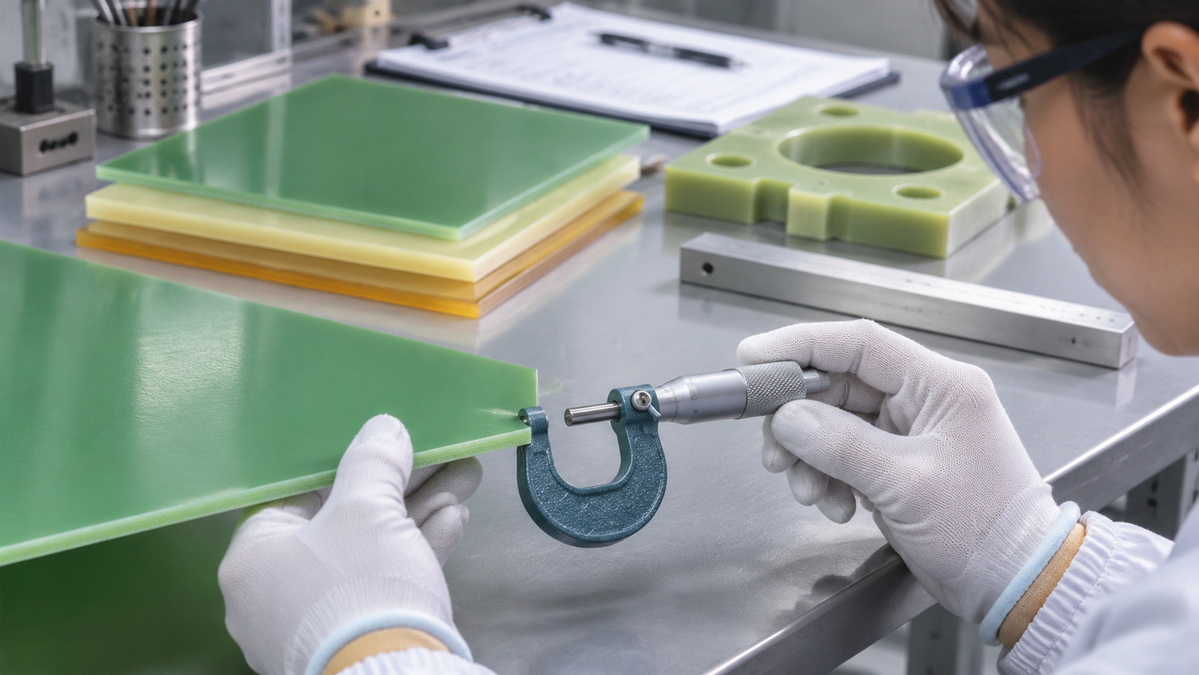
A small, carefully selected sample can answer whether a material appears suitable. It does not establish the thickness distribution, flatness, or machining behavior of the full sheet area delivered in a commercial order.
Likewise, a sample identified only as "FR4" does not adequately control whether future deliveries use the same producer, product designation, or approved construction.
Use the following safeguards as contractual controls:
1. Record the sample's manufacturer, grade, thickness, and batch.
2. Require samples from normal production rather than an unidentified demonstration stock.
3. Approve a full sheet or a representative first-article batch where dimensional performance matters.
4. Define thickness-measurement locations across the usable sheet area.
5. Preserve reference samples and inspection records.
6. Require written approval before changing the producer, grade, or other agreed material characteristics.
For machined insulation parts, also specify the datum structure and orientation where relevant. A supplier should not decide independently that changing the nesting layout is harmless.
The underlying procurement principle is simple: approve a repeatable supply specification, not just an attractive sample.
Ask the contracting company to identify:
- Its legal name and registered address.
- The actual laminate production location.
- The producer of the quoted material.
- Any subcontracted cutting or machining operations.
- Who owns inspection records.
- Who investigates and resolves nonconformities.
A distributor can be a reliable long-term partner. The risk is not distribution itself; it is unclear responsibility and undisclosed changes of source.
For management-system certificates, check that the entity, site, and certified activities match the proposed supply chain. IAF CertSearch records include certificate identification, scope, status, and certified-entity information.
Obtain the quotation, datasheet, proposed specification, relevant certificates, and a sample inspection-report format.
Resolve contradictions before paying for machining trials.
Evaluate the product under the conditions that matter to your application. A sensible trial may include incoming dimensions, machining quality, assembly fit, and independently agreed electrical or environmental tests.
Use the trial to test communication as well: does the supplier answer technical questions clearly and identify risks before production?
Approve a controlled batch before committing to annual volume. Compare the pilot delivery with the agreed specification and reference sample.
Record both product results and supplier performance, including document accuracy, packaging condition, and corrective-action responsiveness.
A useful purchasing comparison includes:
- Material cost.
- Cutting and machining.
- Tooling and first-article inspection.
- Freight and insurance.
- Applicable import charges.
- Packaging and handling.
- Rejected material and rework.
- Inventory carrying cost.
- Usable component yield.
Ask for a nesting proposal when purchasing processed blanks. A lower sheet price can be outweighed by poorer yield or a larger unusable border.
For either domestic or imported supply, specify sheet identification, edge protection, support against transit damage, moisture protection appropriate to the journey, and handling requirements.
For overseas orders, have the freight forwarder or customs representative confirm classification and destination requirements for the actual product. Do not assume that raw sheets, machined insulation parts, and composite sandwich panels receive identical treatment.
Avoid placing a purchase order against a generic "fast delivery" statement. Require a dated dispatch commitment and an explanation of which operations remain outstanding.
The most suitable fiberglass sheets supplier in Poland depends on the purchasing requirement.
IZO-ERG offers a documented domestic manufacturing route for electrical and structural laminates. HOLTEX provides a specialist industrial-material sourcing option, while Eurodrut is relevant to electrical winding and motor-related purchasing. LAMILUX's Polish sales channel serves a different need: fiberglass-reinforced sheets for vehicles, panel facings, and related industrial applications.
Guangdong Weishi New Materials Co., Ltd. adds a factory-direct international alternative for buyers evaluating customized epoxy insulation materials. Its reported manufacturing scale, engineering staff, and design-to-production support justify including it in a structured qualification process—not bypassing that process.
To begin a comparable sourcing exercise, prepare one specification package containing the grade, drawing, annual demand, initial order quantity, operating conditions, and documentation requirements.
For a Weishi quotation, submit that package through the company's published contact channel and request a written material recommendation, sample plan, and itemized commercial proposal. This turns an initial inquiry into a measurable supplier evaluation.
Start with the complete certificate, not a cropped logo. Match the legal entity, site address, certificate number, standard, and scope to the company and operations supplying your order.
Check the certificate through the issuing certification body and use IAF CertSearch where applicable. Its verification tools distinguish statuses such as active, suspended, withdrawn, and expired. If the information is missing or inconsistent, obtain confirmation from the issuer before relying on it.
Do not treat the printed expiry date as the only check: current status matters too.
Do not authorize a blanket substitution.
FR4 and G10 share a glass-epoxy material family but differ in their grade requirements, including flame-related characteristics. A 3240 designation identifies another supplied insulation product and does not, by itself, demonstrate compliance with an FR4 drawing.
Require the proposed material's datasheet, a requirement-by-requirement comparison, and the approval of the responsible engineer. The purchase order should prohibit unapproved substitutions.
Quarantine the affected material and compare it against the approved specification, sample identification, and inspection records.
Ask the supplier to establish whether the production source, grade, manufacturing conditions, or processing route changed. Require a documented investigation and an agreed disposition: replacement, rework, concession, or rejection.
For subsequent orders, strengthen production-representative sampling, lot traceability, and pre-dispatch inspection. These controls are more useful than accepting a second unidentified sample.
Request a written capacity and commercial statement tied to your actual order:
- Monthly availability for the required grade and thickness.
- Capacity already committed to other orders.
- Bottleneck operations.
- MOQ for standard and custom production.
- Sample, pilot, and repeat-order lead times.
- Recovery arrangements for a delayed batch.
A total factory tonnage figure is insufficient if your material requires a limited production or machining route. Validate the response through a pilot order and delivery records.
No. The obligation depends on whether the product and intended use fall within legislation requiring CE marking. The European Commission expressly states that the marking is not applicable to every product and must not be used where the relevant requirements do not apply.
Request an application-specific compliance explanation. A generic "CE certificate" is not a replacement for material identification, relevant testing, or the documentation required for the finished product.
1.AVK, *The European Composites Market in 2025*, March 2026 press release and market findings. [avk-tv]
2.AVK, *European Composites Market Report 2026*, detailed market analysis. [avk-tv]
3.Polish Investment and Trade Agency, *The Automotive & Electromobility Sector*—industrial context, not a fiberglass-sheet market estimate. [paih.gov]
4.Poland's official trade portal, *Silesia Automotive & Advanced Manufacturing Cluster*. [trade.gov]
5.European Commission, Your Europe, *CE Marking*. [europa]
6.IAF CertSearch, certification verification guidance and status information. [support.iafcertsearch]
7.Guangdong Weishi New Materials Co., Ltd., company and product information. [wsepoxysheet]
8.IZO-ERG / LERG Group, manufacturer profile and technical laminate information. [izoerg.com]
9.HOLTEX, company history and glass-epoxy technical laminate information. [holtex]
10.Eurodrut, company background and 3240 laminate listing. [eurodrut]
11.LAMILUX, composite product information and Polish sales channel. [lamilux]


