

Views: 275 Author: Weishi Sheets Publish Time: 2026-10-02 Origin: Site
Content Menu
● What Is the Difference Between Epoxy Resin Sheet and Fiberglass Laminate Sheet?
● Epoxy Resin Sheet for Chemical Processing Equipment
>> Where Epoxy Resin Sheets Perform Well
>> Limitations of Epoxy Resin Sheets
● Fiberglass Laminate Sheet for Chemical Processing Equipment
>> Why Fiberglass Laminate Sheets Are Widely Used
● G10 Fiberglass Laminate Sheet
● FR4 Fiberglass Laminate Sheet
● G11 Fiberglass Laminate Sheet
● Epoxy Resin Sheet vs Fiberglass Laminate Sheet: Full Performance Comparison
● Chemical Resistance in Real Operating Conditions
>> Why Machined Edges Need Extra Attention
● How to Choose the Right Material Grade
>> Choose Epoxy Resin Sheet When
>> Choose G10 Fiberglass Laminate Sheet When
>> Choose FR4 Fiberglass Laminate Sheet When
>> Choose G11 Fiberglass Laminate Sheet When
● Practical Material Specification Checklist
● Custom Machining Considerations for Chemical Equipment Parts
● Common Material Selection Mistakes
>> Selecting by Name Instead of Service Conditions
>> Assuming All Epoxy Materials Have the Same Chemical Resistance
>> Ignoring Temperature During Chemical Exposure
>> Forgetting About Cut Edges and Holes
>> Using Standard G10 Where Flame Resistance Is Required
● FAQ
>> What is the main difference between epoxy resin sheet and fiberglass laminate sheet?
>> Is FR4 suitable for chemical processing equipment?
>> Is G11 better than FR4 for high-temperature applications?
>> Can G10, FR4, and G11 sheets be CNC machined?
>> Can fiberglass laminate sheet be used in direct acid immersion?
>> Why are machined edges important in chemical processing equipment?
>> Which fiberglass laminate grade should I choose for electrical insulation?
Choosing insulation and structural materials for chemical processing equipment is not simply a matter of selecting "epoxy" or "fiberglass." The actual performance of the finished component depends on its resin system, reinforcement structure, operating temperature, chemical exposure, electrical requirements, mechanical loading, and machining design.
An epoxy resin sheet is typically a cured resin-based material with little or no continuous fiber reinforcement. A fiberglass laminate sheet combines epoxy resin with woven fiberglass fabric to create a stronger and more dimensionally stable composite. Common grades include G10, FR4, and G11.
For chemical processing equipment, fiberglass laminate sheets are often the better choice when the part must provide both electrical insulation and mechanical support. Epoxy resin sheets can be a suitable alternative for low-load insulating components, precision-machined parts, smooth-surface applications, or environments where structural reinforcement is not required.
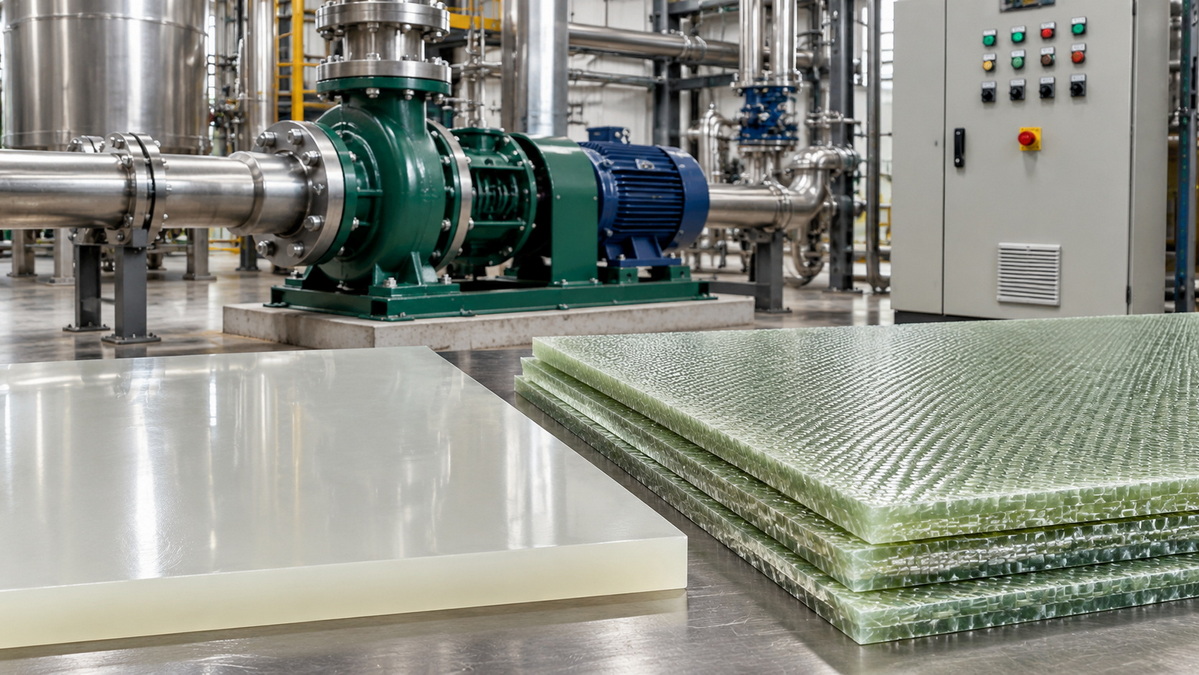
The main difference is the presence of fiberglass reinforcement.
An epoxy resin sheet is made primarily from cured epoxy resin. Depending on its formulation, it may contain fillers, pigments, flame-retardant additives, or performance modifiers. The material's properties are mainly controlled by the epoxy chemistry, curing method, resin thickness, and additives used during production.
A fiberglass laminate sheet is a composite material made from epoxy resin and layers of woven fiberglass cloth. During manufacturing, fiberglass fabric is impregnated with epoxy resin, layered to the required thickness, and cured under carefully controlled pressure and temperature.
The fiberglass reinforcement improves the laminate's ability to resist bending, compression, vibration, impact, dimensional movement, and long-term loading. The epoxy resin binds the glass fibers together, provides electrical insulation, and contributes to moisture and chemical resistance.
| Comparison Factor | Epoxy Resin Sheet | Fiberglass Laminate Sheet |
|---|---|---|
| Material structure | Primarily cured epoxy resin | Epoxy resin reinforced with woven fiberglass fabric |
| Mechanical strength | Moderate and dependent on formulation | High due to glass-fiber reinforcement |
| Flexural stiffness | Lower under continuous load | Higher resistance to bending and deflection |
| Dimensional stability | Can be more sensitive to heat and long-term stress | More stable under mechanical load and thermal cycling |
| Electrical insulation | Excellent in many formulations | Excellent for industrial electrical insulation |
| Chemical resistance | Depends strongly on resin chemistry | Depends on resin system and exposure conditions |
| Flame resistance | Depends on additives and grade | FR4 grades are commonly selected for flame-retardant requirements |
| Machining | Can provide smooth machined surfaces | Suitable for CNC machining, drilling, milling, and custom fabrication |
| Typical applications | Low-load insulators, covers, spacers, specialty parts | Structural insulation, support plates, terminal boards, fixtures, electrical barriers |
For chemical processing equipment, material selection should begin with a practical question:
> "Can this specific material retain its mechanical, electrical, and dimensional performance after exposure to the actual chemical, temperature, pressure, and load conditions?"
This is more important than choosing a material based only on a general label such as "epoxy board" or "fiberglass plate."
Epoxy resin sheets can offer a useful combination of electrical insulation, moisture resistance, surface smoothness, and machining flexibility. Because the sheet is primarily resin-based, it may be suitable for components that do not need to carry high mechanical loads.
In chemical processing equipment, epoxy resin sheets may be used for:
- Electrical isolation pads beneath terminals and electronic assemblies
- Low-load insulating spacers
- Covers for electrical or instrumentation components
- Precision-machined insulation pieces
- Sensor mounting components
- Control-system barriers
- Specialty fixtures and production aids
- Nonconductive separators in protected equipment areas
One advantage of epoxy resin sheet is its relatively uniform structure. It can be machined into thin insulating components, small precision parts, and smooth-surface elements without the visible woven glass texture found in many fiberglass laminate products.
This may be valuable when the design requires:
- Clean surface finishing
- Fine CNC details
- Tight machining tolerances
- Low electrical conductivity
- Moderate temperature exposure
- Limited mechanical stress
- Controlled chemical contact
Epoxy resin sheets are not automatically suitable for every chemical processing environment. Their resistance depends on the specific resin formula, curing process, filler system, chemical type, concentration, exposure time, and operating temperature.
A material that performs well under occasional splash exposure may not perform adequately during continuous immersion. This is especially important when the chemical is hot, concentrated, oxidizing, solvent-based, or used under pressure.
Potential performance concerns include:
- Surface discoloration
- Resin softening
- Chemical swelling
- Reduced stiffness
- Cracking under load
- Loss of dimensional accuracy
- Reduced dielectric performance
- Long-term degradation near elevated heat sources
Temperature can significantly affect chemical resistance. Higher operating temperatures may accelerate chemical diffusion into the resin matrix. They can also reduce the material's safety margin, especially if the service temperature approaches the cured resin's glass-transition temperature.
For this reason, epoxy resin sheets are typically better suited to applications where chemical contact is controlled, intermittent, or secondary to the insulation function.
Fiberglass laminate sheets are widely used in industrial equipment because they combine the insulating properties of epoxy resin with the structural strength of woven fiberglass reinforcement.
The reinforcement structure makes these materials particularly valuable when a part must resist:
- Compression from bolts or mounting hardware
- Repeated vibration from pumps, motors, and rotating equipment
- Bending loads
- Thermal expansion and contraction
- Humidity and moisture exposure
- Dimensional movement during long-term operation
- Wear caused by regular maintenance or assembly work
In chemical processing equipment, fiberglass laminate sheets are frequently selected for components that need to remain electrically insulating while supporting mechanical loads.
Typical applications include:
- Pump insulation parts
- Motor terminal boards
- Electrical mounting plates
- Nonconductive structural supports
- High-voltage insulation panels
- Busbar supports
- Industrial spacers
- Equipment guards
- Custom fixtures
- Wear-resistant insulating components
- CNC-machined electrical barriers
The final performance still depends on the selected material grade. G10, FR4, and G11 are related epoxy fiberglass laminate materials, but they are designed for different operating priorities.
G10 is a general-purpose epoxy glass laminate sheet made with woven E-glass fabric and epoxy resin. It is known for strong mechanical performance, good electrical insulation, low moisture absorption, and stable machining behavior.
G10 is often selected for industrial components that require structural strength and electrical insulation in normal-temperature environments.
Common uses include:
- Structural insulation blocks
- Electrical support plates
- Industrial mounting bases
- Precision-machined jigs
- Pump and motor insulation components
- Nonconductive spacers
- Tooling fixtures
- Electrical barriers
- High-strength support parts
G10 can be an effective choice when a component experiences bolt pressure, moderate vibration, bending force, or repetitive mechanical use.
However, standard G10 is not typically selected when flame retardancy is a mandatory requirement. If the equipment is installed near electrical systems, heat sources, or areas with strict fire-safety expectations, FR4 may be a more suitable alternative.
FR4 is one of the most commonly specified epoxy fiberglass laminate materials in electrical and industrial applications. It is made from woven fiberglass fabric and flame-retardant epoxy resin.
FR4 offers a strong balance of:
- Mechanical strength
- Electrical insulation
- Flame resistance
- Dimensional stability
- Moisture resistance
- CNC machinability
- Industrial reliability
FR4 sheets are commonly used in chemical processing facilities for electrical and mechanical insulation components, especially where equipment includes control panels, electrical cabinets, busbars, heaters, drives, motors, sensors, or high-voltage systems.
Typical FR4 applications include:
- Electrical control panel insulation boards
- Terminal board supports
- Busbar insulation components
- Cable and connector barriers
- Motor insulation plates
- High-voltage separation panels
- Flame-resistant mounting boards
- Precision-machined machine parts
- Structural electrical insulators
FR4 is often selected when a material must remain electrically insulating while also satisfying fire-related performance requirements. It is particularly useful in areas where chemical processing equipment operates alongside electrical power systems.
For many industrial projects, FR4 provides a practical middle ground between cost, mechanical strength, electrical performance, and flame resistance.
G11 is generally selected for higher-temperature applications. It uses a high-temperature epoxy resin system combined with fiberglass reinforcement.
Compared with standard epoxy sheets or general-purpose G10 materials, G11 is designed to retain more of its mechanical and electrical performance under elevated temperatures.
G11 is commonly used for:
- High-temperature electrical insulation
- Heater-adjacent insulation components
- Motor and transformer insulation parts
- Thermal barriers
- Hot process equipment supports
- High-temperature mounting plates
- Equipment operating with repeated thermal cycling
- High-load insulation parts near heat sources
In chemical processing equipment, G11 can be a strong option when the application includes hot pipes, heated tanks, electrical heating systems, high-temperature pumps, or motors that generate sustained heat.
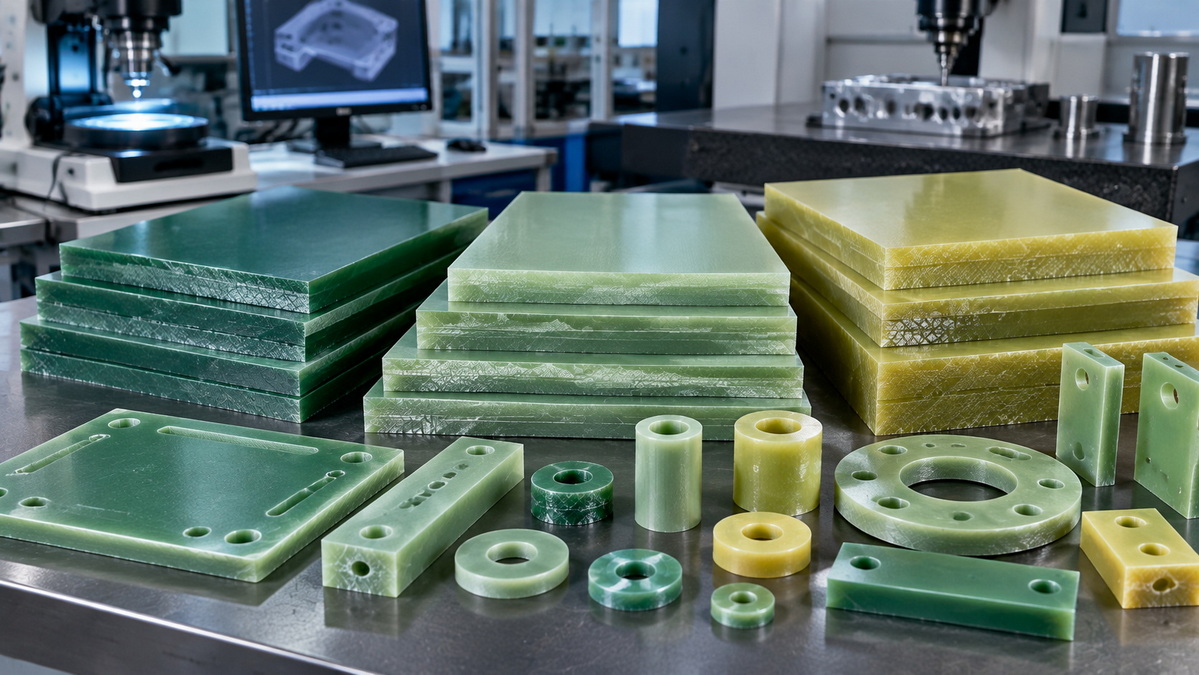
The following comparison provides a practical overview for chemical processing equipment. Actual material values can vary based on resin formulation, fiberglass content, sheet thickness, curing conditions, test method, and manufacturing process.
| Property | Epoxy Resin Sheet | Fiberglass Laminate Sheet |
|---|---|---|
| Mechanical strength | Suitable for low to moderate loads | Better for medium to high loads |
| Bending resistance | May deform under continuous stress | Higher resistance to flexing and deflection |
| Compressive strength | Dependent on resin formulation | Usually stronger under mechanical pressure |
| Electrical insulation | Excellent for many insulation applications | Excellent for structural electrical insulation |
| Heat resistance | Varies by resin system | FR4 is suitable for many industrial temperatures; G11 is better for higher-temperature conditions |
| Chemical resistance | Depends on resin chemistry and exposure conditions | Depends on resin chemistry, grade, temperature, and direct-contact conditions |
| Flame resistance | Depends on additives | FR4 is typically selected for flame-retardant applications |
| Moisture stability | Can be good with suitable resin formulation | Typically strong due to reinforced composite structure |
| Dimensional stability | Lower under heat and long-term load | Better under mechanical and thermal stress |
| CNC machining | Suitable for smooth custom parts | Suitable for drilling, milling, routing, slotting, and precision fabrication |
| Best applications | Low-load insulators and specialty components | Structural insulation and industrial support components |
Chemical resistance should never be treated as a single fixed property. The same sheet material can perform differently depending on the exact operating environment.
Important variables include:
- Chemical type
- Chemical concentration
- Fluid temperature
- Exposure duration
- Pressure level
- Splash, vapor, washdown, immersion, or continuous contact
- Mechanical load during exposure
- Cleaning procedures
- Exposure to steam or hot water
- Exposure to solvents
- Surface condition after machining
- Presence of drilled holes, cut edges, or fasteners
For example, a fiberglass laminate sheet may perform well as a nonconductive support near a chemical pump where it experiences occasional splashes. The same material may not be appropriate for full immersion in a high-temperature acid solution.
Chemical attack often begins gradually. The material may initially appear unchanged, but long-term exposure can lead to reduced strength, edge degradation, cracking, resin softening, surface damage, or loss of electrical insulation performance.
Machined holes, cut edges, slots, and countersinks deserve special attention in chemical processing equipment.
The original sheet surface is usually dense and uniform after curing. When a sheet is machined, new edges expose the internal resin and fiberglass structure. In harsh chemical environments, these areas may become more vulnerable than the flat sheet surface.
When direct chemical exposure is expected, engineers should consider:
- Edge sealing requirements
- Protective coatings
- Component orientation
- Drainage design
- Avoidance of liquid-trapping corners
- Reduced use of sharp internal corners
- Proper bolt-load distribution
- Chemical-resistant washers or sleeves
- Testing of finished parts rather than only raw sheet samples
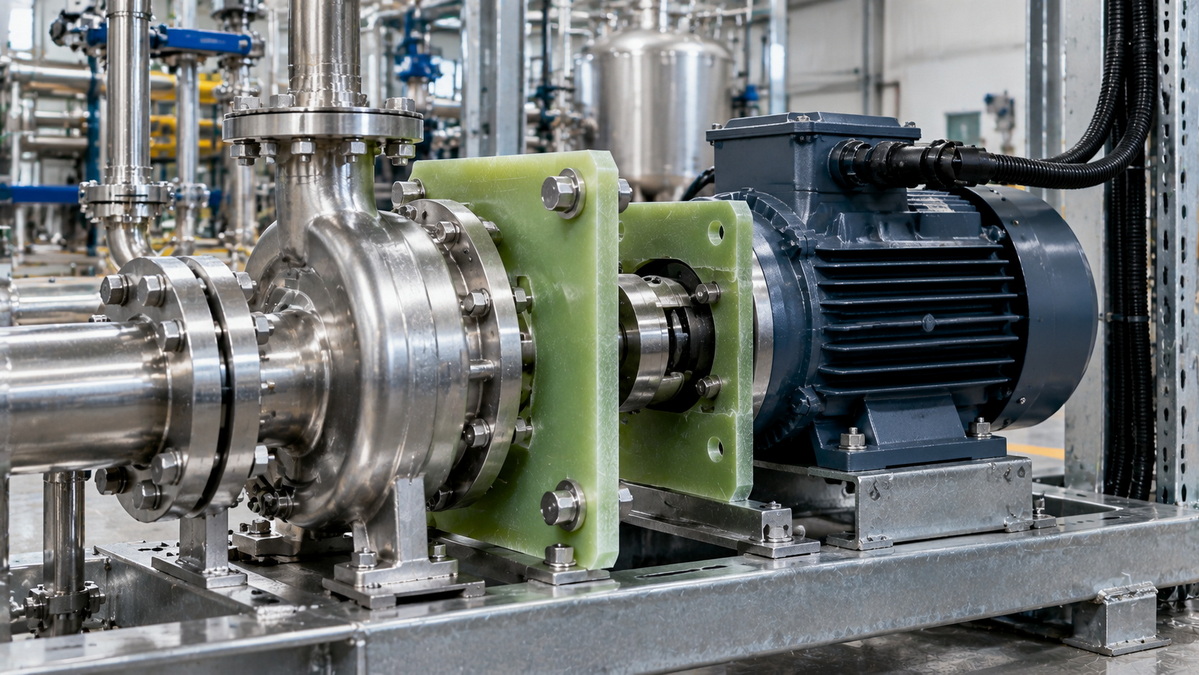
The most effective material selection process starts with the application rather than the product name.
- The component primarily provides electrical insulation.
- Mechanical loading is low or moderate.
- A smooth resin-rich surface is beneficial.
- Precision machining is required.
- Chemical contact is limited or carefully controlled.
- The part is installed in a protected electrical or instrumentation area.
- Fiberglass reinforcement is not necessary for the design.
- The component needs good structural strength.
- Electrical insulation is required.
- The operating temperature is moderate.
- The part experiences compression, vibration, or bolt load.
- Flame retardancy is not a mandatory project requirement.
- The application needs durable, CNC-machined industrial components.
- Electrical insulation and flame resistance are both important.
- The part is used near control panels, electrical cabinets, busbars, motors, or high-voltage systems.
- The application requires stable performance under normal industrial operating conditions.
- The material must be machined into complex insulation parts.
- The project needs a widely used flame-retardant epoxy glass laminate.
- Operating temperatures are higher than standard industrial conditions.
- The component is positioned near heaters, motors, transformers, heated pipes, or hot equipment.
- The part must retain mechanical strength during thermal cycling.
- Higher thermal stability is more important than the lowest initial material cost.
- The equipment requires a stronger safety margin against heat-related deformation.
A clear material specification can reduce procurement mistakes, avoid unexpected failures, and improve the consistency of finished insulation parts.
When requesting epoxy resin sheet, FR4 sheet, G10 sheet, or G11 sheet, include the following information:
1. Material grade
Specify epoxy resin sheet, G10, FR4, G11, or another required grade.
2. Sheet thickness
Define the required thickness and acceptable tolerance.
3. Part dimensions
Provide length, width, thickness, hole positions, slots, radii, and finished part geometry.
4. Operating temperature
Identify the normal operating temperature and maximum temperature.
5. Chemical environment
List the chemical medium, concentration, temperature, and type of exposure.
6. Electrical requirement
State voltage, dielectric requirement, electrical clearance needs, and insulation function.
7. Mechanical loading
Define compression, bending, vibration, bolt load, impact risk, and required stiffness.
8. Flame-resistance requirement
Confirm whether flame-retardant material is needed.
9. Machining requirement
Include drilling, milling, routing, countersinking, threading, chamfering, edge finishing, and tolerance requirements.
10. Quantity and delivery requirement
Provide sample quantity, annual volume, packaging expectations, destination country, and shipping needs.
Material selection is only one part of the final result. The quality of machining and component design can determine whether an insulation part performs reliably over time.
A custom FR4, G10, or G11 part may require:
- High-precision drilling
- CNC milling
- Slotting
- Routing
- Countersinking
- Counterboring
- Chamfering
- Surface grinding
- Deburring
- Edge finishing
- Custom shapes based on engineering drawings
For chemical processing equipment, the finished part should be designed to avoid unnecessary stress concentration. Sharp internal corners, thin unsupported sections, small edge distances around bolt holes, and poorly distributed clamping force can reduce long-term reliability.
Good engineering practice includes using appropriate corner radii, maintaining sufficient material around holes, controlling bolt torque, and evaluating whether the component may experience thermal expansion or vibration during operation.
Dust extraction is also important during fiberglass laminate machining. Fiberglass-reinforced materials generate abrasive dust and can wear cutting tools. Professional machining conditions, proper tooling, controlled cutting parameters, and quality inspection help improve edge quality and dimensional consistency.
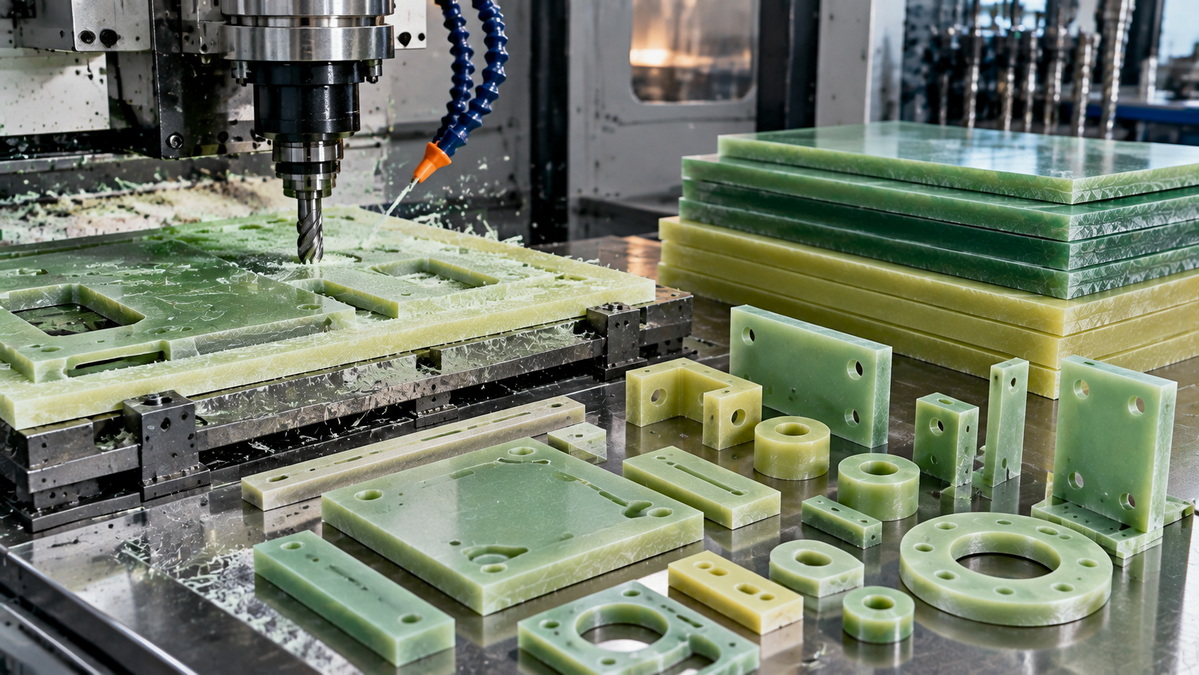
Choosing "FR4 sheet" or "epoxy board" without defining temperature, chemical concentration, mechanical load, and exposure type creates unnecessary risk.
A reliable specification should describe the actual working conditions, not only the preferred material name.
Different epoxy resin systems may behave very differently in acids, alkalis, solvents, oils, steam, and hot-water environments.
Chemical resistance must be assessed for the actual material grade and application conditions.
Higher temperatures can increase the speed of chemical attack. A sheet that performs acceptably at room temperature may not provide the same reliability at elevated temperature.
Chemical exposure may affect machined edges, drilled holes, and damaged surfaces differently from the original sheet face.
Finished-part design matters as much as raw material selection.
G10 is a strong and useful epoxy glass laminate, but it may not be the preferred choice when flame-retardant performance is a formal requirement. FR4 should be considered for applications that require flame-resistant epoxy fiberglass laminate.
When comparing epoxy resin sheet vs fiberglass laminate sheet for chemical processing equipment, fiberglass laminate is usually the stronger solution for applications that need both electrical insulation and mechanical reliability.
The fiberglass reinforcement improves structural strength, stiffness, dimensional stability, and resistance to vibration and fastening pressure. For many industrial components, G10, FR4, and G11 provide practical material options based on mechanical, fire-safety, and temperature requirements.
Epoxy resin sheet remains useful for low-load insulation parts, smooth-surface components, precision-machined elements, and controlled operating environments. However, it may not provide the same structural stability as fiberglass-reinforced epoxy laminate under continuous load, vibration, or elevated temperature.
For the best long-term result, the material should be selected according to the actual chemical medium, exposure method, operating temperature, electrical requirement, mechanical stress, and component design.
Guangdong Weishi New Materials Co., Ltd. manufactures and supplies high-performance epoxy fiberglass laminate materials, including FR4 sheets, G10 sheets, G11 sheets, epoxy fiberglass boards, and custom-machined insulation components. By matching material grade, thickness, machining design, and service environment, industrial customers can achieve safer, more stable, and more durable insulation solutions for chemical processing equipment.
Epoxy resin sheet is primarily made from cured epoxy resin, while fiberglass laminate sheet combines epoxy resin with woven fiberglass reinforcement. Fiberglass laminate typically provides higher mechanical strength, better stiffness, and improved dimensional stability under load.
FR4 can be suitable for chemical processing equipment when the application requires electrical insulation, mechanical support, flame resistance, and stable industrial performance. Its suitability for direct chemical exposure depends on the chemical type, concentration, temperature, and exposure duration.
G11 is often more suitable for higher-temperature applications because it uses a higher-temperature epoxy resin system. It is commonly selected for insulation components near heaters, motors, transformers, hot pipelines, and equipment exposed to thermal cycling.
Yes. G10, FR4, and G11 sheets can be CNC machined into custom shapes, including drilled holes, slots, mounting plates, electrical barriers, spacers, and insulation supports. Appropriate cutting tools and dust-control procedures should be used because fiberglass is abrasive.
It depends on the acid type, concentration, temperature, and immersion period. Fiberglass laminate sheets should not be assumed to resist all acids. Direct chemical immersion applications should be evaluated through material compatibility data or testing under representative operating conditions.
Machined edges, drilled holes, and slots can expose the internal epoxy and fiberglass structure. In harsh chemical conditions, these areas may be more vulnerable than the original sheet surface. Proper design, edge treatment, and application-specific testing can improve long-term reliability.
G10 is suitable for many general structural insulation applications. FR4 is often chosen when flame-retardant properties are required. G11 is generally preferred when the application includes higher operating temperatures or repeated thermal cycling.
1. ASTM International. "[ASTM D543-21: Standard Practices for Evaluating the Resistance of Plastics to Chemical Reagents]." Provides practices for evaluating the resistance of plastics and laminated resinous products to chemical reagents.
2. National Electrical Manufacturers Association. "[Industrial Laminated Thermosetting Products]." Provides information on laminated thermosetting industrial materials.
3. National Electrical Manufacturers Association. "[ANSI/NEMA IM 60000-2021 Scope]." Covers the manufacture, testing, and performance of laminated thermosetting sheet, rod, and tube products.
4. International Electrotechnical Commission. "[IEC 60893-2:2023 RLV]." Describes test methods for industrial rigid laminated sheets based on thermosetting resins for electrical purposes.
5. International Electrotechnical Commission. "[IEC 60893-3-2:2003+AMD1:2011]." Covers material requirements for industrial rigid laminated sheets based on epoxy resins and different reinforcements.
6. The Gund Company. "[NEMA FR4 Glass-Epoxy Laminate Technical Data Sheet]." Provides FR4 material information, including flame-resistant glass-epoxy laminate characteristics.
7. Ready Plastics. "[NEMA G10 vs FR4, G11, G7, G9 Laminates]." Compares G10, FR4, G11, and other industrial laminate grades.
8. XX Insulation. "[NEMA G-11 Technical Data Sheet]." Provides technical information about high-temperature G11 fiberglass epoxy laminate material.


