

Views: 202 Author: Weishi Sheets Publish Time: 2026-07-25 Origin: Site
Content Menu
● Electrical Insulation Performance
● Industry View From Manufacturing
● Why Buyers Still Compare Them
● FAQ
>> 1. Is FR4 better than G10 for high-voltage insulation?
>> 3. Can FR4 replace G10 in all applications?
>> 4. Which material absorbs less moisture?
>> 5. Which is more cost-effective?
>> 6. Which is better for transformer insulation?
For high-voltage electrical insulation, FR4 fiberglass sheet is usually the safer choice, while G10 sheet can be the better option when you need stronger mechanical performance and flame rating is not the deciding factor. Both are reliable epoxy glass laminates, but they are not identical, and that difference matters in real electrical systems.
When engineers compare FR4 fiberglass sheet vs G10 sheet, they are usually deciding between two materials that look similar but serve slightly different priorities. Both are made from woven fiberglass cloth and epoxy resin, and both are widely used in electrical and industrial applications because they combine rigidity, dimensional stability, and strong insulation behavior.
In practice, the question is not only "Which insulates better?" but also "Which performs better under the full set of operating risks?" That includes voltage stress, heat, moisture, mechanical load, flame safety, machinability, and long-term reliability.
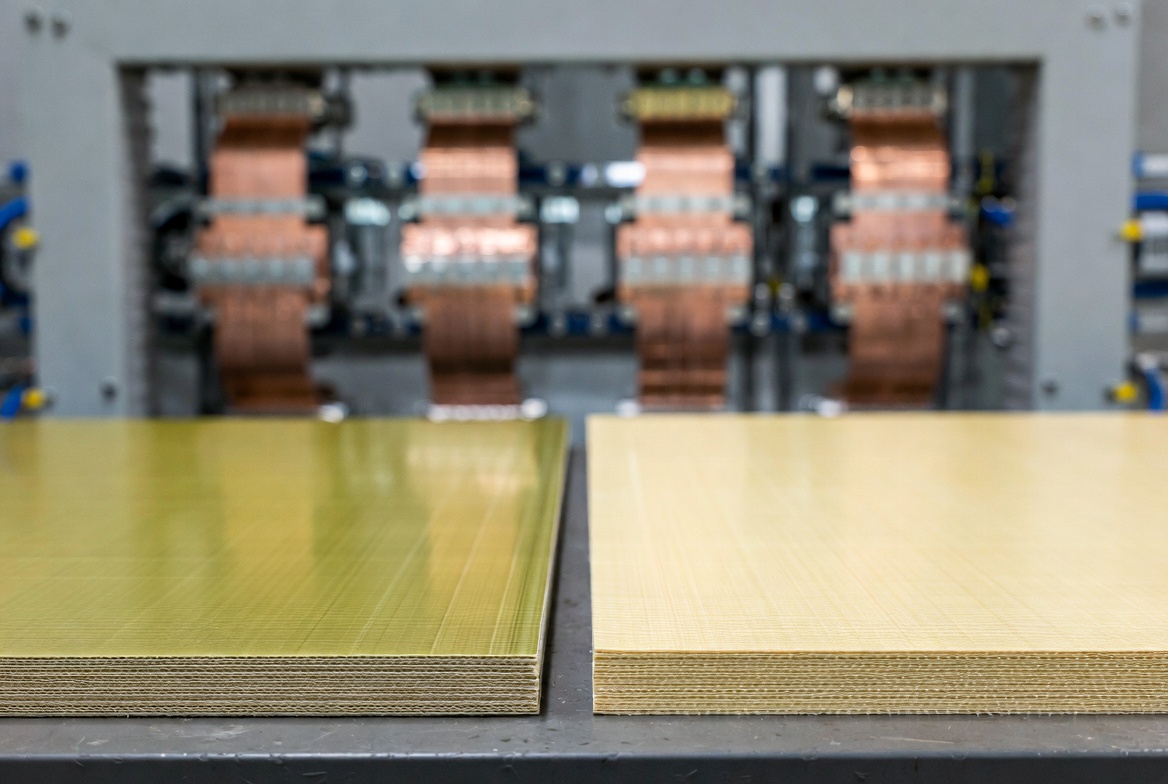
FR4 and G10 are glass-reinforced epoxy laminates. Their structure gives them high strength and dependable dielectric performance, which is why they are used for insulating parts, supports, spacers, panels, and precision-machined components.
The key distinction is simple: FR4 includes flame-retardant additives, while G10 is the non-flame-retardant version. That one difference changes their safety profile and makes FR4 more suitable for applications where fire resistance is important.
For pure insulation behavior, both materials perform well, but FR4 is more often favored in high-voltage environments because it combines strong dielectric performance with flame retardancy and compliance advantages. Both materials are described as having excellent electrical insulation and high dielectric strength in technical sources.
If your application involves switchgear, transformer supports, busbar insulation, or electrical enclosures, FR4 is often the more conservative choice because it better aligns with safety expectations in energized equipment. G10 still provides strong insulation, but it is typically selected when the project prioritizes structural strength and does not require flame-tested material.
| Property | FR4 Fiberglass Sheet | G10 Sheet |
|---|---|---|
| Core composition | Glass cloth + epoxy resin with flame-retardant additive | Glass cloth + epoxy resin without flame-retardant additive |
| Flame behavior | Typically UL94 V-0 or V-1 depending on grade | Typically UL94 HB |
| Electrical insulation | Excellent | Excellent |
| Mechanical strength | High | High, often slightly stronger in bending |
| Moisture resistance | Low water absorption | Low water absorption |
| Heat resistance | Strong, especially in safety-sensitive systems | Strong, but less suited where flame rating is required |
| Typical selection reason | Safety compliance and electrical reliability | Structural strength and cost efficiency |
G10 often has a slight edge in mechanical performance. Technical comparisons show G10 can offer higher compressive and flexural strength than FR4 in some grades, which makes it attractive for machined supports, fixtures, spacers, and load-bearing insulation parts.
That advantage matters when the insulation component must do more than block current. In many industrial assemblies, the material must also resist clamping force, vibration, machining stress, and repeated assembly cycles.
- Precision-machined insulating parts.
- Structural supports in industrial equipment.
- Spacers, washers, and barrier plates.
- Non-flame-critical electrical assemblies.
- Cost-sensitive projects where HB rating is acceptable.
FR4 wins when fire safety is part of the design requirement. Because it is flame-retardant, FR4 is commonly selected for electrical enclosures, high-voltage panels, switchgear, and other systems where heat or arc exposure can become a concern.
This is why FR4 is widely recognized as the more versatile material for electrical insulation in regulated environments. It offers the same broad laminate advantages as G10, but with a stronger safety profile.
- High-voltage electrical insulation parts.
- Transformer and switchgear components.
- Busbar supports and arc shields.
- Electrical enclosures and cabinet barriers.
- Applications requiring flame-retardant certification.
A simple way to choose is to ask three questions:
1. Does the application require flame retardancy or a V-rated material?
2. Is the part exposed to high-voltage stress, heat, or arcing risk?
3. Does the part need strong machining tolerance and load-bearing stability?
If the answer to the first two questions is yes, FR4 is usually the safer recommendation. If flame rating is not mandatory and mechanical loading is a bigger issue, G10 may be the better fit.
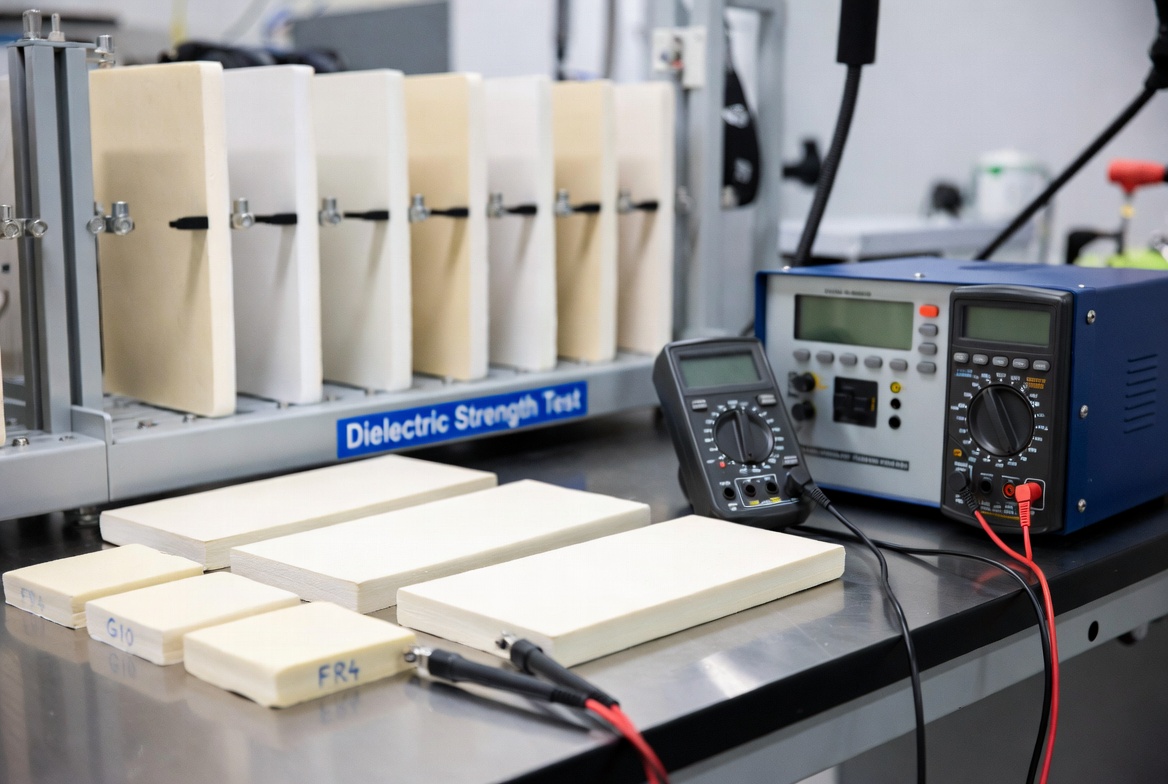
In real manufacturing projects, the material decision is rarely based on one property alone. Engineers usually balance insulation performance, cost, fabrication difficulty, delivery stability, and end-use compliance.
From a supplier's point of view, FR4 is often chosen for broader market acceptance, while G10 is often selected for specialized industrial parts that need robust mechanical behavior. For export-focused customers, FR4 also tends to be easier to justify in technical documentation when the end user asks for flame performance.
Imagine a high-voltage cabinet used in industrial automation. If the internal insulation panels are near heat-generating devices or exposed conductors, FR4 is the more defensible choice because of its flame-retardant profile.
Now imagine a machined support plate inside the same cabinet that must hold alignment under screw pressure and vibration, but is not itself near a major ignition risk. In that case, G10 may be preferable because its mechanical behavior can better suit the load condition. This is a good example of why "better" depends on the function, not just the name of the material.
Although FR4 and G10 are closely related, they are not interchangeable in every project. FR4 is often selected for compliance and fire safety, while G10 is often selected for mechanical robustness and value.
That is also why material buyers, electrical engineers, and machining teams frequently request both options during sourcing. The final choice usually comes down to the project's operating temperature, insulation class, fire safety requirements, and budget.
When sourcing either material, ask for these details:
- Thickness tolerance.
- Dielectric strength data.
- Flame rating and test standard.
- Water absorption value.
- Maximum operating temperature.
- Machining capability and edge quality.
- Batch consistency and traceability.
These details help you avoid choosing a sheet based only on the product name. For high-voltage work, documentation is just as important as the material itself.
For high-voltage electrical insulation, FR4 is usually the better overall choice because it combines reliable electrical performance with flame-retardant safety. G10 remains an excellent option when mechanical strength is the priority and flame rating is not required.
If your project sits near heat, arcing, or strict electrical safety requirements, choose FR4. If you need a tougher structural insulating laminate for industrial machining and the application allows HB-rated material, choose G10.
If you are selecting material for transformers, switchgear, busbar supports, or custom-machined insulating parts, contact Guangdong Weishi New Materials Co., Ltd. for FR4, G10, and epoxy fiberglass sheet solutions tailored to your voltage, temperature, and fabrication requirements.
Yes. FR4 is usually better for high-voltage insulation because it adds flame-retardant performance while keeping strong dielectric behavior.
Not necessarily. In many cases, G10 can offer slightly better mechanical strength, especially in flexural or compressive performance.
No. FR4 can replace G10 in many insulation uses, but G10 may still be preferred when mechanical strength or machining stability is the main concern.
Both materials have low moisture absorption, and the difference is usually small enough that it does not override the main selection criteria.
G10 is often slightly more cost-effective, while FR4 may cost more because of flame-retardant additives and compliance requirements.
FR4 is usually the safer choice for transformer insulation when flame resistance and electrical safety are priorities.
- [Piedmont Plastics: G10 vs. FR4: Which Fiberglass Laminate Should You Choose]
- [Atlas Fibre: The Difference Between G10 and FR4]
- [Cylex Plastics: G10 vs. FR4 Epoxy Fiberglass: What's the Difference?]
- [Allied Market Research: Epoxy Glass Market Size, Share and Industry Forecast 2032]


