

Views: 209 Author: Weishi Sheets Publish Time: 2026-10-07 Origin: Site
Content Menu
● What Are G10 and G11 Sheets?
● G10 Sheet vs G11 Sheet: Key Differences
● Why Outdoor Electrical Equipment Needs Careful Material Selection
>> Common Outdoor Environmental Challenges
● G10 Sheet for Outdoor Electrical Equipment
>> Suitable Applications for G10 Sheet
● G11 Sheet for Outdoor Electrical Equipment
>> Suitable Applications for G11 Sheet
>> Why G11 Is Better for High-Temperature Conditions
● Temperature Performance: Why Thermal Margin Matters
>> Consider These Temperature Factors
● Moisture, Humidity, and Condensation Resistance
>> Factors That Influence Moisture Performance
>> Practical Recommendations for Humid Outdoor Equipment
● Flame Resistance: G10, G11, and FR4 Are Not the Same
>> When Flame Performance Must Be Specified
● How to Select G10 or G11 Sheet
>> Step 1: Identify the Electrical Requirement
>> Step 2: Identify the Maximum Operating Temperature
>> Step 3: Evaluate Mechanical Loading
>> Step 4: Review Outdoor Environmental Exposure
>> Step 5: Confirm the Required Documentation
● G10 vs G11 Selection Table for Common Applications
● Machining Considerations for G10 and G11 Sheets
>> Design Tips for Machined Parts
● Application Example: Outdoor Solar Inverter Cabinet
● Summary: Which Sheet Is Better for Outdoor Electrical Equipment?
>> Is G11 sheet better than G10 sheet for outdoor electrical equipment?
>> Can G10 sheet be used outdoors?
>> What is the main difference between G10 and G11 sheet?
>> Is G11 sheet flame retardant?
>> Can G10 and G11 sheets be CNC machined?
>> Which material is better for busbar supports?
>> Should G10 or G11 be used for solar inverter cabinets?
Choosing between a G10 sheet and a G11 sheet for outdoor electrical equipment is not simply a matter of choosing the stronger insulation board. Both materials are glass-fabric reinforced epoxy laminates with excellent electrical insulation, mechanical strength, and machinability. The critical difference is how reliably they perform when outdoor equipment faces heat, humidity, thermal cycling, condensation, vibration, and long service periods.
For moderate-temperature electrical assemblies, a G10 epoxy fiberglass sheet can provide dependable insulation and structural support at a practical cost. For electrical equipment exposed to elevated temperatures, repeated heating and cooling, high-current busbars, transformer heat, or demanding industrial conditions, G11 sheet normally offers a larger safety margin.
Guangdong Weishi New Materials Co., Ltd. manufactures and supplies high-performance epoxy insulation materials, including epoxy fiberglass sheets, FR4 sheets, G10 sheets, G11 sheets, and customized machined insulation components. This guide compares G10 and G11 sheets from the perspective of material performance, outdoor service conditions, electrical reliability, machining requirements, and long-term application value.
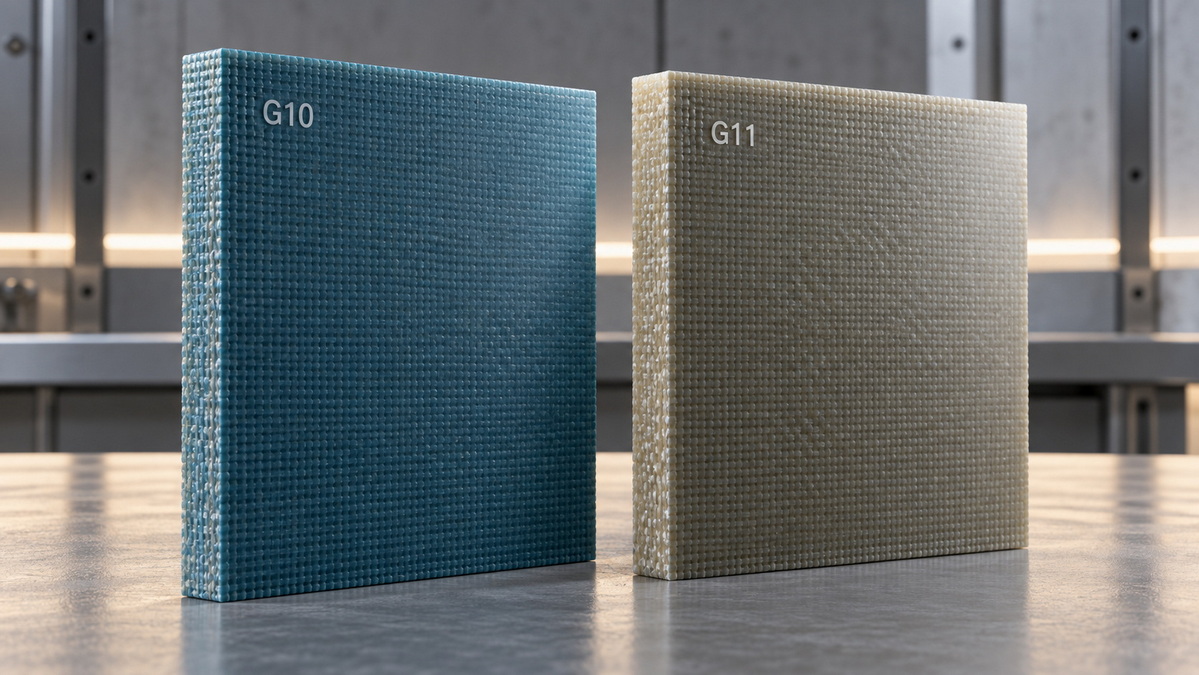
G10 and G11 are rigid laminated composite materials made from woven fiberglass cloth and epoxy resin. During production, multiple layers of fiberglass fabric are impregnated with resin, stacked, pressed under heat and pressure, and cured into dense sheets.
The fiberglass reinforcement provides mechanical strength and dimensional stability. The epoxy resin bonds the layers together and contributes to electrical insulation, heat resistance, chemical resistance, and moisture resistance.
Both G10 and G11 sheets are widely used in electrical, electronic, mechanical, mold-making, industrial processing, and energy-related applications.
Their common performance benefits include:
- High dielectric strength
- Strong electrical insulation
- Good mechanical strength
- Stable dimensions
- Low moisture absorption compared with many non-reinforced materials
- Good resistance to oils and many industrial chemicals
- Reliable CNC machining performance
- Availability in multiple sheet thicknesses and custom dimensions
Although they share a similar fiberglass-reinforced construction, G10 and G11 are not interchangeable in every electrical design. The main difference lies in their epoxy resin systems and their ability to retain performance at elevated temperatures.
The table below provides a practical comparison of G10 and G11 sheets for outdoor electrical equipment.
| Property | G10 Sheet | G11 Sheet | Importance for Outdoor Electrical Equipment |
|---|---|---|---|
| Reinforcement | Woven fiberglass cloth | Woven fiberglass cloth | Both materials provide good structural stability |
| Resin system | Standard epoxy resin system | High-temperature epoxy resin system | The resin system has a major effect on thermal durability |
| Typical thermal performance | Often associated with Class B service conditions | Often associated with Class F service conditions | G11 provides a larger thermal margin |
| Common temperature reference | Around 130°C in many applications | Around 155°C in many applications | Actual capability depends on grade and test conditions |
| Strength retention at high temperatures | Good under moderate heat | Better under elevated heat | Important near busbars, transformers, and power devices |
| Electrical insulation | High | High | Both can function as reliable electrical insulation materials |
| Moisture resistance | Good | Good to very good | Performance depends on grade, surface condition, and enclosure design |
| Machinability | Good | Good | Both can be cut, drilled, milled, and CNC machined |
| Relative cost | Usually lower | Usually higher | G10 may be more economical for moderate-duty applications |
| Typical use | General electrical insulation | High-temperature electrical insulation | G11 is preferred for demanding thermal conditions |
The most important distinction is that G11 sheet is designed to maintain mechanical and insulating performance more effectively at elevated temperatures. This makes it particularly suitable for outdoor electrical equipment where solar heat, internal electrical heat, and repeated thermal cycling can create demanding service conditions.
Outdoor electrical equipment is exposed to a combination of environmental and operational stresses. Even when an electrical cabinet appears fully enclosed, its internal insulation components may still experience high heat, moisture, condensation, vibration, dust, and electrical stress.
A material that performs well in a controlled indoor environment may not deliver the same long-term stability outdoors.
Outdoor electrical equipment may face:
- High ambient temperatures
- Direct sunlight on metal enclosures
- Heat buildup inside cabinets
- Daily heating and cooling cycles
- Rainwater and condensation
- High humidity
- Salt mist in coastal locations
- Industrial dust and chemical contaminants
- Vibration from equipment operation
- Electrical tracking risk
- Surface pollution
- UV exposure on externally installed components
An outdoor cabinet installed in a hot industrial area may have an internal temperature much higher than the outdoor air temperature. Direct sunlight can heat the enclosure, while busbars, switches, transformers, inverters, and power electronics generate additional heat.
For this reason, the correct material choice should be based on the maximum temperature at the actual insulation component, not only on the weather conditions outside the equipment.
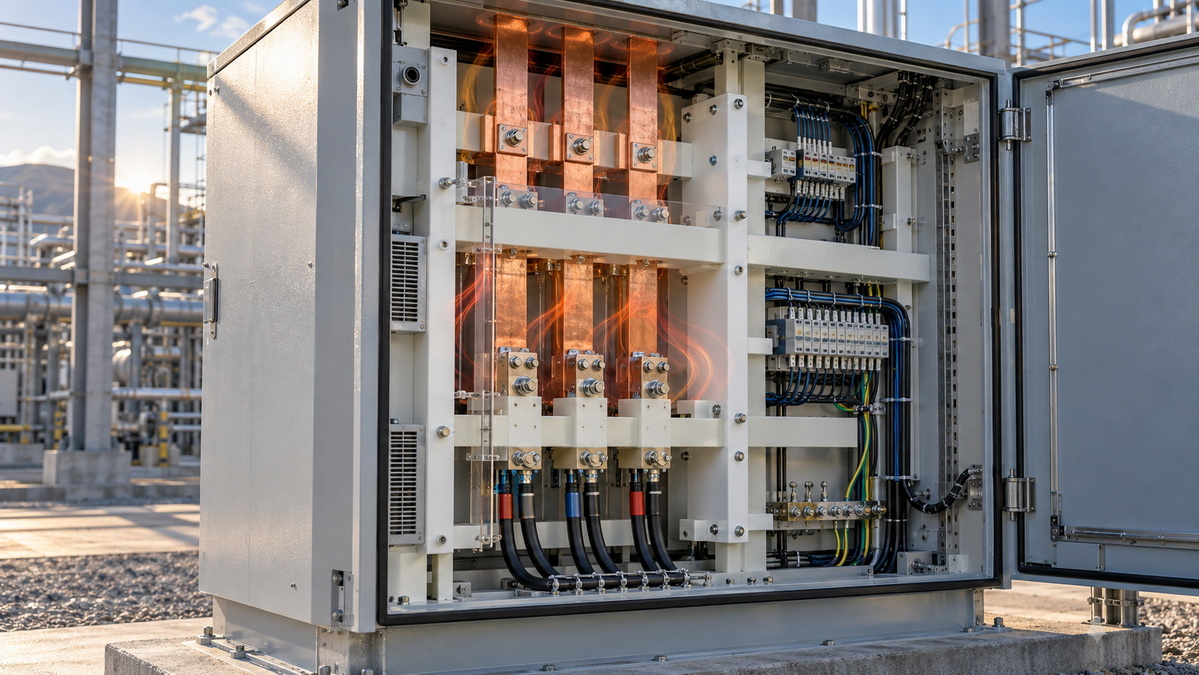
G10 sheet is a widely used epoxy fiberglass laminate for general electrical insulation and structural support. It combines good dielectric properties, high mechanical strength, and efficient machining performance.
For many outdoor electrical systems, G10 can provide a reliable and cost-effective solution when the operating environment remains within a moderate temperature range.
G10 sheet may be suitable for:
- Electrical mounting plates
- Terminal boards
- Insulation spacers
- Busbar support components in moderate-temperature panels
- Electrical brackets
- Machine insulation parts
- Control-panel structural components
- Low- to medium-temperature electrical enclosures
- Insulating washers and gaskets
- CNC-machined electrical supports
- Test fixtures and insulation jigs
G10 remains popular because it provides a practical balance of cost, strength, insulation, and machining performance.
Its main advantages include:
- Cost-effective material selection
- High room-temperature mechanical strength
- Reliable electrical insulation properties
- Good dimensional stability
- Suitable for drilling, milling, routing, and cutting
- Available in a wide range of thicknesses
- Useful for custom-machined insulation components
- Good resistance to many oils and industrial fluids
For a well-designed electrical enclosure with controlled internal temperatures, G10 can be an effective insulation material. It is especially appropriate when the component is not located close to high-temperature conductors or heat-generating equipment.
The main limitation of G10 sheet is its reduced thermal margin compared with G11.
When G10 is exposed to repeated high temperatures, the epoxy resin system may gradually lose stiffness and strength. This is particularly important when the material also carries mechanical loads, supports busbars, maintains electrical clearances, or holds precision dimensions.
Potential risks under excessive heat include:
- Reduced structural stiffness
- Reduced flexural-strength retention
- Faster thermal aging
- Dimensional movement
- Higher risk of stress cracks
- Reduced long-term reliability
- Deformation under load
- Lower safety margin in high-temperature electrical systems
G10 should not be selected solely because it is less expensive. If the actual operating temperature approaches the upper limit of the material's practical service range, the longer-term cost of failure can be much greater than the initial material savings.
G11 sheet is a high-temperature epoxy fiberglass laminate designed for electrical insulation and structural applications that require better heat resistance than standard G10 materials.
It uses a higher-temperature epoxy resin system and is generally selected when equipment must operate under sustained heat, repeated thermal cycling, or combined electrical and mechanical stress.
G11 sheet is commonly used for:
- High-temperature switchgear components
- Transformer insulation structures
- Busbar support blocks
- Electrical insulation barriers
- Motor and generator insulation parts
- High-current electrical equipment
- Industrial power distribution systems
- Solar inverter cabinets
- Energy-storage electrical enclosures
- High-voltage terminal boards
- Structural insulation components
- Electrical supports near heat-generating conductors
- Precision-machined composite insulation parts
G11 sheet is especially valuable when long-term thermal stability matters.
Its major benefits include:
- Higher heat resistance than G10
- Better mechanical strength retention at elevated temperatures
- Strong dielectric performance
- Good resistance to thermal cycling
- Reliable structural performance in demanding electrical systems
- Good moisture resistance
- Stable machining characteristics
- Suitable for high-temperature electrical insulation components
- Longer-term reliability in demanding service conditions
For outdoor electrical systems located in hot climates, G11 offers an additional margin of safety. It is particularly useful when the enclosure experiences strong sunlight, poor ventilation, high electrical load, or long operating cycles.
The fiberglass fabric in both G10 and G11 provides reinforcement, but the epoxy resin system determines much of the material's thermal stability.
When an insulation component becomes hot, the epoxy matrix must continue holding the fiberglass layers together while maintaining its shape, mechanical strength, and electrical insulation performance.
A higher-temperature epoxy system allows G11 sheet to better resist softening, deformation, and mechanical-property loss when exposed to elevated heat.
This does not mean G11 should be selected without reviewing the actual application. However, when temperature uncertainty exists, G11 often provides a more reliable choice for long-life outdoor electrical equipment.
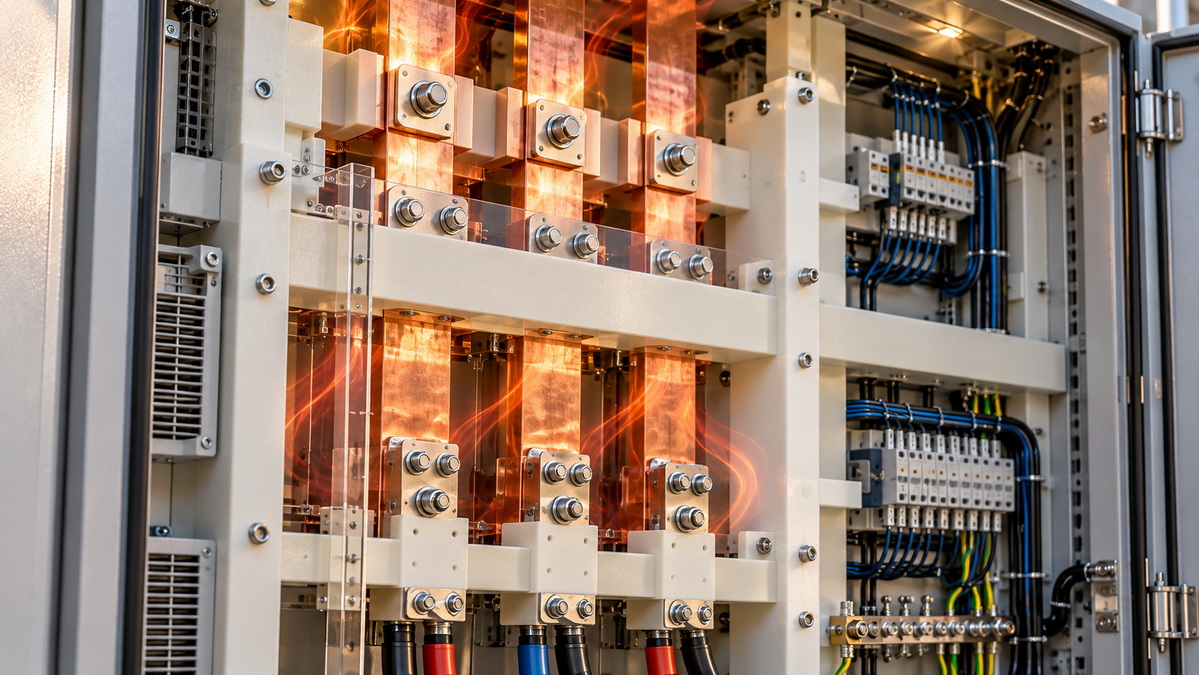
Thermal performance should be one of the first factors considered when selecting G10 or G11 sheet.
A material may survive a short exposure to high temperature, but long-term service is different. Electrical insulation components often operate for years under repeated heat cycles. The important question is not only whether the sheet can withstand a temporary peak temperature, but whether it can maintain its structural and electrical function throughout its intended service life.
When selecting an epoxy fiberglass laminate, evaluate:
- Maximum ambient temperature
- Internal enclosure temperature
- Local temperature near the insulation part
- Temperature generated by nearby conductors
- Short-term temperature peaks
- Continuous operating temperature
- Daily and seasonal thermal cycles
- Heat generated by transformers or power electronics
- Ventilation performance
- Equipment installation location
For example, an electrical cabinet installed outdoors in a region with a 40°C summer temperature may experience much higher internal temperatures. Dark-colored metal enclosures exposed to sunlight can absorb significant heat. If the cabinet also contains high-current conductors, transformers, or power electronics, the temperature near an insulation support may exceed the expected design value.
In this situation, G11 sheet normally offers better protection against thermal aging and loss of mechanical performance.
Humidity is one of the most important considerations for outdoor electrical equipment. Water does not need to enter an enclosure as rainwater to create problems. Condensation can form inside cabinets when temperatures change between day and night.
Both G10 and G11 sheets offer generally good moisture resistance. However, moisture performance depends on much more than the base material.
- Water absorption of the material
- Surface quality after machining
- Exposed fiberglass edges
- Hole and slot geometry
- Enclosure sealing quality
- Condensation control
- Drainage design
- Salt mist exposure
- Surface contamination
- Cleaning chemicals
- Electrical pollution level
A G10 or G11 sheet should not be described as completely waterproof in every condition. Long-term outdoor performance depends on the complete equipment design.
For example, a well-machined G11 busbar support installed inside a sealed, ventilated, and properly drained electrical cabinet may perform very reliably. The same component may face higher risk if it is exposed to standing water, severe salt mist, direct UV radiation, or repeated condensation without adequate enclosure protection.
- Use an enclosure with suitable weather protection.
- Prevent standing water inside electrical cabinets.
- Design for airflow and condensation management.
- Keep insulation parts away from direct water paths.
- Clean machining dust from holes and slots.
- Avoid sharp corners that can concentrate stress.
- Use smooth surfaces and controlled edge finishing.
- Review creepage distance for humid and polluted conditions.
- Consider protective barriers for parts exposed to severe weather.
A common mistake is assuming that all epoxy fiberglass sheets have the same flame-retardant performance.
G10, G11, FR4, and FR5 are related insulation materials, but they may have different flame-performance characteristics depending on resin formulation, thickness, test method, and product certification.
Standard G10 and G11 materials are often used for mechanical and electrical insulation, but they may not automatically meet the same flame-retardant requirements as FR4 or FR5 materials.
A flame-retardant material should be considered when the application involves:
- Electrical cabinets with fire-safety requirements
- Transportation equipment
- Battery energy-storage systems
- Power-distribution equipment
- High-density electronic assemblies
- Public infrastructure projects
- Customer-specific compliance requirements
- Equipment requiring a defined UL 94 rating
When flame performance is important, the material specification should include:
- Required flame-rating level
- Required sheet thickness
- Applicable test standard
- Required certification documents
- Product identification requirements
- Whether the rating must apply after machining
The most reliable way to choose between G10 and G11 is to review the actual equipment conditions step by step.
Define the electrical conditions of the component:
- Operating voltage
- Insulation thickness requirement
- Dielectric-strength requirement
- Creepage distance
- Clearance distance
- AC, DC, or impulse voltage exposure
- High-voltage or low-voltage application
- Risk of partial discharge
- Pollution level
- Surface tracking risk
The material must be selected together with the part geometry. A high-quality sheet cannot compensate for insufficient creepage distance, poor assembly design, sharp edges, or contaminated surfaces.
Do not rely only on the equipment's external ambient temperature.
Review:
- Internal cabinet temperature
- Nearby conductor temperature
- Transformer heat
- Busbar heat
- Heat generated by electrical components
- Solar heating
- Ventilation condition
- Duration of high-temperature exposure
If the component is close to the upper practical service range of G10, G11 usually provides a more conservative material choice.
Consider whether the insulation part is only a barrier or whether it supports mechanical loads.
Important questions include:
- Does the part support a busbar?
- Is it under bolt tightening force?
- Will it experience vibration?
- Does it maintain a critical clearance?
- Is it a structural bracket?
- Does it carry a heavy electrical component?
- Must it retain dimensional accuracy during temperature changes?
For load-bearing applications exposed to heat, G11 is often more appropriate.
Evaluate:
- Rain and humidity
- Condensation
- Salt mist
- Dust
- Industrial pollution
- Oils and chemicals
- UV exposure
- Temperature cycling
- Vibration
- Wind-driven water
For directly exposed external components, additional weather-protection measures should be considered. Epoxy fiberglass laminates are often best used inside protected enclosures or behind suitable external barriers.
For industrial projects, request and review:
- Material technical data sheet
- Material grade identification
- Sheet thickness tolerance
- Flexural-strength data
- Dielectric-strength data
- Water-absorption data
- Thermal-performance data
- Flame-rating information, if required
- Quality inspection report
- Certificate of conformity
- Sample material for application validation
| Application | Recommended Material | Reason |
|---|---|---|
| General terminal board in a protected electrical cabinet | G10 or G11 | G10 may be sufficient when temperature remains moderate |
| High-current busbar support | G11 preferred | Better heat resistance near current-carrying conductors |
| Transformer insulation spacer | G11 preferred | Strong thermal and electrical stability is important |
| Low-voltage mounting plate | G10 | Practical for moderate-temperature electrical assemblies |
| Outdoor solar inverter cabinet | G11 preferred | Solar heat and power-electronics heat can raise internal temperature |
| Industrial switchgear insulation component | G11 preferred | Higher operating stress and thermal cycling |
| Motor or generator insulation part | G11 preferred | Suitable for higher-temperature electrical applications |
| Flame-critical electrical cabinet part | FR4, FR5, or certified flame-retardant material | Requires documented flame-performance confirmation |
| Outdoor electrical support exposed to moisture | G11 with protective equipment design | Material choice should be combined with moisture control |
| Machined insulation washer or spacer | G10 or G11 | Select according to temperature and mechanical load |
Both G10 and G11 sheets can be processed into custom electrical insulation parts. They can be cut, drilled, milled, routed, grooved, slotted, chamfered, and CNC machined into complex industrial components.
However, fiberglass-reinforced epoxy materials require proper processing because the glass fibers are abrasive and can affect tools, edges, and surface quality.
G10 and G11 sheets can be machined into:
- Insulation washers
- Electrical spacers
- Busbar supports
- Terminal boards
- Transformer insulation parts
- High-voltage barriers
- Mounting plates
- Electrical brackets
- Slot-insulation components
- Precision structural components
- Customized electrical support blocks
- Use rounded internal corners where possible.
- Avoid excessively thin sections.
- Keep enough material around mounting holes.
- Confirm sheet thickness tolerance before processing.
- Consider the direction of load in the finished part.
- Avoid sharp edges in high-voltage areas.
- Remove burrs and machining dust completely.
- Maintain appropriate creepage and clearance distances.
- Review bolt tightening force for mounting holes.
- Confirm flatness requirements for large support plates.
The best material is only as reliable as the finished component design. Proper machining, assembly, enclosure protection, and quality inspection are all important for long-term outdoor performance.

An outdoor solar inverter cabinet provides a useful example of how G10 and G11 selection affects long-term performance.
A solar inverter system may be installed in direct sunlight and operate for many hours each day. The metal enclosure absorbs solar heat, while internal power electronics, terminals, busbars, and switching components generate additional heat.
In a mild-temperature application with controlled ventilation and moderate electrical loading, a G10 insulation component may function reliably.
However, when the cabinet is installed in a hot climate, exposed to direct sunlight, and operates with high electrical load, the internal temperature may rise significantly. Busbar supports and insulation barriers may need to maintain both electrical clearances and mechanical stability while exposed to repeated thermal cycles.
In this situation, G11 sheet is often the more suitable option because it provides stronger high-temperature performance and a larger long-term safety margin.
The initial material cost may be higher, but the decision should be based on total lifecycle value rather than sheet price alone.
Potential costs caused by using an insufficient material grade may include:
- Equipment downtime
- Component deformation
- Reduced insulation reliability
- Maintenance labor
- Field replacement costs
- Warranty claims
- Production interruption
- Electrical safety risks
G10 and G11 sheets are both reliable epoxy fiberglass insulation materials, but they serve different levels of thermal demand.
Choose G10 sheet when the application has moderate operating temperatures, controlled enclosure conditions, lower thermal stress, and cost-sensitive requirements.
Choose G11 sheet when the electrical equipment is exposed to high temperatures, repeated thermal cycling, high-current busbars, transformer heat, industrial duty, or demanding long-term operating conditions.
For flame-sensitive projects, do not rely on general material names alone. Select a documented flame-retardant material grade that meets the specific project requirements.
The right choice depends on the actual electrical load, temperature, humidity, mechanical stress, enclosure design, and expected service life. Reviewing these factors before production can reduce risk and improve the long-term reliability of outdoor electrical equipment.
Guangdong Weishi New Materials Co., Ltd. provides high-performance epoxy insulation sheets and customized composite insulation parts for electrical, electronic, industrial, and mechanical applications. G10, G11, FR4, and related materials can be supplied in customized dimensions and processed according to drawings, thickness requirements, machining specifications, and application conditions.
G11 sheet is generally better for outdoor electrical equipment that operates at elevated temperatures or experiences repeated thermal cycling. It provides a higher thermal margin and better mechanical strength retention at high temperatures. G10 remains suitable for moderate-temperature electrical applications.
Yes. G10 sheet can be used in outdoor electrical equipment, especially when it is installed inside a protected enclosure with controlled temperature and moisture conditions. However, G11 is usually preferred if the equipment experiences high temperatures, strong sunlight, high electrical loading, or demanding long-term service conditions.
The main difference is heat resistance. Both are epoxy fiberglass laminates, but G11 uses a higher-temperature epoxy resin system. G11 is generally more suitable for applications that require stable mechanical and electrical performance at elevated temperatures.
G11 sheet has good moisture resistance, but it should not be treated as completely waterproof in every environment. Outdoor performance depends on the material grade, machining quality, exposed edges, enclosure protection, drainage design, humidity level, and condensation control.
Not all G11 sheets have the same flame performance. Standard G11 materials may not meet the same flame-retardant requirements as FR4 or FR5 materials. If a specific flame rating is required, confirm the material grade, thickness, test method, and available documentation before placing an order.
Yes. Both materials can be CNC machined into customized insulation parts, including busbar supports, terminal boards, spacers, washers, barriers, slots, holes, grooves, and structural electrical components. Proper cutting tools and dust-control methods are important because fiberglass reinforcement is abrasive.
G11 is often the better choice for busbar supports located near high-current conductors or heat-generating electrical equipment. Its higher-temperature performance helps maintain strength and dimensional stability during long-term operation.
G11 is generally recommended for insulation parts used inside outdoor solar inverter cabinets, especially in hot climates. Solar heat, restricted ventilation, and heat from power electronics can raise internal temperatures, making G11 a more dependable long-term option.
1. [Atlas Fibre — G-11 Material Specification Data Sheet]
2. [The Gund Company — A Review of High Temperature Glass Epoxy Laminate Materials]
3. [The Gund Company — NEMA G-11 Formable Technical Data Sheet]
4. [Ready Plastics — NEMA G10 vs FR4, G11, G7, G9 Laminates]
5. [XX Insulation — NEMA G-11 / EPGC203 Technical Data Sheet]


