

Views: 254 Author: Weishi Sheets Publish Time: 2026-10-06 Origin: Site
Content Menu
● Why Mexico Is Important for Fiberglass Sheet Sourcing
● How to Evaluate Fiberglass Sheet Suppliers
>> Product Scope and Material Compatibility
>> Quality Control and Documentation
● Top Fiberglass Sheets Manufacturers and Suppliers Serving Mexico
>> 1. Guangdong Weishi New Materials Co., Ltd.
>>> Core Strengths
>>> What Buyers Should Confirm
>> 2. Stabilit
>>> Core Strengths
>>> What Buyers Should Confirm
>>> Core Strengths
>>> What Buyers Should Confirm
>>> Core Strengths
>>> What Buyers Should Confirm
>>> Core Strengths
>>> What Buyers Should Confirm
>> 6. AIC International Mexico
>>> Core Strengths
>>> What Buyers Should Confirm
● Understanding Fiberglass Sheet Grades
>> Polyester Fiberglass Sheets
>> Vinyl Ester Fiberglass Sheets
>> FR4 Epoxy Fiberglass Sheets
>> G10 Epoxy Fiberglass Sheets
>> G11 Epoxy Fiberglass Sheets
● Hidden Risks When Buying Fiberglass Sheets
● An Industry Insight Buyers Often Miss
● Buyer's Checklist Before Placing an Order
● FAQ
>> What is the difference between fiberglass sheet and FR4 sheet?
>> How can I verify whether a supplier's ISO certificate is valid?
>> What should I test in an FR4 or G10 sample?
>> Can I use G10 instead of FR4?
>> What is the best way to compare fiberglass sheet quotations?
Mexico has become an increasingly relevant sourcing location for fiberglass-reinforced plastic panels, composite materials, industrial laminates, and custom fiberglass components. Its proximity to the United States, mature manufacturing base, established industrial regions, and growing demand from construction, automotive, electrical, and industrial equipment sectors make it an important part of the North American composites supply chain.
However, buyers should be careful when using the general term "fiberglass sheets." A translucent roofing panel, a corrosion-resistant FRP liner, a custom molded composite enclosure, and an FR4 epoxy glass insulation board may all contain fiberglass, but they are not interchangeable products.
They differ in resin systems, reinforcement structures, performance requirements, processing methods, certifications, thermal stability, electrical insulation properties, and intended applications.
For example, polyester FRP sheets are widely used in roofing, wall cladding, skylights, and agricultural buildings. In contrast, FR4, G10, and G11 sheets are engineered laminates used in electrical insulation, battery packs, switchgear, transformers, industrial machinery, and precision-machined components.
For procurement managers, sourcing the right fiberglass sheet supplier is not only about comparing prices. It requires evaluating whether the supplier can provide stable material quality, consistent thickness, reliable delivery, relevant technical documentation, custom processing support, and long-term production capacity.
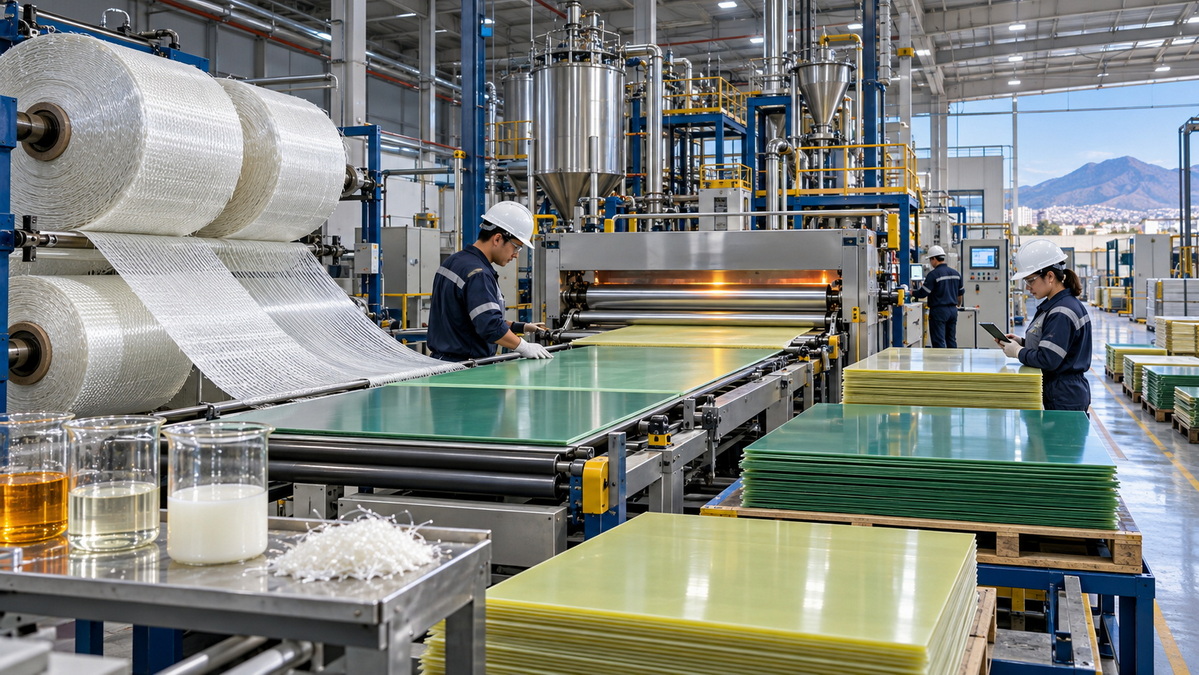
Mexico has a strong manufacturing ecosystem supported by automotive production, electronics assembly, industrial equipment manufacturing, construction projects, agricultural facilities, aerospace supply chains, and export-oriented factories.
The country has developed major industrial clusters in regions such as Monterrey, Guadalajara, Mexico City, Querétaro, Baja California, Jalisco, the Bajío region, and northern border cities including Tijuana and Mexicali.
These locations are particularly attractive for fiberglass and composite sourcing because they provide access to:
- Cross-border logistics routes to the United States and Canada
- Industrial labor and manufacturing infrastructure
- Automotive and transportation supply chains
- Construction and industrial building demand
- Composite fabrication services
- Engineering plastics and industrial materials distributors
- Warehousing and regional inventory programs
- Custom molding, machining, and assembly capabilities
Mexico is especially suitable for buyers that require shorter delivery distances within North America. Companies sourcing from Mexican suppliers may reduce lead time compared with overseas supply programs, particularly for large FRP panels, molded fiberglass components, and project-based construction materials.
At the same time, many high-performance electrical insulation materials, including FR4, G10, G11, FR5, and specialty epoxy fiberglass laminates, are often supplied through global material programs. Buyers may source from local distributors, Mexican converters, or direct manufacturers in Asia depending on required material grade, volume, customization level, and delivery schedule.
A professional fiberglass sheet supplier should be evaluated using measurable technical and commercial criteria. Buyers should avoid selecting a supplier based only on website appearance, product photos, or the lowest unit price.
The following factors are more important when choosing a long-term supplier.
The first question is whether the supplier actually provides the required material category.
A supplier specializing in roofing panels may not be capable of supplying electrical-grade FR4 sheets. A distributor selling fiberglass fabrics may not manufacture finished laminate boards. A custom composite fabricator may be excellent for molded components but unsuitable for high-volume flat sheet supply.
Before requesting a quotation, buyers should clarify whether they need:
- Polyester FRP sheets
- Vinyl ester FRP sheets
- FR4 epoxy fiberglass sheets
- G10 epoxy glass laminates
- G11 high-temperature insulation boards
- Phenolic fiberglass laminates
- GPO-3 insulation sheets
- Fiberglass reinforcement fabrics
- Fiberglass mat materials
- Pultruded fiberglass profiles
- Custom molded composite components
- CNC-machined fiberglass insulation parts
The clearer the material category, the more accurate the quotation and sample approval process will be.
Buyers should determine whether a supplier is a manufacturer, converter, distributor, trading company, or contract fabricator.
Each model can be useful, but the source must be transparent.
A direct manufacturer may provide stronger control over resin formulation, pressing conditions, material thickness, production lead time, and custom orders. A distributor may provide shorter local delivery times and access to multiple brands. A contract fabricator may be the best option for buyers needing finished composite parts instead of raw sheets.
Important questions include:
- Does the company manufacture the fiberglass sheet in-house?
- What resin systems are available?
- What reinforcement materials are used?
- What sheet thicknesses can be produced?
- Can the supplier provide custom sheet dimensions?
- Can the supplier machine, cut, drill, route, punch, or engrave parts?
- What is the typical production lead time?
- Can the factory support repeat production orders?
- Does the company have dedicated quality inspection procedures?
- Can the supplier provide batch records and test reports?
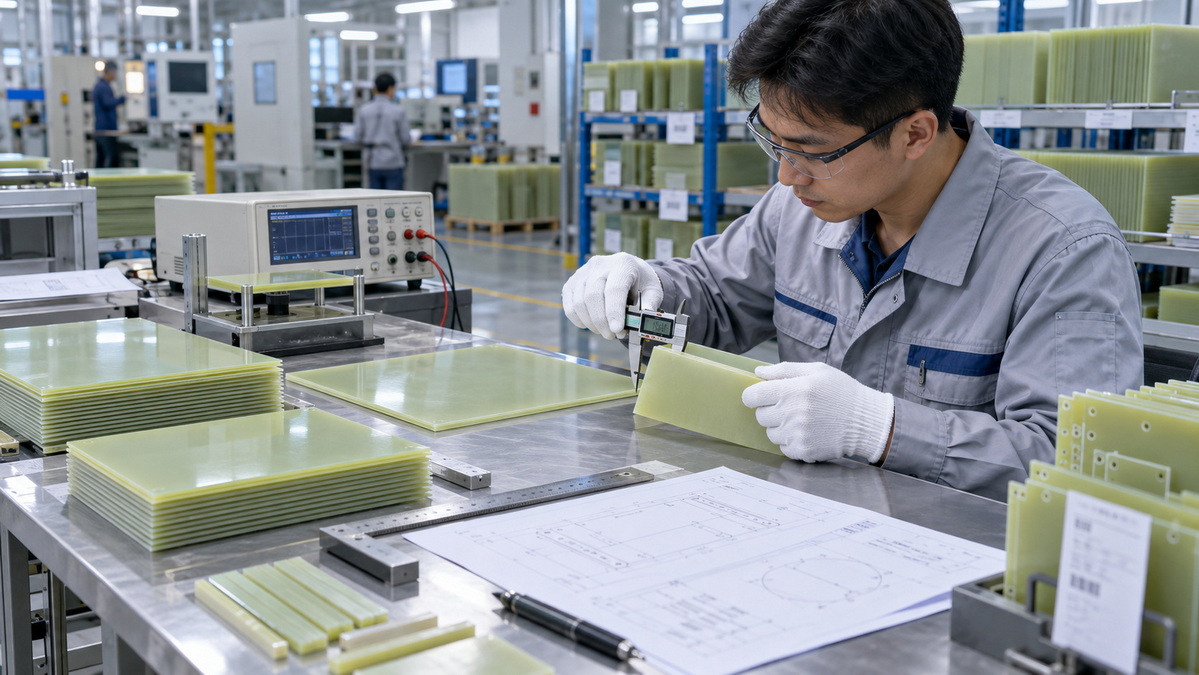
Fiberglass sheet materials are often used in demanding environments. Poor-quality material can cause machining problems, electrical failure, cracking, warping, delamination, moisture absorption, or premature aging.
Buyers should request technical documentation before placing an order.
Typical documents may include:
- Technical data sheet
- Certificate of conformity
- Material composition declaration
- Thickness inspection report
- Flame-retardancy report
- RoHS declaration
- REACH declaration
- Material test report
- Packing list
- Country-of-origin statement
- ISO quality-management certificate
- Incoming material inspection records
- Batch or lot traceability information
For electrical insulation applications, buyers should also verify dielectric strength, insulation resistance, flame-retardancy classification, heat resistance, moisture absorption, flexural strength, and dimensional stability.
Delivery delays can affect production schedules, installation projects, maintenance programs, and customer commitments.
Buyers should ask suppliers about:
- Standard production lead time
- Emergency-order capability
- Available stock sizes
- Monthly production capacity
- Minimum order quantity
- Packing method
- International shipping experience
- Incoterms
- Customs documentation
- Freight options to Mexico
- Container loading capability
- Damage-prevention procedures
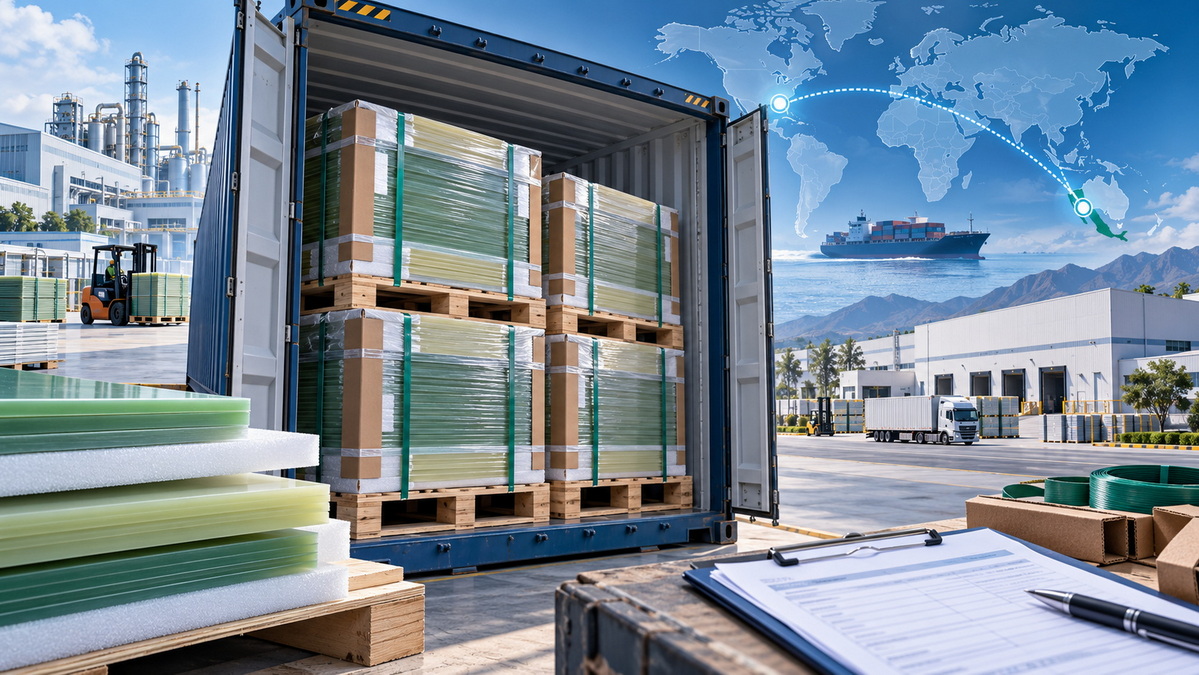
For large-format fiberglass sheets, packaging quality matters almost as much as material quality. Boards can crack, warp, chip, or absorb moisture if pallets are poorly designed or corners are not protected.
Founded: 2007
Location: Guangdong, China
Primary Markets: Global industrial, electrical, electronics, machinery, battery, and insulation-material applications
Main Products: FR4 sheets, G10 sheets, G11 sheets, FR5 sheets, 3240 epoxy sheets, GPO-3 sheets, phenolic boards, mica sheets, copper-clad laminate sheets, antistatic boards, and custom-machined insulation components
Guangdong Weishi New Materials Co., Ltd. is a suitable supplier for buyers in Mexico that need high-performance epoxy fiberglass sheets, electrical insulation laminates, and custom-machined industrial insulation components.
The company focuses on products such as FR4 epoxy sheets, G10 fiberglass sheets, G11 high-temperature insulation boards, 3240 epoxy glass laminates, GPO-3 insulation materials, phenolic sheets, mica sheets, and other industrial composite materials.
Unlike suppliers that focus primarily on building panels or roofing sheets, Guangdong Weishi New Materials is positioned for applications that require electrical insulation, mechanical strength, heat resistance, dielectric performance, flame retardancy, and machining stability.
Its product range can support applications in:
- Electrical switchgear
- Transformer insulation
- High-voltage equipment
- Lithium battery packs
- EV battery insulation structures
- Electronics fixtures
- CNC machining jigs
- Mechanical processing fixtures
- Mold components
- Industrial equipment
- Busbar insulation
- Motor insulation parts
- Power-distribution systems
- Electrical enclosures
- Precision-machined composite components
The company is particularly suitable for small and medium-sized industrial buyers that need more than a standard sheet size. Many OEM buyers require custom dimensions, small-batch prototype support, drawings-based machining, special thicknesses, drilled holes, CNC routing, chamfered edges, insulation gaskets, and finished installation-ready components.
Guangdong Weishi New Materials offers a practical balance between manufacturing capacity and flexible customization. This is important for buyers who may begin with samples or trial orders before moving into stable recurring production.
- Broad selection of epoxy fiberglass insulation materials
- Suitable for FR4, G10, G11, FR5, 3240, GPO-3, mica, and phenolic material requirements
- Support for custom sheet sizes and thicknesses
- CNC machining and custom insulation-part processing capability
- Suitable for OEM and drawings-based projects
- Applicable to electrical, electronics, machinery, battery, and industrial markets
- Export-oriented communication and project support
- Suitable for prototype, pilot, and repeat-order programs
- Strong fit for buyers requiring customized electrical insulation components
Guangdong Weishi New Materials is especially relevant for buyers sourcing:
- FR4 sheets for electrical insulation
- G10 sheets for machining fixtures and structural insulation
- G11 sheets for high-temperature electrical applications
- Insulation components for battery systems
- Custom machined fiberglass parts
- CNC-cut epoxy laminate panels
- Industrial electrical insulation boards
- Transformer insulation materials
- High-voltage insulation components
- Mold and mechanical processing boards
Before placing a volume order, buyers should confirm:
- Exact material grade
- Thickness tolerance
- Flame-retardancy requirement
- Sheet color and surface finish
- Dielectric strength requirement
- Thermal resistance requirement
- Water absorption requirement
- Mechanical strength requirement
- Sheet flatness
- Machining drawing revision
- Sample approval process
- Production lead time
- Packaging specification
- Shipping terms to Mexico
For customers purchasing FR4, G10, or G11 boards for precision electrical use, it is recommended to request both a sample and a batch-specific test report.
Founded: 1959
Location: Mexico
Primary Markets: Construction, industrial buildings, agricultural facilities, transportation, corrosion-resistant applications
Main Products: Fiberglass-reinforced plastic laminates, translucent roofing panels, opaque panels, wall liners, industrial FRP sheets, cladding materials
Stabilit is one of Mexico's best-known fiberglass-reinforced plastic laminate manufacturers. The company has a long history in producing FRP panels for roofing, cladding, wall systems, industrial facilities, agricultural buildings, and commercial construction projects.
Stabilit is particularly suitable for buyers looking for fiberglass sheets that provide daylighting, weather resistance, corrosion resistance, impact strength, and structural support in large building projects.
Its products are commonly used in:
- Industrial roofing
- Warehouse skylights
- Factory wall panels
- Agricultural buildings
- Livestock facilities
- Food-processing facilities
- Chemical plants
- Industrial cladding
- Warehouses
- Greenhouses
- Commercial buildings
- Corrosion-prone environments
The company's position in the Mexican market makes it a practical option for projects requiring local availability, domestic distribution, and regional technical support.
- Long operating history in Mexico
- Focus on fiberglass-reinforced plastic laminate panels
- Suitable for industrial and construction applications
- Strong fit for roofing and daylighting systems
- Product options for corrosion-prone environments
- Local Mexican market experience
- Suitable for large panel and building-material projects
- Capable of supporting custom colors, profiles, and panel requirements
Stabilit is suitable for buyers sourcing:
- Translucent fiberglass roofing sheets
- Industrial wall panels
- Agricultural building panels
- FRP skylight panels
- Corrosion-resistant panels
- Fiberglass cladding sheets
- Hygienic wall liner systems
- Warehouse and factory roofing solutions
Buyers should clarify whether the required sheet is intended for building applications or electrical insulation applications.
Stabilit is a strong choice for FRP construction panels, but buyers requiring FR4, G10, G11, or other epoxy-glass electrical insulation materials should verify whether the required grade is available.
Location: Tijuana, Baja California, Mexico
Primary Markets: Cross-border manufacturing programs, industrial applications, automotive, aerospace, custom composite projects
Main Capabilities: Fiberglass fabrication, carbon fiber manufacturing, hand lay-up, wet lay-up, vacuum infusion, resin transfer molding, compression molding, prepreg molding, filament winding
CompositeMex is a suitable partner for buyers that require custom fiberglass components rather than only flat sheets.
The company is located in Tijuana, Baja California, giving it an important logistical advantage for customers in California, Arizona, Nevada, and other U.S. regions requiring cross-border supply-chain support.
CompositeMex is relevant for projects involving molded fiberglass parts, enclosures, structural components, industrial covers, vehicle parts, tooling, and prototype-to-production composite programs.
Its capabilities may include multiple composite manufacturing processes, allowing customers to select the production method according to part complexity, surface finish, volume requirement, strength target, tooling cost, and delivery schedule.
- Strategic Tijuana location near the U.S. border
- Suitable for North American cross-border manufacturing programs
- Custom fiberglass and carbon fiber part production
- Multiple composite fabrication processes
- Suitable for prototype and repeat-production projects
- Useful for molded parts and structural components
- Potential support for tooling and product development
CompositeMex may be suitable for:
- Custom fiberglass enclosures
- Automotive fiberglass panels
- Industrial equipment covers
- Machine guards
- Composite housings
- Molded fiberglass structures
- Prototype composite components
- Carbon fiber and fiberglass parts
- Custom composite assemblies
- Engineering development projects
Buyers should confirm:
- Resin type
- Reinforcement type
- Fiber orientation
- Surface finish
- Fire-retardancy requirement
- Tooling ownership
- Annual production quantity
- Dimensional tolerance
- Quality inspection plan
- Material traceability
- First-article approval procedure
CompositeMex is more suitable for buyers requiring finished components than for buyers sourcing standard FR4 or G10 laminate sheets.
Market Coverage: Mexico and the United States
Primary Markets: Composite fabricators, industrial users, material buyers, maintenance programs, prototype workshops
Main Products: Fiberglass reinforcements, composite materials, industrial composites, multi-supplier material sourcing
Business Model: Distribution and technical material support
IMATE Composites is a material-supply option for buyers that require fiberglass reinforcements, composite materials, and access to multiple suppliers within Mexico and the United States.
The company's multi-supplier structure can be useful for smaller buyers, repair operations, prototype manufacturers, and industrial facilities that need faster access to composite materials without committing to direct overseas container orders.
IMATE Composites may be useful when the buyer needs:
- Fiberglass fabric
- Fiberglass mat
- Composite reinforcement materials
- Resin-related materials
- Industrial composite supplies
- Small to medium order quantities
- Regional stock availability
- Technical material-selection support
- Coverage for Mexico and U.S. customers
- Access to multiple composite-material suppliers
- Suitable for buyers needing regional supply support
- Useful for prototype and maintenance requirements
- Can support material selection for composite projects
- Potentially shorter replenishment time than overseas sourcing
IMATE Composites may be suitable for:
- Fiberglass reinforcement sourcing
- Composite repair projects
- Industrial fabrication
- Small-batch composite projects
- Prototype programs
- Resin and reinforcement purchasing
- Regional composite material supply
Because distributor models vary, buyers should request:
- Original manufacturer's product data sheet
- Material batch number
- Certificate of conformity
- Resin compatibility information
- Storage conditions
- Shelf-life requirements
- Country of origin
- Production date
- Lot traceability
- Available stock quantity
Location: Mexico
Primary Markets: FRP products, engineering plastics, composite materials, pultrusion-related projects, industrial supply programs
Main Capabilities: Fiberglass-reinforced plastic products, engineering plastics, silicone rubber, sourcing support, material selection, production-process assistance
Composites Mexico is relevant for buyers looking for support across a broader range of composite and engineering material requirements.
The company's scope includes fiberglass-reinforced plastic products, engineering plastics, silicone rubber, pultrusion-related materials, process guidance, and sourcing support.
This type of supplier can be useful for buyers that are still developing a composite product specification or evaluating whether fiberglass, engineering plastic, pultruded FRP, or another material category is the most suitable option.
- Broad material and composite-industry focus
- Relevant for FRP and engineering plastic applications
- Useful for pultrusion-related sourcing
- Suitable for industrial material selection
- Can support broader production and sourcing discussions
- Useful for companies entering the Mexican composite market
Composites Mexico may be suitable for:
- Pultruded fiberglass profiles
- FRP structures
- Engineering plastic alternatives
- Industrial composite components
- Material sourcing programs
- Production-process development
- Supplier connection and local-market support
Buyers should confirm whether the product will be:
- Manufactured in-house
- Converted from stock material
- Supplied through a manufacturing partner
- Imported from another country
- Produced under a contract manufacturing arrangement
It is also important to clarify who controls the inspection process, traceability, warranty, and final technical documentation.
Location: Mérida, Yucatán, Mexico
Primary Markets: Composite fabricators, OEM engineering teams, advanced materials users, tooling and process-development projects
Main Capabilities: Advanced composite materials, specialty reinforcements, vacuum-infusion technologies, tooling systems, large-format additive manufacturing support, technical training
AIC International Mexico is more relevant for buyers working with advanced composite materials, manufacturing processes, tooling solutions, and technical development programs.
The company's presence in Mérida supports composite manufacturers, fabrication shops, engineering teams, and OEMs that need materials and process support beyond basic fiberglass sheets.
AIC International may be useful for projects involving vacuum infusion, specialty reinforcement materials, tooling systems, large-format manufacturing technologies, and advanced composite fabrication.
- Focus on advanced composite materials
- Suitable for vacuum-infusion and tooling programs
- Relevant for technical manufacturing development
- Useful for composite fabrication teams
- Supports specialty reinforcement-material requirements
- Potential fit for complex and engineered composite projects
AIC International Mexico may be suitable for:
- Vacuum-infusion projects
- Composite tooling programs
- Specialty reinforcement materials
- Advanced fiberglass composite development
- Engineering prototype programs
- Custom composite manufacturing support
- Process optimization projects
Buyers should identify whether they need:
- Raw fiberglass reinforcement
- Resin systems
- Vacuum-infusion equipment
- Tooling materials
- Finished composite parts
- Flat fiberglass sheets
- Custom manufacturing support
This distinction will help ensure that the supplier's scope matches the actual procurement requirement.
| Supplier | Main Focus | Supply Model | Suitable Product Categories | MOQ Approach | Documentation to Request |
|---|---|---|---|---|---|
| Guangdong Weishi New Materials Co., Ltd. | FR4, G10, G11, epoxy fiberglass insulation sheets and custom machining | Direct manufacturer and exporter | Electrical insulation sheets, high-temperature laminates, custom components | Quote-based, suitable for samples, prototypes, and repeat OEM orders | Technical data sheet, test report, flame-retardancy report, RoHS declaration, batch inspection record |
| Stabilit | FRP construction panels and industrial laminates | Mexican manufacturer | Roofing panels, wall liners, translucent sheets, industrial FRP panels | Project-based | Product data sheet, weathering data, UV performance information, fire-performance documentation |
| CompositeMex | Custom fiberglass and carbon fiber components | Contract manufacturer | Molded parts, enclosures, automotive panels, industrial components | Tooling- and project-dependent | Quality plan, material traceability, first-article report, tooling agreement |
| IMATE Composites | Fiberglass and composite material distribution | Distributor | Fiberglass fabric, reinforcement materials, composite supplies | Stock- and supplier-dependent | Original manufacturer data sheet, certificate of conformity, lot traceability |
| Composites Mexico | FRP, engineering plastics, pultrusion and supply support | Manufacturing and sourcing support | FRP products, pultruded materials, engineering plastic alternatives | Quote-based | Manufacturing source confirmation, material data sheet, inspection procedure |
| AIC International Mexico | Advanced composites, tooling and process support | Materials and technology supplier | Specialty reinforcements, infusion systems, tooling materials | Program-dependent | Original manufacturer documentation, material compatibility data, technical support scope |
Polyester fiberglass sheets are commonly used for roofing, skylights, cladding, wall panels, agricultural buildings, and industrial structures.
These sheets generally combine fiberglass reinforcement with polyester resin. They can be translucent, opaque, corrugated, flat, textured, or gel-coated.
Important purchasing factors include:
- UV resistance
- Light transmission
- Impact strength
- Surface finish
- Color stability
- Thickness consistency
- Panel profile compatibility
- Chemical resistance
- Weather resistance
- Fastener performance
- Thermal expansion behavior
Vinyl ester fiberglass sheets are often selected when chemical resistance is more important than standard polyester-panel performance.
They are commonly used in corrosive industrial environments, chemical-processing areas, wastewater-treatment facilities, storage areas, and industrial plants.
Important purchasing factors include:
- Chemical exposure conditions
- Acid and alkali resistance
- Temperature range
- Resin formulation
- Corrosion resistance
- Surface protection
- Reinforcement structure
- Thickness and laminate design
FR4 is a glass-cloth-reinforced epoxy laminate generally selected for electrical insulation applications requiring flame-retardant performance.
It is commonly used in:
- Electrical control systems
- Switchgear
- Transformers
- Battery packs
- Electronics fixtures
- Insulation spacers
- Busbar components
- High-voltage insulation structures
- CNC-machined industrial parts
Important purchasing factors include:
- Flame-retardancy classification
- Dielectric strength
- Insulation resistance
- Flexural strength
- Moisture absorption
- Thermal resistance
- Thickness tolerance
- Flatness
- Machinability
- Surface finish
- Test-report availability
G10 is an epoxy glass laminate often selected for mechanical strength, electrical insulation, dimensional stability, and machining performance.
It is commonly used in:
- Mechanical fixtures
- Industrial jigs
- Insulation components
- Marine applications
- Structural spacers
- Machine parts
- Tooling plates
- Custom CNC components
G10 may be suitable where strong mechanical performance is required, but buyers should confirm whether a flame-retardancy requirement applies to the application.
G11 is commonly selected for high-temperature electrical insulation environments.
It may be used in:
- High-temperature electrical systems
- Transformers
- Motors
- Industrial heating equipment
- Thermal insulation structures
- High-temperature fixtures
- Power equipment
Buyers should verify thermal performance at the actual operating temperature rather than relying only on room-temperature test data.

One of the most common risks is receiving a lower-grade material that looks similar to the approved sample.
A green, yellow, black, or natural-color fiberglass sheet may appear identical to another board, but the actual resin system, glass content, curing process, flame-retardant formulation, and electrical performance can be very different.
A low-grade fiberglass sheet may cause:
- Delamination during machining
- Cracking during installation
- Reduced dielectric strength
- Poor heat resistance
- High moisture absorption
- Surface blistering
- Thickness inconsistency
- Warping
- Electrical failure
- Premature aging
The best prevention is to approve the material based on technical specifications, not appearance.
Some suppliers may use FR4 as a general marketing term for epoxy fiberglass boards. Buyers should confirm whether the material meets the required flame-retardancy level at the purchased thickness.
The supplier should clarify:
- Test standard used
- Thickness tested
- Flame-retardancy classification
- Resin system
- Reinforcement structure
- Electrical properties
- Thermal performance
- Batch traceability
Thickness inconsistency can create serious problems during CNC machining, assembly, electrical clearance control, and fixture production.
Buyers should define:
- Nominal thickness
- Allowable tolerance
- Measurement positions
- Flatness requirement
- Edge quality requirement
- Inspection method
- Rejection criteria
Fiberglass sheets can be damaged during international shipping if they are packed without sufficient corner protection, moisture barriers, stable pallets, or reinforced crates.
Buyers should specify:
- Protective film
- Foam layers
- Corner protectors
- Pallet structure
- Moisture barrier
- Maximum stack height
- Maximum pallet weight
- Pallet labeling
- Handling instructions
- Loading photos before shipment
A supplier may display an ISO certificate that has expired, applies only to a sales company, or does not cover the actual manufacturing location.
Buyers should verify:
- Certificate number
- Legal company name
- Factory address
- Certification scope
- Certification body
- Issue date
- Expiration date
- Current validity
A quality-management certificate is useful, but it does not replace material-specific testing.
A common but rarely discussed issue in fiberglass sheet procurement is that sheet color is often mistaken for material grade.
Buyers may assume that green FR4 sheets, yellow G11 boards, black G10 sheets, or white fiberglass panels represent a universal material standard. In reality, color is not a reliable indicator of resin chemistry, flame-retardancy level, glass-cloth construction, electrical performance, or heat resistance.
Two visually similar green epoxy fiberglass sheets may have very different:
- Resin content
- Glass fiber content
- Dielectric strength
- Flame-retardancy performance
- Cure quality
- Moisture absorption
- Flexural strength
- Thermal endurance
- Thickness tolerance
- Machining behavior
For this reason, procurement teams should avoid approving fiberglass sheets by photo, color, or a previous supplier's informal naming system.
A better approach is to approve a controlled specification containing:
- Material grade
- Resin type
- Reinforcement type
- Thickness tolerance
- Required technical properties
- Test standards
- Sample approval record
- Drawing revision
- Lot traceability requirement
- No-substitution clause
This approach reduces the risk of receiving a similar-looking but lower-performing material.
Before issuing a purchase order, confirm the following items:
- Product grade is clearly defined
- Resin system is confirmed
- Sheet size is specified
- Thickness tolerance is included
- Surface finish is agreed
- Required certifications are listed
- Sample is approved
- Test report is reviewed
- Machining drawing is controlled
- Packaging method is approved
- Delivery lead time is confirmed
- Incoterms are agreed
- Customs responsibilities are understood
- Insurance responsibility is clear
- Lot traceability is required
- Change-control requirements are included
- No material substitution is allowed without written approval
Mexico offers a strong sourcing environment for fiberglass-reinforced plastic panels, industrial laminates, composite materials, and custom fiberglass components. Buyers can find local suppliers for construction panels, roofing systems, molded composite parts, fiberglass reinforcement materials, and project-based fabrication support.
For construction and industrial FRP panels, local Mexican manufacturers such as Stabilit can provide strong market familiarity and regional delivery advantages. For custom composite components, companies such as CompositeMex may be suitable for buyers requiring molded parts, cross-border manufacturing support, and technical fabrication processes.
For high-performance electrical insulation materials such as FR4, G10, G11, FR5, GPO-3, and custom-machined epoxy fiberglass components, Guangdong Weishi New Materials Co., Ltd. provides an export-oriented manufacturing option with a broad product range, flexible customization support, and practical OEM communication.
The most reliable purchasing decision comes from selecting the correct material category, approving samples through real application testing, verifying documentation, controlling specifications, and building a long-term relationship with a supplier whose production capability matches the technical risk of the project.
Fiberglass sheet is a broad term that may refer to roofing panels, reinforced plastic boards, molded composite materials, or electrical insulation laminates. FR4 sheet is a specific type of glass-reinforced epoxy laminate designed for electrical insulation applications and typically associated with flame-retardant performance.
Request the certificate number, legal company name, manufacturing address, scope, issue date, expiration date, and certification-body details. Verify the certificate directly through the certification body or its official certificate database. Ensure the certificate covers the actual manufacturing facility supplying the material.
Test thickness consistency, flatness, machinability, edge quality, drilling performance, delamination resistance, moisture response, dielectric performance, mechanical strength, and thermal behavior based on the intended application.
Possibly, but only after confirming application requirements. G10 and FR4 are both epoxy glass laminates, but FR4 is typically chosen when flame-retardancy is required. If the application involves electrical safety, fire regulations, or high-voltage systems, buyers should confirm the required material specification before substitution.
Compare more than unit price. Review material grade, resin system, thickness tolerance, sheet dimensions, quality documentation, testing scope, MOQ, tooling cost, machining cost, packaging, delivery time, Incoterms, and after-sales communication. A lower quote may become more expensive if the material causes rejection, machining loss, delivery delays, or field failure.
1.[Guangdong Weishi New Materials Co., Ltd.]
2.[National Institute of Statistics and Geography of Mexico]
3.[Mexico International Merchandise Trade Statistics]
4.[Stabilit]
5.[CompositeMex]
6.[IMATE Composites]


