

Views: 272 Author: Weishi Sheets Publish Time: 2026-07-29 Origin: Site
Content Menu
● What Epoxy Resin Sheet Means
● How to Evaluate Before Buying
● FAQ
>> 1. Is epoxy resin sheet stronger than plastic?
>> 2. Is FR4 the same as epoxy resin sheet?
>> 3. Which is stronger, G10 or FR4?
>> 4. Can epoxy sheets handle heat?
>> 5. What affects the strength of an epoxy board the most?
>> 6. Where are epoxy resin sheets commonly used?
How strong is a sheet of epoxy resin? In practical use, the answer is: very strong, but its real performance depends on formulation, thickness, fiber reinforcement, and working environment. For industrial buyers, epoxy resin sheets and glass epoxy laminates such as FR4, G10, and G11 are valued not only for strength, but also for insulation, stability, and long service life.
A sheet of epoxy resin is not a single material with one fixed strength value. In the real world, its strength changes based on whether it is a pure cured epoxy sheet or a reinforced laminate such as fiberglass epoxy board. That is why engineers often ask a more useful question: how strong is the sheet under tension, bending, heat, moisture, and long-term load?
For manufacturers, electrical contractors, machine builders, and OEM buyers, that distinction matters. A sheet that looks similar on the surface may behave very differently in a transformer, electrical cabinet, mold base, or CNC fixture. Understanding the material type is the first step to choosing the right one.
Epoxy resin sheet usually refers to a cured thermoset sheet made from epoxy resin, often combined with fiberglass cloth and pressed into a rigid laminate. This structure creates a dense, crosslinked network that is difficult to melt or dissolve, which is one reason the material performs well in demanding industrial settings.
In industrial supply chains, the term often includes:
- Pure cured epoxy sheets.
- Epoxy fiberglass laminate.
- FR4 boards.
- G10 and G11 insulation sheets.
These materials are related, but they are not identical. FR4 is generally flame-retardant, while G10 and G11 are commonly selected for stronger mechanical performance or higher temperature resistance in electrical and industrial applications.
The strength of an epoxy resin sheet is usually measured in terms of tensile strength, flexural strength, compressive strength, impact resistance, and dimensional stability. In published product data, FR4 glass epoxy laminates are often described with tensile strength values around 310 to 455 MPa, depending on grade and test direction.
A practical way to understand this is:
- Tensile strength shows how well the sheet resists pulling forces.
- Flexural strength shows how well it resists bending.
- Compressive strength shows how well it resists crushing loads.
- Impact strength shows how well it handles sudden force.
That is why epoxy sheets are used in structural insulation, machine tooling, and electrical support parts. Their value is not just "hardness"; it is the combination of strength, insulation, and stability under repeated use.

The exact numbers vary by grade, thickness, fiber content, and test method. For example, FR4 technical data sheets commonly show tensile strength in the 310 to 455 MPa range, and flexural strength often above 345 MPa in crosswise directions.
A simplified view is shown below.
| Material type | Typical strength profile | Best known advantage |
|---|---|---|
| Pure cured epoxy sheet | Strong, rigid, but more brittle than fiber-reinforced grades | Good bonding and chemical resistance |
| FR4 glass epoxy laminate | High mechanical strength plus flame retardancy | Electrical insulation and PCB use |
| G10 fiberglass epoxy | Stronger mechanical behavior in many structural uses | High rigidity and stability |
| G11 fiberglass epoxy | Strong at elevated temperature | Better thermal endurance |
These are industry-oriented values, not universal promises. Final performance depends on the manufacturer's process control, resin formulation, glass cloth quality, and the thickness of the finished board.

Epoxy resin becomes much stronger when it is reinforced with woven fiberglass cloth. The glass fibers carry load, while the epoxy binds the structure and helps distribute stress across the sheet. This is why a fiberglass epoxy sheet is usually far stronger than a pure resin sheet of the same size.
Reinforcement improves:
- Bending resistance.
- Dimensional stability.
- Wear resistance.
- Long-term load-bearing performance.
This also explains why FR4, G10, and G11 are widely used in industrial equipment. In many cases, buyers are not looking for a "plastic board"; they are looking for a stable engineering substrate that can survive electrical stress, heat, and mechanical vibration.
Heat changes how any epoxy-based material behaves. Standard FR4 already offers solid thermal stability, and some high-Tg variants are designed for more demanding electronics and power applications. G11 is often selected when higher mechanical strength is required at elevated temperatures.
In real use, heat can reduce stiffness, accelerate aging, and weaken bonding if the grade is not matched to the application. That is why the right answer is never "epoxy is strong" or "epoxy is weak." The right answer is: the correct grade stays strong enough for the operating temperature and load cycle.
For this reason, engineers should check:
- Continuous working temperature.
- Short-term heat exposure.
- Humidity conditions.
- Electrical load and arc risk.
Epoxy resin sheets are widely used in electrical insulation, PCB support structures, mechanical fixtures, and tooling because they combine strength with insulation. FR4 is especially common in communications, computer systems, industrial controls, and automotive electronics.
In manufacturing environments, these sheets are valued for:
- Stable machining performance.
- Good resistance to moisture.
- Reliable electrical insulation.
- Consistent dimensional behavior after cutting or drilling.
For buyers, this means the material is often chosen not only because it is strong, but because it is predictable. Predictability reduces production defects, maintenance issues, and downtime.
Several factors decide how strong a sheet of epoxy resin really is in practice.
1. Resin system. Different epoxy formulations cure differently and create different mechanical outcomes.
2. Fiber content. More and better-aligned fiberglass usually improves strength.
3. Thickness. Thicker sheets can carry more load, but thickness alone does not guarantee better performance.
4. Curing quality. Poor curing lowers stability and may reduce strength.
5. Operating environment. Heat, moisture, vibration, and chemicals can all affect long-term behavior.
This is why a sheet specified for electrical insulation may not be the best choice for a heavily loaded fixture, and why a mechanically strong board may still fail if the temperature rating is too low.
If you are sourcing epoxy fiberglass board or FR4 sheet, a quick evaluation process can save a lot of trouble.
1. Ask for the full technical data sheet.
2. Confirm tensile, flexural, dielectric, and thermal values.
3. Check the sheet thickness tolerance.
4. Review machining performance and edge quality.
5. Ask for test reports from recent production batches.
6. Confirm the material grade matches the application.
A reliable supplier should be able to explain why one grade is better than another for your application. For example, G10 may be preferred for stronger structural performance, while G11 may be better when higher temperature resistance is needed.
From a practical manufacturing perspective, the most common mistake is choosing epoxy sheet by name only. Two products may both be called "epoxy board," but one may be intended for electronics insulation and another for structural fixtures or mold tooling.
A better approach is to decide based on application:
- Need flame resistance? Consider FR4.
- Need stronger general structural insulation? Consider G10.
- Need better elevated-temperature performance? Consider G11.
- Need highly stable custom machining? Specify thickness, tolerance, and cutting requirements clearly.
This is especially important for export buyers and OEM engineers who want stable supply, repeatable quality, and low risk in final assembly.
For industries that need high-performance insulation materials, epoxy fiberglass boards provide a reliable balance of mechanical strength, electrical protection, and processability. That makes them suitable for electronic supports, electrical insulation parts, fixture plates, mold components, and industrial equipment parts.
Guangdong Weishi New Materials Co., Ltd. focuses on producing epoxy insulation sheets, FR4 boards, G10 boards, and G11 boards for global industrial use. With stable quality control and custom processing capability, the material can be matched to different thermal, mechanical, and electrical requirements.
If your project depends on safety, insulation, and long service life, do not ask only whether the sheet is "strong." Ask whether it is the right kind of strong for your operating condition. That single change in thinking will improve product reliability and reduce sourcing mistakes.
For technical projects, request:
- Material grade.
- Mechanical test data.
- Heat resistance level.
- Electrical performance data.
- Machining or cutting requirements.
If you need a sheet for electrical insulation, structural support, or custom industrial parts, choosing the right epoxy laminate grade is the fastest path to better performance and fewer failures.
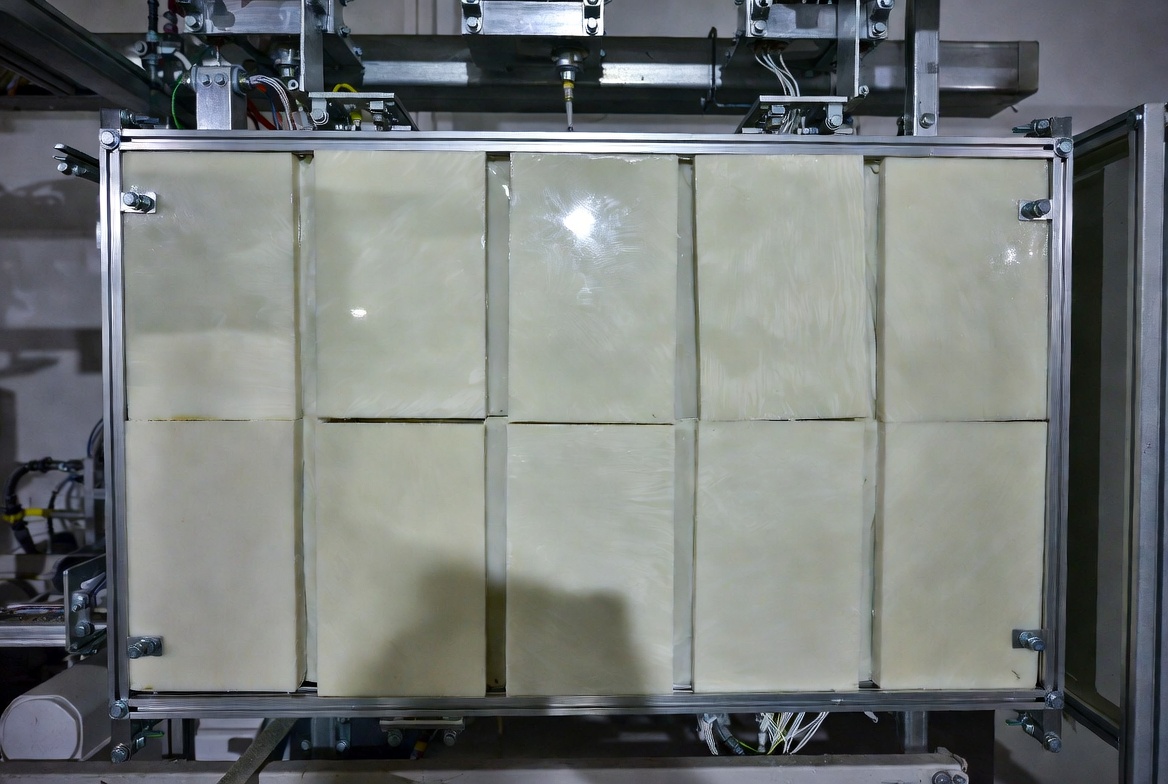
Yes, in many industrial cases it is stronger than common general-purpose plastics because it has higher rigidity and better mechanical stability. Reinforced epoxy laminates perform especially well under load.
Not exactly. FR4 is a fiberglass-reinforced epoxy laminate with flame-retardant properties, while "epoxy resin sheet" can refer to broader epoxy-based sheet materials.
In many structural uses, G10 is often viewed as the stronger mechanical option, while FR4 is preferred when flame retardancy is required. The final choice depends on the application.
Yes, but heat resistance depends on the grade. FR4, G10, and G11 each have different thermal performance, and G11 is often chosen for more demanding elevated-temperature use.
The main factors are resin formulation, fiberglass reinforcement, thickness, curing quality, and the working environment.
They are widely used in electrical insulation, printed circuit boards, industrial fixtures, machinery parts, mold components, and other applications that need strength plus insulation.
- [What is FR-4 Glass Epoxy Laminate material]
- [Essential Insights into FR-4 Mechanical Properties for Industry Leaders]
- [FR-4 Glass Epoxy Technical Product Information]


