

Views: 223 Author: Weishi Sheets Publish Time: 2026-09-06 Origin: Site
Content Menu
● Why China Is a Major Source of Epoxy Fiberglass Boards
● How to Select a Reliable Epoxy Fiberglass Board Manufacturer
>> Customization and Processing Capability
>> Compliance and Documentation
● Top 10 Epoxy Fiberglass Board Manufacturers in China
>> 1. Guangdong Weishi New Materials Co., Ltd.
>> 2. Jiujiang Xinxing Insulation Material Co., Ltd.
>> 3. Hebei JingHong Electronic Technology Co., Ltd.
>> 4. Sichuan D&F Electric Co., Ltd.
>> 5. Shenzhen Xiongyihua Plastic Insulation Limited
>> 6. Guangzhou SR Material Co., Ltd.
>> 8. J&Q New Composite Material Group Co., Ltd.
● Manufacturer Comparison Table
● Understanding FR4, G10, G11, FR5, and 3240 Boards
>> FR4 Board
>> G10 Board
>> G11 Board
>> FR5 Board
● Common Sourcing Problems and How to Avoid Them
>> Surface Quality Hides Internal Defects
● The Machined-Edge Inspection Method
● How to Verify a Factory Before Ordering
>> Review Product-Specific Documents
>> Use a Structured Sample Process
>> Define Shipping and Packaging Requirements
>> 1. How can I verify whether an ISO 9001 certificate is still valid?
>> 2. Is FR4 always better than G10?
>> 3. What documents should I request before buying FR4 epoxy fiberglass sheets?
>> 4. What is a reasonable MOQ for customized epoxy fiberglass boards?
>> 5. How can I identify low-quality epoxy fiberglass boards before placing a large order?
China is one of the world's most important manufacturing bases for epoxy fiberglass boards and rigid electrical insulation laminates. From standard FR4 sheets and G10 boards to high-temperature G11 materials, anti-static laminates, and CNC-machined insulation parts, Chinese manufacturers serve a wide range of industries including electrical equipment, electronics, battery systems, automation, machinery, mold manufacturing, and industrial processing.
For international buyers, sourcing from China offers more than competitive pricing. The country has a mature supply chain for fiberglass cloth, epoxy resin systems, thermoset composite processing, electrical insulation materials, CNC machining, export packaging, and industrial component fabrication. This allows buyers to source standard boards, customized dimensions, special thicknesses, machined parts, and multi-material insulation solutions through one manufacturing region.
However, epoxy fiberglass board is not a simple commodity. Two products described as FR4 or G10 may differ significantly in resin formulation, glass-cloth content, flame-retardant performance, dielectric strength, heat resistance, water absorption, thickness tolerance, internal bonding, and machining behavior. A successful sourcing decision should therefore be based on technical documentation, production consistency, sample testing, and communication quality—not only on the quoted price.
This article introduces 10 epoxy fiberglass board manufacturers and suppliers in China that are worth considering for industrial procurement, OEM programs, distributor sourcing, and customized insulation-material projects.
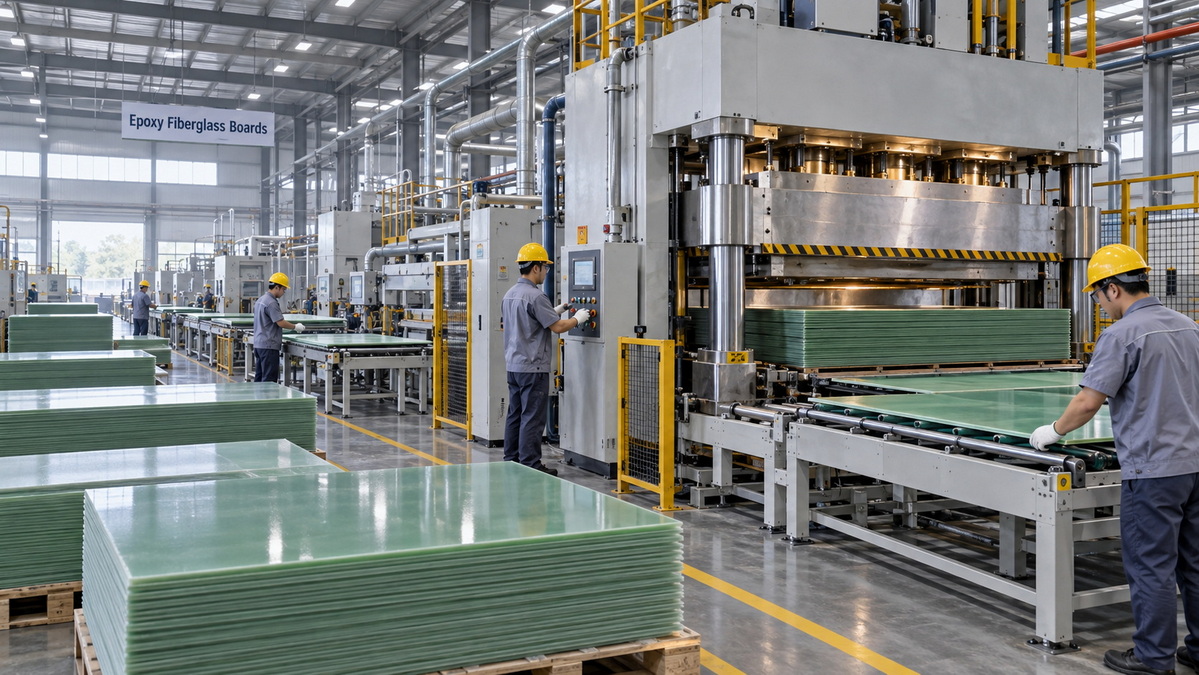
China has established strong industrial clusters for electrical insulation materials, fiberglass reinforcement fabrics, epoxy-resin processing, electronic laminates, precision machining, switchgear components, electric motors, transformers, battery systems, and industrial automation equipment.
Major production regions include Guangdong, Jiangxi, Hebei, Sichuan, Zhejiang, Jiangsu, and Shenzhen's surrounding manufacturing belt. Each area has different strengths. Guangdong and Shenzhen are closely connected with electronics, battery production, export logistics, and industrial machining. Jiangxi has a long history in fiberglass-related materials and electrical insulation products. Hebei is home to larger-scale laminate and phenolic-board manufacturing. Sichuan has developed capabilities in electrical insulation systems, laminated busbars, and industrial electrical components.
For buyers, this ecosystem provides several practical advantages:
- Broad availability of FR4, G10, G11, FR5, 3240, and EPGC-grade materials
- Competitive pricing for standard industrial insulation sheets
- Custom sheet dimensions, thicknesses, colors, and surface finishes
- CNC milling, drilling, routing, punching, slotting, and edge finishing
- Anti-static and ESD-grade FR4 materials
- Copper-clad laminates and composite board options
- Support for OEM and private-label requirements
- Export packaging and container-loading experience
- Access to both small-batch and large-volume production programs
The main challenge is that China's large supplier base includes direct factories, export companies, distributors, stockists, machining workshops, and trading companies. Buyers should therefore identify the actual production source before approving a supplier.
Choosing a supplier requires more than comparing websites or reviewing product photos. A reliable manufacturer should be evaluated across material quality, production capability, quality control, technical communication, customization capacity, and delivery consistency.
The first step is confirming whether the supplier is a direct manufacturer, a manufacturer with its own export team, a trading company, or a machining company sourcing boards from another producer.
This matters because the production source affects:
- Pricing transparency
- Material traceability
- Customization speed
- Quality-control responsibility
- Technical response time
- Sample consistency
- Complaint handling
- Delivery reliability
A direct manufacturer may provide better control over resin systems, glass-cloth selection, press cycles, curing methods, dimensions, and batch management. A trading company may still be useful for buyers who need multiple categories of materials, but the actual manufacturer should be clearly identified.
A qualified supplier should be able to explain the differences between common epoxy fiberglass board grades.
| Material Grade | Common Application | Main Characteristics | Buyer Considerations |
|---|---|---|---|
| G10 | General electrical insulation, fixtures, mechanical components | Strong mechanical performance and electrical insulation | Typically used where flame retardancy is not a primary requirement |
| FR4 | Electronics, electrical insulation, fixtures, switchgear | Flame-retardant epoxy fiberglass laminate | Confirm flame-retardant test data for the specific thickness |
| G11 | High-temperature electrical insulation | Better heat resistance than standard G10 or FR4 | Verify thermal rating and high-temperature mechanical stability |
| FR5 | High-temperature flame-retardant applications | Enhanced heat resistance and flame performance | Often used in demanding electrical or thermal environments |
| 3240 | General industrial insulation and structural applications | Economical epoxy glass cloth laminate | Quality may vary significantly between suppliers |
| ESD FR4 | Electronics fixtures, semiconductor-related handling | Controlled anti-static performance | Confirm surface resistance and volume resistance range |
| Copper-Clad FR4 | PCB-related products and electrical applications | FR4 laminate with copper foil | Confirm copper thickness, bonding strength, and laminate quality |
A professional supplier should not use the same product description for every epoxy fiberglass board. The grade, resin system, test standard, thickness range, flame-retardant performance, and recommended application should be clearly explained.
A reliable manufacturer should have a defined process for raw-material inspection, lamination, press control, curing, trimming, sheet inspection, packing, and batch traceability.
Buyers should ask whether the factory can provide or test the following properties:
- Thickness tolerance
- Flatness
- Density
- Water absorption
- Flexural strength
- Tensile strength
- Compressive strength
- Dielectric breakdown strength
- Insulation resistance
- Flame-retardant performance
- Thermal endurance
- Surface quality
- Internal voids
- Delamination resistance
- Machining behavior
- Batch traceability
Factories that cannot explain their inspection process or provide clear product data should be treated cautiously, especially for high-voltage, battery, electrical-safety, or export-regulated applications.
For many industrial buyers, standard full sheets are not enough. The supplier may need to provide customized sizes, machining support, tight tolerances, or finished insulation parts.
Useful customization capabilities include:
- Custom sheet dimensions
- Custom thicknesses
- Custom colors
- Cut-to-size panels
- CNC drilling and milling
- Die cutting and punching
- Slotting and routing
- Chamfering and edge finishing
- Machined insulation components
- Prototype development
- Small-batch sample orders
- OEM labeling
- Private-label packaging
- Custom export packing
The right supplier should be able to support a project from material selection through sample confirmation and production delivery.
For international projects, buyers may require documentation related to quality management, material safety, flame resistance, and environmental compliance.
Common requests include:
- ISO 9001 certificate
- Material data sheet
- Material safety data sheet
- RoHS declaration
- REACH declaration
- UL-related test report or file reference where applicable
- Third-party laboratory report
- Batch inspection report
- Product specification sheet
- Export packing information
- Country-of-origin documentation
Documentation should match the quoted material. Buyers should not accept a generic report that does not identify the product grade, thickness, color, or test condition.
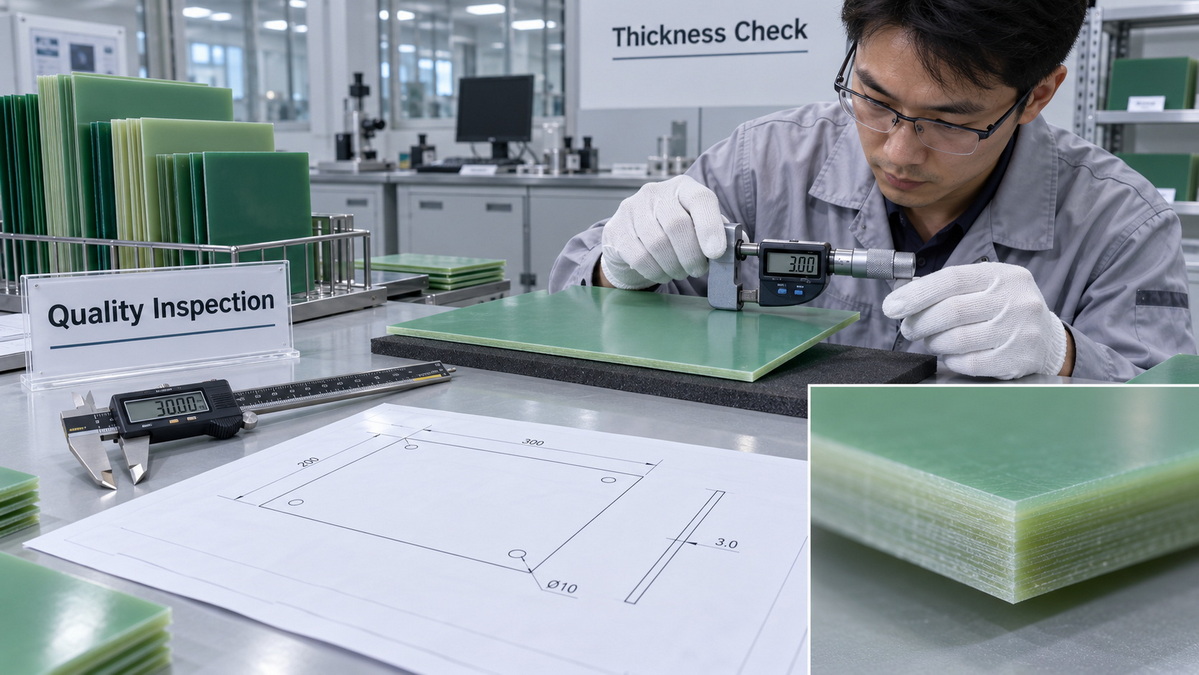
The following manufacturers and suppliers represent different sourcing profiles. Some are more suitable for high-volume standard boards, while others are stronger in flexible OEM support, machining, specialty grades, electrical-system components, or multi-material sourcing.
Location: Heyuan, Guangdong, China
Established: 2007
Main Products: FR4 sheets, G10/G11 sheets, 3240 epoxy boards, anti-static boards, copper-clad sheets, high-density composite sheets, engineering plastics
Manufacturing Focus: Customized epoxy fiberglass insulation materials and flexible OEM support
Reported Production Scale: More than 16,000 m² facility area and more than 100 tonnes of monthly output
Guangdong Weishi New Materials Co., Ltd. is a practical supplier for buyers who require both standard epoxy fiberglass sheets and customized insulation-material solutions. The company focuses on high-performance epoxy insulation boards and composite materials, including FR4, G10, G11, 3240 epoxy boards, anti-static materials, copper-clad sheets, and high-density composite boards.
The company is especially relevant for small and mid-sized industrial brands, electrical-equipment manufacturers, battery-pack assemblers, machinery producers, mold makers, and CNC-machining businesses that require flexible communication and customized service.
Rather than focusing only on high-volume commodity sheets, Guangdong Weishi is positioned to support buyers with specific requirements such as custom thicknesses, special sheet sizes, cut-to-size panels, application-specific material selection, OEM packaging, and downstream processing needs.
For high-voltage and battery-related projects, buyers can evaluate its FR4 and epoxy fiberglass products for dielectric performance, arc resistance, mechanical strength, low moisture absorption, and flame-retardant requirements. The exact material grade and test data should always be confirmed according to the final application.
Core strengths:
- Flexible support for custom dimensions and thicknesses
- Broad product coverage across FR4, G10, G11, 3240, ESD boards, and copper-clad materials
- Suitable for industrial OEM projects and small-to-medium-volume programs
- Responsive communication for drawings, samples, and technical inquiries
- Support for customized processing and insulation components
- Practical option for buyers requiring cost control without sacrificing engineering support
Suitable buyers:
- Battery-pack manufacturers
- Switchgear and electrical-equipment producers
- CNC-machined insulation-parts buyers
- Mold and fixture manufacturers
- Industrial automation companies
- Mid-sized OEM brands
- Buyers sourcing customized FR4, G10, or G11 boards
Location: Jiujiang, Jiangxi, China
Established: 2003
Main Products: Epoxy fiberglass insulation sheets, rigid electrical insulation laminates, high-performance composite insulation materials
Manufacturing Focus: Electrical and electronic rigid insulation laminates
Reported Production Scale: More than 3,000 tonnes of epoxy fiberglass insulation sheets annually
Jiujiang Xinxing Insulation Material Co., Ltd. is one of the more established manufacturers in China's rigid insulation laminate sector. The company focuses on electrical and electronic insulation sheets, with long-term experience in epoxy glass cloth laminated materials.
Jiujiang is an important industrial location for fiberglass-related material production and insulation-laminate development. Buyers looking for a company with a long operating history and a focus on electrical insulation materials may consider Jiujiang Xinxing for recurring industrial orders.
The company is better suited to buyers that require stable supply, consistent material grades, and conventional epoxy fiberglass board specifications. Its reported production scale also makes it relevant for distributors, electrical-equipment manufacturers, and buyers with repeat purchasing requirements.
Core strengths:
- Long-term specialization in rigid electrical insulation laminates
- Reported large-scale epoxy fiberglass sheet production
- Suitable for recurring industrial purchasing programs
- Relevant for standard FR4, G10, G11, and related insulation grades
- Experience in electrical and mechanical insulation applications
Suitable buyers:
- Electrical-equipment manufacturers
- Motor and transformer component producers
- Industrial insulation distributors
- OEM buyers with regular purchasing volumes
- Buyers requiring conventional epoxy glass cloth laminate materials
Location: Baoding, Hebei, China
Established: 2018
Main Products: FR4 sheets, 3240 epoxy sheets, Bakelite sheets, phenolic cotton sheets, copper-clad laminates
Manufacturing Focus: Large-volume electrical insulation boards and phenolic laminate products
Reported Production Scale: Combined annual capacity of approximately 43,000 tonnes across related facilities
Hebei JingHong Electronic Technology is part of a manufacturing group that produces a wide range of insulation boards and laminated materials. Its product portfolio includes FR4 sheets, grade-A and grade-B 3240 epoxy sheets, Bakelite boards, phenolic cotton sheets, and copper-clad laminates.
The company is relevant for buyers looking for high-volume production capacity and broad access to industrial insulation-board categories. Its manufacturing profile may suit distributors, large equipment manufacturers, and procurement teams sourcing multiple board types from one supplier group.
The group's larger production scale can be useful for customers that prioritize supply continuity, repeatable production, and container-level orders. Buyers should still clearly define material-grade requirements, thickness tolerances, test methods, and inspection standards before placing large-volume orders.
Core strengths:
- Broad portfolio of epoxy, phenolic, and copper-clad materials
- Strong suitability for larger industrial orders
- Potentially useful for distributors and consolidated material sourcing
- Experience with standard insulation-board products
- Suitable for projects requiring multiple board categories
Suitable buyers:
- High-volume distributors
- Electrical insulation importers
- Industrial manufacturers requiring FR4 and 3240 boards
- Buyers sourcing Bakelite and phenolic boards alongside epoxy sheets
- Procurement teams with container-load requirements
Location: Sichuan, China
Main Products: Epoxy glass cloth laminated sheets, insulation profiles, laminated busbars, electrical insulation systems
Manufacturing Focus: Electrical-insulation systems and engineered electrical components
Sichuan D&F Electric is a suitable option for buyers whose needs go beyond standard insulation sheets. The company is associated with epoxy glass cloth laminates, molded insulation profiles, laminated busbars, and electrical-system components.
This manufacturing profile makes it relevant for switchgear manufacturers, transformer producers, power-distribution equipment companies, and industrial electrical-system integrators. Buyers can consider D&F Electric when the project involves finished electrical insulation components rather than raw boards alone.
The company's product range includes common epoxy glass laminate classifications such as G10, FR4, G11, and FR5-related materials. This is useful for projects requiring higher-temperature grades, electrical-system compatibility, or engineered insulation components.
Core strengths:
- Focus on electrical-insulation systems
- Suitable for busbar and switchgear-related applications
- Product coverage beyond standard epoxy sheets
- Relevant for high-value electrical-equipment projects
- Potential support for engineered insulation profiles and components
Suitable buyers:
- Switchgear manufacturers
- Transformer manufacturers
- Electrical-panel and busbar producers
- High-voltage equipment suppliers
- Industrial electrical-system integrators
Location: Shenzhen, Guangdong, China
Established: 2006
Main Products: FR4 sheets, epoxy fiberglass sheets, phenolic laminates, Durostone, nylon, POM, PTFE, PVC, ABS, and engineering plastics
Manufacturing Focus: Engineering plastics, insulation materials, and machining-oriented supply
Shenzhen Xiongyihua Plastic Insulation Limited is a supplier with a wide portfolio of engineering plastics and insulation materials. In addition to FR4 epoxy fiberglass sheets, the company supplies phenolic laminates, Durostone, nylon, POM, PTFE, PVC, ABS, and other machinable materials.
This broad material range is valuable for buyers who manufacture fixtures, jigs, automation components, electrical insulation parts, PCB-handling tools, and industrial machine components. Instead of sourcing every material category from a separate supplier, buyers may be able to consolidate several products through one company.
Shenzhen's location also provides logistical advantages for electronics manufacturing, export shipments, prototype development, and industrial machining projects in southern China.
Core strengths:
- Broad engineering-plastic and insulation-material portfolio
- Suitable for CNC machining and fixture applications
- Useful for buyers requiring FR4 together with POM, nylon, PTFE, or Durostone
- Located near Shenzhen's electronics and export ecosystem
- Suitable for cut-to-size and custom-machined projects
Suitable buyers:
- Electronics fixture manufacturers
- Automation-equipment companies
- PCB assembly tooling buyers
- CNC-machining workshops
- Buyers needing multiple plastic and insulation material categories
Location: Guangzhou, Guangdong, China
Established: 2012
Main Products: FR4/G10 laminates, multi-color G10, G11/FR5 laminates, ESD FR4/G10, 3240 sheets, copper-clad laminates, prepreg sheets, carbon-fiber sheets and tubes
Manufacturing Focus: Specialty composite materials, anti-static boards, colored laminates, and industrial machining materials
Guangzhou SR Material is a supplier with a broad product range covering FR4, G10, G11, FR5, ESD boards, copper-clad laminates, prepreg sheets, carbon fiber sheets, and carbon fiber tubes.
The company is particularly relevant for buyers who require specialty materials rather than only standard green FR4 sheets. Examples include colored G10 laminates, anti-static FR4 boards, carbon-fiber materials, high-temperature G11 boards, and FR5 laminates.
For industrial buyers, access to several composite material types can simplify procurement. However, customers should confirm that the required grade is supported by clear technical data and that the performance requirements match the intended application.
Core strengths:
- Specialty colors and multi-color G10 laminates
- ESD FR4 and anti-static insulation materials
- G11 and FR5 options for higher-temperature environments
- Carbon-fiber and fiberglass-composite material sourcing
- Suitable for machining, fixtures, and specialty industrial applications
Suitable buyers:
- ESD fixture manufacturers
- Electronics and semiconductor-related companies
- Buyers requiring colored G10 materials
- Carbon-fiber and fiberglass composite purchasers
- CNC-machined component producers
Location: Jiujiang, Jiangxi, China
Main Products: FR4 sheets, G10 boards, G11 epoxy fiberglass sheets
Manufacturing Focus: Self-owned production and research for epoxy fiberglass insulation boards
Jiujiang Leadcomp focuses on FR4, G10, and G11 epoxy fiberglass sheets. The company presents itself as a production and development-oriented factory for glass epoxy laminates and customized sheet products.
For buyers who prefer a more focused epoxy fiberglass board supplier, Jiujiang Leadcomp may be a suitable company to include in a quotation and sample-comparison process. Its product range is centered on the most commonly requested electrical insulation grades, making it potentially useful for buyers who require consistent sourcing of FR4, G10, and G11 materials.
The company also offers customization in color, thickness, and sheet size, which may benefit OEM customers with non-standard project requirements.
Core strengths:
- Focused product range covering FR4, G10, and G11
- Suitable for custom sheet sizes and thicknesses
- Relevant for electrical and mechanical insulation projects
- Potential fit for direct factory communication
- Useful for industrial OEM material programs
Suitable buyers:
- Buyers sourcing standard FR4, G10, and G11 sheets
- Electrical-insulation component manufacturers
- Industrial machinery producers
- OEM customers requiring custom dimensions
- Distributors seeking focused laminate suppliers
Location: Hebei, China
Main Products: FR4 sheets, 3240 epoxy sheets, Bakelite sheets, phenolic cotton sheets, copper-clad laminates
Manufacturing Focus: Export-oriented supply of insulation-board materials
J&Q New Composite Material Group serves as an export-oriented company connected to Hebei JingHong Electronic Technology. Its product range includes FR4 sheets, 3240 epoxy sheets, Bakelite boards, phenolic cotton sheets, and copper-clad laminates.
For overseas buyers, an export-focused supplier can provide advantages in communication, export documentation, container coordination, packaging requirements, and shipment handling. However, buyers should always confirm the actual manufacturing location, production batch information, and quality-control responsibility.
J&Q may be useful for importers that require a broad insulation-board portfolio from one export partner.
Core strengths:
- Export-oriented material supply
- Broad coverage of epoxy and phenolic insulation boards
- Suitable for international buyers and distributors
- Access to larger manufacturing capacity through related production facilities
- Potential support for consolidated container shipments
Suitable buyers:
- Importers and distributors
- Overseas buyers requiring export documentation
- Buyers sourcing FR4, 3240, Bakelite, and phenolic boards together
- Medium- to high-volume insulation material purchasers
Location: China
Main Products: Epoxy glass cloth laminated sheets and rigid electrical insulation laminates
Manufacturing Focus: Epoxy glass laminate products
Weshare Insulation is a supplier focused on epoxy glass cloth laminated sheets and related insulation materials. Buyers looking for standard FR4, G10, G11, or epoxy glass laminate products may include the company in their supplier comparison process.
A focused insulation-material supplier can be useful for standard industrial applications, especially when the buyer has a clear technical specification and needs to compare several factory quotations.
Before moving to a production order, buyers should request samples, test reports, product specifications, quality-management documentation, and confirmation of manufacturing capacity.
Core strengths:
- Focus on epoxy glass cloth laminate materials
- Relevant for standard industrial insulation applications
- Suitable for supplier comparison and dual-sourcing programs
- Potential option for conventional epoxy fiberglass board requirements
Suitable buyers:
- Buyers comparing multiple FR4 and G10 suppliers
- Industrial insulation distributors
- Procurement teams building backup supply sources
- Projects involving conventional epoxy glass laminate sheets
Location: China
Main Products: Epoxy glass fiber sheets, FR4/G10/G11 sheets, Durostone PCB composites, engineering plastics
Manufacturing Focus: Multi-material industrial plastics and insulation materials
HONY Plastics supplies epoxy glass fiber sheets, FR4/G10/G11 boards, Durostone-related materials, and engineering plastic products. This portfolio can be useful for buyers that need to source multiple materials for industrial equipment, PCB fixtures, electrical insulation components, and machining projects.
Multi-material suppliers are particularly convenient for businesses that require FR4 boards alongside materials such as POM, nylon, PTFE, PVC, ABS, or Durostone. This can reduce the number of suppliers involved in a project.
Buyers should clarify which products are manufactured in-house and which are sourced from partner factories. They should also request material-specific documentation for every critical item.
Core strengths:
- Multi-material sourcing for industrial projects
- FR4, G10, G11, and Durostone-related options
- Useful for PCB fixture and machining applications
- Suitable for buyers consolidating several engineering-plastic categories
- Potential fit for prototypes and mixed-material orders
Suitable buyers:
- PCB fixture manufacturers
- Industrial machining workshops
- Automation-equipment producers
- Buyers requiring insulation boards and engineering plastics together
- Companies developing mixed-material assemblies
| Manufacturer | Main Location | Founded | Main Product Focus | Production Profile | Suitable Order Type | Documentation to Confirm |
|---|---|---|---|---|---|---|
| Guangdong Weishi New Materials Co., Ltd. | Heyuan, Guangdong | 2007 | FR4, G10/G11, 3240, ESD boards, copper-clad materials | Flexible customization and OEM support | Small-to-medium OEM orders, custom projects | ISO 9001, RoHS, REACH, flame-retardant reports |
| Jiujiang Xinxing Insulation Material | Jiujiang, Jiangxi | 2003 | Rigid electrical insulation laminates | Large-scale epoxy fiberglass sheet production | Recurring industrial orders | ISO certification, grade-specific test reports |
| Hebei JingHong Electronic Technology | Baoding, Hebei | 2018 | FR4, 3240, Bakelite, phenolic boards | Large-volume insulation-board manufacturing | Medium-to-large volume orders | Product specifications, RoHS, REACH, QC records |
| Sichuan D&F Electric | Sichuan | Not publicly specified | Electrical laminates, insulation profiles, busbars | Engineered electrical insulation solutions | Electrical-system projects | Electrical performance reports, material-grade documents |
| Shenzhen Xiongyihua Plastic Insulation | Shenzhen, Guangdong | 2006 | FR4, engineering plastics, Durostone | Broad industrial-material portfolio | Cut-to-size and machining projects | ESD specifications, RoHS, material traceability |
| Guangzhou SR Material | Guangzhou, Guangdong | 2012 | FR4/G10, G11/FR5, ESD, carbon fiber | Specialty composite materials | Specialty-color, ESD, and composite orders | ESD reports, flame-retardant data, thickness tolerance |
| Jiujiang Leadcomp | Jiujiang, Jiangxi | Not publicly specified | FR4, G10, G11 boards | Focused epoxy fiberglass board production | Customized sheet programs | Grade reports, thermal data, flatness tolerance |
| J&Q New Composite Material Group | Hebei | Not publicly specified | FR4, 3240, Bakelite, phenolic boards | Export-oriented insulation-material supply | Medium-to-high volume export orders | Factory traceability, export documents, inspection process |
| Weshare Insulation | China | Not publicly specified | Epoxy glass cloth laminate sheets | Product-category-focused supply | Standard laminate orders | Direct factory status, test reports, compliance data |
| HONY Plastics | China | Not publicly specified | FR4/G10/G11, Durostone, engineering plastics | Multi-material industrial supply | Mixed-material and prototype orders | Product origin, compliance files, machining tolerance |
Selecting the correct material grade is essential because each epoxy fiberglass board has different electrical, thermal, mechanical, and flame-retardant characteristics.
FR4 is one of the most common epoxy fiberglass laminate materials used in electrical insulation, electronics, fixtures, switchgear, automation equipment, battery components, and PCB-related applications.
It is generally made from woven fiberglass cloth impregnated with epoxy resin and processed under heat and pressure. FR4 is widely selected because of its mechanical strength, insulation performance, dimensional stability, machinability, and flame-retardant properties.
Common applications include:
- Electrical insulation panels
- Battery-pack insulation parts
- PCB fixtures
- Switchgear components
- Transformer insulation
- Electrical spacers
- CNC-machined mechanical parts
- Industrial automation fixtures
G10 is also a fiberglass-reinforced epoxy laminate. It is known for good mechanical strength, electrical insulation, and machinability. It is often used in structural and electrical applications where flame retardancy is not the primary requirement.
Common applications include:
- Mechanical fixtures
- Industrial jigs
- Electrical supports
- Structural spacer components
- Machined insulation parts
- Tooling applications
- Knife handles and specialty industrial products
Buyers should not assume that all G10 boards are identical. Resin content, fiberglass fabric type, pressing quality, thickness tolerance, and curing conditions can affect actual performance.
G11 is generally selected for applications requiring higher heat resistance than standard G10 or FR4 materials. It is often used in motors, transformers, high-temperature electrical equipment, and industrial systems exposed to elevated operating temperatures.
Common applications include:
- High-temperature electrical insulation
- Transformer components
- Motor insulation systems
- Thermal-resistant fixtures
- High-voltage electrical parts
- Industrial heating equipment
When buying G11, ask for thermal information, mechanical strength after heat aging, dielectric performance at operating temperature, and thickness-specific material data.
FR5 is commonly used when both flame-retardant performance and higher heat resistance are required. It may be selected for demanding electrical equipment, industrial electronics, high-temperature fixtures, and safety-sensitive applications.
The supplier should explain the difference between FR4 and FR5 rather than simply describing both products as "high-temperature insulation boards."
3240 epoxy glass cloth laminate is widely used in general electrical insulation and mechanical applications. It is often more economical than premium FR4 or G11 grades.
However, 3240 quality can vary greatly from one supplier to another. Differences may include:
- Fiberglass fabric quality
- Epoxy resin quality
- Resin-to-glass ratio
- Internal bonding
- Curing quality
- Surface smoothness
- Thickness tolerance
- Moisture resistance
- Dielectric strength
- Heat resistance
- Delamination resistance
For basic insulation parts, non-critical machinery components, or general industrial uses, 3240 may be a cost-effective choice. For high-voltage systems, export-regulated products, battery packs, or safety-critical equipment, buyers should carefully compare it with FR4, G11, FR5, or application-specific grades.
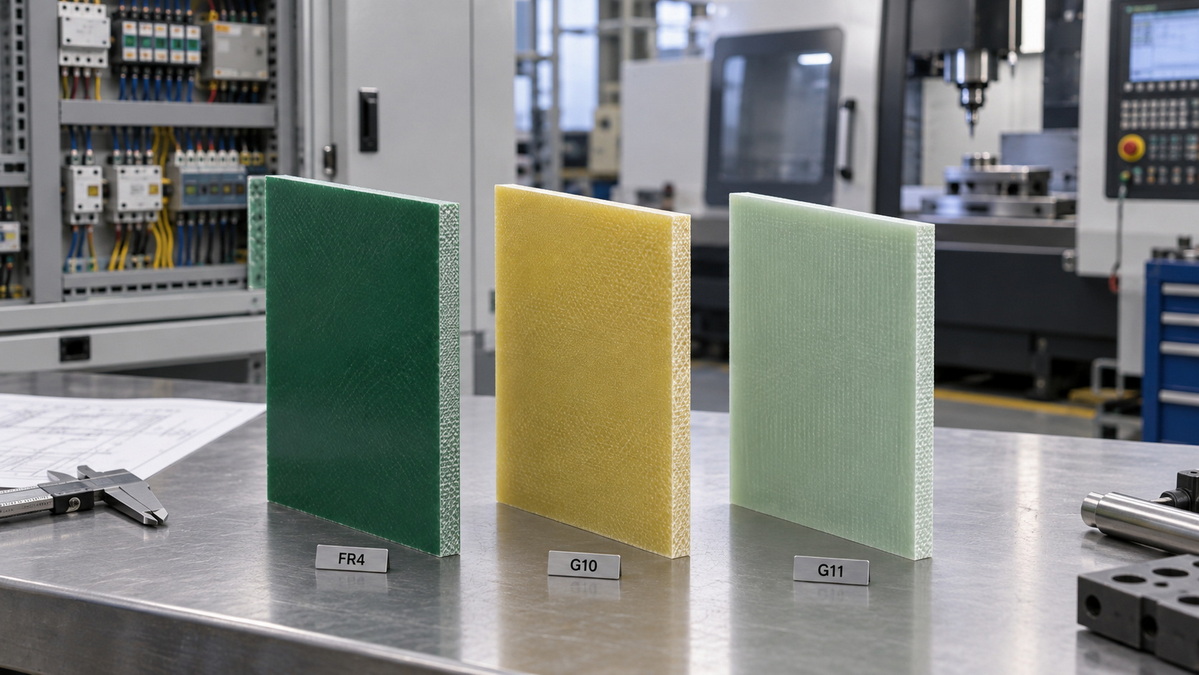
One of the most common problems is material substitution. A supplier may quote FR4 but deliver generic epoxy fiberglass sheet, lower-grade 3240 material, or a product that does not meet the claimed flame-retardant performance.
How to avoid it:
- Specify the exact grade in the purchase order.
- Include required test standards.
- Request product-specific test reports.
- Confirm thickness and color covered by the report.
- Retain approved samples for batch comparison.
- Require batch numbers on packing labels.
- Perform incoming inspection after delivery.
A board sold as 2.0 mm may not measure exactly 2.0 mm. Thickness variation can affect electrical clearance, fixture assembly, press-fit components, automated equipment, and CNC-machined parts.
How to avoid it:
Define thickness tolerance clearly in the order.
Example:
> Nominal thickness: 2.00 mm
> Accepted tolerance: ±0.10 mm
> Measurement method: Calibrated micrometer
> Measurement points: Minimum five points per sheet
> Inspection requirement: Supplier report plus buyer incoming inspection
A visually clean green board may still contain internal voids, weak bonding, uneven resin distribution, dry fiberglass areas, or incomplete curing. These issues often become visible only after drilling, routing, milling, or thermal exposure.
How to avoid it:
- Request machined sample pieces.
- Inspect drilled holes and routed edges.
- Check for fiber pull-out and layer separation.
- Conduct bend tests where applicable.
- Compare cross-sections between sample batches.
- Test dielectric performance for electrical applications.
Moisture absorption can affect insulation resistance, dimensional stability, and long-term reliability. This is especially important for high-voltage systems, battery components, outdoor equipment, tropical climates, and long sea shipments.
How to avoid it:
- Request water-absorption data.
- Confirm packaging requirements.
- Use moisture-barrier packaging where necessary.
- Consider desiccants for container shipments.
- Store materials in dry warehouse conditions.
- Conduct humidity-conditioning tests for critical applications.
Some suppliers quote a low price based on full production runs but raise prices significantly for samples, non-standard thicknesses, custom colors, cut-to-size sheets, or CNC-machined parts.
How to avoid it:
Request separate pricing for:
- Samples
- Prototype orders
- Small-batch orders
- Mass production
- Standard full sheets
- Cut-to-size sheets
- CNC-machined parts
- Tooling costs
- Packaging costs
- Freight terms
- Lead times
- Payment terms
One of the most useful methods for evaluating epoxy fiberglass boards is to inspect a machined edge rather than only reviewing the sheet surface.
A board may look smooth and uniform before processing, but its true internal quality often becomes visible after drilling, milling, routing, or slotting.
Before approving a supplier, ask for a test piece with:
- Drilled holes
- Routed slots
- Milled edges
- Thin walls
- Countersunk holes
- CNC-machined features
Then inspect for:
- Delamination
- Fiber pull-out
- Dry fiberglass layers
- White stress marks
- Resin-poor areas
- Voids
- Cracking around drilled holes
- Edge chipping
- Uneven layer bonding
This inspection method is particularly important for battery-pack insulation parts, high-voltage electrical components, CNC fixtures, industrial spacers, mold components, and automation equipment.
A board that appears acceptable in full-sheet form may fail during machining or assembly. Evaluating the machined sample before production approval can reduce material loss, downstream rejection, and unexpected equipment downtime.
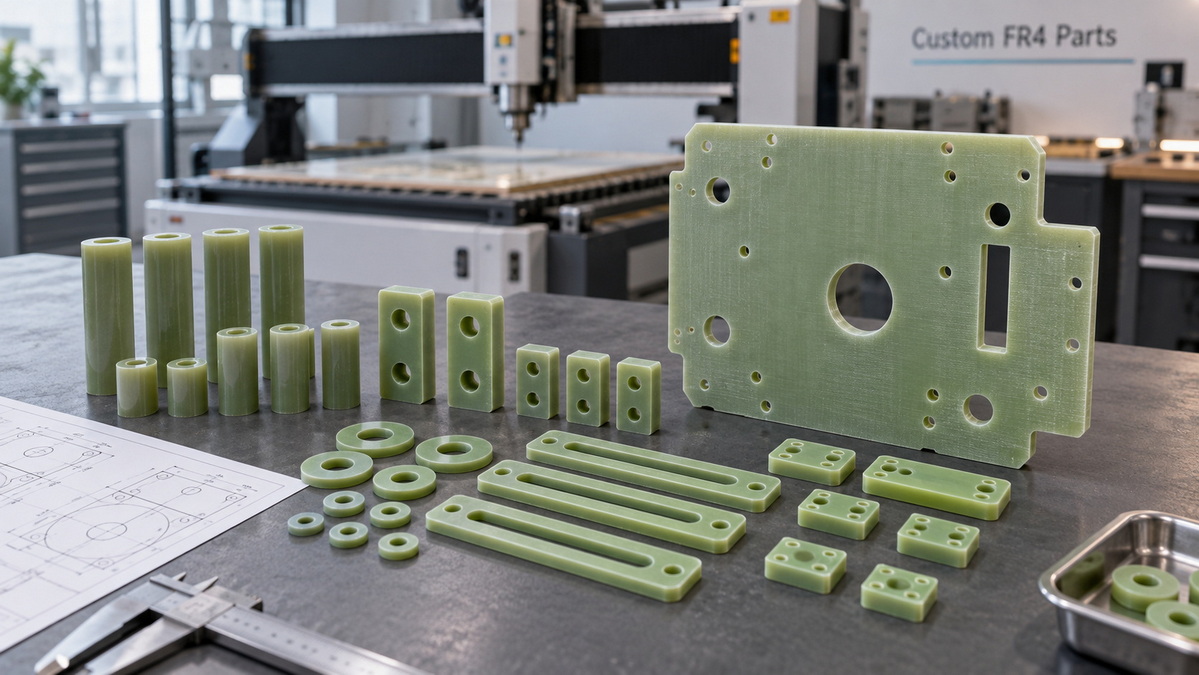
Request the following information before placing an order:
- Chinese legal company name
- English company name
- Business license
- Unified Social Credit Code
- Factory address
- Bank beneficiary name
- Export license information where applicable
- Main contact details
- Company website
- Product catalog
The company name on the quotation, bank account, contract, invoice, certificate, and packaging should be consistent.
For every critical product, request:
- Product data sheet
- Material specification
- Test report
- Material safety data sheet
- Quality certificate
- Thickness tolerance standard
- Packing specification
- Compliance declaration
- Batch traceability information
The documentation should match the actual product being purchased. If the supplier provides a report for a different thickness, color, or product grade, request clarification before approving the order.
To verify whether an ISO certificate remains valid, check:
- Certificate number
- Certification body
- Factory name
- Factory address
- Scope of certification
- Issue date
- Expiry date
- Accreditation mark
- Certificate status in the issuing body's database
An ISO certificate is useful, but it does not replace material testing. Buyers should still confirm that the actual epoxy fiberglass board meets their application requirements.
A recommended sample process includes:
1. Define the material grade and application.
2. Confirm dimensions, thickness, color, and tolerance.
3. Request a product data sheet and test report.
4. Receive physical samples.
5. Perform visual inspection.
6. Measure thickness and flatness.
7. Test machining performance.
8. Test dielectric or mechanical properties if required.
9. Approve a retained reference sample.
10. Place the production order only after approval.
For high-value projects, consider using third-party inspection before shipment.
Epoxy fiberglass boards are heavy, rigid, and vulnerable to corner damage, moisture exposure, and poor pallet handling.
Buyers should clarify:
- Full-container load or less-than-container load shipment
- Pallet dimensions
- Sheet-edge protection
- Corner protection
- Moisture-barrier packaging
- Desiccant use
- Wooden pallet requirements
- Fumigation requirements
- Shipping marks
- Container loading plan
- Cargo insurance responsibility
- Destination-port documentation
For long sea shipments, moisture protection is particularly important because condensation inside containers can affect packaging and material condition.
China provides a broad and competitive supply base for FR4, G10, G11, FR5, 3240 epoxy sheets, anti-static laminates, and customized fiberglass-reinforced insulation components. The most suitable supplier depends on the buyer's technical requirements, order volume, machining needs, documentation standards, and delivery expectations.
Large-volume buyers may prioritize stable production capacity and conventional board grades. Electrical-equipment manufacturers may need specialized insulation systems and high-temperature materials. Smaller OEM brands may benefit more from flexible communication, customized dimensions, manageable MOQ levels, and processing support.
Guangdong Weishi New Materials Co., Ltd. is a strong option for buyers seeking a balanced combination of epoxy fiberglass board manufacturing, flexible customization, responsive communication, and support for small-to-medium-sized OEM projects. Its range of FR4, G10, G11, 3240, anti-static, and copper-clad materials makes it suitable for customers across electrical insulation, battery systems, industrial machinery, mold manufacturing, automation, and CNC processing applications.
The most effective purchasing strategy is to define the material grade, performance requirements, dimensions, tolerances, packaging standards, inspection methods, and documentation requirements before confirming the supplier. A disciplined sample-validation process can reduce the risk of material substitution, inconsistent thickness, machining failure, delamination, and unexpected production delays.
Ask the supplier for the certificate number, certification body name, factory address, scope of certification, issue date, and expiry date. Then verify the certificate through the certification body's official database or by contacting the certification body directly. Make sure the factory address shown on the certificate matches the actual manufacturing location.
No. FR4 is generally preferred when flame-retardant performance is required, while G10 may be suitable for mechanical and electrical applications where flame retardancy is not the main concern. The correct choice depends on operating temperature, voltage, fire-safety requirements, machining method, mechanical stress, and regulatory requirements.
Request a product data sheet, material specification, thickness tolerance standard, test report, compliance declaration, material safety data sheet, packing specification, and batch-traceability information. For high-voltage or safety-critical use, also request dielectric-strength data, water-absorption data, thermal information, and relevant third-party reports.
MOQ depends on thickness, size, color, material grade, resin system, processing method, and whether the supplier must change the production setup. Standard stock sheets may be available in small quantities. Custom colors, special thicknesses, high-temperature grades, and CNC-machined components may require a higher MOQ or additional setup charges.
Do not rely only on photos or surface appearance. Request physical samples and inspect thickness, flatness, surface quality, drilled holes, routed edges, resin distribution, internal bonding, water absorption, dielectric performance, and delamination resistance. Machining tests are especially useful because internal defects often become visible after drilling or routing.
1. [Guangdong Weishi New Materials Co., Ltd.]
2. [Jiujiang Xinxing Insulation Material Co., Ltd.]
3. [J&Q New Composite Material Group / Hebei JingHong Electronic Technology]
4. [Sichuan D&F Electric Co., Ltd.]
5. [Shenzhen Xiongyihua Plastic Insulation Limited]
6. [Guangzhou SR Material Co., Ltd.]
7. [Jiujiang Leadcomp]
8. [Weshare Insulation]
9. [HONY Plastics]
10. [General Administration of Customs of the People's Republic of China]


