

Views: 246 Author: Weishi Sheets Publish Time: 2026-09-02 Origin: Site
Content Menu
● What Is Epoxy Fiberglass Sheet?
● G10 Epoxy Sheet vs Epoxy Fiberglass Sheet: Main Differences
● Why Material Selection Matters in Medical Imaging Equipment
● When G10 Epoxy Sheet Is the Better Choice
>> High-Strength Electrical Insulation Components
>> Precision Machining Applications
>> G10 for Stable Internal Assemblies
● When Epoxy Fiberglass Sheet Is the Better Choice
>> FR4 for Flame-Related Requirements
>> G11 for Higher-Temperature Conditions
>> Customized Epoxy Fiberglass Components
● Electrical Insulation Considerations for Medical Imaging Systems
● Patient Contact and Material Evaluation
● How to Specify G10 or Epoxy Fiberglass Sheet
>> Recommended Specification Information
● Summary
● FAQ
>> Is G10 epoxy sheet the same as epoxy fiberglass sheet?
>> Is G10 epoxy sheet suitable for medical imaging equipment?
>> What is the main difference between G10 and FR4 sheet?
>> When should G11 epoxy fiberglass sheet be used?
>> Can G10 epoxy sheet be CNC machined?
>> What information is needed when ordering epoxy fiberglass sheet?
>> Can epoxy fiberglass sheet be used for patient-contact applications?
Medical imaging equipment requires insulation materials that can deliver stable electrical performance, mechanical support, dimensional accuracy, and long-term reliability. G10 epoxy sheet and epoxy fiberglass sheet are both widely used in electrical and industrial assemblies, but they are not always the same material.
G10 is a defined glass-fabric epoxy laminate grade. In contrast, epoxy fiberglass sheet is a broader term that may include G10, FR4, G11, and other glass-reinforced epoxy composite materials. For CT scanners, X-ray machines, ultrasound systems, diagnostic electronics, and related equipment, choosing the right grade depends on voltage conditions, heat exposure, flame requirements, machining needs, and installation location.
Guangdong Weishi New Materials Co., Ltd. manufactures and supplies high-performance epoxy insulation materials, including G10 sheets, FR4 sheets, G11 sheets, epoxy fiberglass boards, and customized machined insulation components for global industrial customers.
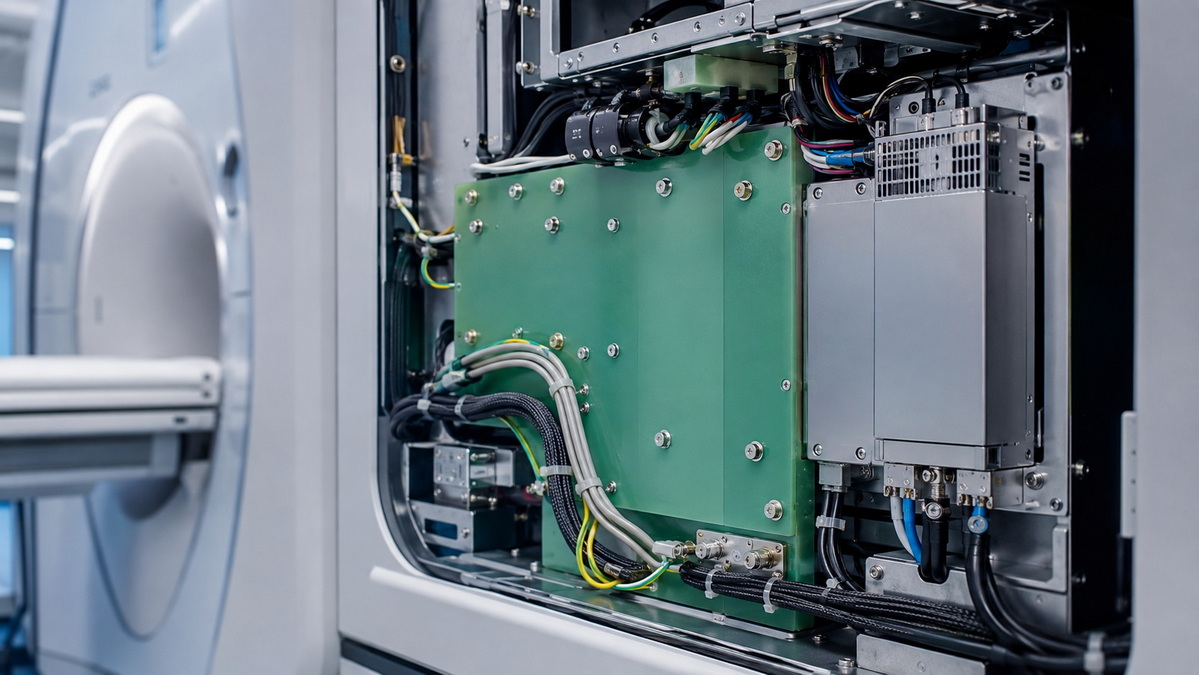
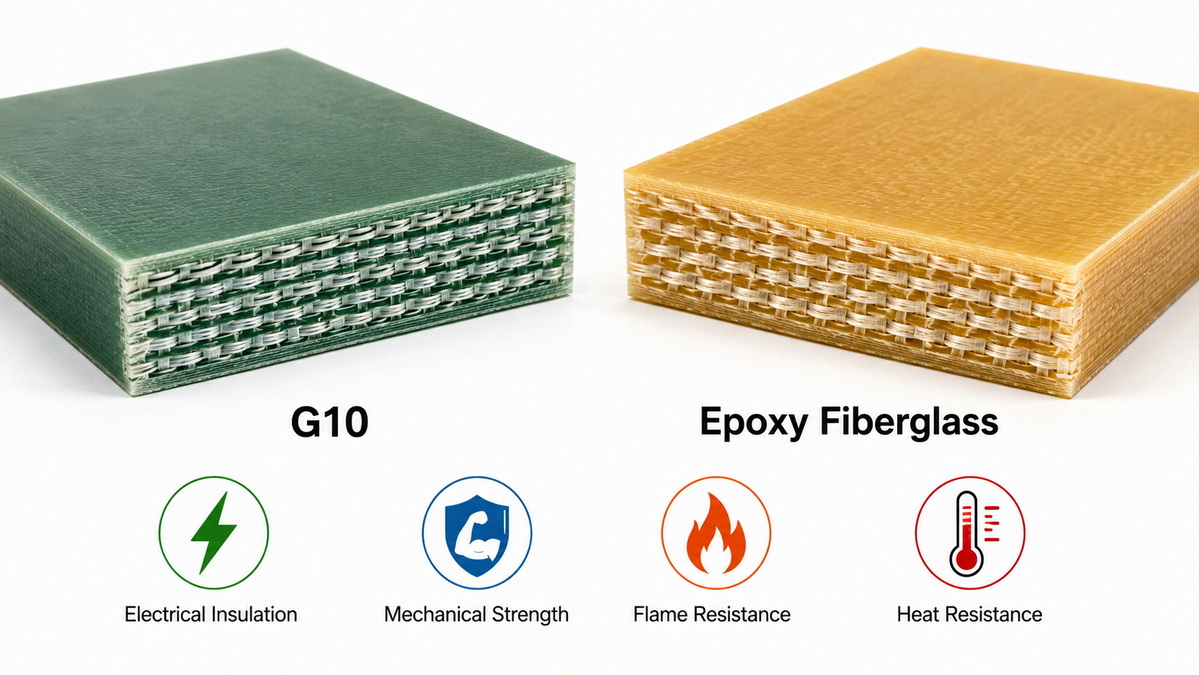
G10 epoxy sheet is a rigid composite laminate produced by bonding woven fiberglass cloth with epoxy resin under controlled heat and pressure. The finished material offers a strong combination of electrical insulation, mechanical strength, moisture resistance, and dimensional stability.
The "G" refers to glass reinforcement. The "10" identifies the laminate grade. G10 is commonly selected for applications that need structural strength together with reliable insulation performance.
Typical G10 epoxy sheet characteristics include:
- High dielectric strength
- Strong tensile and flexural performance
- Good compressive strength
- Low moisture absorption
- Stable dimensions after machining
- Resistance to many industrial chemicals
- Good wear resistance in structural insulation applications
- Suitable performance for medium-temperature electrical environments
G10 is often supplied in green, natural, yellow, or customized colors. It can also be machined into insulating barriers, terminal boards, spacers, washers, support blocks, brackets, and precision structural components.
Epoxy fiberglass sheet is a general name for composite insulation boards made from fiberglass reinforcement and epoxy resin. The exact characteristics depend on the type of glass cloth, resin formulation, curing process, thickness, reinforcement ratio, and performance grade.
This category can include several common materials:
- G10 epoxy fiberglass sheet
- FR4 flame-retardant fiberglass sheet
- G11 high-temperature epoxy fiberglass sheet
- EPGC-grade epoxy glass laminate
- Custom epoxy fiberglass composite board
- CNC-machined epoxy fiberglass insulation components
Because the term is broad, buyers should not rely on the phrase "epoxy fiberglass sheet" alone when specifying an important part. A qualified purchase specification should define the grade, thickness, tolerance, temperature requirement, electrical requirement, flame-performance requirement, and machining details.
| Comparison Item | G10 Epoxy Sheet | Epoxy Fiberglass Sheet |
|---|---|---|
| Material category | A defined glass epoxy laminate grade | A broad category of fiberglass-reinforced epoxy composites |
| Reinforcement | Usually woven continuous fiberglass cloth | May use woven glass cloth, fiberglass mat, or other reinforcement structures |
| Resin system | Standard epoxy resin system | May use standard epoxy, flame-retardant epoxy, high-temperature epoxy, or modified resin systems |
| Flame performance | Usually non-flame-retardant unless otherwise specified | Can include flame-retardant grades such as FR4 |
| Thermal capability | Suitable for many medium-temperature insulation applications | Varies by grade; high-temperature options such as G11 may be available |
| Mechanical strength | High strength and rigidity | Can range from moderate to high depending on grade and glass content |
| Electrical insulation | Excellent dielectric and insulating performance | Can provide excellent insulation, but values should be confirmed for the selected grade |
| Dimensional stability | Good stability for precision-machined components | Depends on resin system, reinforcement, thickness, and curing quality |
| Typical use | Structural electrical insulation components | Broad range of insulation panels, flame-retardant parts, high-temperature components, and custom structures |
| Purchasing requirement | Specify G10 grade and technical requirements | Specify the exact epoxy fiberglass grade and expected performance values |
The most important point is that G10 is one type of epoxy fiberglass sheet. It is not accurate to assume that every epoxy fiberglass board offers the same performance as G10.
Medical imaging equipment contains sensitive electrical assemblies, high-voltage components, electronic controls, motors, sensors, cable systems, and precision structural parts. These components must operate reliably in environments where insulation performance and dimensional accuracy are important.
The material used for internal insulation parts can influence:
- Electrical isolation between energized components
- Mechanical positioning of boards, cables, and terminal structures
- Clearance maintenance between conductive parts
- Stability during vibration and movement
- Resistance to heat generated by power and control systems
- Long-term reliability under humidity and thermal cycling
- Cleanliness of enclosed equipment compartments
- Precision of machined mounting and alignment features
A lower-cost fiberglass board may appear similar to G10 on the surface. However, variations in resin quality, glass reinforcement, curing process, thickness control, and electrical properties can affect the final performance of the component.
For this reason, the most reliable approach is to select the insulation material based on the actual functional requirement rather than choosing a board only by color or generic name.
G10 epoxy sheet is often the preferred option when a component must provide both electrical insulation and structural strength. It is especially useful for internal parts that need to remain rigid and stable during assembly and service.
G10 can be used for many non-patient-contact components inside medical imaging equipment, including:
- Insulating support plates
- High-voltage barriers
- Terminal boards
- Electrical standoffs
- Precision spacers
- Mounting blocks
- Insulated brackets
- Cable-support structures
- Transformer support components
- Motor and actuator insulation parts
- Sensor mounting plates
- CNC-machined insulation profiles
The woven fiberglass structure gives G10 good rigidity. This helps maintain component position when the material is installed with screws, clamps, bolts, or other fastening systems.
G10 epoxy sheet is suitable for CNC machining when the supplier uses appropriate equipment and process controls. It can be cut, drilled, milled, routed, chamfered, and shaped into customized insulation parts.
For medical imaging equipment, typical machined G10 parts may include:
- Tight-tolerance spacer blocks
- Multi-hole insulation plates
- Electrical separation panels
- Slot-machined mounting boards
- Cable-routing supports
- Custom terminal supports
- High-strength insulating washers
- Structural isolation components
Because fiberglass reinforcement is abrasive, machining G10 requires suitable cutting tools, effective dust collection, controlled feed rates, and edge finishing. These details are particularly important when parts are assembled in clean and high-value equipment environments.
G10 is a practical material when the operating environment does not require a flame-retardant laminate and the main priorities are strength, insulation, and machinability.
It is especially suitable for components that must maintain shape under mechanical pressure or repeated assembly operations. For example, a custom G10 support plate can electrically isolate a power component while also carrying fastener load and maintaining a precise position inside an equipment cabinet.

The broader epoxy fiberglass sheet category becomes more useful when the application requires a performance profile that standard G10 does not provide.
FR4 is a common epoxy fiberglass laminate with flame-retardant characteristics. It is often considered for electrical assemblies where flame performance is an important requirement.
FR4 may be a better material choice for:
- Power-control compartments
- Electrical enclosure panels
- Insulating barriers near power conversion components
- Control cabinet structures
- Internal electronic support boards
- High-density wiring compartments
- Flame-sensitive equipment assemblies
Although FR4 and G10 have similar glass-reinforced epoxy structures, they should not be treated as identical products. The resin system and flame-performance characteristics can differ.
When flame performance is relevant, buyers should request the correct material grade and confirm the applicable test standard, thickness range, and supplier documentation.
G11 epoxy fiberglass sheet is commonly considered when an application faces higher operating temperatures or repeated thermal cycling. It can be more suitable than G10 in areas close to heat-producing components.
Potential G11 applications include:
- Power supply insulation structures
- Heat-adjacent electrical barriers
- Transformer support components
- Thermal-resistant motor insulation parts
- High-temperature mounting panels
- Equipment modules exposed to repeated heat cycles
Material selection should consider both continuous operating temperature and possible peak temperatures. A sheet that performs well in a short test may not necessarily maintain the same properties after long-term exposure to heat, humidity, pressure, and electrical stress.
Custom epoxy fiberglass sheet may be the best solution when a medical imaging equipment manufacturer needs a specific balance of mechanical, electrical, thermal, flame, and dimensional properties.
Customized options can include:
- Non-standard thicknesses
- Custom colors
- CNC-machined designs
- Hole patterns and countersinks
- Slots and milled profiles
- Tight-tolerance components
- Finished insulating assemblies
- Material combinations for special operating conditions
A custom solution helps reduce secondary processing, improve assembly efficiency, and create more consistent component performance across production batches.
Electrical insulation materials play a major role in helping equipment designers manage voltage separation and mechanical protection inside diagnostic systems.
However, a high-quality G10 epoxy sheet or FR4 epoxy fiberglass sheet is only one part of the electrical design. The final performance of the equipment also depends on the complete insulation system.
Important design factors include:
- Working voltage
- Peak voltage and transient voltage
- Clearance distance
- Creepage distance
- Material thickness
- Dielectric strength
- Insulation resistance
- Temperature rise
- Moisture exposure
- Dust and contamination conditions
- Mechanical fastening pressure
- Cable movement and vibration
- Long-term material aging
An insulation board should not be selected only because it has a high dielectric-strength value on a data sheet. The board must work together with the equipment layout, air gaps, fasteners, wiring route, enclosure design, and manufacturing process.
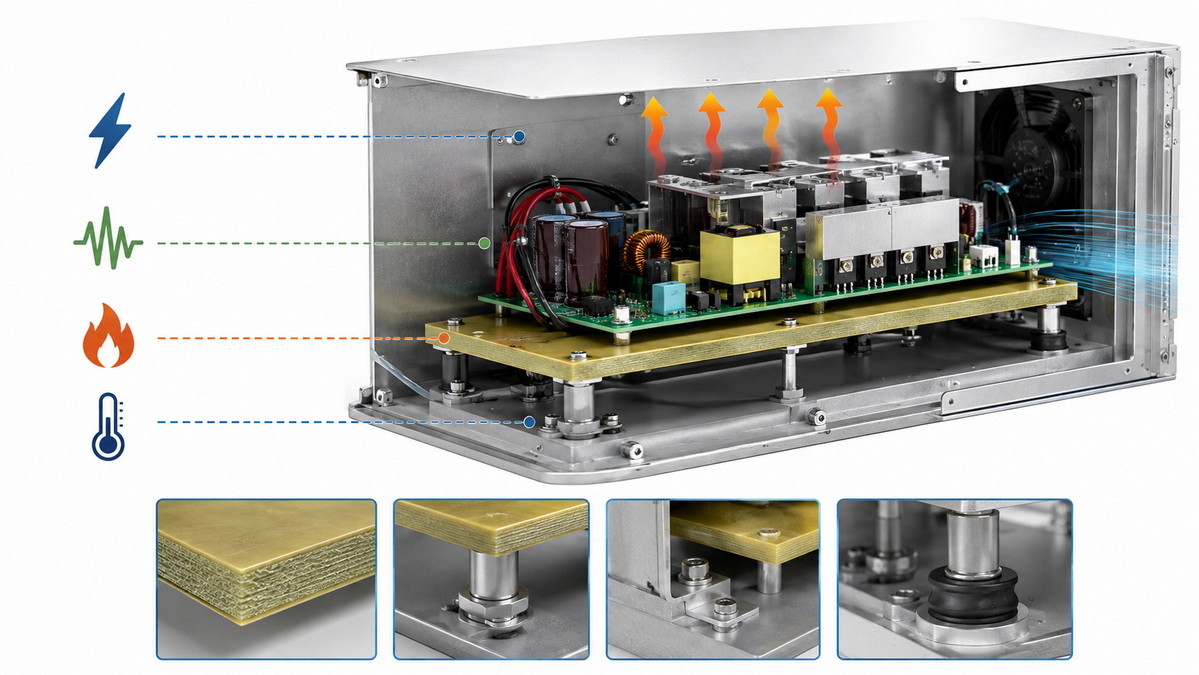
Consider a precision-machined insulation plate installed between a high-voltage power module and a metal support frame inside an imaging system.
The material must do more than block electrical current. It may also need to:
- Hold the power module in a fixed position
- Resist fastener pressure without cracking
- Maintain safe separation during vibration
- Tolerate heat from nearby electronics
- Remain stable in humid transport or storage conditions
- Support tight manufacturing tolerances
- Fit into an enclosed assembly without releasing excessive machining debris
In this situation, G10 may be a strong choice if flame performance and higher-temperature requirements are not limiting factors. If the environment requires flame resistance, FR4 may be more suitable. If thermal stress is higher, G11 or another heat-resistant epoxy fiberglass material may be the better option.
Most G10, FR4, and epoxy fiberglass sheets are used as internal structural or electrical insulation materials. In many cases, these parts are located inside equipment housings and do not touch the patient.
However, the material evaluation process changes if an insulation component has direct or indirect contact with the human body, is used in a fluid path, or may affect a patient-contacting assembly.
For these situations, the device manufacturer should conduct a formal material assessment based on the intended use, contact type, contact duration, manufacturing residues, cleaning process, and overall product risk profile.
General industrial laminate should not be described as a patient-contact material without a separate qualification process.
For internal non-contact applications, more appropriate wording includes:
- Suitable for internal electrical insulation components
- Suitable for structural insulation assemblies
- Designed for industrial and electrical equipment applications
- Available for customized non-patient-contact components
- Subject to equipment-level material validation
This distinction helps manufacturers communicate accurately with engineering teams, procurement departments, and regulatory reviewers.
A clear material specification reduces sourcing risk and helps ensure repeatable quality. Instead of requesting only "green fiberglass board" or "epoxy insulation sheet," provide detailed requirements.
1. Material grade
Specify G10, FR4, G11, or another required epoxy fiberglass grade.
2. Sheet dimensions
Define length, width, thickness, and permitted dimensional tolerances.
3. Thermal requirement
State the continuous operating temperature, maximum peak temperature, and expected thermal cycling conditions.
4. Electrical requirement
Identify the working voltage, dielectric-strength expectation, insulation-resistance requirement, and test conditions.
5. Flame requirement
State whether flame-retardant performance is required.
6. Mechanical requirement
Define whether the part must withstand compression, bending, fastening pressure, vibration, or impact.
7. Machining details
Provide 2D drawings, 3D models, hole sizes, slots, countersinks, chamfers, tolerances, and surface-finish expectations.
8. Environmental requirement
Describe moisture exposure, cleaning agents, chemicals, dust conditions, and storage environment.
9. Quality documentation
Request material data sheets, batch identification, inspection reports, or certificates according to project requirements.
10. Order quantity and delivery plan
Include prototype quantity, production volume, packaging needs, and delivery destination.
G10 epoxy sheet and epoxy fiberglass sheet both offer important advantages for medical imaging equipment. The correct choice depends on the functional demands of the individual component.
Choose G10 epoxy sheet when the application needs strong, rigid, and machinable electrical insulation for stable internal assemblies.
Choose FR4 epoxy fiberglass sheet when flame-retardant performance is required in electrical cabinets, power assemblies, or enclosed electronic systems.
Choose G11 epoxy fiberglass sheet when higher-temperature resistance and thermal durability are more important.
For custom medical imaging equipment components, the material should be selected according to the complete application environment, including voltage, heat, mechanical load, flame requirements, machining accuracy, installation method, and quality-control needs.
Guangdong Weishi New Materials Co., Ltd. provides G10, FR4, G11, epoxy fiberglass sheets, and customized insulating components for global customers. Material selection can be aligned with your drawing, technical requirements, operating conditions, and production needs to help create reliable electrical insulation solutions for advanced equipment applications.
No. G10 epoxy sheet is a specific type of epoxy fiberglass laminate. Epoxy fiberglass sheet is a broader term that can include G10, FR4, G11, and other fiberglass-reinforced epoxy composites.
G10 can be suitable for internal electrical insulation and structural support components in medical imaging equipment. Common uses include insulating plates, spacers, terminal boards, mounting blocks, barriers, and CNC-machined support parts.
The primary difference is flame performance. G10 is generally selected for mechanical strength and electrical insulation, while FR4 is designed to provide flame-retardant characteristics in addition to glass epoxy laminate performance.
G11 is often selected when the application experiences higher temperatures, repeated thermal cycling, or heat exposure near power supplies, transformers, motors, and other heat-producing components.
Yes. G10 can be cut, drilled, milled, routed, and shaped into custom insulation components. Proper tools, dust extraction, machining parameters, and edge finishing are important because fiberglass is abrasive.
Provide the material grade, dimensions, thickness tolerance, operating temperature, electrical requirement, flame requirement, machining drawing, quantity, quality documentation needs, and delivery destination.
General industrial G10, FR4, and epoxy fiberglass sheets should not be assumed suitable for direct patient contact. Any patient-contact or indirect-contact use requires a separate application-specific material evaluation.
2. [U.S. Food and Drug Administration: Use of ISO 10993-1 for Biological Evaluation of Medical Devices]
3. [U.S. Food and Drug Administration: Biocompatibility Assessment Resource Center Glossary]
4. [Norplex-Micarta: What Is G-10 Glass Epoxy?]
5. [Atlas Fibre: G-10 Material Specification Data Sheet]
6. [VDE: Electrical Safety in Active Medical Devices and IEC 60601-1]
7. [Wall Industries: IEC 60601-1 Safety and Performance Guide]


