
Views: 242 Author: Weishi Sheets Publish Time: 2026-11-16 Origin: Site
Content Menu
● Choose the Right Fiberglass Sheet Manufacturing Method
● Materials and Tools for Making an Epoxy Fiberglass Sheet
>> Plan Thickness Before Starting
● How to Make Fiberglass Sheet: Step-by-Step Instructions
>> 1. Define the Panel Requirements
>> 2. Prepare a Flat Mold and Release Surface
>> 3. Cut and Organize the Fiberglass Cloth
>> 4. Measure and Mix the Epoxy Accurately
>> 5. Wet Out the First Fiberglass Layer
>> 6. Add Layers and Remove Trapped Air
>> 7. Consolidate and Cure the Sheet
>> 8. Demold, Trim, and Inspect
● Practical Material Planning: A Simple Worked Example
● How Industrial FR4, G10, and G11 Sheets Differ
● Three Quality Controls That Make Fiberglass Sheets More Reliable
>> Control Resin Content, Not Just Surface Appearance
>> Separate Electrical Qualification From Mechanical Inspection
>> Design the Sheet Around the Finished Part
● Common Fiberglass Sheet Defects and What to Check
● Safety When Making and Machining Fiberglass Sheets
● Request the Right Epoxy Insulation Board for Your Application
>> Can I Make Fiberglass Sheet Without a Vacuum Pump?
>> How Many Fiberglass Layers Do I Need?
>> Can Hand-Laid Epoxy Fiberglass Replace FR4?
>> How Long Does an Epoxy Fiberglass Sheet Take to Cure?
>> Is G11 Always Better Than G10?
>> Can I Drill or Machine a Finished Fiberglass Sheet?
Learning how to make fiberglass sheet starts with combining glass-fiber reinforcement and a compatible resin on a flat mold, removing trapped air, and allowing the laminate to cure. However, making a general-purpose panel is different from manufacturing an electrical insulation board with verified performance.
At Guangdong Weishi New Materials Co., Ltd., our focus is epoxy glass-fiber insulation materials, including FR4, G10, and G11 boards. From a material-selection perspective, the most important question is not simply whether a sheet becomes hard. It is whether the finished material meets the mechanical, electrical, thermal, and dimensional requirements of its intended application.
This guide explains practical fiberglass sheet fabrication, the distinction between workshop panels and industrial laminates, and the quality checks that matter before a sheet enters service.
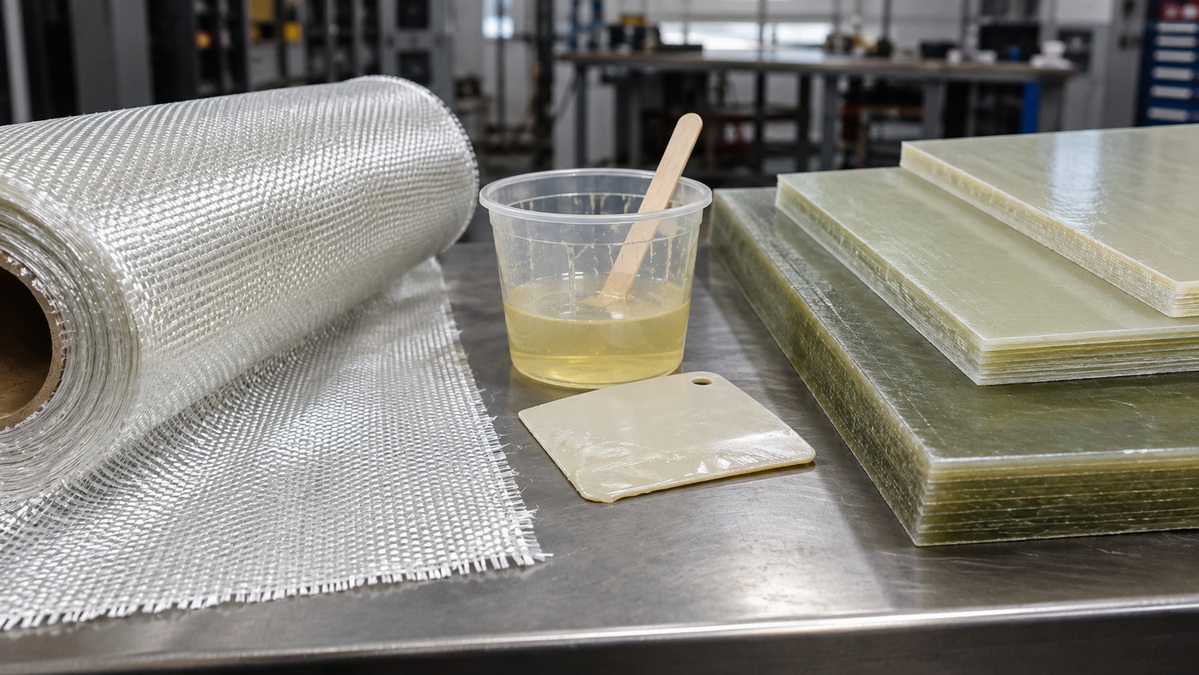
A fiberglass sheet is a composite material consisting of glass fibers held together by a cured resin matrix.
The reinforcement provides strength and stiffness. The resin binds the fibers, transfers loads between them, and protects the reinforcement.
Common resin options include epoxy, polyester, and vinyl ester. This guide focuses on epoxy fiberglass sheets because they are relevant to electrical insulation boards and engineered composite components.
However, resin choice alone does not establish performance. Fabric construction, resin content, fiber orientation, consolidation, and curing conditions all influence the finished sheet.
An attractive surface is therefore not proof of structural integrity or electrical suitability.
Before buying materials, decide what you need the sheet to do.
| Manufacturing method | Basic process | Suitable starting point | Main limitation |
|---|---|---|---|
| Hand layup | Wet fiberglass layers with resin on a mold | Prototypes and general-purpose panels | Operator-dependent thickness and air removal |
| Vacuum-assisted wet layup | Apply vacuum consolidation after wetting the fabric | Better-controlled prototype laminates | Requires suitable consumables and process control |
| Industrial heat-and-pressure lamination | Consolidate resin-impregnated glass layers under controlled conditions | Engineered insulation boards | Requires industrial equipment and material qualification |
Hand layup is useful for learning and prototyping. It should not be treated as a shortcut to producing a qualified FR4, G10, or G11 board.
For industrial electrical applications, start with a documented material specification rather than assuming that any glass-and-epoxy panel will perform adequately.
Prepare everything before mixing resin. Once the resin and hardener are combined, available working time becomes limited.
- Epoxy-compatible woven fiberglass cloth.
- A matched epoxy resin and hardener system.
- A flat, rigid mold surface.
- A release system compatible with the mold and resin.
- Mixing containers and stirring tools.
- A measuring system appropriate to the specified mixing ratio.
- Plastic spreaders, brushes, or suitable laminating rollers.
- Protective gloves, eye protection, and protective clothing.
For vacuum consolidation, additional items can include peel ply, release film, breather material, bagging film, sealant tape, a vacuum gauge, and a resin trap.
Compatibility matters. Do not assume that every fiberglass mat, release film, or resin system can be combined successfully.
Fabric weight does not directly equal finished sheet thickness.
The final thickness also depends on weave, resin content, and consolidation. Manufacturer-provided cured-ply thickness is a better starting point than a generic layer-count rule.
For repeatable work, make a small trial laminate using the intended materials and process. Measure it after curing, then adjust the production layup.
Write down:
- Finished length and width.
- Target thickness and tolerance.
- Required flatness and surface finish.
- Expected mechanical loads.
- Service temperature and environmental exposure.
- Whether electrical insulation or flame performance must be verified.
These requirements determine whether workshop fabrication is appropriate.
For a noncritical cover or demonstration panel, hand layup may be sufficient. For a high-voltage barrier or safety-related component, material qualification and engineering review are essential.
Clean the mold and apply the release system according to its instructions.
The mold must remain rigid throughout layup and cure. A flexible base can produce a panel that appears acceptable on the bench but distorts after demolding.
Keep the work area clean. Dust, moisture, oil, and loose debris can compromise surface quality or bonding between layers.
Check release compatibility on a small sample before committing to a full panel.
Cut the fabric slightly larger than the finished dimensions to allow trimming.
Stack the dry layers in their intended sequence. Keep them clean and avoid stretching or distorting the weave.
Fiber direction should follow the design requirements. Woven cloth already contains reinforcement in two directions, but its orientation still affects how the panel carries loads.
Do not assume that simply adding layers will correct an unsuitable laminate arrangement.
Follow the resin manufacturer's specified resin-to-hardener ratio.
A ratio stated by weight may differ from one stated by volume. Use the correct measuring method and mix thoroughly, including material along the container walls and bottom.
Never add extra hardener to accelerate curing.
Mix manageable batches. Epoxy curing releases heat, and a large mass left in a deep container can become dangerously hot. Working time also changes with temperature and batch size.
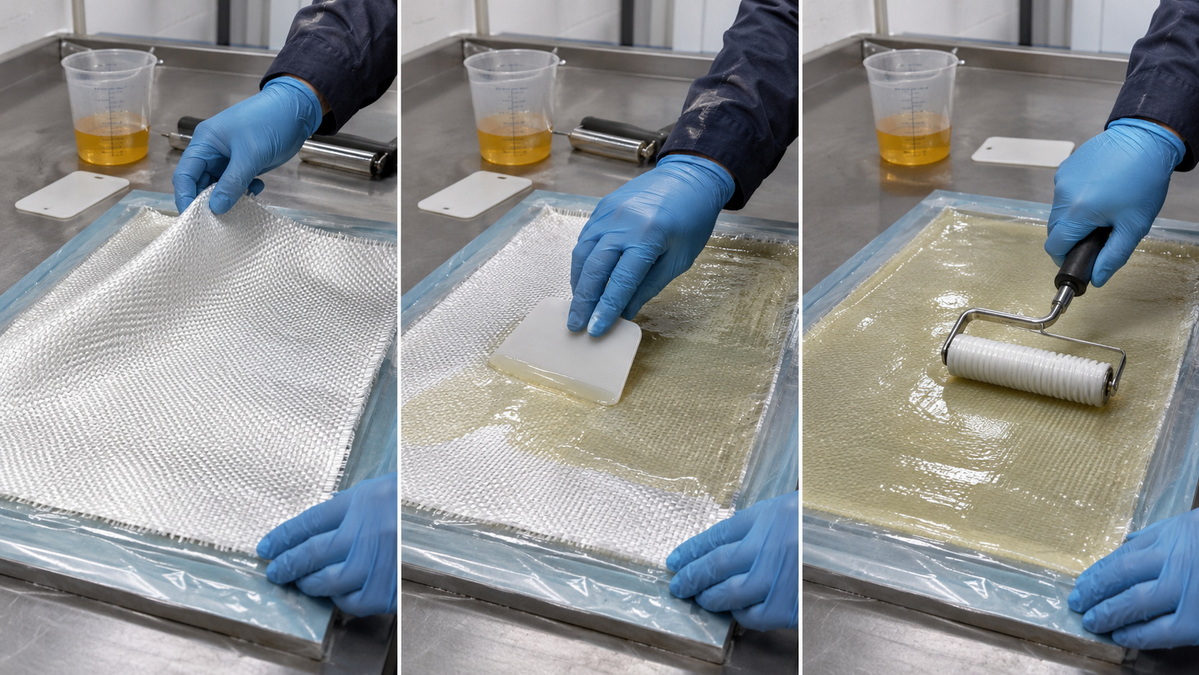
Position the cloth on the prepared release surface.
Apply mixed epoxy and spread it gently from the center toward the edges. Properly wetted fiberglass generally becomes more transparent, while persistent white areas can indicate incomplete wetting.
Use enough resin to impregnate the fabric, but avoid leaving deep pools.
The objective is uniform fiber wetting, not the thickest possible resin layer.
Place each additional layer carefully and wet it thoroughly.
Use controlled spreader or roller pressure to remove excess resin and encourage trapped air toward the edges. Avoid aggressive working, which can introduce additional fine bubbles or move the fabric.
Check for:
- Dry patches.
- Wrinkles and folded fibers.
- Resin-rich pools.
- Visible bubbles.
- Distorted fabric alignment.
Complete the layup within the resin system's permitted working and recoat windows.
For a basic panel, maintain the layup on a stable surface while it cures.
Vacuum consolidation can improve control, but it is not automatically better. The consumable stack, vacuum level, and resin-removal strategy must suit the laminate. Excessive resin removal can leave a resin-starved panel.
Follow the specified curing schedule. Demolding strength, machining readiness, and full cure are different stages.
If post-curing is required, use the resin supplier's controlled temperature schedule and suitable equipment. Do not improvise heating temperatures.
Remove the panel only after it has sufficient handling strength.
Support it during cutting and drilling. Use appropriate tooling and local dust extraction because machining creates glass-containing composite dust.
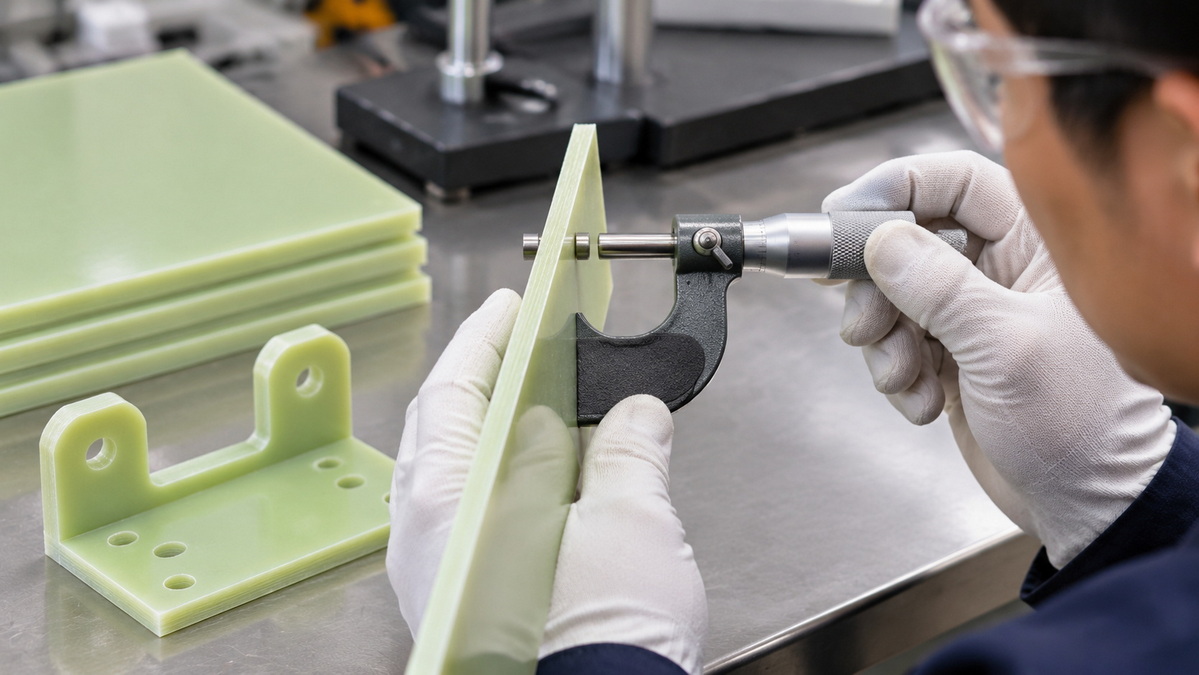
Inspect both faces and the edges. Check thickness at multiple locations and compare flatness against the intended acceptance criteria.
A finished appearance does not replace application-specific testing.
Consider an illustrative panel measuring 500 × 500 mm, made from four layers of 200 g/m² fiberglass cloth.
The reinforcement calculation is:
- Panel area: 0.25 m².
- Total fabric area across four layers: 1 m².
- Dry fiberglass mass: 200 g.
For preliminary planning only, assuming equal masses of mixed epoxy and dry fiberglass would mean approximately 200 g of mixed epoxy for impregnation.
This is not a universal recipe. Resin demand varies with fabric construction, application technique, surface coatings, and waste.
The resin-to-fiber planning ratio is also entirely separate from the resin-to-hardener mixing ratio.
Do not infer finished thickness or mechanical strength from this example. Confirm both through a trial laminate and appropriate measurements.
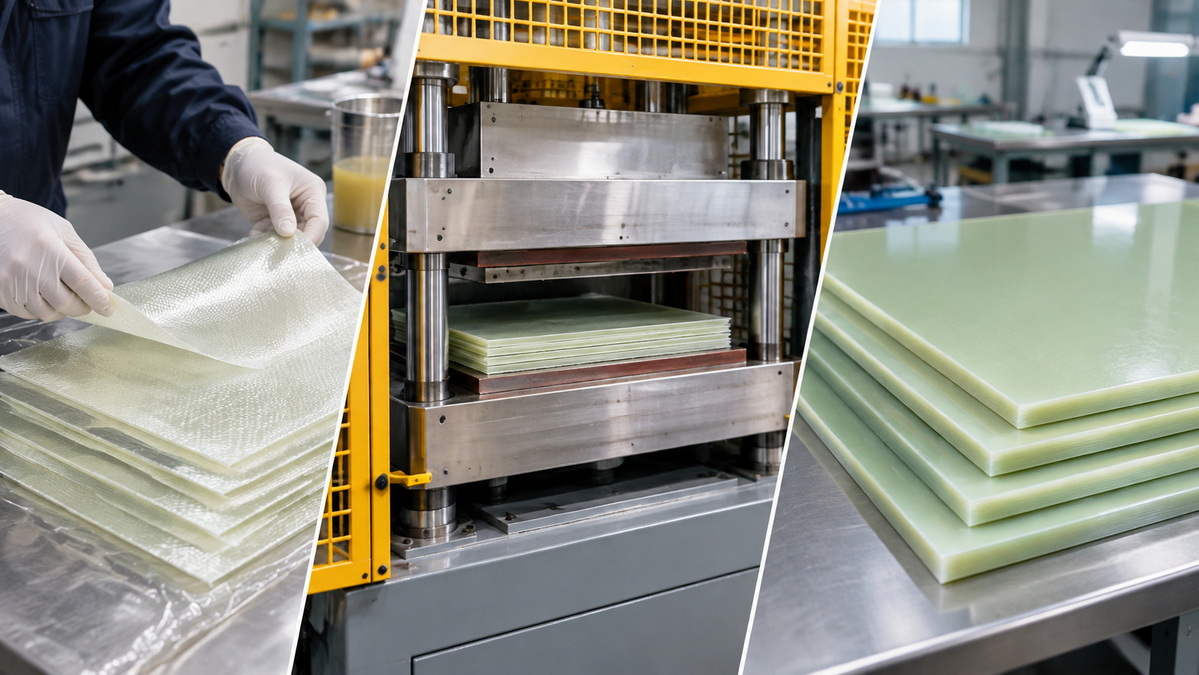
Industrial epoxy glass laminates use controlled materials and processing rather than an improvised wet-layup recipe.
A common production route involves resin impregnation of glass cloth, controlled partial curing to make prepreg, stacking, and consolidation under heat and pressure. The resulting thermoset laminate cannot simply be remelted and reshaped.
| Material | General distinction | What buyers should verify |
|---|---|---|
| G10 | Epoxy glass laminate used for mechanical and electrical applications | Strength, insulation properties, dimensional requirements |
| FR4 | Flame-retardant epoxy glass laminate | Applicable flame-test evidence, electrical properties, thickness |
| G11 | Epoxy glass laminate formulated for improved elevated-temperature performance | Strength retention and electrical performance at operating temperature |
FR4 does not mean fireproof. Flame performance must be supported by documentation applicable to the supplied material and relevant test conditions.
Likewise, do not assign one universal operating temperature to every board carrying a grade name. Formulation, supplier qualification, loading, environment, and exposure duration matter.
A glossy panel can still contain resin-rich areas, dry fibers, or internal defects.
Record fabric mass, mixed resin consumption, cured thickness, and processing conditions. Comparing these records between batches helps identify variation that visual inspection alone may miss.
For workshop production, consistency is often a more useful improvement target than an unsupported claim of maximum strength.
A sheet that withstands bending is not automatically suitable for electrical insulation.
Electrical performance depends on material composition, thickness, moisture exposure, conditioning, and test method.
For insulation components, request relevant dielectric and resistance data. Confirm that the test conditions reflect the application rather than relying on an isolated headline value.
Consider an illustrative machined insulating bracket. A visually sound sheet may still be unsuitable if it warps after machining or chips around closely spaced holes.
Before ordering production quantities, evaluate:
- Finished-part geometry and tolerances.
- Hole locations and edge distances.
- Machining allowance.
- Service temperature and moisture exposure.
- Required inspection and documentation.
This example is a procurement scenario, not a reported customer case.
| Defect | Possible contributing factors | Practical response |
|---|---|---|
| White or dry regions | Incomplete wetting or insufficient resin | Improve impregnation before gelation |
| Visible bubbles | Air entrapment or excessive working | Refine wetting and consolidation technique |
| Warping | Uneven construction, unstable tooling, cure variation | Review mold rigidity and layup balance |
| Soft or tacky areas | Incorrect ratio, incomplete mixing, inadequate cure | Investigate the process; reject unsuitable material |
| Edge delamination | Internal defects or damaging machining conditions | Review laminate quality, support, and tooling |
Do not conceal defects with a surface coating and assume the panel has recovered its intended performance.
Uncured epoxy can irritate skin and cause sensitization. Fiberglass handling and composite machining can generate irritating dust.
Use the product safety data sheets to select controls:
- Prevent skin and eye contact.
- Provide suitable ventilation.
- Use local extraction when cutting or sanding.
- Select respiratory protection for the actual exposure.
- Keep mixed epoxy away from combustible materials.
- Follow approved disposal procedures.
A particulate respirator does not protect against chemical vapors. Respiratory protection must match the hazard, and partially cured epoxy dust deserves particular caution.
Guangdong Weishi New Materials Co., Ltd. develops, manufactures, and supplies epoxy glass-fiber boards, including FR4, G10, and G11 materials, with customization and machining capabilities.
For industrial procurement, we recommend starting with the finished component's requirements—not sheet thickness alone.
Send your drawing, dimensions, tolerances, quantity, operating temperature, electrical requirements, and any flame-performance requirements. Request a material recommendation and quotation based on those conditions, and confirm the relevant documentation before approving production.
Yes. Hand layup can produce general-purpose panels without vacuum equipment. However, thickness, resin distribution, and trapped air require careful control.
Use the fabric supplier's cured-ply thickness as an initial estimate. Then produce a trial laminate. Layer count alone cannot guarantee thickness or strength.
Not automatically. A hand-laid panel lacks verified FR4 performance unless its materials, processing, and finished properties meet the applicable requirements.
There is no universal curing time. Follow the resin system's instructions for working temperature, demolding, machining, full cure, and any post-cure.
No. G11 is generally selected for improved elevated-temperature performance. The better choice depends on the application, verified properties, machining needs, and cost.
Yes, with suitable tooling, support, and dust controls. Inspect machined edges and holes for chipping or delamination before accepting the finished component.
1. WEST SYSTEM. ["Applying Fiberglass Cloth & Tape."] Guidance on wetting fiberglass, identifying dry areas, removing excess epoxy, and limiting air introduction. [westsystem]
2. WEST SYSTEM. ["Reinforcing Materials."] Fabric selection, product-specific single-layer thicknesses, and reinforcement planning. [westsystem]
3. WEST SYSTEM. ["Estimating Epoxy Coverage for Fabric Application."] Resin-estimation assumptions, fabric-weight calculations, and allowance for application variation. [westsystem]
4. Boedeker Plastics. ["Glass Laminates."] Industrial heat-and-pressure lamination and general distinctions between glass-reinforced laminate grades. [boedeker]
5. Boedeker Plastics. ["G-10 Glass Epoxy Laminate."] Material description, applications, and distinctions among G10, G11, and FR4. [boedeker]
6. Boedeker Plastics. ["G-11 Glass Epoxy Laminate."] Elevated-temperature material selection and supplier-specific property data. [boedeker]
7. WEST SYSTEM. ["General Epoxy Safety Guidelines."] Exposure prevention, protective equipment, ventilation, and precautions around partially cured epoxy. [westsystem]
8. WEST SYSTEM. ["105 Epoxy Resin—Safety Data Sheet."] Skin and eye hazards and heat generation from mixed epoxy in large masses. [westsystem]
9. Atlas Fibre, hosted by Boedeker Plastics. ["Safety Data Sheets—Glass Grades."] Dust-control and protective-equipment guidance for processing glass-reinforced laminates. [boedeker]


