

Views: 246 Author: Weishi Sheets Publish Time: 2026-10-05 Origin: Site
Content Menu
● Why Welding Machine Insulation Materials Matter
>> Key Advantages of Mica Sheet
● What Is Epoxy Fiberglass Sheet?
>> Key Advantages of Epoxy Fiberglass Sheet
● Mica Sheet vs Epoxy Fiberglass Sheet Comparison
● Temperature Resistance in Welding Machine Applications
>> FR4 Sheet for Medium-Temperature Electrical Insulation
>> G10 Sheet for Structural Insulation Parts
>> G11 Sheet for Higher-Temperature Structural Insulation
● Mechanical Strength and Vibration Resistance
>> Typical Structural Applications for Epoxy Fiberglass Sheet
● Electrical Insulation and Flame Resistance
● Machining and Custom Fabrication
>> Practical Material Processing Guide
● Recommended Material Selection by Welding Machine Component
● Expert Material Selection Insight
● Example: A Hybrid Welding Transformer Insulation Design
● How to Specify the Right Insulation Material
>> 1. Is mica sheet better than epoxy fiberglass sheet for welding machine insulation?
>> 2. Can mica sheet be used for welding machine busbar supports?
>> 3. What is the difference between FR4 sheet and G10 sheet?
>> 4. Is G11 sheet suitable for high-temperature welding machines?
>> 5. Can epoxy fiberglass sheet be CNC machined?
>> 6. Can mica sheet and G11 sheet be used together?
>> 7. What information is needed for a custom insulation sheet quotation?
When engineers compare mica sheet vs epoxy fiberglass sheet for welding machine insulation, the most important consideration is not simply which material has better insulation performance. Both materials can provide effective electrical insulation. The real decision depends on temperature exposure, mechanical loading, flame resistance, dimensional accuracy, machining requirements, vibration, moisture, and long-term operating reliability.
For welding machine manufacturers, repair companies, industrial equipment builders, and electrical component buyers, selecting the right insulation sheet can directly affect equipment safety, service life, assembly efficiency, and maintenance cost.
Guangdong Weishi New Materials Co., Ltd. specializes in high-performance epoxy insulation boards and composite materials, including FR4 sheet, G10 sheet, G11 sheet, and custom-machined epoxy fiberglass components. These materials are widely used in electrical equipment, electronics, machinery, molds, industrial systems, and welding machine assemblies requiring reliable insulation and mechanical strength.
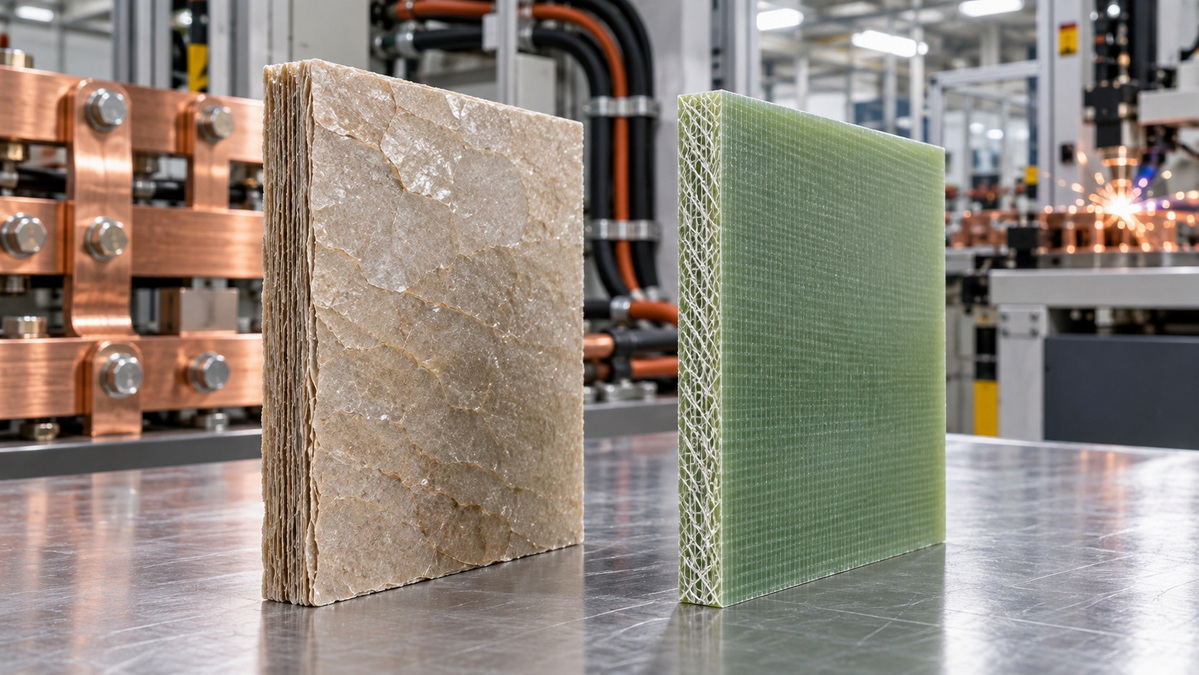
Welding machines operate under demanding electrical and thermal conditions. During use, internal components can be exposed to high current, elevated temperatures, vibration, copper dust, metal particles, moisture, mechanical impact, and repeated thermal cycling.
A welding machine insulation component may need to perform several functions at once:
- Prevent electrical short circuits
- Separate live electrical conductors
- Maintain creepage and clearance distances
- Resist heat generated by transformers and cables
- Support busbars and terminals
- Protect nearby components from thermal radiation
- Maintain dimensional stability under tightening force
- Resist vibration during operation and transportation
- Reduce the risk of tracking, carbonization, or insulation breakdown
A material that performs well in one part of a welding machine may not be suitable for another part.
For example, a thin insulation barrier near a hot transformer coil requires excellent heat resistance. A busbar support block requires strength, rigidity, accurate machining, and electrical insulation. A control panel insulation plate may require flame-retardant performance and reliable dimensional stability.
This is why material selection should be based on the exact function of the part, rather than selecting one insulation sheet for every location.
Mica sheet is an electrical insulation material made from natural mica, mica paper, or synthetic mica-based material bonded with a suitable resin system. Depending on the product design, mica sheet may use silicone resin, epoxy resin, or another high-temperature binder.
Common mica types include:
- Muscovite mica
- Phlogopite mica
- Mica paper
- Rigid mica plate
- Flexible mica sheet
- Silicone-bonded mica sheet
- Epoxy-bonded mica laminate
Mica is valued because it naturally provides strong electrical insulation and excellent resistance to high temperatures. In industrial applications, mica sheet is often used around heating systems, electrical coils, transformers, arc-related components, and thermal barriers.
Mica sheet is especially useful in welding machine applications that involve direct or nearby heat exposure.
Its main advantages include:
- Excellent heat resistance
- Reliable electrical insulation at elevated temperatures
- Strong flame resistance
- Low thermal conductivity
- Good resistance to burning
- Effective protection against thermal radiation
- Stable performance near high-temperature components
- Useful for thin heat barriers and insulation layers
- Suitable for transformer and coil insulation
- Useful in resistance welding and industrial heating equipment
Mica sheet is often used where a conventional epoxy laminate could gradually lose strength after repeated high-temperature exposure.
Although mica sheet is highly heat resistant, it has limitations that should be considered before use.
Mica sheet may be:
- More brittle than epoxy fiberglass sheet
- Less suitable for heavy structural loads
- More likely to chip during drilling or cutting
- Less resistant to impact
- More sensitive to unsupported edges
- Less suitable for high-torque fastening points
- More difficult to machine into complex precision parts
- Less effective as a structural bracket or load-bearing support
Rigid mica sheet can crack if it is over-tightened with screws or used in locations with strong vibration and impact. For this reason, it is usually better suited to thermal insulation barriers, hot-zone separators, and heat shields than heavily loaded electrical support components.
Epoxy fiberglass sheet is a rigid composite laminate made from woven fiberglass cloth impregnated with epoxy resin. The material is manufactured by curing multiple layers of epoxy-treated glass fabric under controlled pressure and temperature.
The fiberglass reinforcement provides mechanical strength and dimensional stability. The epoxy resin contributes electrical insulation, moisture resistance, chemical resistance, and bonding performance.
Common epoxy fiberglass insulation grades include:
- FR4 epoxy fiberglass sheet
- G10 epoxy glass laminate
- G11 epoxy fiberglass sheet
- High-temperature glass epoxy laminate
- Custom-machined glass epoxy insulation parts
Epoxy fiberglass sheet is widely used in electrical equipment because it combines electrical insulation performance with structural strength.
Epoxy fiberglass sheet is a practical material for welding machine components that must be rigid, durable, and accurately machined.
Its advantages include:
- High mechanical strength
- Good dielectric properties
- Reliable dimensional stability
- Good resistance to moisture
- Good resistance to oil and many industrial chemicals
- Strong resistance to vibration
- Suitable for CNC machining
- Can be drilled, milled, cut, and shaped
- Suitable for bolts, screws, slots, and mounting features
- Available in different temperature grades
- Useful for custom insulation parts
- Long service life in industrial equipment
FR4, G10, and G11 sheets can be processed into highly accurate insulation components, including busbar supports, spacers, terminal blocks, insulating plates, washers, brackets, and transformer mounting components.
The following table provides a practical comparison for welding machine insulation applications.
| Property | Mica Sheet | Epoxy Fiberglass Sheet |
|---|---|---|
| Main advantage | High-temperature insulation | Mechanical strength and precision machining |
| Typical composition | Mica mineral or mica paper with resin binder | Woven fiberglass cloth with cured epoxy resin |
| Heat resistance | Excellent for extreme-temperature areas | Good to excellent depending on FR4, G10, or G11 grade |
| Electrical insulation | Excellent | Excellent |
| Mechanical strength | Moderate and often brittle | High and structurally stable |
| Impact resistance | Lower | Higher |
| Flame behavior | Naturally heat resistant and non-combustible in many applications | FR4 provides flame-retardant performance |
| Machining performance | Can be cut and drilled carefully | Excellent for drilling, milling, CNC cutting, and custom processing |
| Dimensional precision | Moderate | High |
| Vibration resistance | Limited in unsupported structural positions | Good for structural electrical components |
| Moisture resistance | Depends on resin binder and grade | Generally good |
| Suitable fastening strength | Limited for high-torque fastening | Good for bolts, screws, and clamping structures |
| Best use | Heat shields, thermal barriers, hot-zone insulation | Busbar supports, terminal spacers, mounting plates, brackets |
| Common welding machine role | High-temperature separator | Structural electrical insulation component |
The selection becomes easier when the application requirement is clear.
> Choose mica sheet when heat is the main challenge. Choose epoxy fiberglass sheet when strength, precision, and custom machining are the main requirements.
Temperature is often the main reason mica sheet is considered for welding machine insulation.
Welding transformers, heavy-duty cables, copper conductors, coil assemblies, and resistance welding systems can generate significant heat. In certain locations, conventional insulation materials may soften, deform, age, or lose mechanical strength over time.
Mica sheet is highly useful in these high-temperature locations because it can retain useful insulating behavior in environments that exceed the practical continuous service range of standard epoxy fiberglass materials.
Mica sheet can be selected for:
- Transformer coil heat barriers
- High-temperature electrical separators
- Arc-adjacent protective barriers
- Resistance welding machine heat shields
- Thermal isolation layers
- Heating-element insulation
- Hot-zone equipment panels
- Electrical coil insulation systems
- High-temperature cable separation layers
However, the actual performance of mica sheet depends on the mica type, resin system, material thickness, installation method, and temperature profile. A silicone-bonded mica sheet may perform differently from an epoxy-bonded mica laminate.
FR4 sheet is one of the most commonly used electrical insulation laminates in industrial equipment.
It is made from woven fiberglass cloth and flame-retardant epoxy resin. It provides a useful balance of electrical insulation, mechanical rigidity, machining performance, and flame resistance.
FR4 sheet is suitable for:
- Control compartment insulation panels
- Terminal separators
- Electrical mounting plates
- Circuit board support structures
- Busbar insulation barriers
- Medium-temperature transformer components
- Electrical cabinet insulation parts
- CNC-machined insulation spacers
- Protective electrical panels
FR4 is particularly suitable when a welding machine component requires a flame-retardant rigid insulation board that can be accurately cut, drilled, or machined.
G10 sheet is a glass-reinforced epoxy laminate with strong mechanical properties and useful electrical insulation performance.
It is commonly used for parts that need rigidity, wear resistance, dimensional stability, and machining accuracy. Standard G10 does not have the same flame-retardant classification as FR4, so it should not automatically replace FR4 in applications where flame behavior is an important requirement.
G10 sheet is useful for:
- High-strength insulation spacers
- Machined support blocks
- Electrical fixtures
- Structural insulating components
- Precision insulation washers
- Dry-environment electrical equipment
- Industrial machine support parts
- Custom profiles requiring accurate holes and slots
For welding machine assemblies, G10 can be a practical option when the part requires strength and accurate fabrication, but flame-retardant performance is not the main specification.
G11 epoxy fiberglass sheet is designed for more demanding thermal environments than standard FR4 and G10 materials.
It uses a higher-temperature epoxy resin system and is often selected where a component must remain mechanically stable and electrically insulating at elevated temperatures.
G11 sheet is particularly suitable for:
- High-temperature transformer insulation parts
- Structural insulation close to heat sources
- Heavy-duty welding machine supports
- Busbar supports exposed to elevated heat
- Electrical brackets requiring thermal stability
- Insulating mounting plates in industrial power equipment
- CNC-machined high-temperature electrical components
For many welding machine applications, G11 offers an effective middle ground. It does not replace mica sheet in the hottest areas, but it provides stronger mechanical performance than mica sheet while offering better thermal stability than standard FR4.
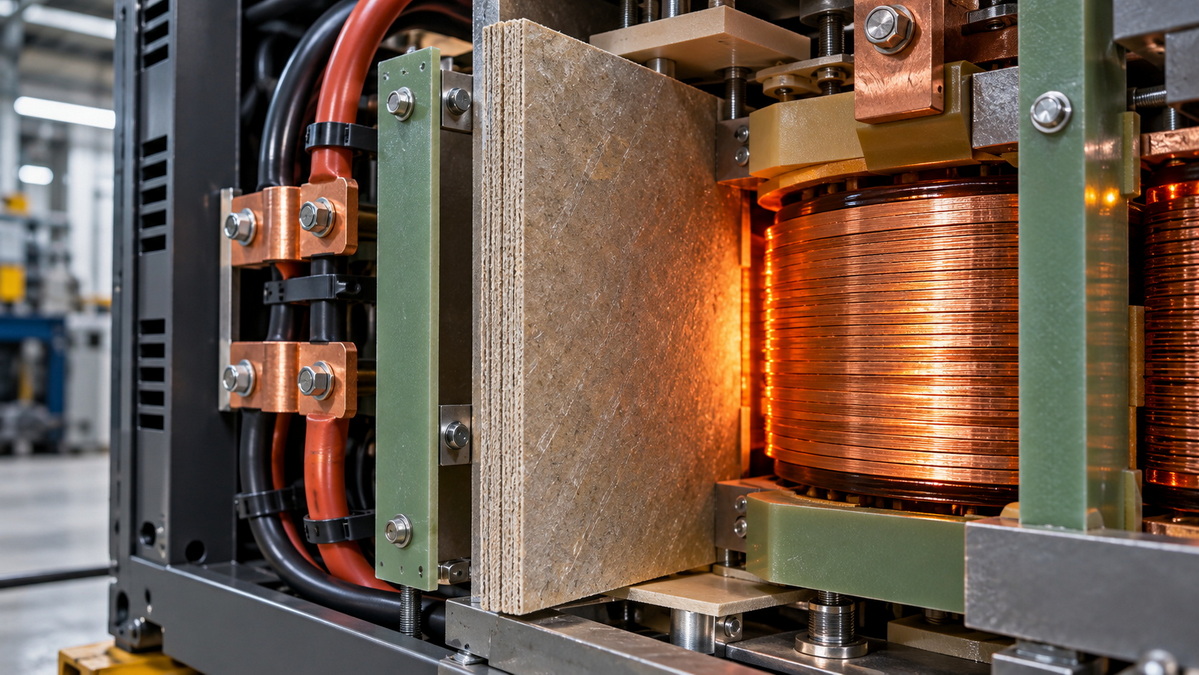
A welding machine insulation component often needs to do more than separate electrical conductors. It may also support copper parts, maintain spacing, absorb vibration, and withstand assembly pressure.
This is where epoxy fiberglass sheet has a major advantage.
Mica sheet can work effectively as a barrier layer, but it is generally less suitable for components that must tolerate repeated mechanical force. If a mica sheet is drilled, bolted, or clamped without appropriate support, it may crack or chip.
Epoxy fiberglass sheet is better suited to components that require:
- High compressive strength
- Stable mounting geometry
- Accurate thickness control
- Tight fastening
- Resistance to vibration
- Structural rigidity
- Repeated mechanical handling
- Precision holes and slots
- Reliable positioning of electrical conductors
FR4, G10, and G11 can be manufactured into:
- Busbar supports
- Terminal insulators
- Electrical mounting boards
- Insulating brackets
- Coil support plates
- Cable routing plates
- Transformer clamps
- Insulating washers
- Precision spacers
- Electrical housing liners
- Motor and generator insulation parts
- Custom CNC-machined electrical components
For example, a copper busbar support must prevent electrical contact while resisting pressure from bolts, current vibration, and equipment movement. In this application, G11 or FR4 epoxy fiberglass sheet is generally a more reliable choice than mica sheet.
Both mica sheet and epoxy fiberglass sheet provide effective electrical insulation. Their performance depends on material thickness, environmental conditions, voltage level, surface cleanliness, component design, and operating temperature.
Mica sheet is highly suitable for high-temperature electrical insulation because it can maintain dielectric performance even in hot environments. This is why it is commonly used in thermal barriers, coil insulation, heating systems, and heat-resistant electrical assemblies.
Epoxy fiberglass sheet is also a reliable electrical insulator. Its main advantage is that it combines insulation performance with structural strength and easy machining.
When selecting a material, consider the following electrical design factors:
1. Continuous working voltage
2. Peak voltage and surge conditions
3. Required insulation thickness
4. Creepage distance
5. Clearance distance
6. Maximum operating temperature
7. Humidity and condensation risk
8. Metal dust or conductive contamination
9. Vibration and mechanical load
10. Flame-retardancy requirements
For applications requiring flame-retardant laminate performance, FR4 sheet is often a practical choice. For high-temperature structural insulation, G11 sheet may be more suitable. For direct heat shielding, mica sheet is typically the stronger option.
Machining capability is a major factor in the mica sheet vs epoxy fiberglass sheet decision.
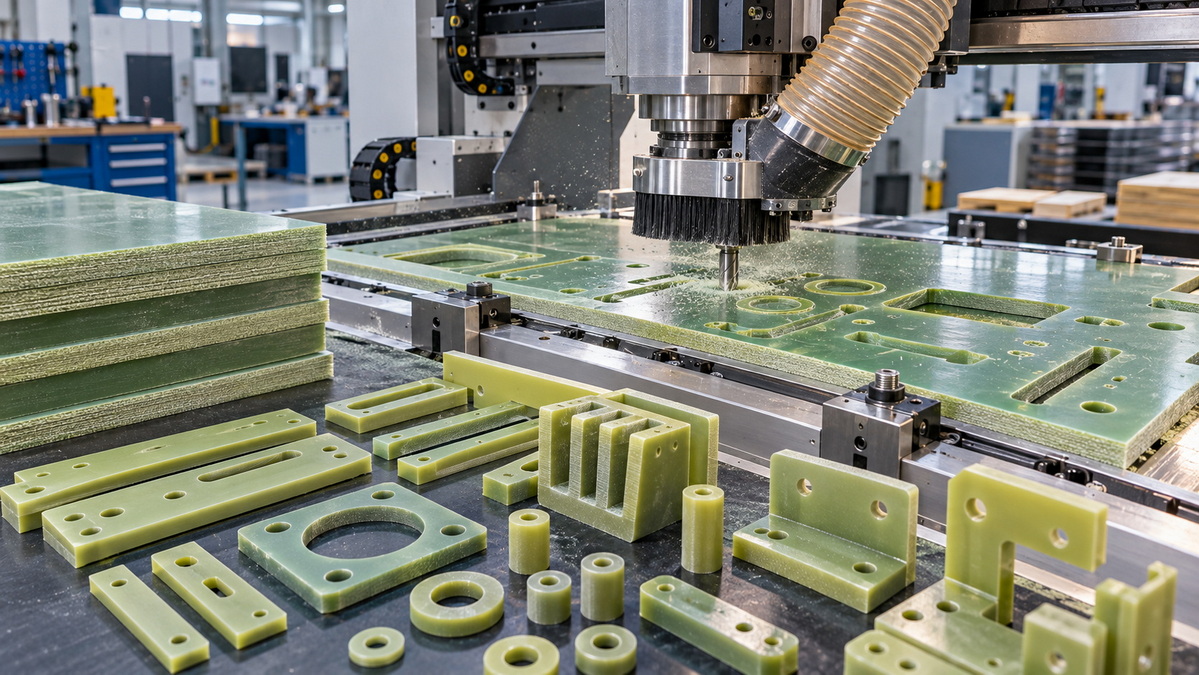
Epoxy fiberglass sheets are highly suitable for custom processing. They can be fabricated into complex shapes with CNC routers, milling machines, drilling equipment, waterjet cutting systems, and other industrial processing methods.
Guangdong Weishi New Materials Co., Ltd. can provide customized epoxy fiberglass insulation parts with features such as:
- Drilled holes
- Countersunk holes
- Precision slots
- Grooves
- Chamfered edges
- Curved profiles
- Insulation washers
- Support blocks
- Busbar brackets
- Transformer insulation plates
- Terminal separators
- Custom thicknesses
- Custom dimensions
- Application-specific machining
Mica sheet can also be cut, punched, and drilled. However, its fabrication process requires more care because it is more brittle. Poor drilling parameters or excessive pressure may damage edges or create cracks.
Use mica sheet when the component is primarily a flat heat barrier or a high-temperature electrical separator.
Use FR4 sheet when the component requires flame-retardant performance, electrical insulation, and accurate machining.
Use G10 sheet when strength, rigidity, and custom machining are the main priorities in a suitable environment.
Use G11 sheet when the component needs higher-temperature resistance along with structural mechanical performance.
Use a mica and G11 combination when the design requires both strong thermal protection and rigid structural insulation.
| Welding Machine Component | Recommended Material | Main Reason |
|---|---|---|
| Transformer heat barrier | Mica sheet | Strong high-temperature insulation |
| Arc-adjacent separator | Mica sheet | Better thermal shielding |
| Busbar support block | FR4, G10, or G11 | Strength, electrical insulation, and machining accuracy |
| Electrical control panel | FR4 sheet | Flame-retardant rigid insulation |
| Terminal spacer | FR4 or G11 sheet | Stable electrical insulation and mechanical support |
| Transformer mounting plate | G11 sheet | Better thermal stability and mechanical strength |
| Precision insulating washer | FR4, G10, or G11 | Accurate custom machining |
| High-temperature structural bracket | G11 sheet | Strong and heat resistant |
| Cable routing insulation plate | FR4 sheet | Rigid, machinable, and electrically insulating |
| Resistance welding heat shield | Mica sheet | Suitable for high-temperature protection |
| Hybrid insulation assembly | Mica sheet plus G11 sheet | Combines thermal and mechanical performance |
A common purchasing mistake is selecting insulation material based only on the highest possible temperature rating.
This approach can lead to unnecessary cost or poor mechanical performance.
For example, using mica sheet for a busbar support may offer excellent heat resistance, but it may not provide the mechanical rigidity required for long-term fastening and vibration resistance. On the other hand, using standard FR4 too close to a high-temperature welding transformer zone may result in gradual thermal aging.
The better approach is to divide the welding machine into functional zones:
- Extreme heat zone: Use mica sheet where direct heat resistance is the primary requirement.
- Elevated-temperature structural zone: Use G11 epoxy fiberglass sheet where both heat resistance and mechanical strength are required.
- General electrical insulation zone: Use FR4 sheet for flame-retardant structural insulation parts.
- High-strength machined zone: Use G10 or G11 sheet for precision components where mechanical performance is critical.
- Control and panel zone: Use FR4 sheet for stable, rigid, flame-retardant insulation boards.
This zoning method helps manufacturers improve material efficiency while maintaining safety and durability.
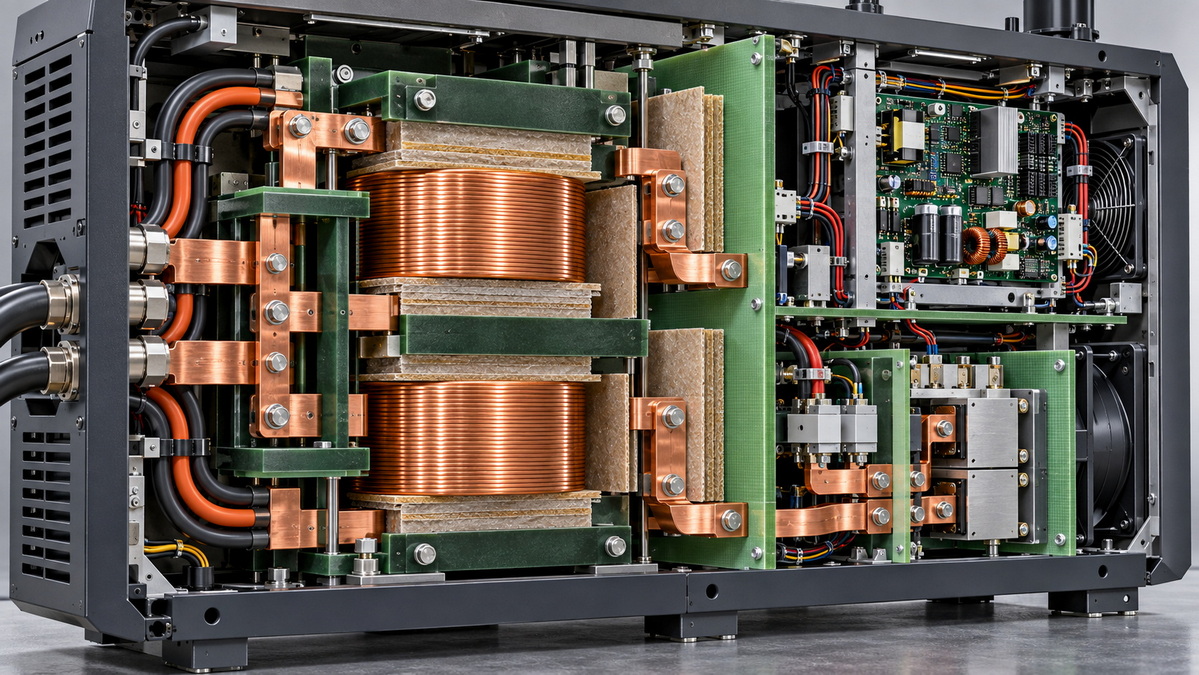
A heavy-duty welding transformer may require several insulation materials in one assembly.
A practical arrangement may include:
- A mica sheet barrier placed near the hottest transformer winding area
- A G11 epoxy fiberglass support plate behind the mica layer to provide rigidity
- FR4 terminal separators in the electrical connection area
- Custom-machined G10 or G11 spacers for cable positioning and structural assembly
This design distributes each material according to its strongest performance feature.
Mica protects against heat. G11 supports the structure under elevated temperature. FR4 provides flame-retardant insulation in the control area. G10 or G11 offers precision for custom parts.
The result is a more balanced welding machine insulation system that can improve reliability without using high-cost high-temperature material in every location.
Before ordering mica sheet, FR4 sheet, G10 sheet, or G11 sheet, prepare the following information.
1. Application location
Identify where the component will be installed inside the welding machine.
2. Maximum continuous temperature
Confirm both the normal operating temperature and possible peak temperature.
3. Electrical requirements
Provide working voltage, insulation thickness, creepage distance, and clearance requirements.
4. Mechanical loading
Explain whether the part supports a busbar, terminal, bracket, cable, transformer, or other component.
5. Flame requirements
Confirm whether a flame-retardant material grade is required.
6. Machining details
Provide drawings, holes, slots, grooves, thickness tolerance, and finished dimensions.
7. Environmental conditions
Include humidity, oil exposure, dust, chemicals, vibration, and outdoor or indoor use.
8. Quantity and production plan
Specify prototype quantity, trial quantity, and expected mass-production volume.
A detailed technical specification helps ensure that the selected insulation material matches the actual working condition.
Mica sheet and epoxy fiberglass sheet are both important insulation materials for welding machine manufacturing, but they should not be treated as direct substitutes.
Mica sheet is the preferred choice for high-temperature barriers, heat shields, and hot-zone electrical insulation. It performs well where thermal resistance is the dominant requirement.
Epoxy fiberglass sheet is the preferred choice for strong, rigid, and accurately machined insulation components. FR4, G10, and G11 sheets are suitable for busbar supports, terminal spacers, transformer mounting plates, insulating brackets, control panels, and customized electrical insulation parts.
For demanding welding machine designs, the most effective solution is often a combined approach. Mica sheet can protect the hottest areas, while G11, FR4, or G10 epoxy fiberglass sheet can provide mechanical support, dimensional stability, and custom-machined precision.
Guangdong Weishi New Materials Co., Ltd. provides high-performance FR4 epoxy fiberglass sheet, G10 sheet, G11 sheet, epoxy glass laminate, and custom-machined insulation components for electrical equipment, welding machines, industrial machinery, and specialized insulation applications. Send your technical drawing, operating temperature, thickness requirement, and component dimensions to receive a practical material recommendation for your project.
Mica sheet is better for high-temperature insulation areas, especially near hot transformer coils, heating elements, or arc-adjacent components. Epoxy fiberglass sheet is better for structural insulation parts that need mechanical strength, precise machining, and stable mounting performance.
Mica sheet can provide electrical insulation, but it is usually not the best choice for heavily loaded busbar supports. FR4, G10, or G11 epoxy fiberglass sheet is generally more suitable because it can handle mechanical load, fastening pressure, vibration, and precision machining requirements.
FR4 and G10 are both glass-reinforced epoxy laminates. The main difference is that FR4 is designed with flame-retardant properties, while standard G10 does not provide the same flame-retardant classification. FR4 is often preferred when flame resistance is important.
Yes. G11 sheet is commonly used for high-temperature structural insulation parts because it offers better thermal resistance than standard FR4 and G10 materials while maintaining strong mechanical and electrical performance.
Yes. FR4, G10, and G11 epoxy fiberglass sheets can be CNC machined into custom insulation parts such as busbar supports, terminal spacers, washers, brackets, holes, slots, grooves, and transformer insulation plates.
Yes. This is often an effective design strategy. Mica sheet can be installed as a heat-facing barrier, while G11 sheet can provide rigid structural support behind it. The combined design offers improved thermal protection and mechanical stability.
A complete request should include the material grade, thickness, sheet size or finished part dimensions, technical drawing, working temperature, voltage requirement, flame-retardancy requirement, machining details, tolerance, quantity, and final application.
1. National Electrical Manufacturers Association. [NEMA Standards Publication LI 1: Industrial Laminated Thermosetting Products]
2. The Gund Company. [NEMA FR4 Glass Epoxy Laminate Technical Data]
3. Cut and Mor. [NEMA Grade G10 Glass Epoxy Laminate Technical Data Sheet]
4. Jiujiang Xinxing Insulation Material Co., Ltd. [NEMA FR4 EPGC202 Technical Data Sheet]
5. Jiujiang Xinxing Insulation Material Co., Ltd. [NEMA G11 EPGC203 Technical Data Sheet]
6. Swift Supplies. [Silicone Bonded Mica Sheet Technical Data Sheet]
7. ELANTAS. [Mica-Based Papers, Laminates, and High-Temperature Composite Materials]
8. Final Advanced Materials. [Machinable Mica Silicone Composite Boards]
9. Ready Plastics. [G10 vs FR4, G11, G7, and G9 Laminate Grades]
10. Guangdong Weishi New Materials Co., Ltd. [FR4 Epoxy Sheet, G10 Sheet, G11 Sheet, and Insulation Material Solutions]


